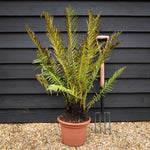

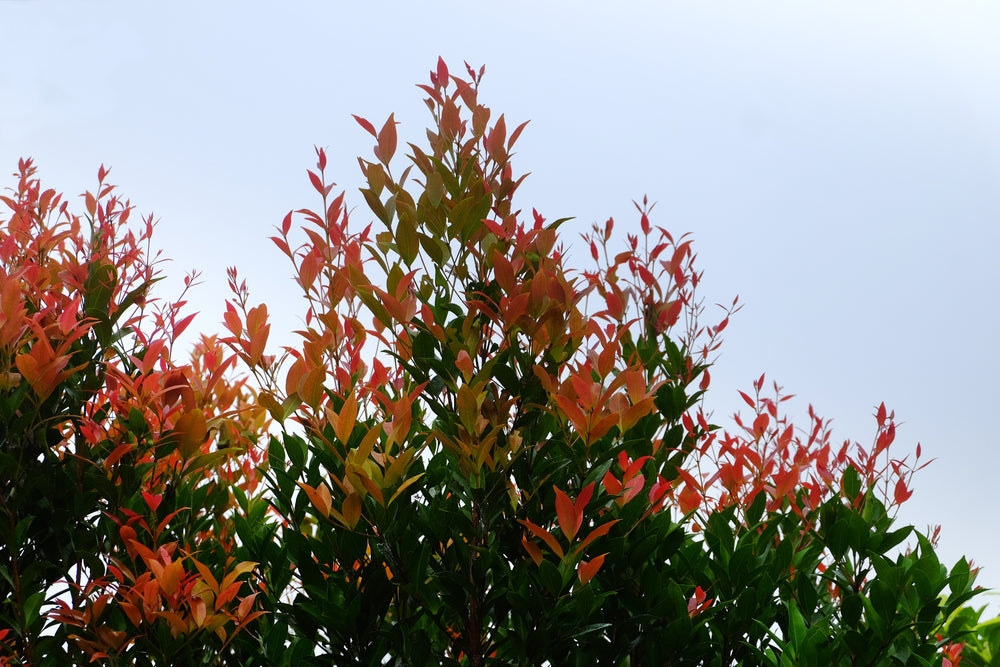
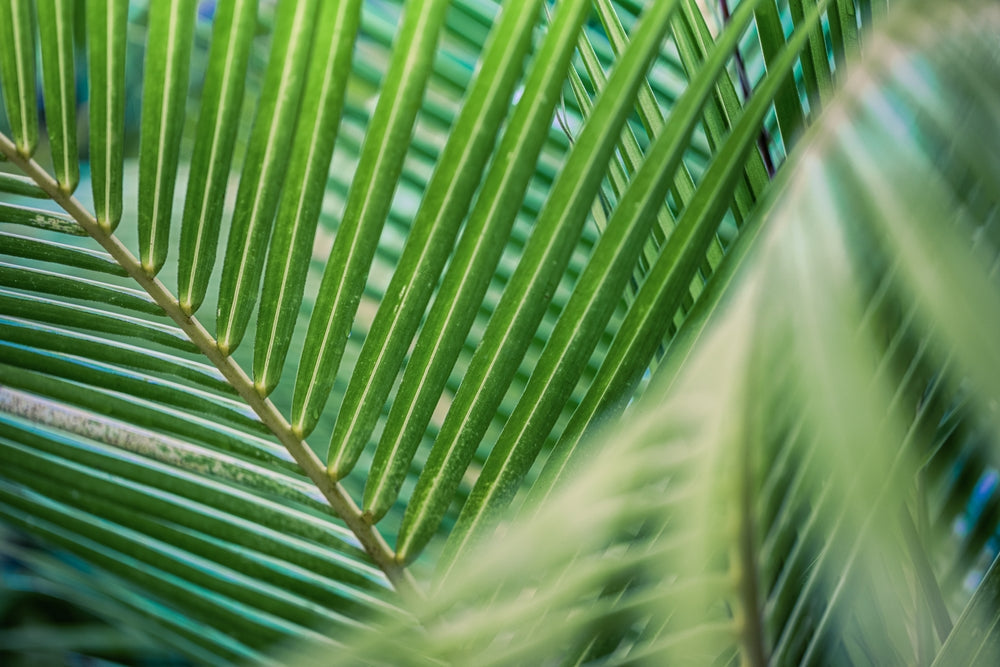
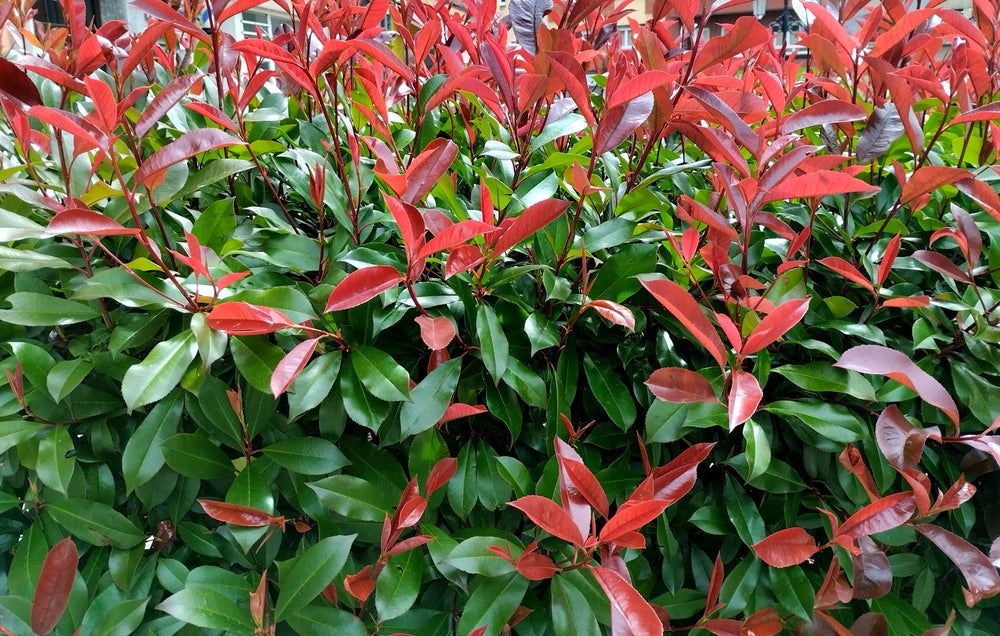
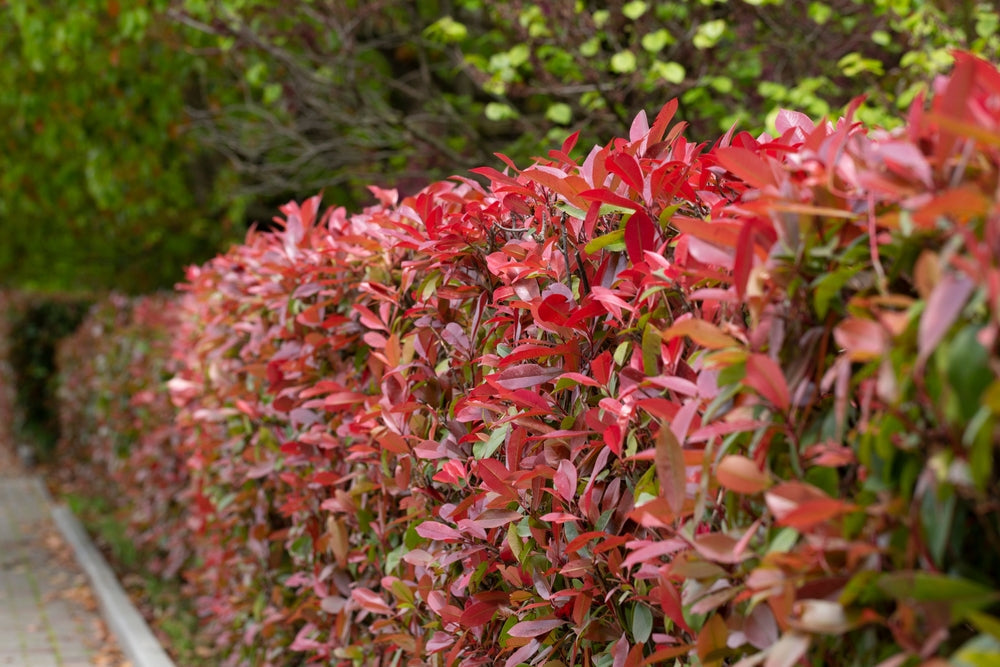
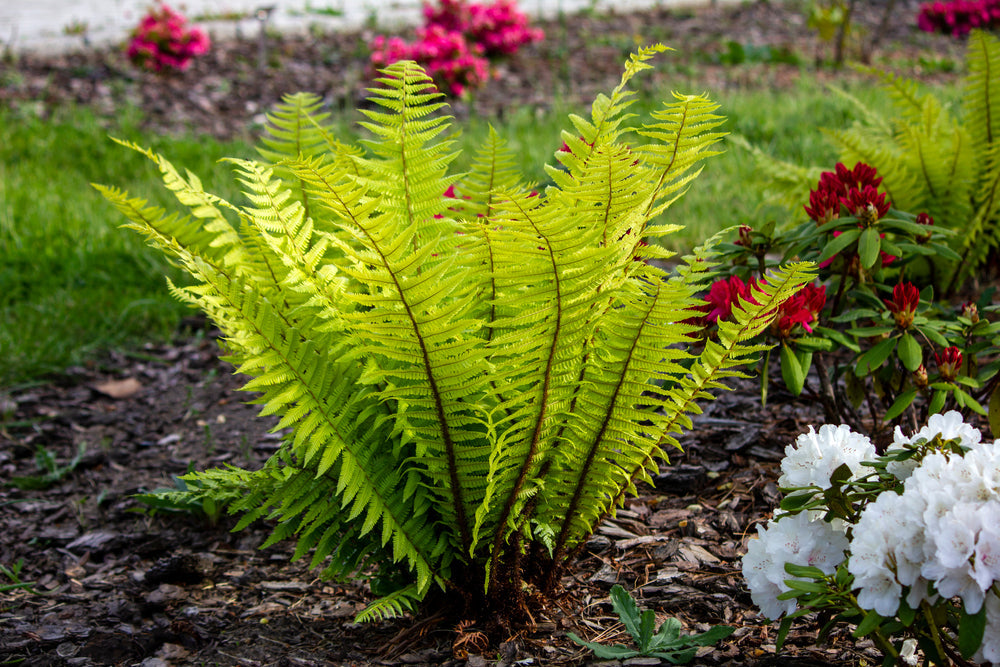


The Blechnum Brasiliense Volcano is named after the fern Blechnum brasiliense, a plant known for its distinctive foliage and preference for warm, moist environments. The species is widely recognised in horticulture for the colour of its young fronds, which emerge in shades of red or copper before gradually maturing into a deep, glossy green. This striking contrast between new and older growth makes it a popular ornamental fern.
It grows best in humid conditions with consistent moisture and well-drained soil. It prefers partial shade, similar to the conditions found beneath forest canopies, where it is protected from direct midday sunlight and strong winds. The plant typically forms an upright cluster of arching fronds that can reach around one to one and a half metres in height when mature, giving it a structured, almost tree-like appearance compared with many smaller ferns.
It prefers fertile and free-draining soil, which helps prevent waterlogging while still retaining enough moisture for fern roots to develop. In warm and humid environments this combination of soil quality and climate can support healthy, dense plant growth.
Because of its attractive foliage, Blechnum brasiliense is sometimes cultivated in botanical gardens, glasshouses, and sheltered landscapes. Gardeners value it for the colour of its new growth and the architectural shape of its fronds. In cooler climates such as the United Kingdom, it is generally grown in greenhouses, conservatories, or other protected settings where temperatures remain mild and humidity can be maintained.
With the right conditions—steady moisture, acidic soil, and protection from frost—the plant can develop into a striking feature specimen, valued for both its unusual colouring and its elegant, tropical form.