

-
Trees
Trees
 Fruit Trees
 Ornamental
 Screening
 Palms
By FeaturesBy Shape
Palms
By FeaturesBy Shape -
Shrubs
Shrubs
 Large shrubs
 Hedging
 Bamboo
 Climbers
 Flowering
 Grasses & Ferns
 Popular
-
Pines & Conifers
Pines & Conifers
 Pines
Pines
 Spruce & Fir
 Cypress
 Thuja
Thuja
 Redwood | Sequoia
-
Specimen
FREE DELIVERY OVER £350
All Pines trees
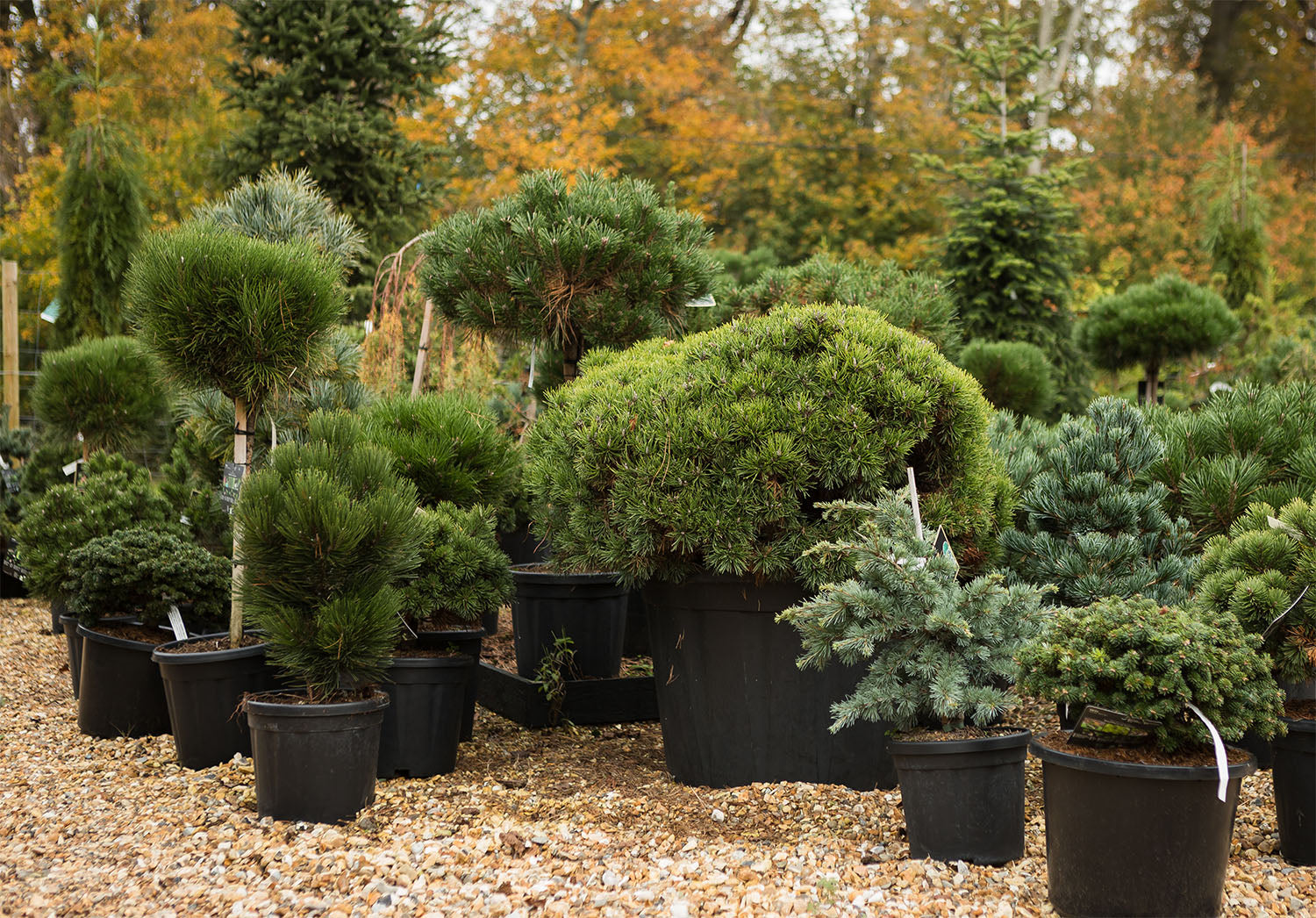
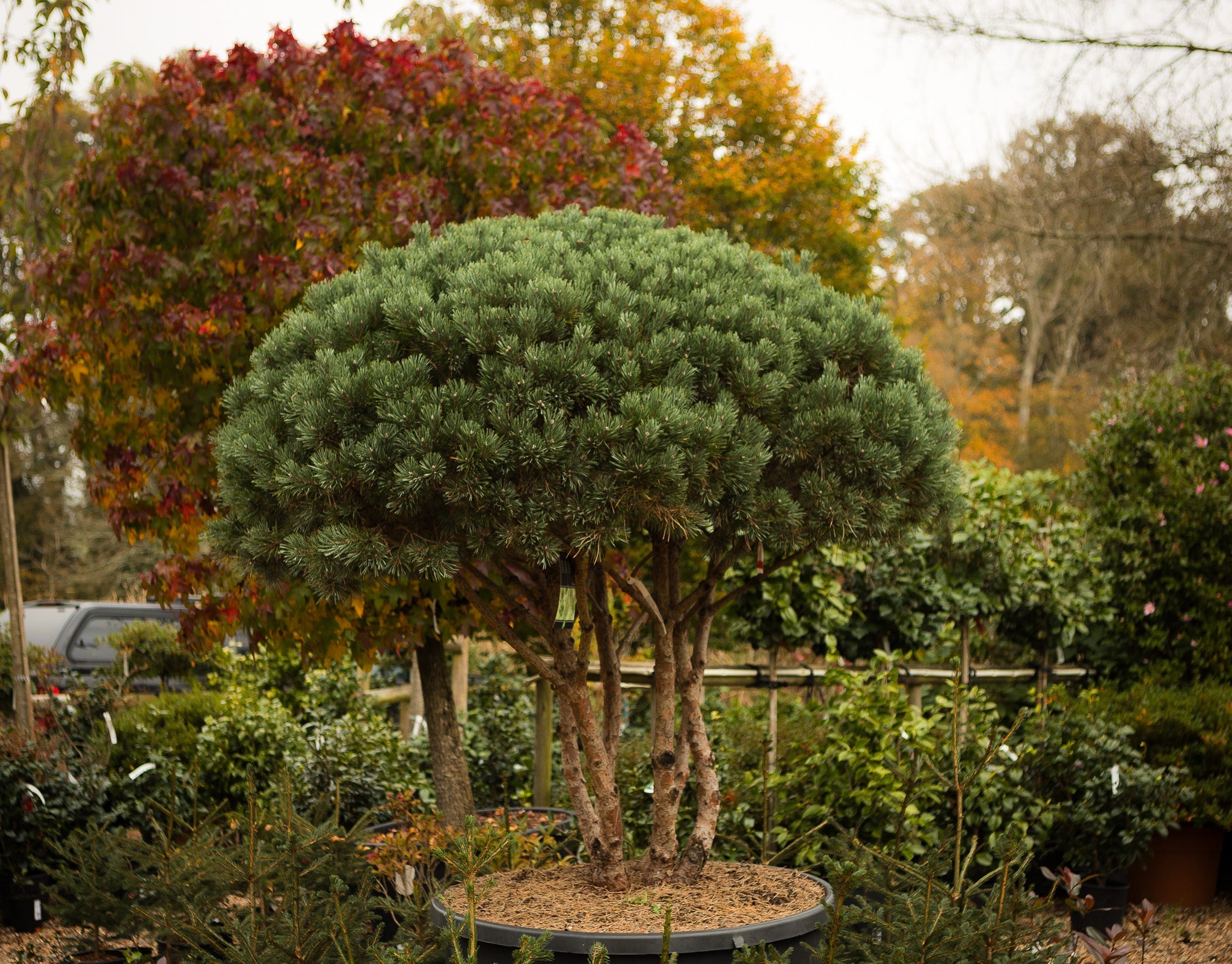
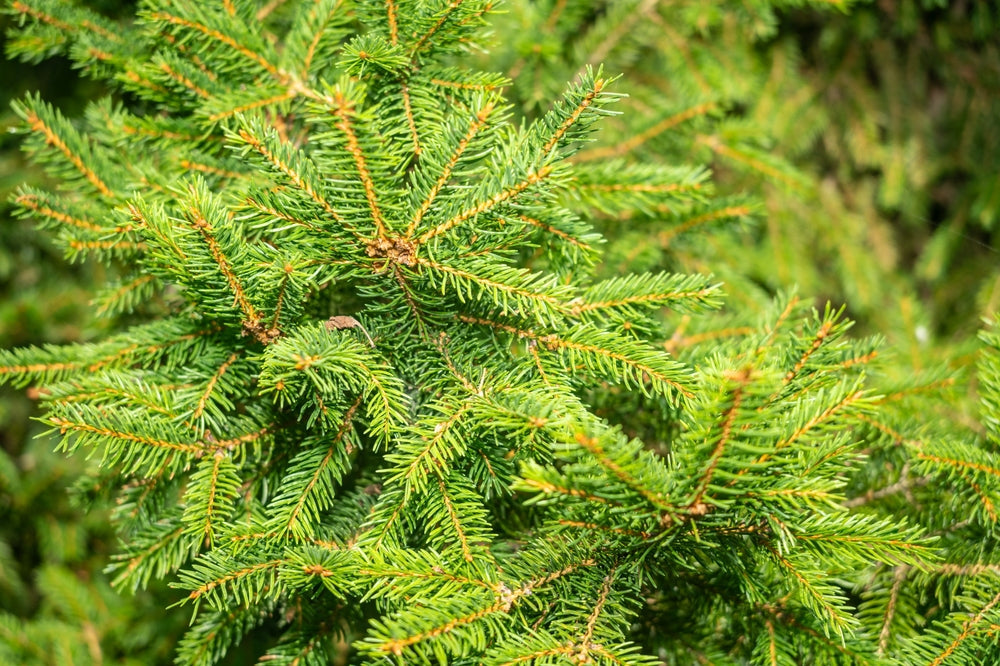
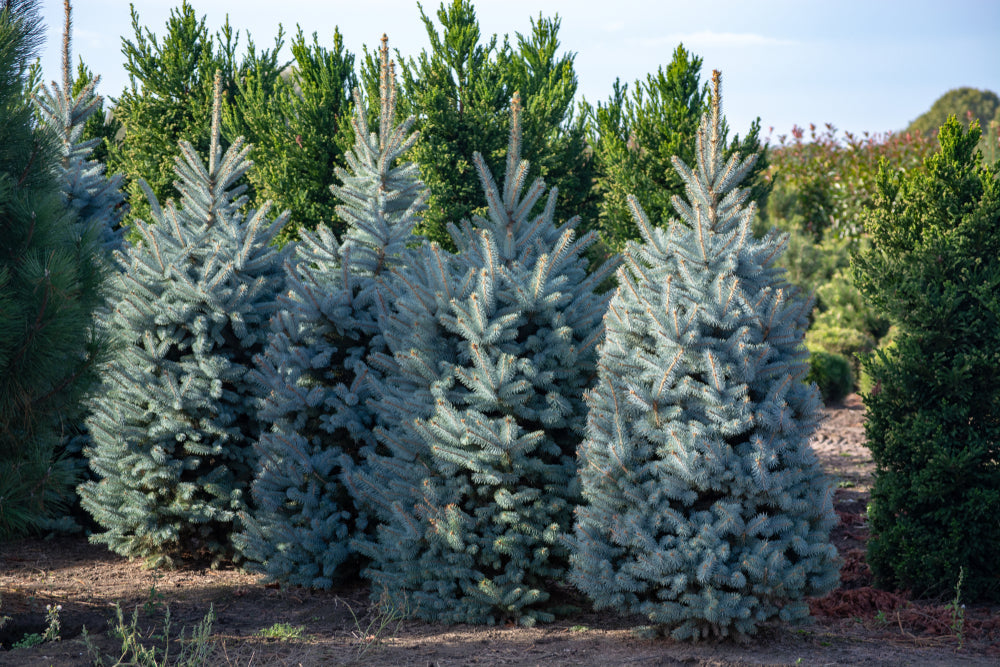
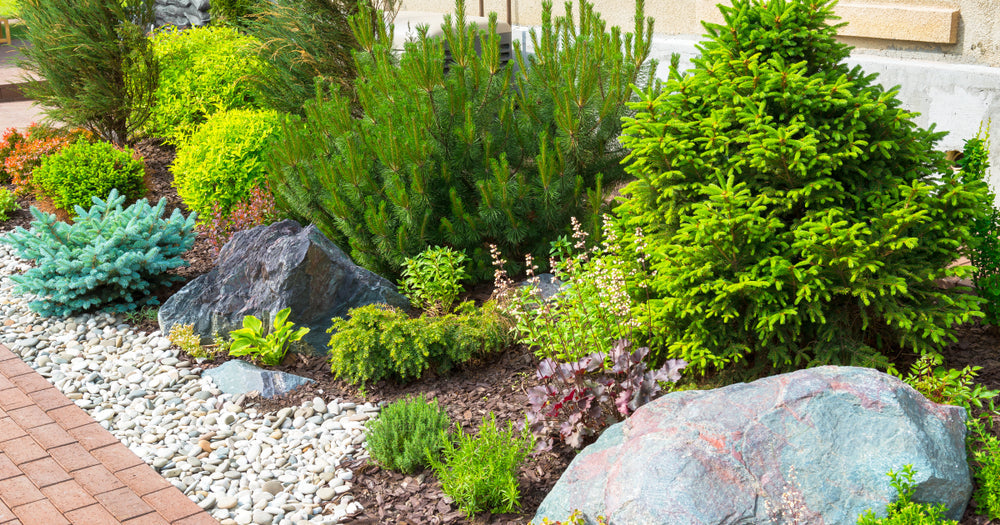
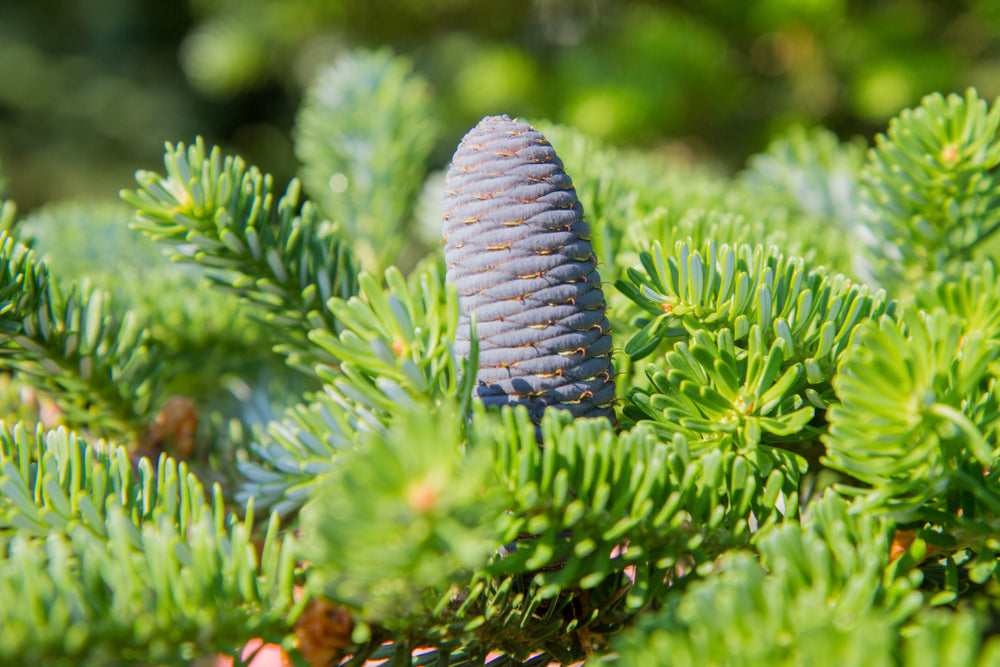
A versatile evergreen with fragrant needles and distinctive cones. Ideal for landscapes, windbreaks, and ornamental planting, it offers year-round beauty, resilience, and adaptability to various climates and soil conditions.
94 products
94 products
Sort by:
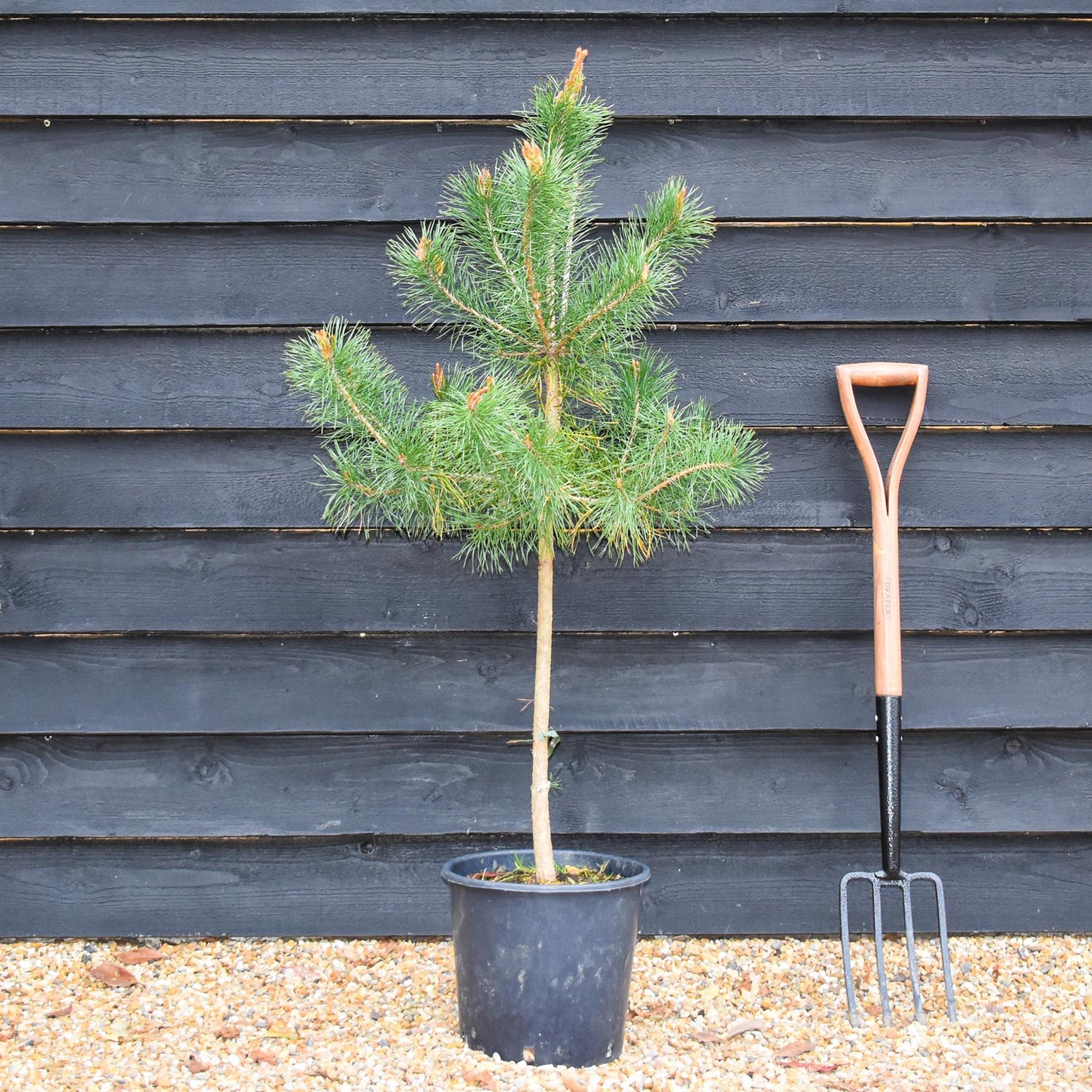
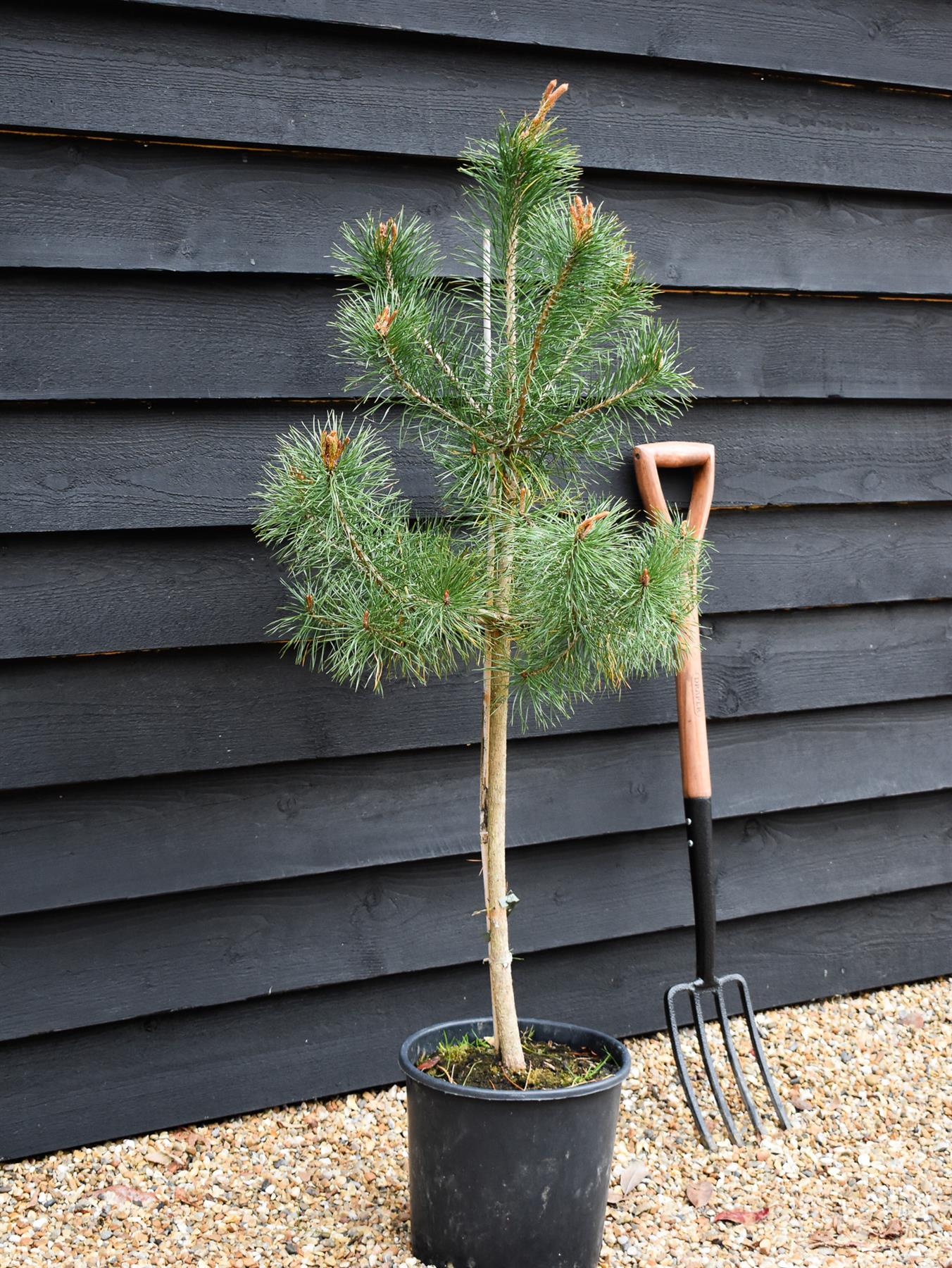
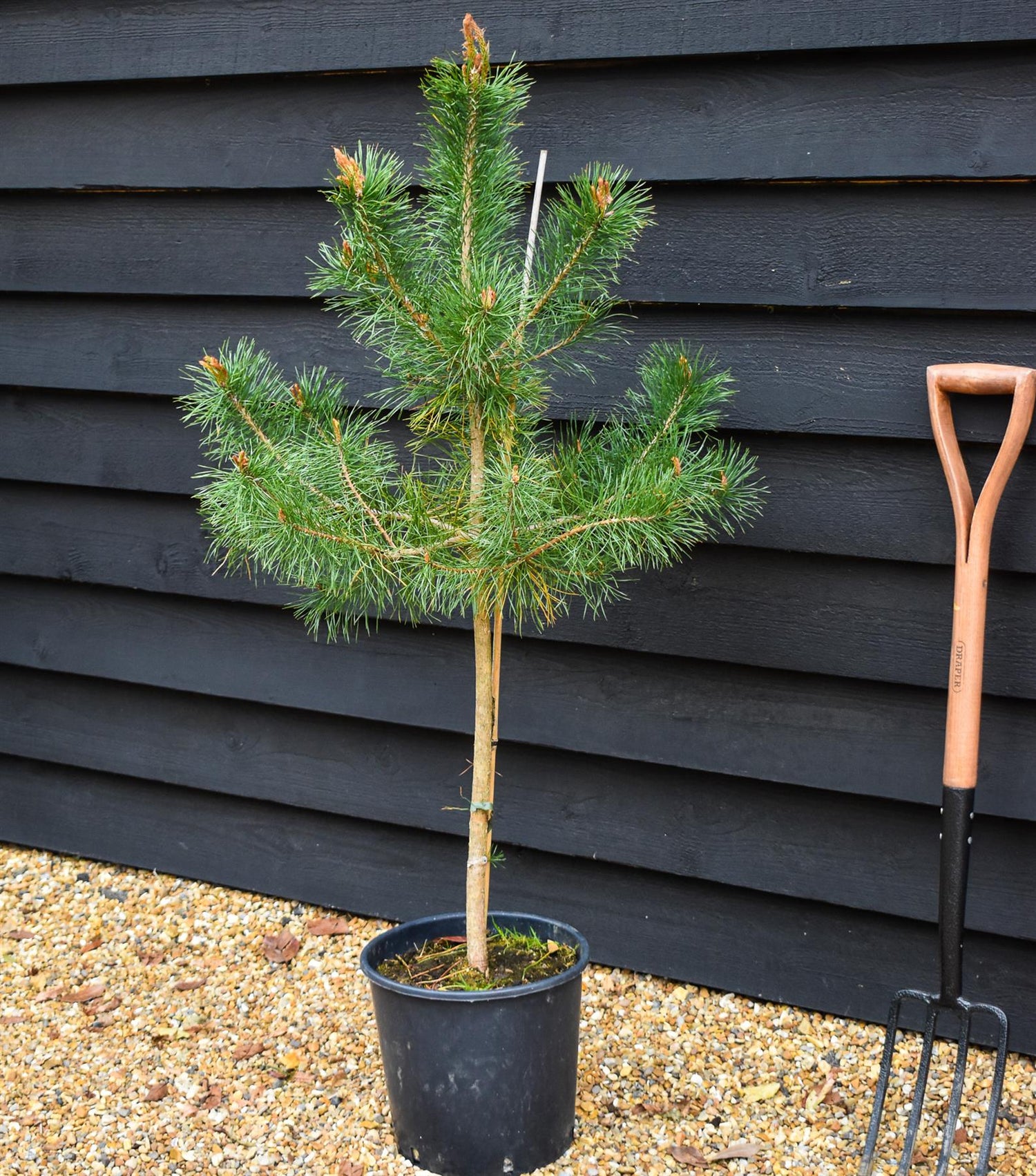
Scots Pine | Pinus sylvestris - Pot Grown - Height 80-110cm - Girth 4-8cm - 10lt
£48.00
Unit price perScots Pine | Pinus sylvestris - Pot Grown - Height 80-110cm - Girth 4-8cm - 10lt
£48.00
Unit price perThis particular Pinus sylvestris, commonly known as Scots Pine, has been grown from seed in a pot at Arundel Arboretum and is approximately 5 years old. In the wild, Scots Pine is a majestic conifer that can reach an ultimate height of up to 20 metres, with a distinctive tall, straight trunk and an open, airy crown. It is native to Europe and Asia and is well-known for its attractive, flaky orange-brown bark and blue-green needles, which provide year-round colour and texture.
Although naturally large, Pinus sylvestris can be adapted for smaller gardens with careful maintenance. By pruning the new growth, or "candles", annually, the tree’s size and shape can be controlled, making it suitable for container growing or compact outdoor spaces. Its rugged beauty, adaptability, and striking foliage make it an excellent feature tree or bonsai candidate, especially when nurtured from a young age like this specimen.


Japanese white pine | Pinus parviflora 'Ara kawa' - Height 70-90cm - Width 40-50cm - 12lt
£180.00
Unit price perJapanese white pine | Pinus parviflora 'Ara kawa' - Height 70-90cm - Width 40-50cm - 12lt
£180.00
Unit price perPinus parviflora 'Ara Kawa' is a distinctive cultivar of the Japanese White Pine (Pinus parviflora), a species native to Japan and the Korean Peninsula. Valued for its ornamental features, 'Ara Kawa' is popular among gardeners, landscapers, and bonsai enthusiasts.
This cultivar is a slow-growing, compact tree or shrub that typically reaches a height of 6 to 10 feet (1.8 to 3 meters) and a spread of 3 to 6 feet (0.9 to 1.8 meters) after about 10 years. The growth rate of 'Ara Kawa' can be further controlled through pruning, making it suitable for various landscape designs and bonsai artistry.
'Ara Kawa' is easily recognized by its dense, irregular branching pattern and striking, contorted trunk. The bark is rough and dark brown with patches of light gray, creating a visually appealing contrast. The tree's overall form is sculptural and reminiscent of driftwood, which adds to its aesthetic value.
The needles of 'Ara Kawa' are arranged in bundles of five, a characteristic shared with other Pinus parviflora species. The needles are soft, slightly twisted, and measure between 2 to 3 inches (5 to 7.6 centimeters) in length. They are bluish-green, providing a pleasant color contrast against the darker trunk.
The tree produces small, attractive cones that are 1 to 2 inches (2.5 to 5 centimeters) long. They are initially green, maturing to a light brown color over time. The cones add to the visual interest of the tree, particularly during the winter months.
It prefers well-drained, slightly acidic soil and should be planted in full sun for optimal growth. Once established, the tree is relatively low-maintenance, requiring only minimal pruning to maintain its shape.
Due to its unique features and adaptability, Pinus parviflora 'Ara Kawa' is an excellent choice for gardens, rockeries, and specimen planting. Its slow growth rate, compact size, and intriguing form also make it a popular choice for bonsai art, where it can be trained and shaped to accentuate its natural beauty.


Pinus mugo 'Gnom' | Dwarf mountain pine - Height 40-50cm - 10.5lt
£132.00
Unit price perPinus mugo 'Gnom' | Dwarf mountain pine - Height 40-50cm - 10.5lt
£132.00
Unit price per


Pinus leucodermis 'Malinki' - Height - 60-70cm - 11lt
£138.00
Unit price perPinus leucodermis 'Malinki' - Height - 60-70cm - 11lt
£138.00
Unit price perPinus leucodermis 'Malinki' is a cultivar of the whitebark pine species, native to the mountains of the western United States and Canada. This slow-growing evergreen tree is prized for its attractive appearance and hardiness, making it an excellent choice for landscaping and ornamental purposes.
The 'Malinki' cultivar is particularly desirable for its unique blue-green needles and compact growth habit, making it ideal for smaller gardens or as a feature in a mixed border. The needles are twisted and grow in clusters of five, adding texture and interest to the tree's appearance. It typically reaches a mature height of around 15 to 20 feet, with a spread of 10 to 15 feet.
In addition to its aesthetic appeal,Pinus leucodermis 'Malinki' is also known for its resilience and ability to withstand harsh growing conditions. It is drought-tolerant and able to grow in a wide range of soil types, from sandy to heavy clay. It is also relatively disease-resistant, making it a low-maintenance option for gardeners.


Pinus mugo 'Wintergold' | Golden mountain pine - Height 30-40cm - 7.5lt
£99.00
Unit price perPinus mugo 'Wintergold' | Golden mountain pine - Height 30-40cm - 7.5lt
£99.00
Unit price perPinus mugo 'Wintergold', commonly known as the golden mountain pine, is a captivating dwarf conifer that brings vibrant colour to gardens, particularly during the colder months. Originating from the mountainous regions of Central and Southern Europe, this variety is prized for its striking golden-yellow needles that intensify in hue during winter, before reverting to a softer green in summer. This seasonal transformation makes it a standout choice for year-round interest.
Growing to an ultimate height and spread of approximately 1-1.5 meters, 'Wintergold' is ideally suited for small gardens, rockeries, and containers where space is limited. It thrives in well-drained, acidic soils and prefers full sun to partial shade, making it adaptable to a variety of garden settings.
This slow-growing pine is also low maintenance, requiring minimal pruning, thus it is a popular choice for adding structure and winter colour in garden designs across the UK.


Pinus Mugo 'Mops' | Dwarf mountain pine - Height 20-25cm - 8lt
£105.00
Unit price perPinus Mugo 'Mops' | Dwarf mountain pine - Height 20-25cm - 8lt
£105.00
Unit price per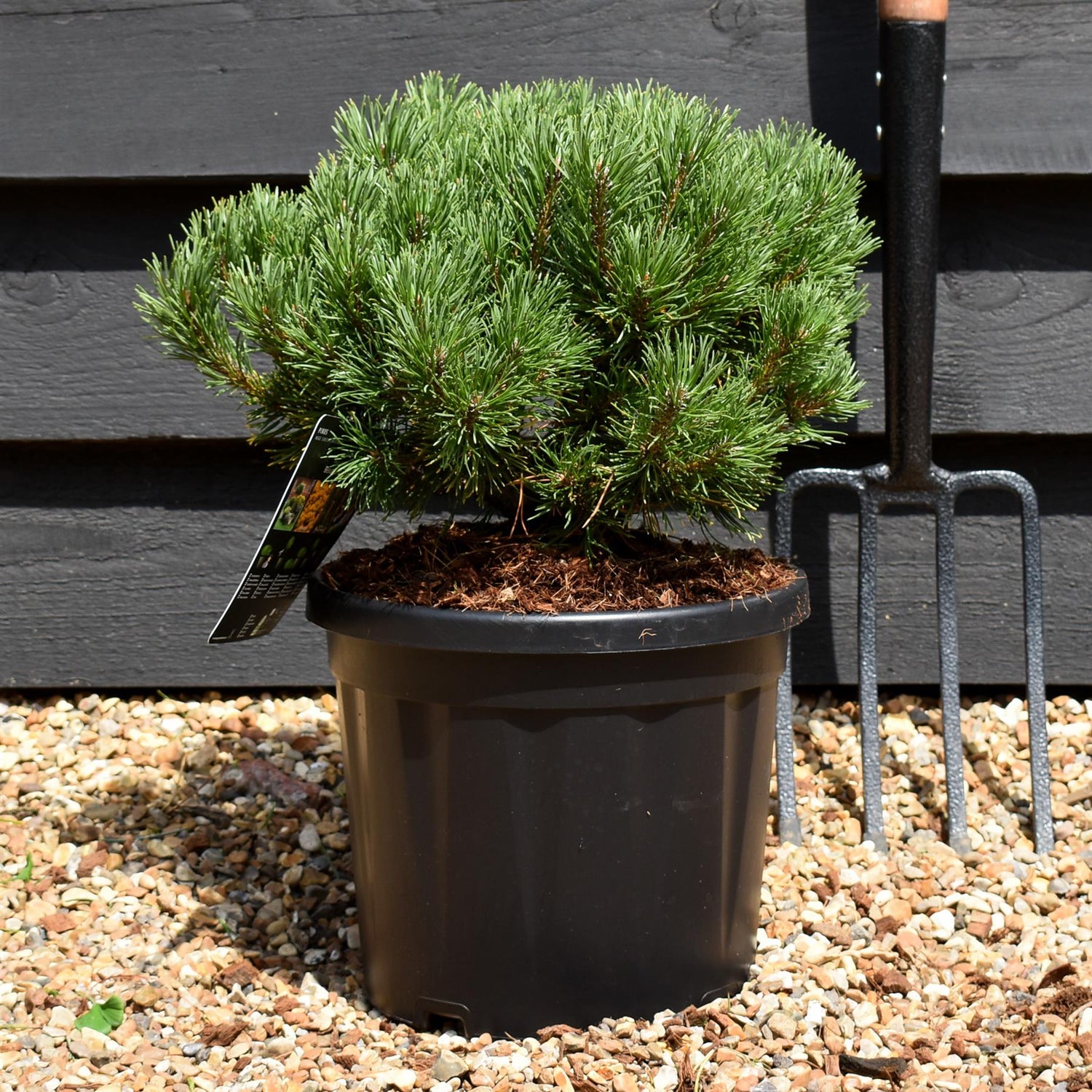
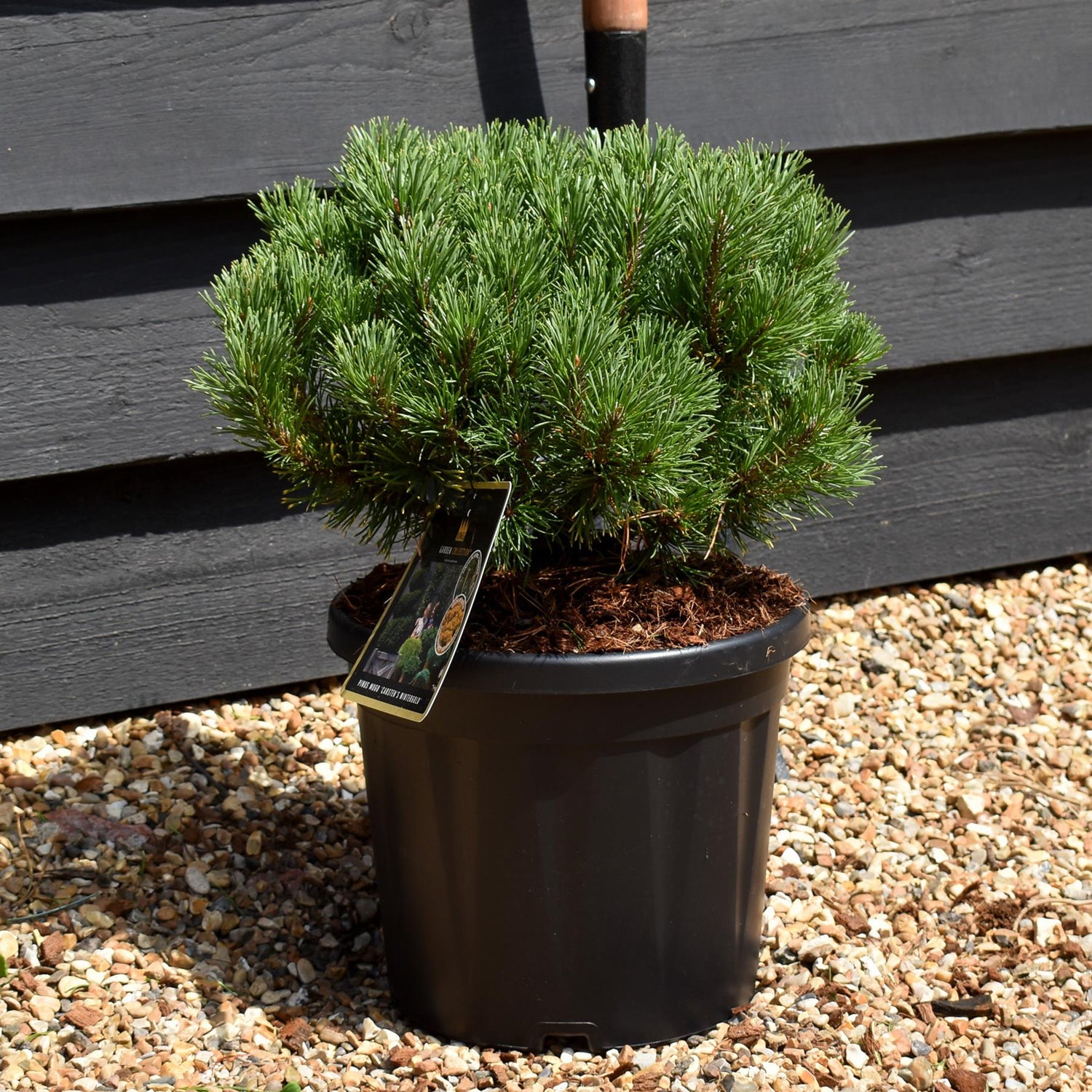
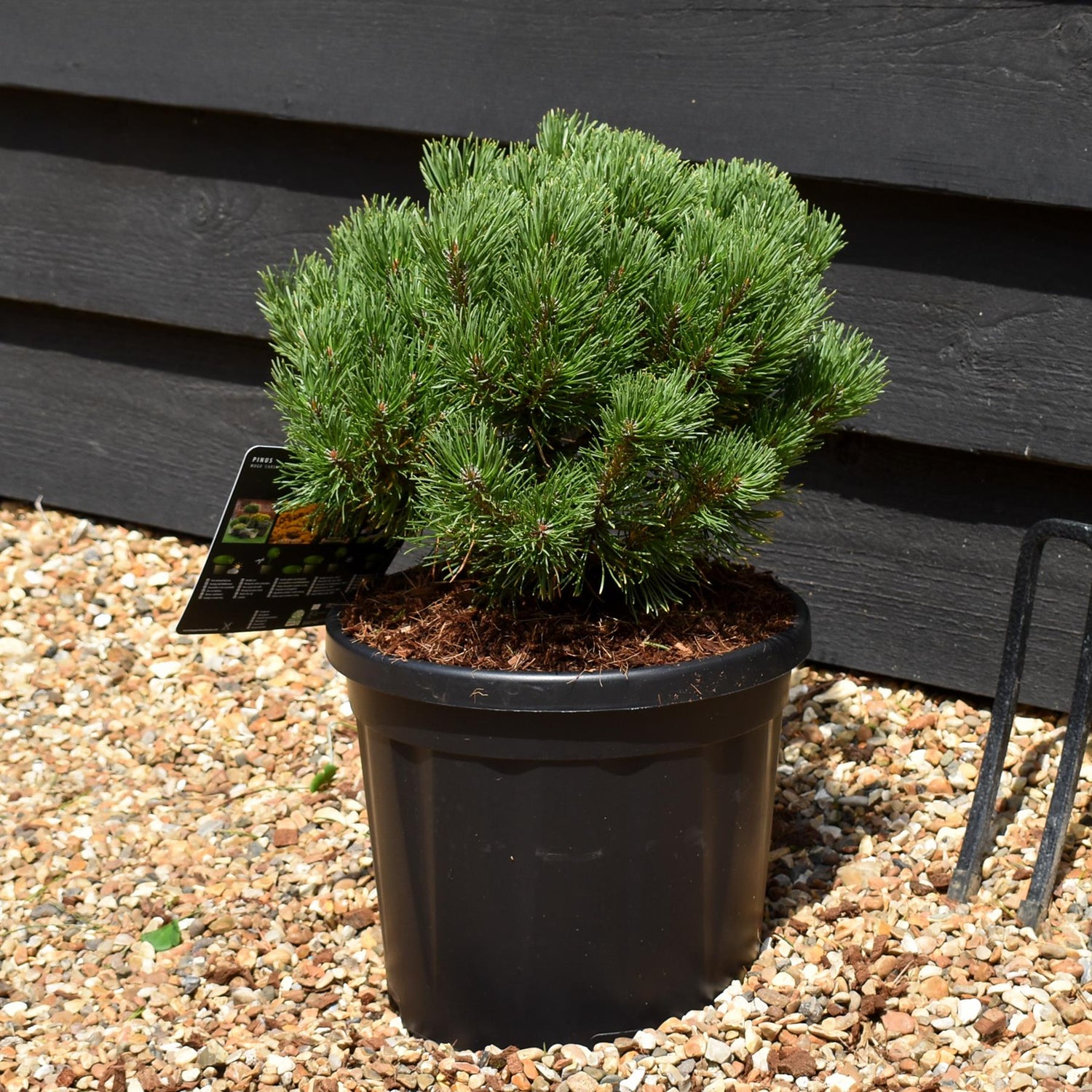
Pinus mugo 'Carsten's Wintergold' | Dwarf mountain pine - Height 30cm - Width 20cm - 6lt
£68.00
Unit price perPinus mugo 'Carsten's Wintergold' | Dwarf mountain pine - Height 30cm - Width 20cm - 6lt
£68.00
Unit price per


Pinus parviflora 'Negishi' - Height 60-80cm - 12lt
£150.00
Unit price perPinus parviflora 'Negishi' - Height 60-80cm - 12lt
£150.00
Unit price perPinus parviflora 'Negishi' is a dwarf, compact, slow-growing, coniferous, evergreen shrub of upright, spreading habit, with short stems, stiff, slightly twisted, silvery-blue, needle-like leaves, clustered in groups of five. It produces attractive, small, ovoid, brown cones in autumn.
Pinus parviflora 'Negishi' will tolerate almost all soil types, chalky, clay, sandy, loamy, as long as they are well-drained. It thrives in neutral to acidic soil in full sun. It doesn’t cope well with humidity and heat, but can adapt to coastal conditions. It prefers cool summer climates. Very resistant to frost and low temperatures, as well as wind and exposed positions. Tolerant of urban pollution. Low maintenance plant, doesn’t require pruning.
Japanese white pine 'Negishi' is an attractive pine with interesting, architectural, irregular habit. It looks great in rock and gravel gardens, but is also suitable for cottage and urban gardens. Excellent as a specimen or accent plant, for beds and borders, and low hedges and screens. Suitable for growing in containers.


Sciadopitys Verticillata | Japanese umbrella tree - Height 50-70cm - 11lt
£115.00
Unit price perSciadopitys Verticillata | Japanese umbrella tree - Height 50-70cm - 11lt
£115.00
Unit price perSciadopitys verticillata, commonly referred to as the Japanese umbrella pine, is a distinct and architecturally striking evergreen conifer. Native to Japan, this tree is prized for its unique appearance, featuring glossy, dark green needles that radiate around its branches resembling the spokes of an umbrella. The needles are thick and leathery, arranged in whorls that contribute to the plant’s dense, sculptural form.
Growing slowly, the Japanese umbrella pine eventually reaches an ultimate height of about 15-20 meters in the UK, making it a magnificent specimen tree in larger gardens. It thrives in moist, well-drained, slightly acidic soil and prefers a sheltered position to protect it from harsh winds. Partial shade to full sun is ideal for its growth.
In British gardens, Sciadopitys verticillata is often used as a focal point due to its rare and exotic appearance. Its resilience and year-round beauty also make it a popular choice for ornamental planting.


Pinus mugo 'Benjamin' - Height 20-25cm - Width 30-40cm - 8lt
£110.00
Unit price perPinus mugo 'Benjamin' - Height 20-25cm - Width 30-40cm - 8lt
£110.00
Unit price perPinus mugo 'Benjamin' is a remarkable cultivar of the Pinus mugo species, also known as the mountain pine or dwarf mountain pine. This particular cultivar, named 'Benjamin,' is a compact, slow-growing, and low-maintenance coniferous evergreen shrub that makes an ideal choice for gardens, rockeries, or as a specimen plant in various landscaping projects. Its distinctive characteristics and growth habits make it a popular choice among gardeners and landscapers who appreciate its unique charm and resilience.
Originating from the mountainous regions of central and southern Europe, Pinus mugo 'Benjamin' thrives in higher altitude environments and is well-adapted to a wide range of conditions. It prefers well-drained, slightly acidic to neutral soils and can tolerate various soil types, including sandy, loamy, or clayey compositions. It can withstand temperatures as low as -50°F (-45°C) and is suitable for a diverse range of climates.
Pinus mugo 'Benjamin' is characterized by its dense, symmetrical, and rounded growth habit, reaching a mature height and spread of approximately 3-4 feet (0.9-1.2 meters) in 10 years. Its slow growth rate, typically about 1-3 inches (2.5-7.5 cm) per year, makes it an excellent choice for small gardens and confined spaces where other conifers might become too large. The compact size of this cultivar allows it to maintain its shape without the need for regular pruning, which makes it an attractive low-maintenance option.
The foliage of Pinus mugo 'Benjamin' consists of dark green, needle-like leaves, arranged in pairs and spirally arranged along the branches. Each needle is approximately 1.2-2.4 inches (3-6 cm) in length, with a slightly curved or twisted appearance. These needles are retained year-round, providing constant interest and color even during the winter months.
In addition to its attractive foliage, Pinus mugo 'Benjamin' produces small, inconspicuous, yellowish-brown male cones and slightly larger, ovoid, green female cones. As the female cones mature, they turn into a woody, brown color and release winged seeds that are dispersed by the wind. While the cones are not particularly showy, they do provide additional textural interest to the plant's overall appearance.
The bark of Pinus mugo 'Benjamin' is initially smooth, with a grayish-brown color, which gradually becomes more rugged and furrowed as the shrub ages. This textural contrast between the bark, needles, and cones contributes to the visual appeal of this cultivar.
To maintain the health and vigor of Pinus mugo 'Benjamin,' it is essential to provide it with a sunny or partially shaded location, allowing it to receive at least 4-6 hours of direct sunlight daily. Although it is relatively drought-tolerant once established, it is essential to water it regularly during the first few years of growth to encourage a strong, healthy root system.
In summary, Pinus mugo 'Benjamin' is a captivating and resilient evergreen shrub that offers year-round interest, with its dense growth habit, dark green needle-like foliage, and intriguing bark texture. Its compact size, slow growth rate, and low-maintenance requirements make it an exceptional choice for various landscape settings, from rock gardens to mixed borders or as a focal point in a small garden.


Pinus mugo mughus |Dwarf Mountain Pine -Height 50-80cm - 12lt
£70.00
Unit price perPinus mugo mughus |Dwarf Mountain Pine -Height 50-80cm - 12lt
£70.00
Unit price perPinus mugo subsp. mughus, commonly known as dwarf mountain pine or creeping pine, is a low-growing, evergreen conifer native to the mountainous regions of central and southern Europe. This subspecies of Pinus mugo is characterised by its compact, shrubby form, often spreading horizontally rather than growing upright. It is a popular choice in rock gardens, alpine gardens, and as ground cover due to its resilience and attractive appearance.
The dwarf mountain pine typically grows to a height of 1 to 2 metres, with a similar spread, although in ideal conditions it can reach up to 3 metres over many years. Its growth habit varies, with some plants forming a dense, cushion-like mound, while others develop more open, irregular shapes. The bark is brown to grey, developing furrows and ridges as the plant ages, which adds to its visual appeal.
The needles of Pinus mugo mughus are dark green and arranged in pairs, measuring around 3 to 8 centimetres in length. These needles are stiff and sharp, giving the plant a somewhat prickly texture. It produces small, conical brownish-grey cones, usually about 2 to 5 centimetres long, which mature after two to three years.
One of the key attributes of this subspecies is its hardiness. It can thrive in poor soils, withstand drought, and tolerate cold and windy conditions, making it suitable for exposed locations and high altitudes. It prefers full sun and well-drained soils, although it can adapt to a range of soil types, including sandy and stony substrates.


Tsuga canadensis 'Pendula' - Height 100-110cm - 35lt
£495.00
Unit price perTsuga canadensis 'Pendula' - Height 100-110cm - 35lt
£495.00
Unit price perTsuga canadensis ‘Pendula’, commonly known as weeping Canadian hemlock, is a highly ornamental, evergreen conifer prized for its graceful, cascading form and soft, dark green needles. Its distinctive weeping branches create a flowing, layered appearance that adds elegance and movement to the garden. Ideal as a specimen plant, it brings structure and year-round interest to shady borders, woodland gardens, or sloped landscapes where its draping habit can be showcased.
This cultivar is slow-growing and can be trained or staked to achieve various shapes, including upright with drooping branches or a spreading, ground-hugging form. It typically grows 5 to 15 feet tall and wide, depending on training and space. 'Pendula' thrives in partial to full shade and prefers moist, well-drained, acidic soils. It is hardy and benefits from shelter against harsh wind or strong sun, which can scorch its foliage.
Low-maintenance and deer-resistant, it requires little pruning beyond shaping and responds well to thoughtful training. Tsuga canadensis ‘Pendula’ is an elegant, versatile choice for gardeners seeking a dramatic yet refined evergreen focal point in shaded or naturalistic garden settings.
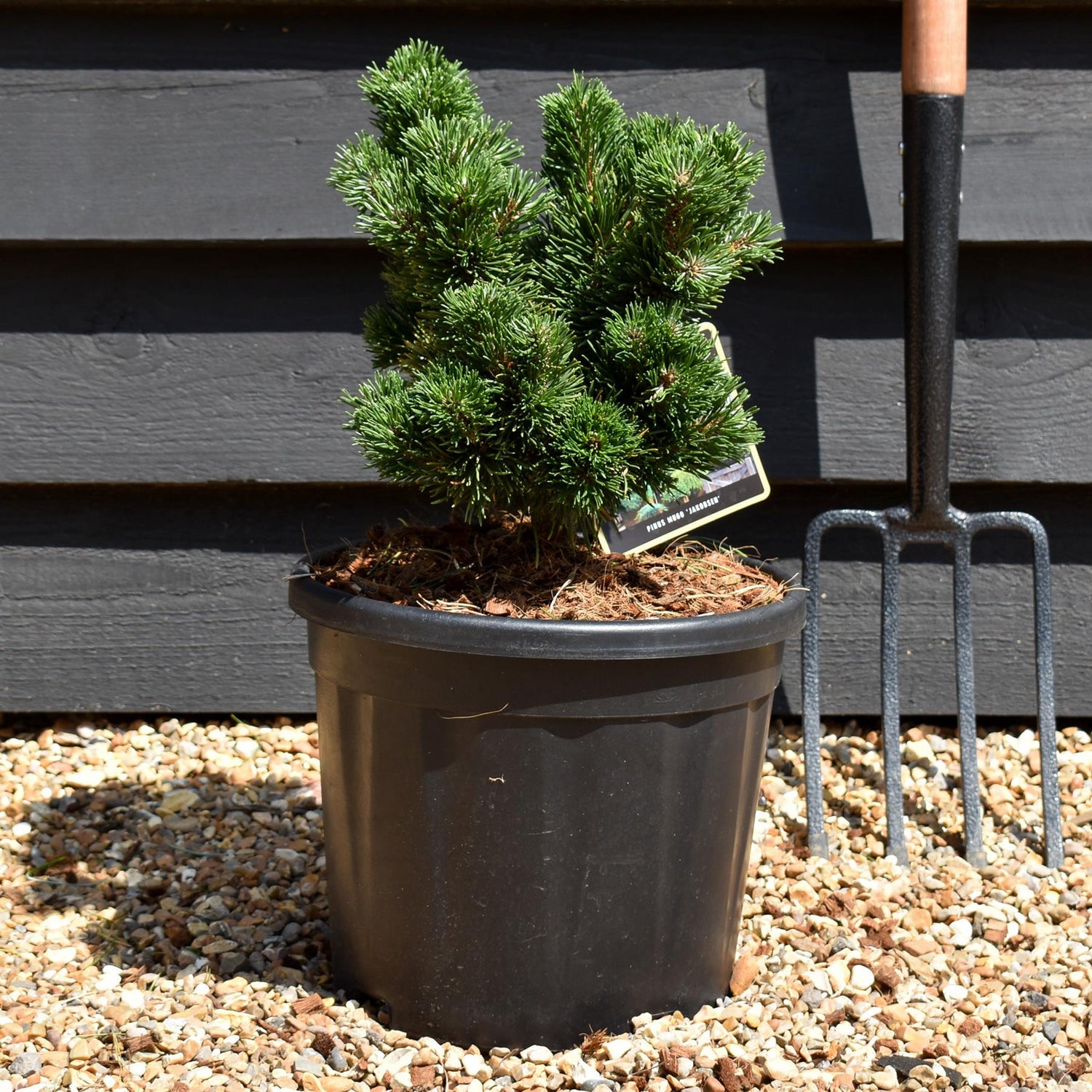
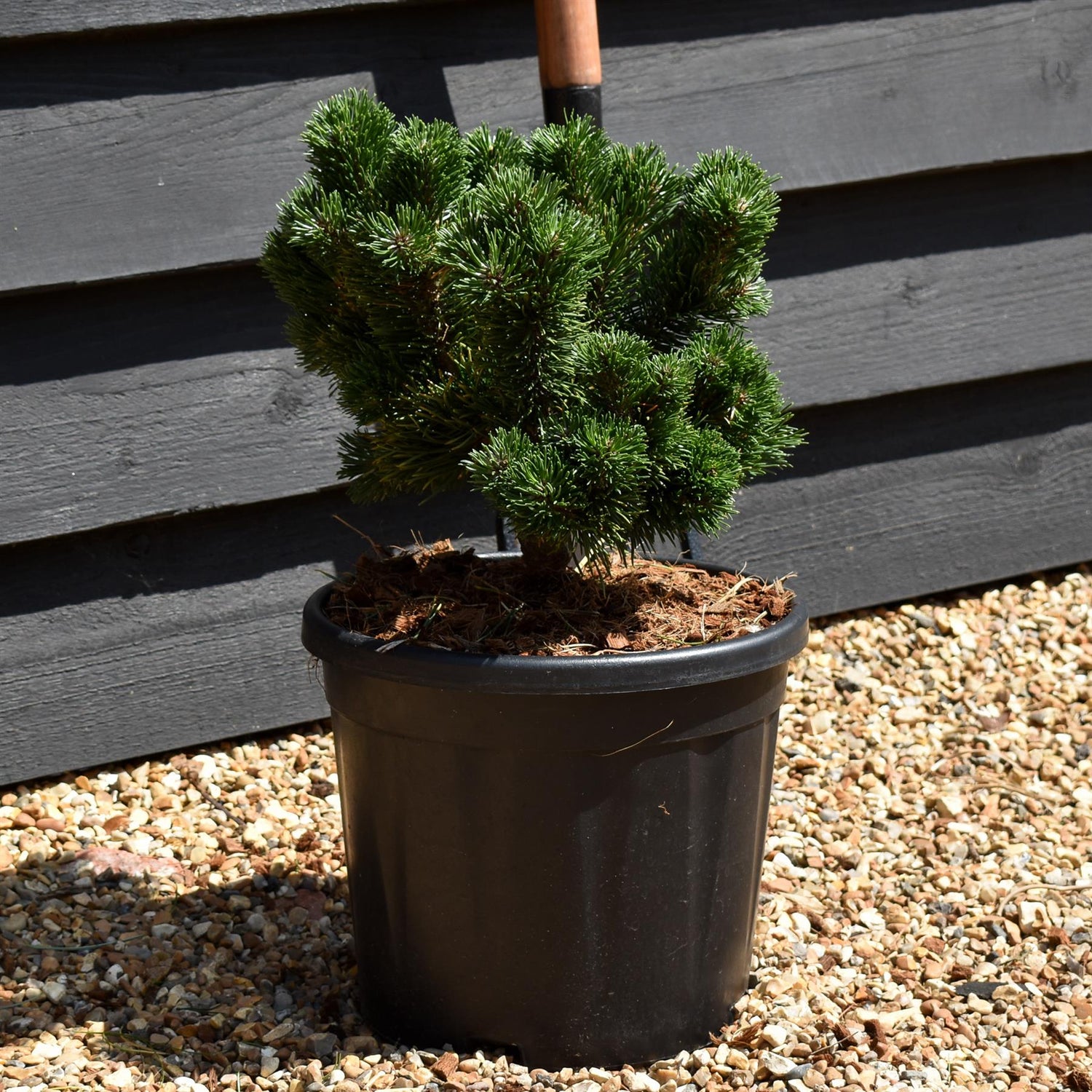
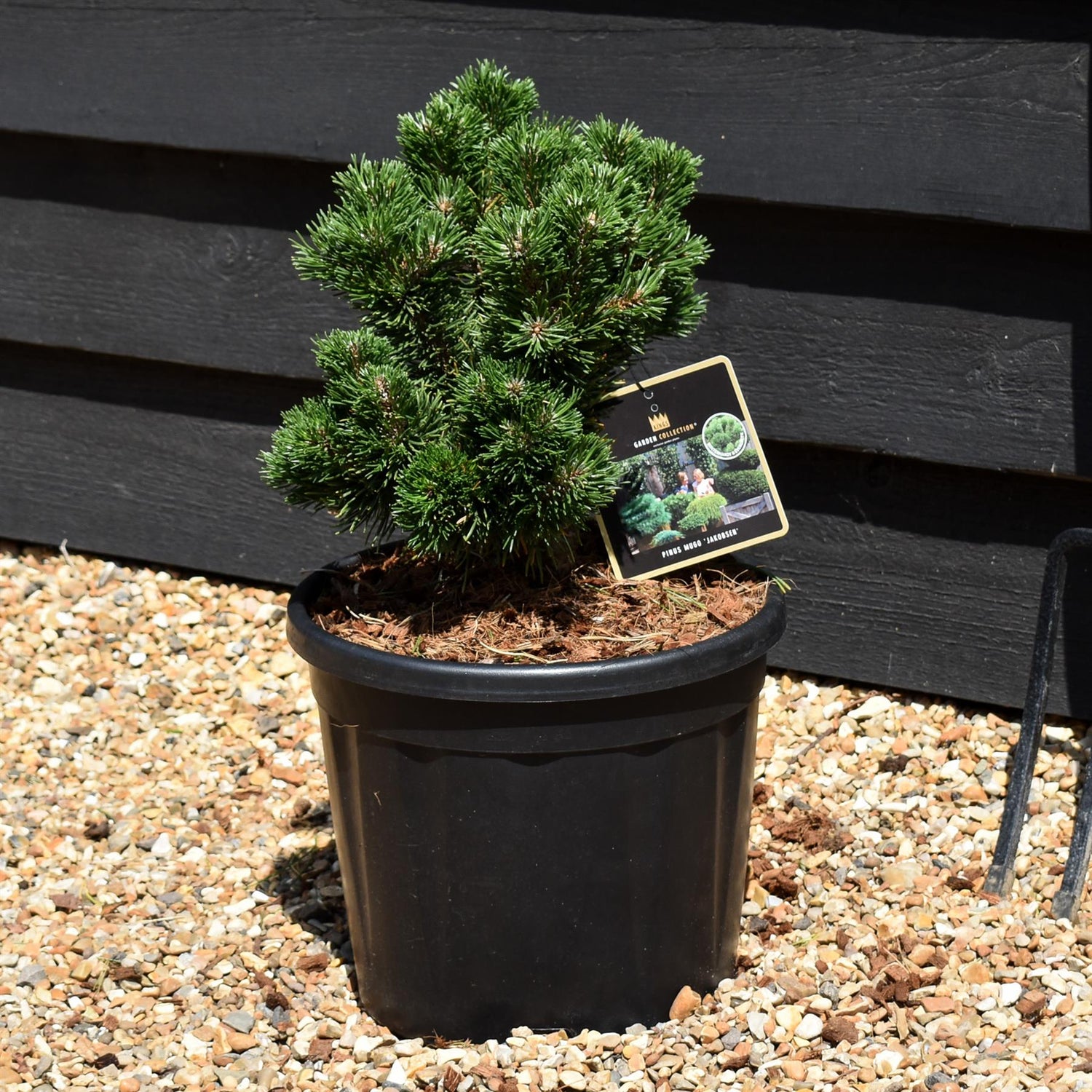
Pinus mugo 'Jakobsen' - Height 20-30cm - Width 30cm - 11lt
£104.00
Unit price perPinus mugo 'Jakobsen' - Height 20-30cm - Width 30cm - 11lt
£104.00
Unit price perPinus mugo 'Jacobsen', also known as Jacobsen Dwarf Pine, is a compact, slow-growing evergreen conifer that belongs to the Pinaceae family. This cultivar was first discovered by the Danish nurseryman, Mogens H. Jacobsen in the 1960s.
The Jacobsen Dwarf Pine is a small shrub or tree that typically reaches a height of 2-3 feet and a width of 3-5 feet when fully mature. It has a dense and bushy habit, with short and twisted needles that are arranged in pairs on the stems. The needles are dark green in color and measure about 1 inch in length.
This cultivar is known for its interesting bark, which is reddish-brown and develops shallow grooves as it ages. It also produces small, oval-shaped cones that are about 1 inch long and have a light brown color.
Jacobsen Dwarf Pine is a hardy plant that can tolerate a wide range of soil conditions, including poor, sandy, and acidic soils. It prefers full sun to partial shade and is generally drought-tolerant once established.
Because of its small size and slow growth rate, Jacobsen Dwarf Pine is an excellent choice for small gardens, rock gardens, and container plantings. It can also be used as a low-maintenance groundcover or as an accent plant in a mixed border.
In summary, Pinus mugo 'Jacobsen' is a compact and attractive evergreen conifer with twisted needles, interesting bark, and small cones. It is a hardy and versatile plant that can be used in a variety of garden settings and is particularly well-suited for small gardens and containers.
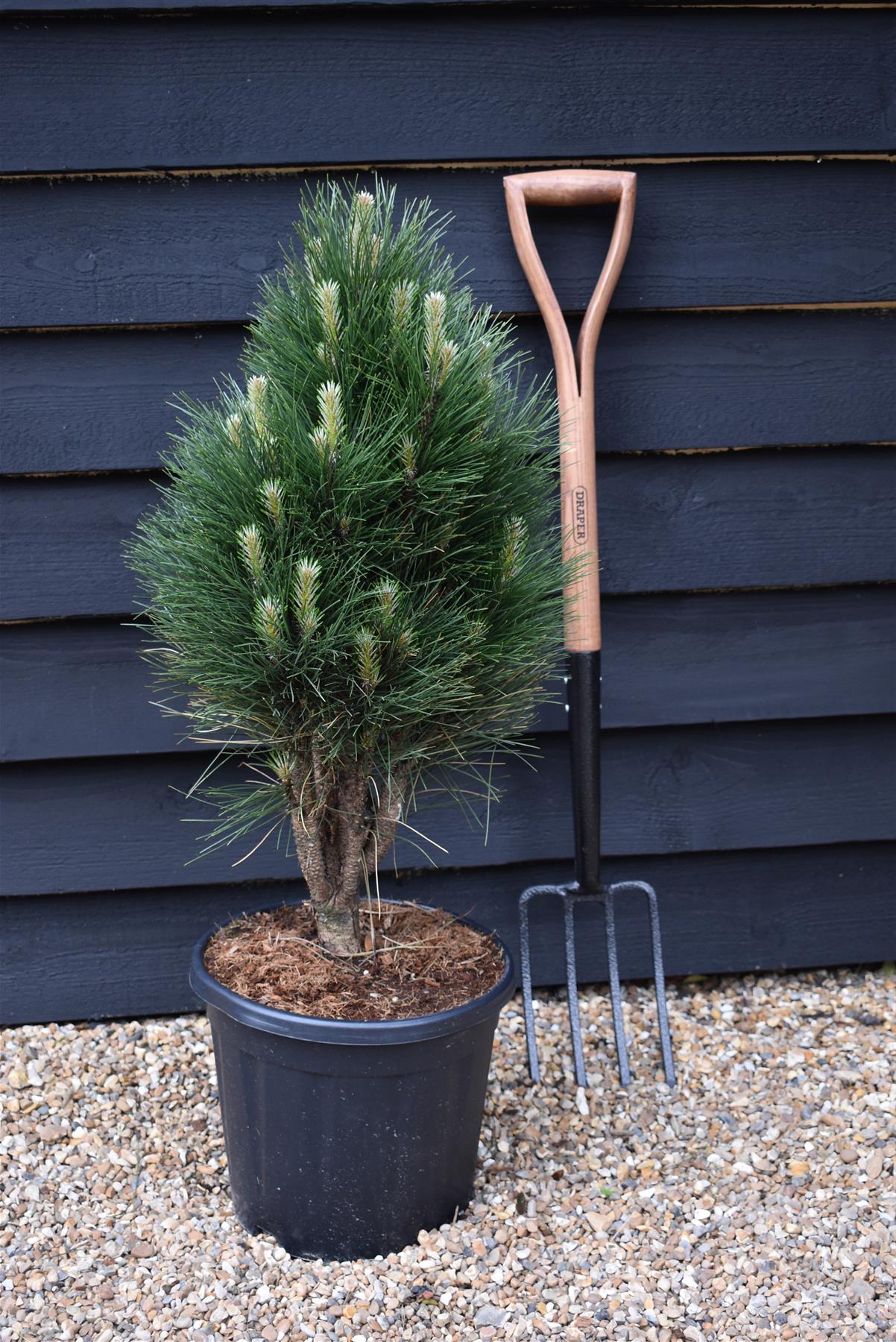
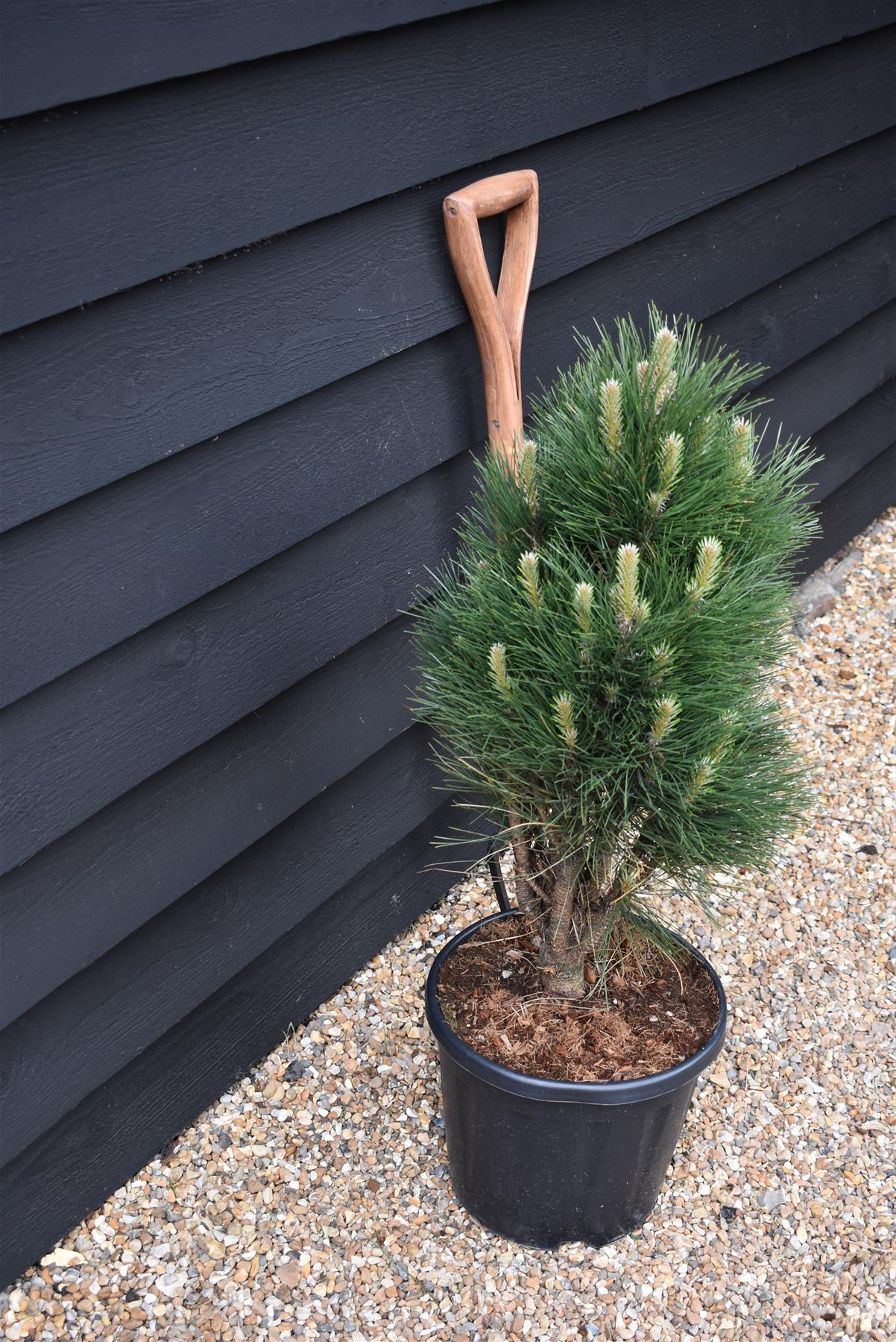
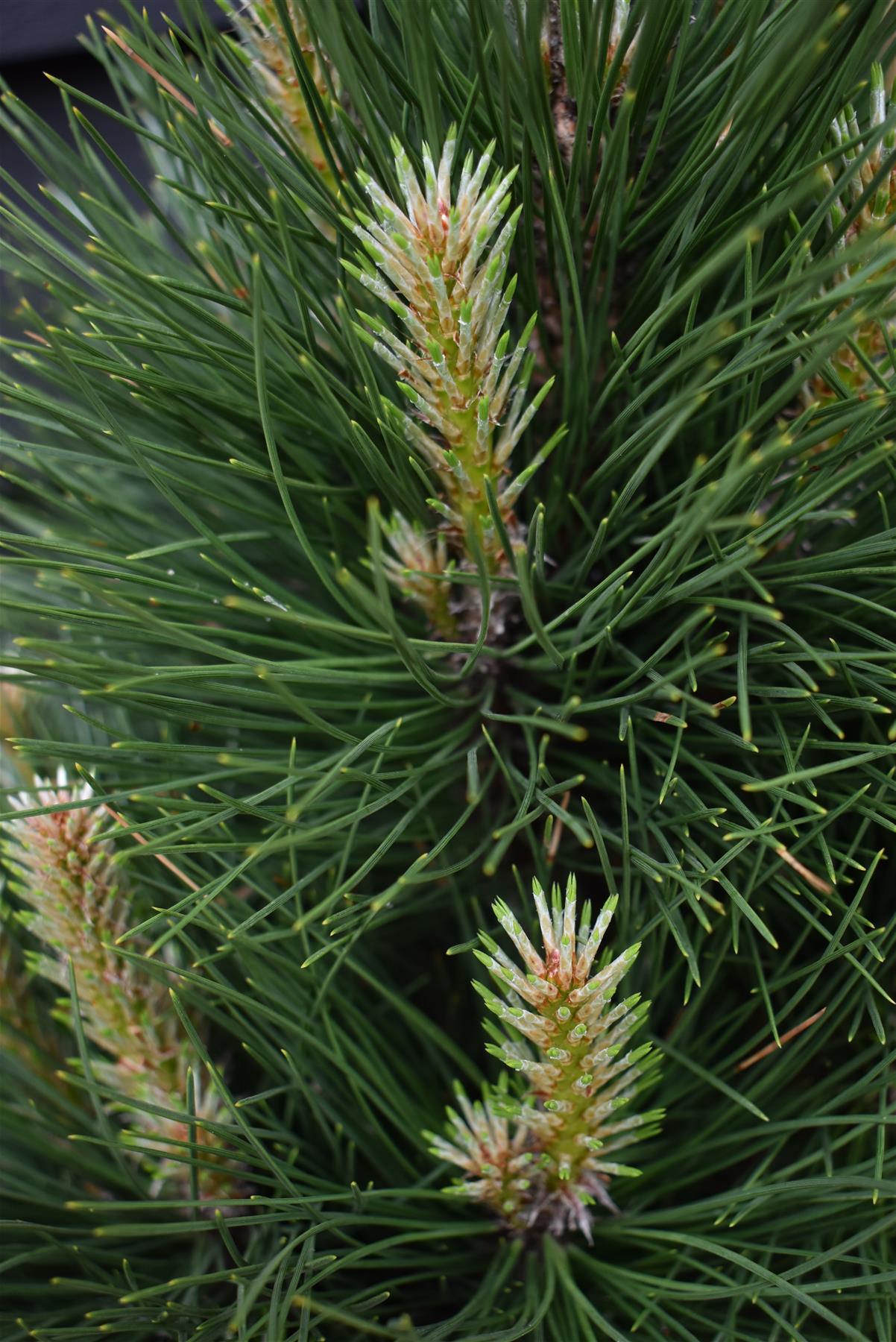
Pinus nigra 'Green Tower' | Austrian pine - Height 70-80cm - Width 30-40cm - 15lt
£104.00
Unit price perPinus nigra 'Green Tower' | Austrian pine - Height 70-80cm - Width 30-40cm - 15lt
£104.00
Unit price per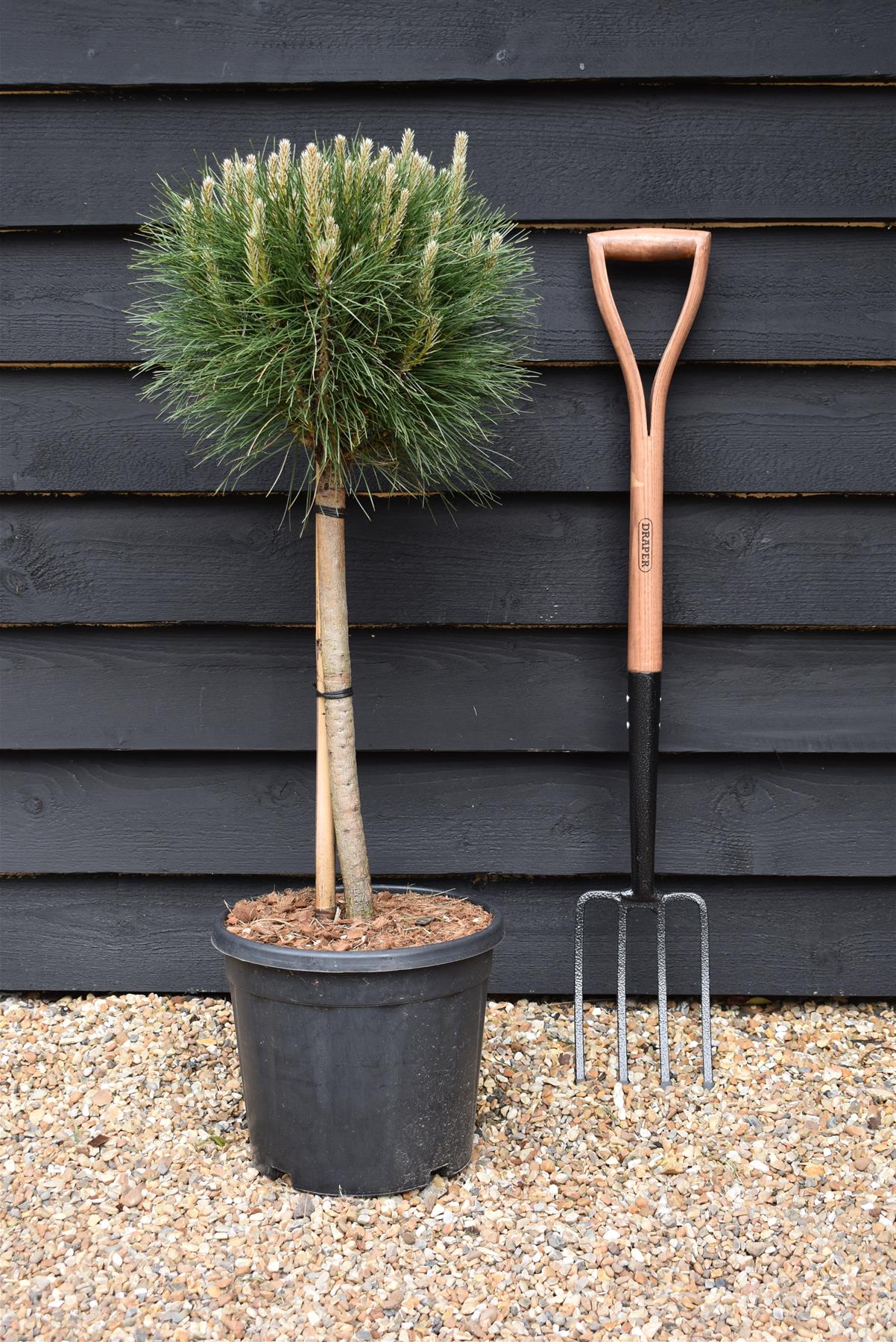
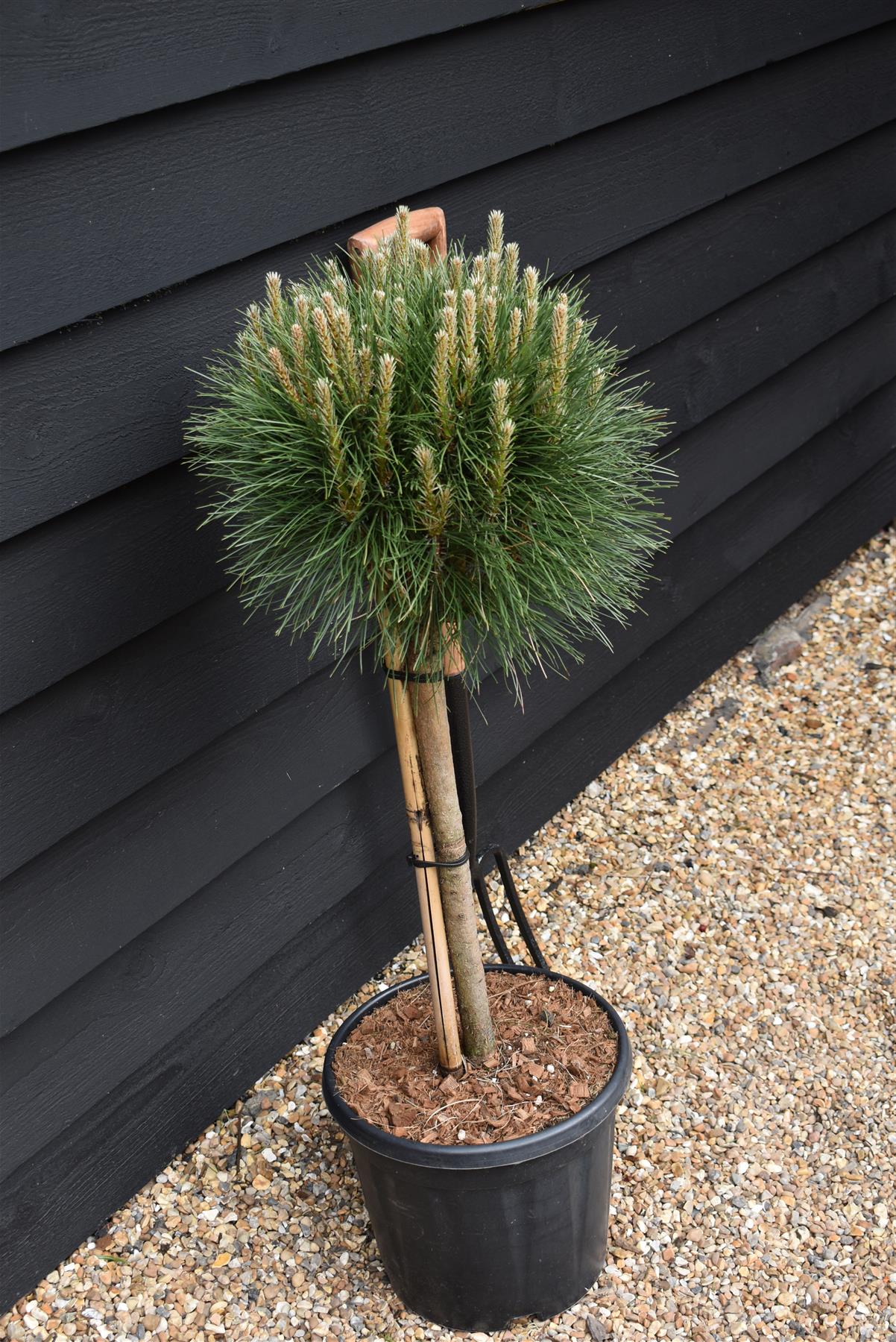
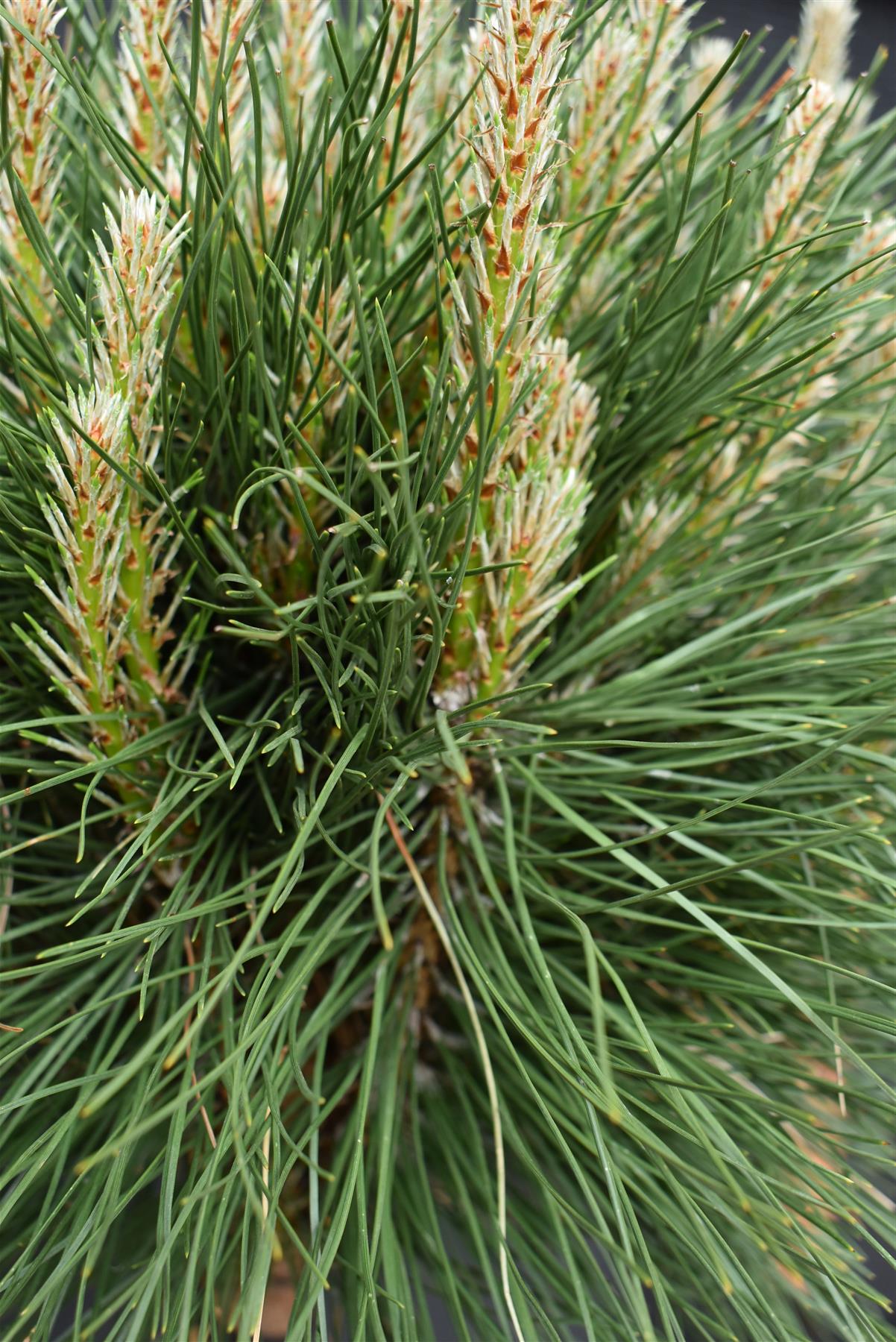
Pinus nigra 'Summer Breeze' | Austrian pine - Clear Stem 40cm - Height 80-90cm - Width 40cm - 15lt
£146.00
Unit price perPinus nigra 'Summer Breeze' | Austrian pine - Clear Stem 40cm - Height 80-90cm - Width 40cm - 15lt
£146.00
Unit price per


Pinus Mugo 'March' | Dwarf Mountain Pine - Height 40-50cm - Width 30cm - 11lt
£135.00
Unit price perPinus Mugo 'March' | Dwarf Mountain Pine - Height 40-50cm - Width 30cm - 11lt
£135.00
Unit price perPinus mugo 'March', commonly known as dwarf mountain pine, is a particularly hardy conifer, prized for its dense, lush needle-like foliage and compact, mounding growth habit. This variety of mountain pine achieves an ultimate height of approximately 1-1.2 metres, making it perfectly suited for smaller garden spaces and rockeries. Its vibrant green needles maintain their appeal throughout the year, offering a burst of colour even during the winter months.
Adaptable to a wide range of climates, Pinus mugo 'March' is suited to UK conditions and thrives in RHS Hardiness Ratings of H7, indicating it can withstand harsh winter temperatures. It favours well-drained soil and is drought-tolerant once established, making it an excellent choice for water-wise gardening. Its robust nature and low maintenance needs also make it ideal for urban gardens.
Frequently utilised in landscape designs as a foundational plant, border shrub, or part of a conifer collection, its sturdy form and evergreen characteristics provide ongoing interest and structure to any garden.


Pinus mugo 'Sherwood Compact' | Dwarf mountain pine - Height 20cm-30cm - Width 20cm-30cm - 10lt
£110.00
Unit price perPinus mugo 'Sherwood Compact' | Dwarf mountain pine - Height 20cm-30cm - Width 20cm-30cm - 10lt
£110.00
Unit price per


Sciadopitys Verticillata | Japanese umbrella tree - Height 50-60cm - 3lt
£50.00
Unit price perSciadopitys Verticillata | Japanese umbrella tree - Height 50-60cm - 3lt
£50.00
Unit price perSciadopitys verticillata, commonly referred to as the Japanese umbrella pine, is a distinct and architecturally striking evergreen conifer. Native to Japan, this tree is prized for its unique appearance, featuring glossy, dark green needles that radiate around its branches resembling the spokes of an umbrella. The needles are thick and leathery, arranged in whorls that contribute to the plant’s dense, sculptural form.
Growing slowly, the Japanese umbrella pine eventually reaches an ultimate height of about 15-20 meters in the UK, making it a magnificent specimen tree in larger gardens. It thrives in moist, well-drained, slightly acidic soil and prefers a sheltered position to protect it from harsh winds. Partial shade to full sun is ideal for its growth.
In British gardens, Sciadopitys verticillata is often used as a focal point due to its rare and exotic appearance. Its resilience and year-round beauty also make it a popular choice for ornamental planting.
Showing 18/94
Related blog posts


