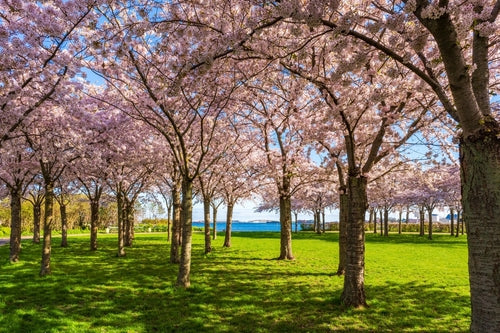
Gardens full of flowering trees are really magical places. However, most people tend to have gardens with trees that bloom only in spring. But garden doesn’t have to be dull the rest of the year. There can always be something in bloom, even in the middle of winter, just plant trees that flower in different seasons and your garden will be filled with colour all year round.
Why Plant Trees That Flower in Different Seasons?
The garden with a mix of trees that bloom at different times of the year will keep surprising you and you’ll always have something new to enjoy. To make it easier, we’ve prepared a simple guide to best flowering trees for every season. These trees are carefully chosen for UK gardens and UK growing conditions, and available at Arundel Arboretum for you to explore and enjoy.
Best Spring Flowering Trees UK
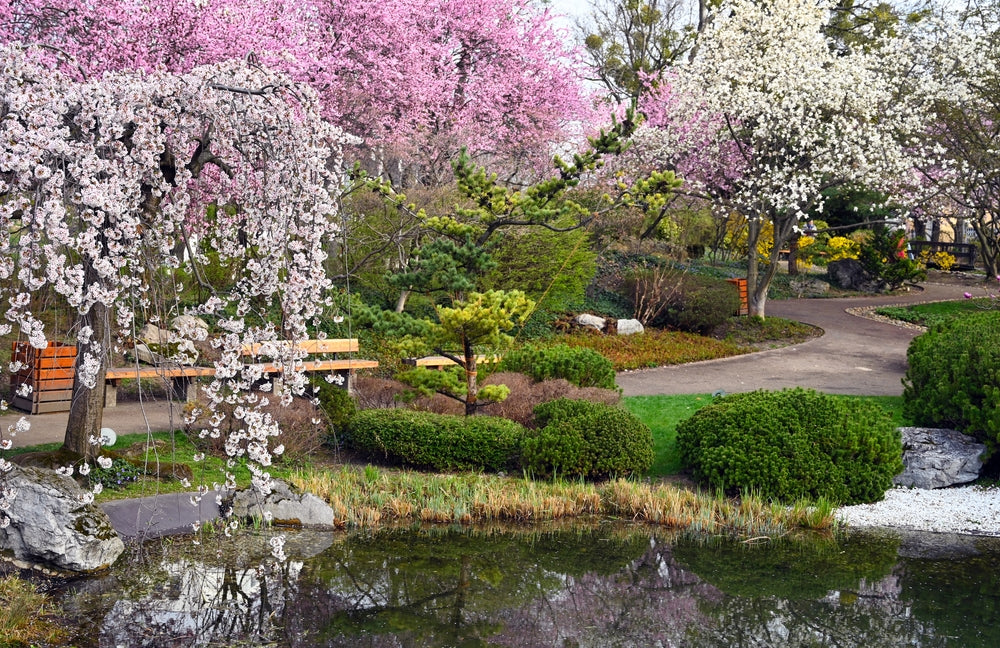
After a cold winter, nothing brightens a garden faster than spring flowering trees. Their bare branches transform into clouds of colour and spectacularly announce the beginning of the gardening year. There’s no doubt early blooming trees burst with energy and joy. If you’re still indecisive what to buy, here are some of the best spring blossom trees for UK gardens:
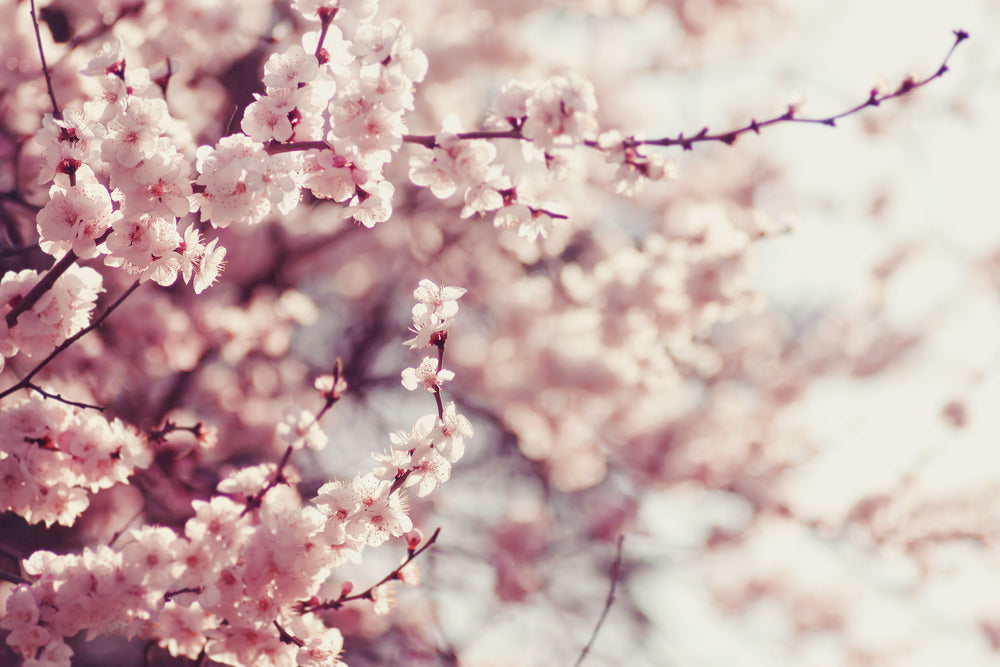
Prunus Avium 'Cherry blossom'
If there is a tree that perfectly captures the spirit of spring, it’s cherry blossom. It’s not only stunning, but also sends a strong message of new energy and renewal. Sadly, the flowers don’t last long, carrying another meaning – that life is short.• When It Flowers - Usually from March to April, sometimes a bit earlier in milder parts of the UK.• Blooming Time - Around 2 to 3 weeks, depending on variety and weather.• What You'll See - Branches completely covered in white or pink blossoms, often double or semi-double, before a single leaf appears.
Care & Maintenance - Many Cherry Blossom varieties are perfect for small UK gardens. They prefer sunny, sheltered places with well-drained soil. Light pruning after flowering will maintain its shape and encourage healthy growth. However, if you prefer a slightly later bloom, look for varieties like Prunus ‘Accolade’ or ‘Kanzan’.
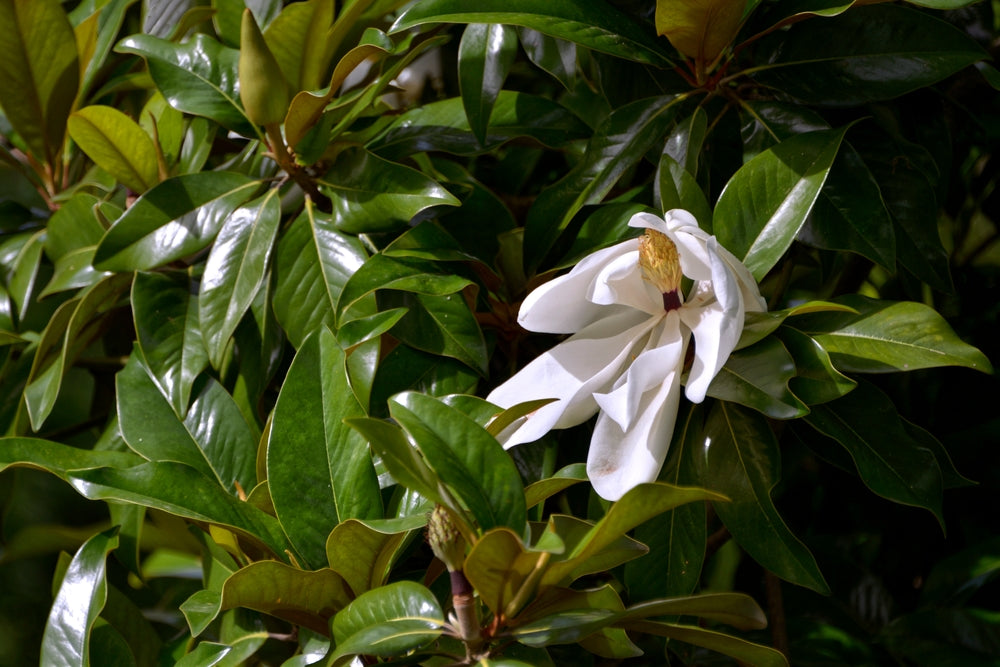
Magnolia
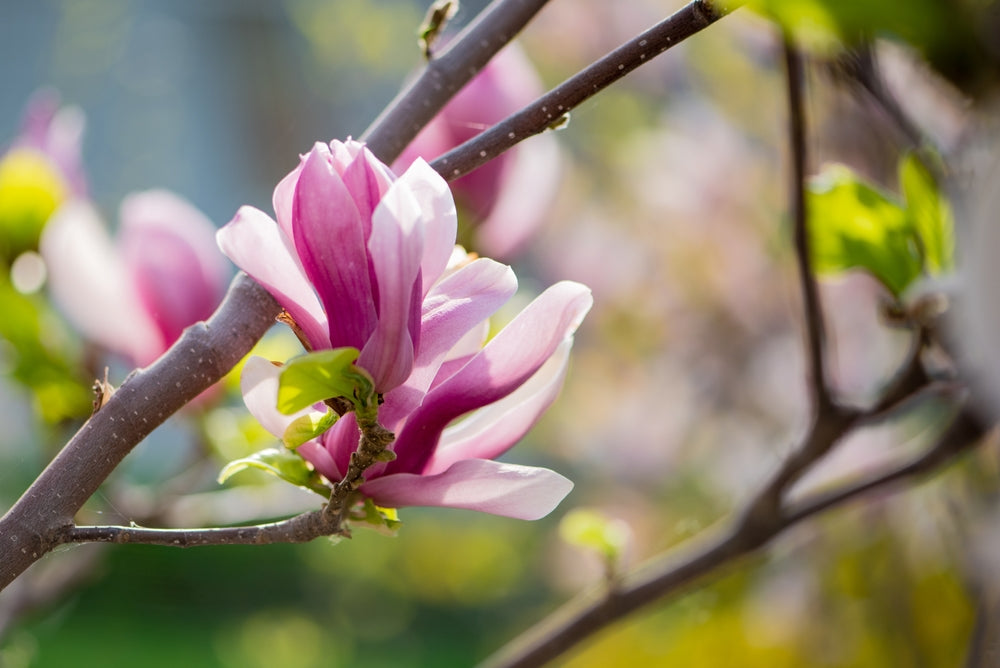
Magnolias are stunning trees that bring a sense of luxury. Their large, fragrant flowers are of superb elegance and beauty. • When It Flowers - Usually between March and May, depending on the variety.• Blooming Time - Around 3 to 4 weeks, sometimes even longer if the weather is nice. • What You'll See - Big, elegant blooms in shades of white, pink, purple, or yellow, appearing before the leaves.
Amelanchier 'Juneberry'
Amelanchier is a tree that you can really count on to bloom early. Beside lovely flowers, it also brings berries in early summer, and brilliant orange-red foliage in autumn. If you have a small garden, Amelanchier is the perfect choice. • When It Flowers - Usually from late March into April.• Blooming Time - Around 2 to 3 weeks, depending on the weather.• What You'll See - Masses of star-shaped white blossoms bursting into life before the coppery new leaves start to unfold.
Care & Maintenance - It loves sun or partial shade, and moist but well-drained soil. It doesn’t require much pruning, just remove any weak or crossing branches in late winter. One of the most reliable early bloomers in the UK.
Malus 'Crab Apple'
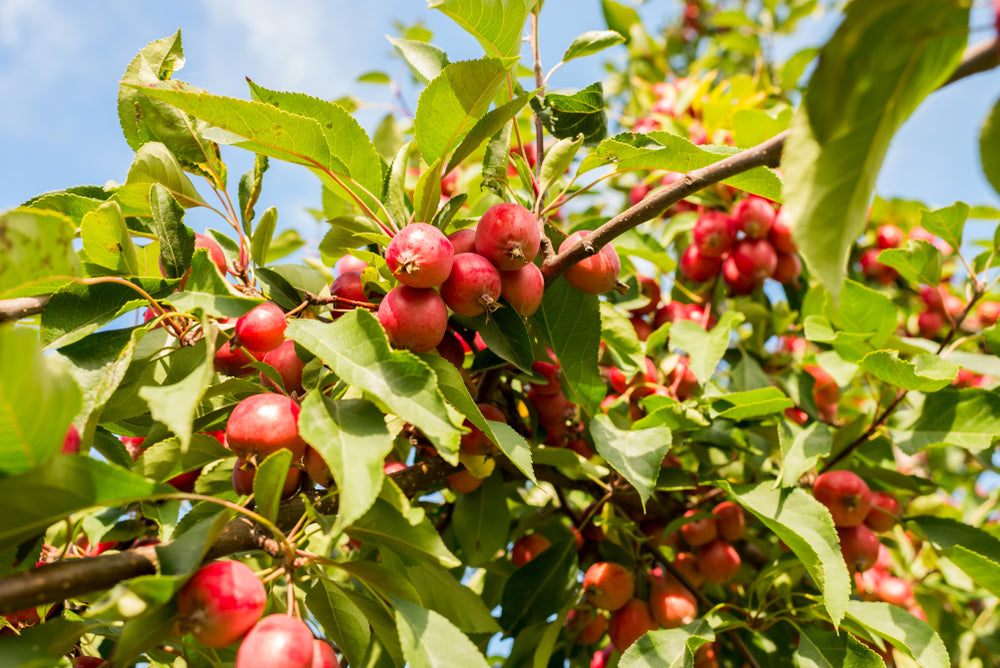
Besides having amazing flowers in spring, Crab Apple is also vibrant in autumn. It’s friendly to wild life because pollinators love its flowers and its fruits are great source of food for birds during the winter.• When It Flowers - Usually from April through May.• Blooming Time - Around 3 to 4 weeks of steady colour.• What You'll See - Clusters of white, pink, or red blossoms that cover the branches, later giving way to small ornamental fruits.
Care & Maintenance - Crab Apples are hardy, very easy to grow, and adaptable to most soil types. The only thing they really prefer is full sun. A light trim in late winter is enough to keep its shape. Note that UK varieties like ‘Evereste’ and ‘John Downie’ bloom mid-spring.
Cercis 'Judas Tree'
The Cercis tree brings a touch of the Mediterranean to UK gardens as it’s common in Mediterranean landscapes. Its flowers are spectacular and profuse.• When It Flowers - Usually from April to May.• Blooming Time - Around 3 weeks, sometimes a bit longer in mild weather.• What You'll See - Dark pink, pea-shaped flowers that pop straight from the bare branches and trunk before the leaves appear.
Care & Maintenance - It likes warm, sheltered spots and well-drained soil. Once established, it can tolerate drought but you need to water it regularly during the first year. After flowering, make sure to remove dead and crossing branches.
Best Summer Flowering Trees UK
With days becoming longer and the air warmer, summer flowering trees step into the spotlight. They fill gardens with greenery and beautiful flowers all summer. They’re perfect for lazy afternoons in the shade or evening walks among the blossoms.
Catalpa
If you’re looking for something bold, architectural, and full of personality, choose Catalpa. Its large leaves create generous shade, while the flowers add a touch of tropical flair.• When It Flowers - Usually from July to August.• Blooming Time - Around 3 to 4 weeks, sometimes a bit longer in a warm summer.• What You'll See - Big, showy clusters of white, trumpet-shaped flowers with yellow and purple markings, standing proudly above large, heart-shaped leaves.
Care & Maintenance - Catalpa handles UK summers well and looks especially striking as a specimen tree. It doesn’t need much care, just some light pruning in late winter.
Albizia julibrissin 'Silk Tree'
The Silk Tree brings an exotic touch to the garden. It’s best suited for mild UK areas, like southern England and coastal regions. It’s popularly called Persian Silk Tree or Tree of Happiness.• When It Flowers - From June to August, even September.• Blooming Time - Usually around 4 to 6 weeks, and in warm years it can keep blooming well into early autumn.• What You'll See - Soft, fluffy pink tufts that look a bit like tiny silk brushes, gently scented and floating above fine, fern-like leaves.
Care & Maintenance - It loves a warm, sheltered spots, well-drained soil, and needs very little attention. Some tiding up after flowering is usually enough.
Robinia pseudoacacia 'Black Locust'
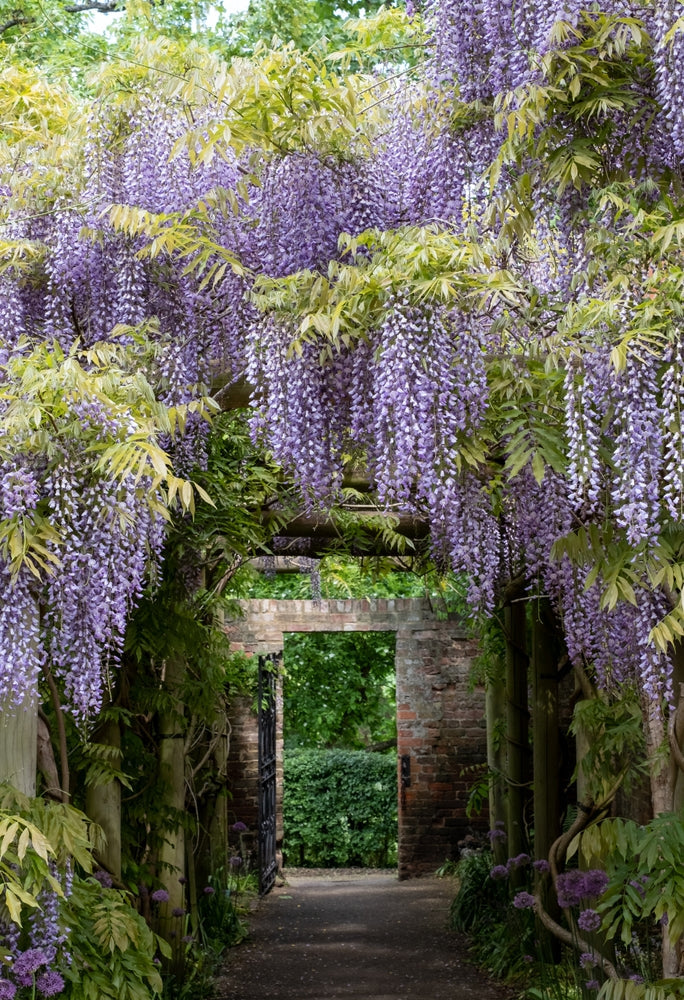
Black Locust is tough, fast-growing, and buzzing with life when in bloom. Bees absolutely love it. It’s ideal for larger gardens, as it needs room to spread and can grow quite tall.• When It Flowers - From late May through to July.• Blooming Time - Around 2 to 3 weeks of gorgeous, fragrant blooms.• What You'll See - Cascading clusters of white, wisteria-like flowers that hang gracefully against fresh green foliage.
Care & Maintenance - It doesn’t require much care, but needs regular pruning to prevent it from overgrowing. It’s interesting that its flowers are edible.
Koelreuteria paniculata 'Golden Rain Tree'
The Golden Rain Tree is one of the most reliable summer flowering ornamental trees for UK gardens. It has a very interesting and elegant structure as its yellow falling panicles resemble the golden rain.• When It Flowers - Usually from July into August.• Blooming Time - Around 3 to 4 weeks, sometimes more.• What You'll See - Loose clusters of golden-yellow, star-shaped flowers that light up the canopy, followed by rose-tinted, lantern-like seed pods that stay on branches well into autumn.
Care & Maintenance - It’s best to plant it in a sunny spot with well-drained soil because it thrives in warm, sheltered locations. It needs very little pruning and is excellent for urban landscapes.
Best Autumn Flowering Trees UK
As summer fades, autumn flowering trees bring unexpected beauty. These late bloomers keep the garden full of life in cooler months. Beside their lovely flowers, they often bring even more colour with ornamental fruits. Here are some of the best autumn flowering trees for UK gardens:
Lagerstroemia 'Crape Myrtle'
Crape Myrtle brings a splash of late-season colour that feels almost tropical. However, it’snot suitable for all parts of the UK. In colder areas, it may fail to flower well.• When It Flowers - From August to October.• Blooming Time - Around 6 to 8 weeks in warm, sheltered spots.• What You'll See - Big clusters of pink, purple, red, or white flowers that often last well into autumn, followed by beautiful orange-red foliage.
Care & Maintenance - It loves full sun and warmth so it will grow best in southern England and coastal regions.
Arbutus unedo 'Strawberry Tree'
The Strawberry Tree is one of the most charming trees for autumn interest because it’s flowering and fruiting at the same time.• When It Flowers - From October to December.• Blooming Time - Usually around 6 to 10 weeks.• What You'll See - Clusters of small, white to pale pink bell-shaped blooms that appear alongside the red fruit from the previous year.
Care & Maintenance - It prefers milder coastal or southern areas of the UK. In harsher inland or northern sites, it may struggle so it needs some winter protection.
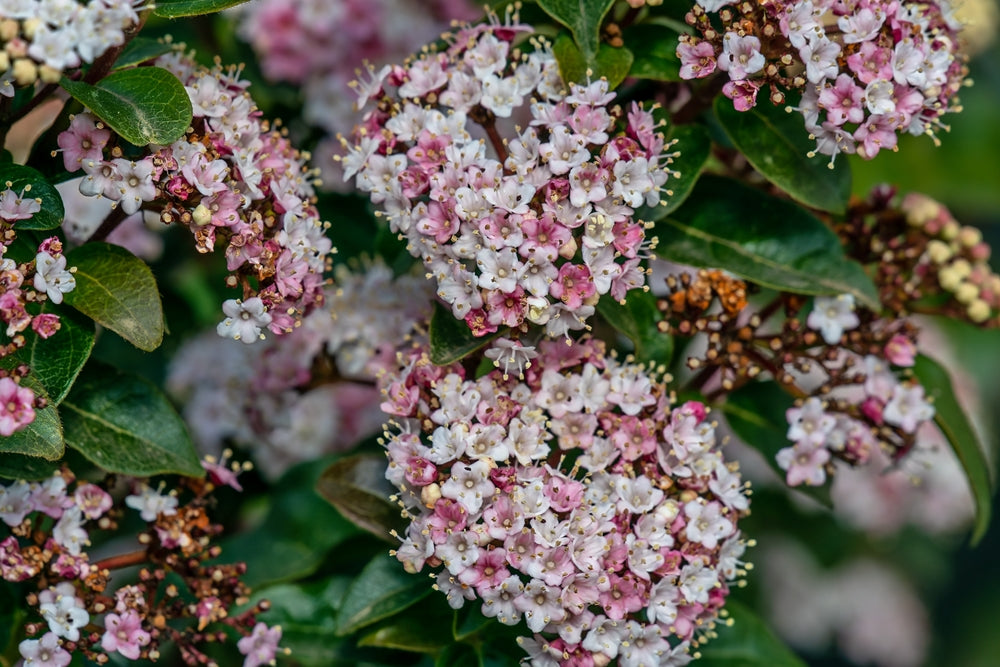
Viburnum bodnantense ‘Dawn’
It’s typically considered to be a shrub, but it can be trained into a small tree form. Also, its flower period often extends into winter. It’s one of those plants that surprise you with beauty and fragrance when you least expect it.• When It Flowers - From November to March• Blooming Time - It can flower for several months, especially when the weather stays gentle.• What You'll See - Clusters of fragrant, pale to deep pink blooms that appear on bare branches, releasing a strong, sweet scent on sunny days.
Care & Maintenance – Prefers sunny and warm spots, and well-drained, slightly acidic soil but it’s not very fussy about the soil type. It also doesn’t require much care, just prune it lightly after flowering.
Winter Flowering Trees UK
When most of the garden is quiet, a few remarkable flowering trees continue to bring us joy. They light up cold months with unexpected blooms and colour. Here are some of the best winter flowering trees for UK gardens to keep your outdoor space glowing when everything else lies asleep.
Hamamelis 'Witch Hazel'
Witch Hazel is one of the most striking winter flowering trees for UK gardens. Many varieties also have vibrant autumn foliage before flowering.• When It Flowers - From December to February.• Blooming Time - Around 6 to 8 weeks.• What You'll See - Clusters of spidery, ribbon-like petals in shades of yellow, orange, or red that appear on bare branches, often releasing a delicate, spicy scent.
Care & Maintenance - It thrives in sun or partial shade and likes moist, well-drained, slightly acidic soil. After flowering, prune it lightly to maintain shape.
Chimonanthus 'Praecox Wintersweet'
True to its name, Chimonathus fills the garden with powerful scent and delicate winter display. It’s more of a shrub that can grow up to 4m. The flowers appear on bare branches, catching the light beautifully on sunny days.• When It Flowers - From December to February.• Blooming Time - Around 6 to 8 weeks.• What You'll See - Pale yellow, waxy flowers, with a sweet fragrance, appearing on bare branches.
Care & Maintenance - Plant it in a sunny, sheltered spot with well-drained soil, ideally against a south-facing wall for some extra warmth. Prune it after flowering to encourage better blooms the following year.
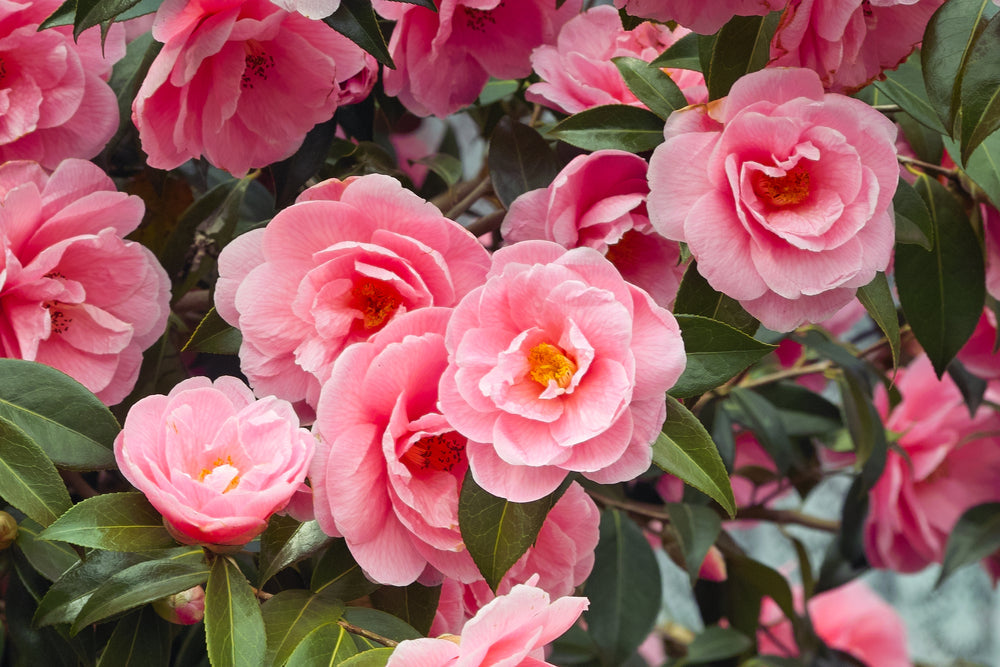
Camellia sasanqua 'Winter's Snowman'
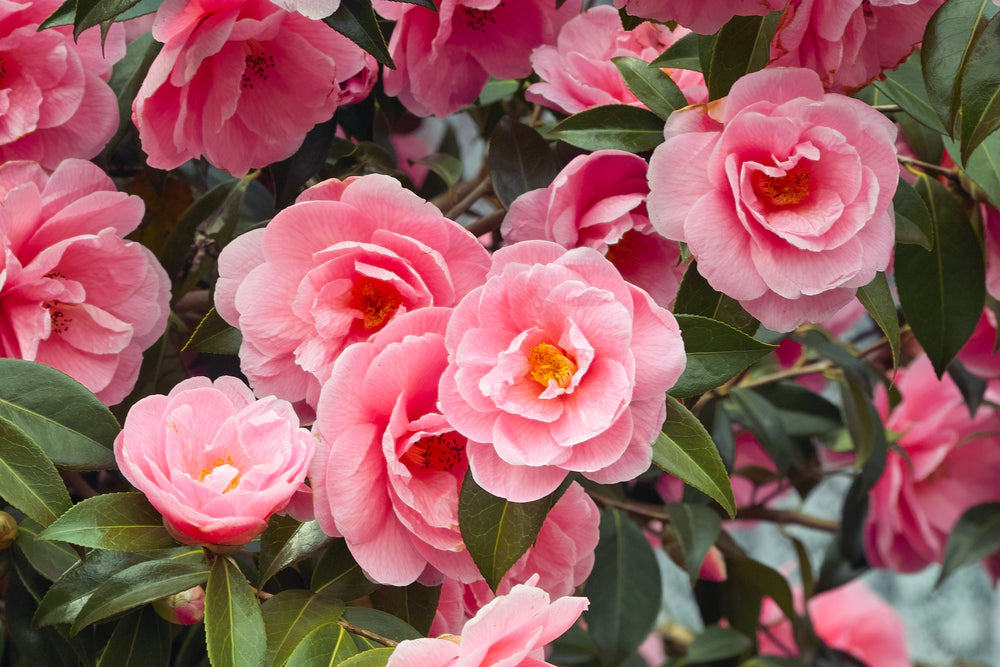
A beautiful evergreen winter-flowering tree. It’s the earliest camellia to flower, often brightening the garden before Christmas.• When It Flowers - From October to January.• Blooming Time - Usually 6 to 10 weeks, depending on the weather.• What You'll See - Elegant, semi-double white blooms with golden centres, set against glossy evergreen leaves.
Care & Maintenance - It prefers acidic, well-drained soil and partial shade. Ideally, keep it away from morning sun, which can scorch frost-covered buds. Make sure to water it well in dry spells.
Prunus subhirtella ‘Autumnalis’ Winter-Flowering Cherry
This beautiful cherry tree bridges the gap between autumn and spring. Its gentle blossoms glow against grey skies making it a stunning sight in winter. Still, the bloom level depends on mild outdoor conditions.• When It Flowers - From late October right through to March, often peaking during mild autumn spells.• Blooming Time - It flowers on and off for several months.• What You'll See - Soft pink to white blossoms that open on bare branches.
Care & Maintenance - It’s happiest in a sunny, sheltered spot and needs protection from cold winds and heavy frost, which can shorten its flowering time.
Discover Flowering Trees for Every Season at Arundel Arboretum
Are you ready to make your garden spectacular with seasonal flowering trees? At Arundel Arboretum, you’ll find a carefully curated selection of flowering trees for every season. We choose them for their beauty, resilience, and suitability to UK gardens. If you want to create a truly amazing year-round display of colour, our expert team can help you choose the right trees for your soil, space, and style. Visit us at our nursery in the historic town of Arundel, in the heart of West Sussex, or explore our online store if you prefer buying online.


 Fruit Trees
 Ornamental
 Screening
 Palms
By FeaturesBy Shape
Palms
By FeaturesBy Shape Large shrubs
 Hedging
 Bamboo
 Climbers
 Flowering
 Grasses & Ferns
 Popular
 Pines
Pines
 Spruce & Fir
 Cypress
 Thuja
Thuja
 Redwood | Sequoia