

-
Trees
Trees
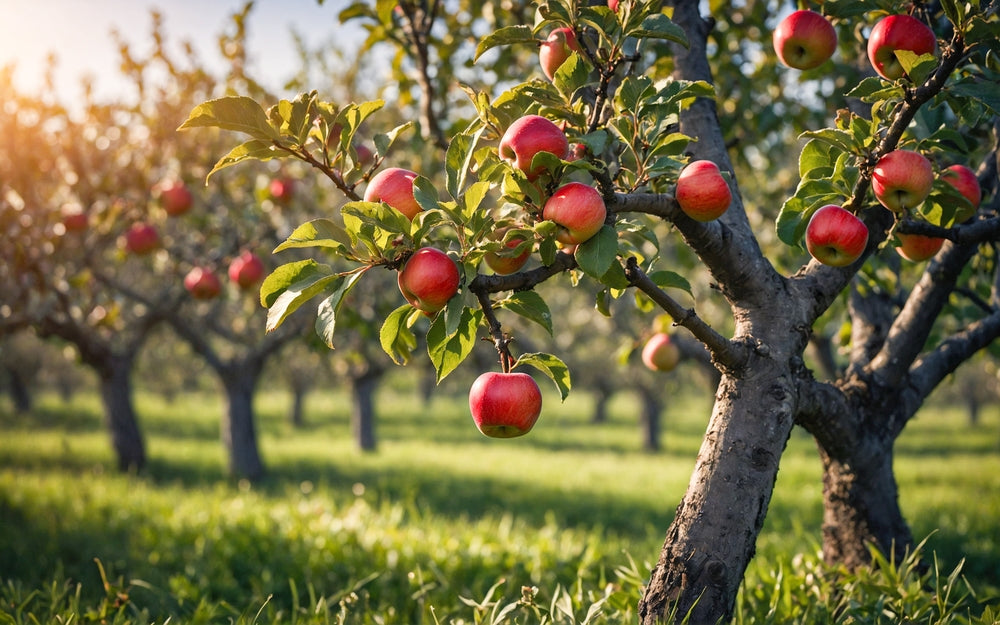 Fruit Trees
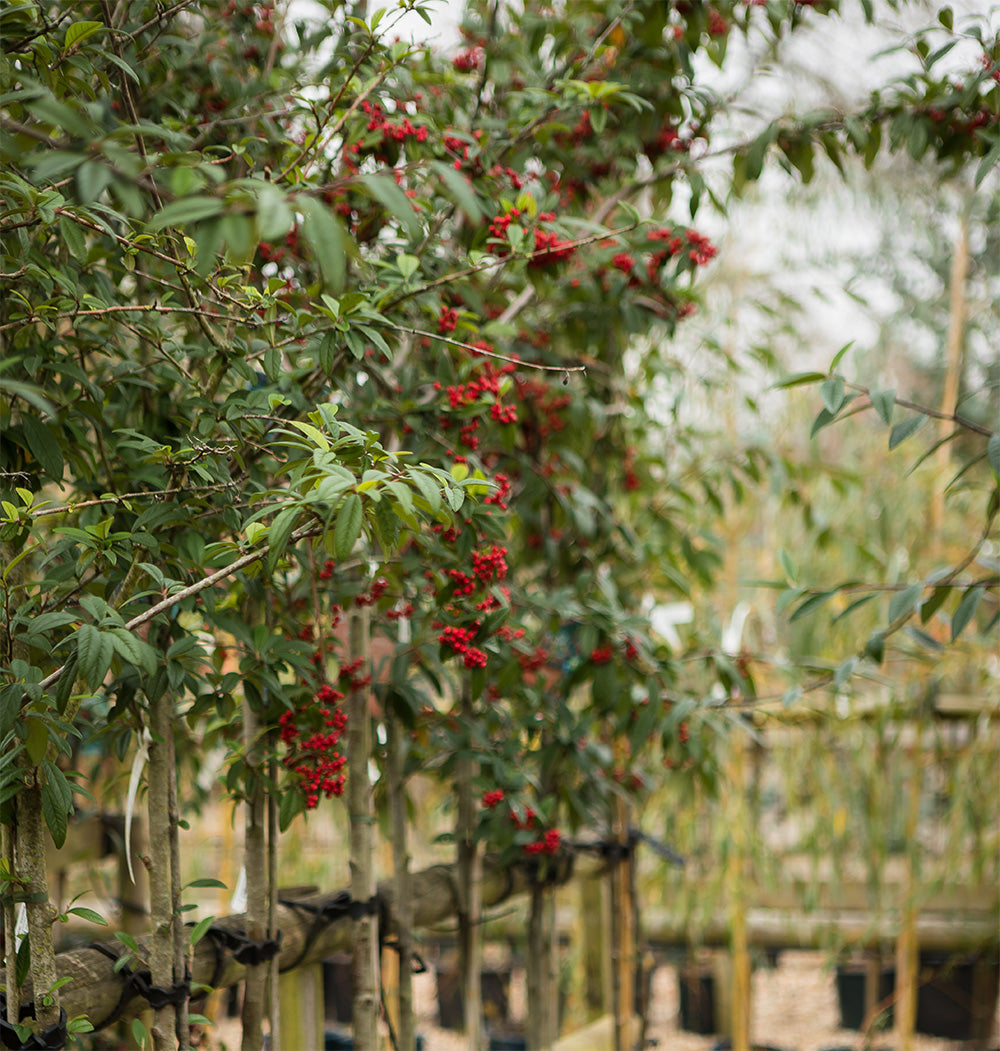 Ornamental
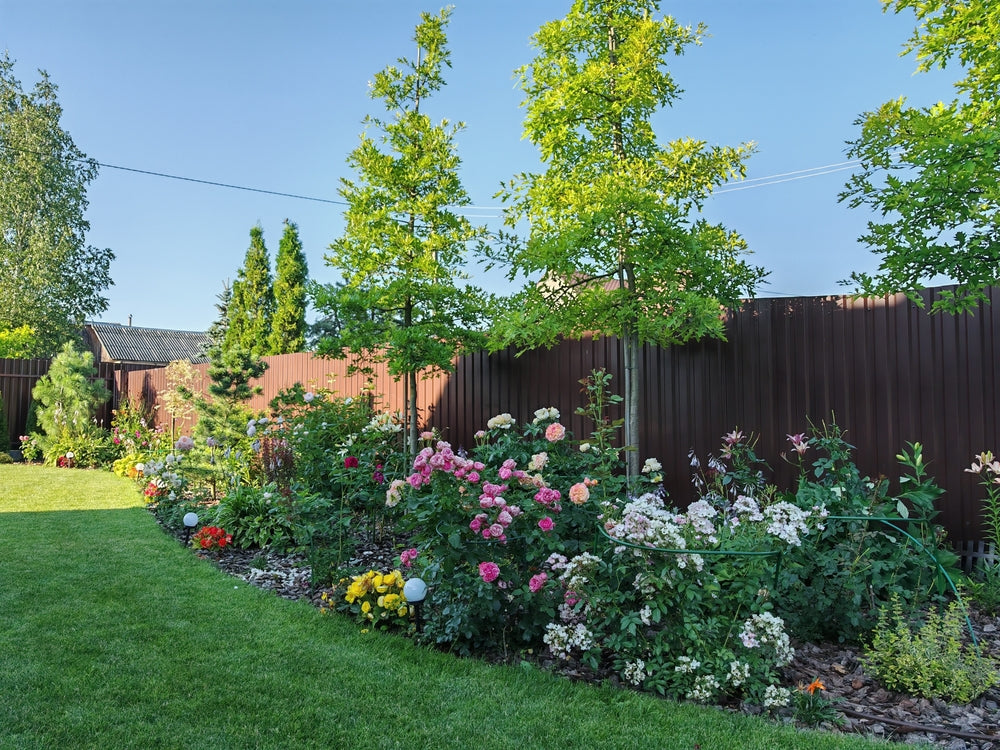 Screening
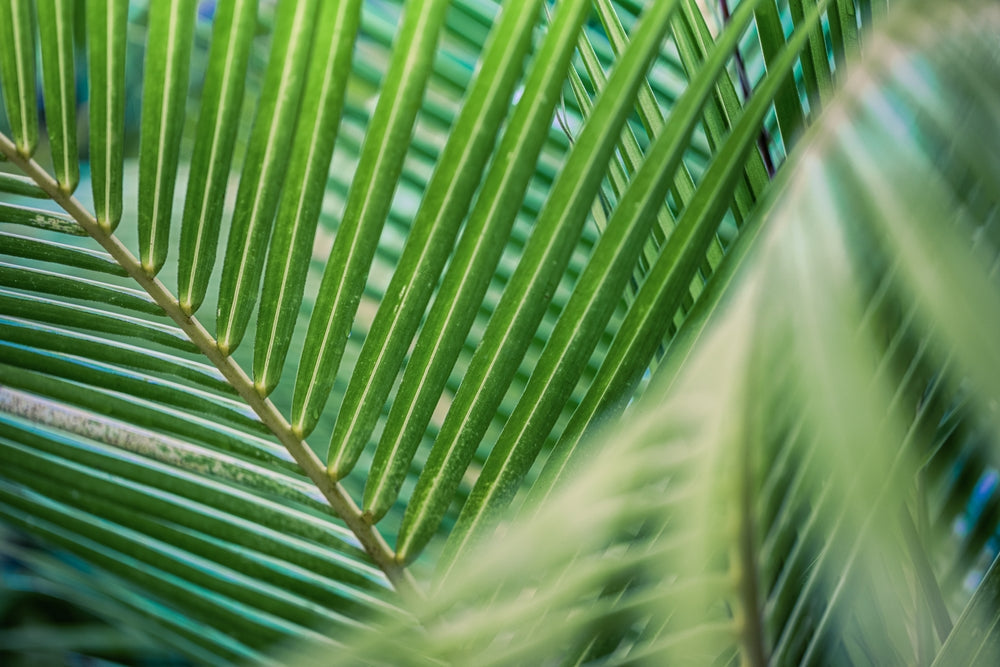 Palms
By FeaturesBy Shape
Palms
By FeaturesBy Shape -
Shrubs
Shrubs
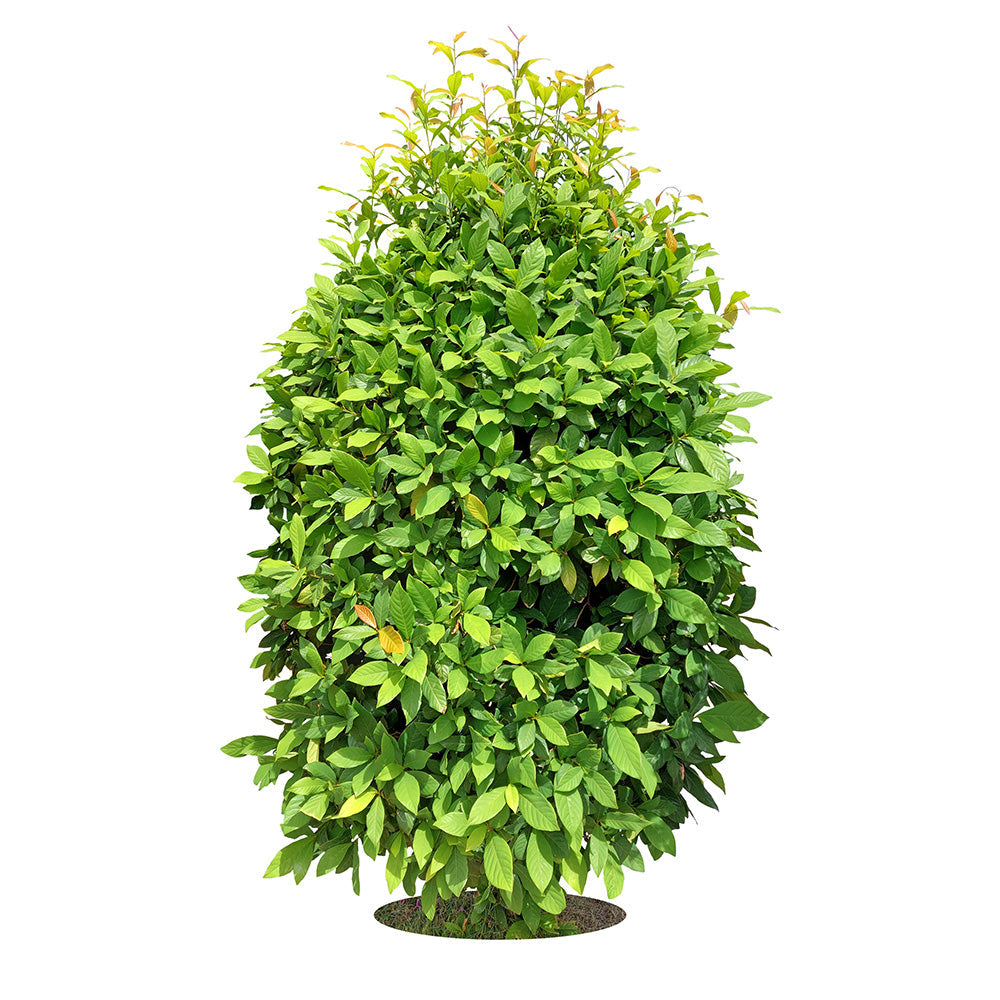 Large shrubs
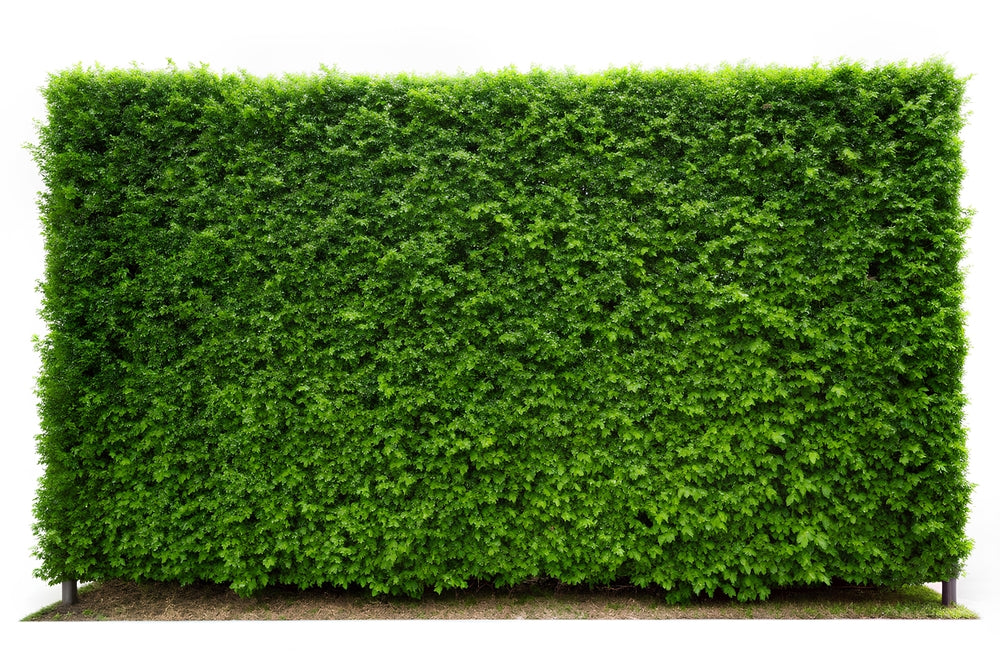 Hedging
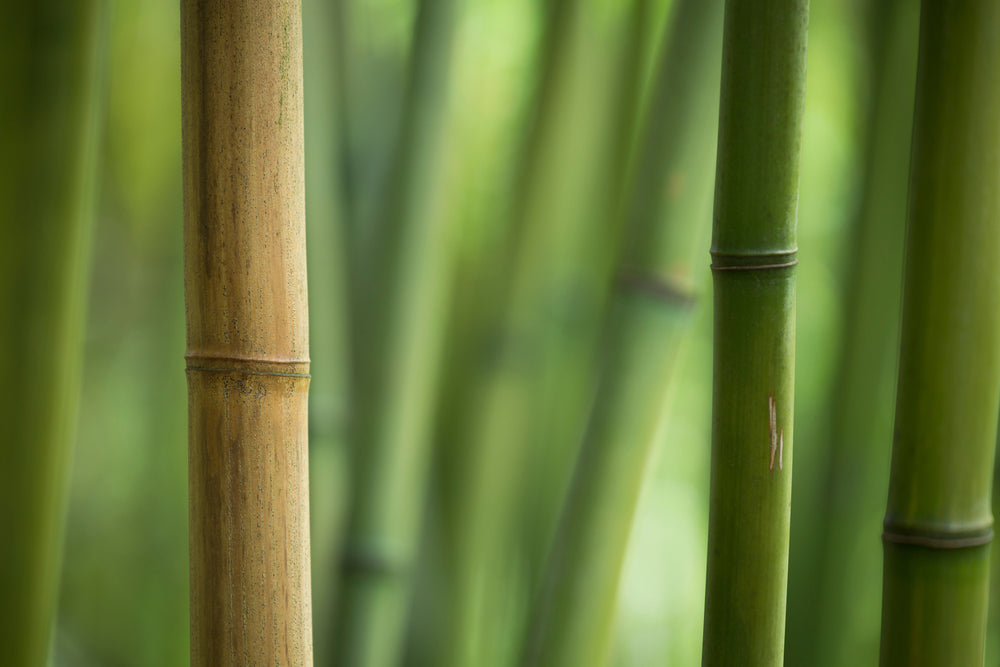 Bamboo
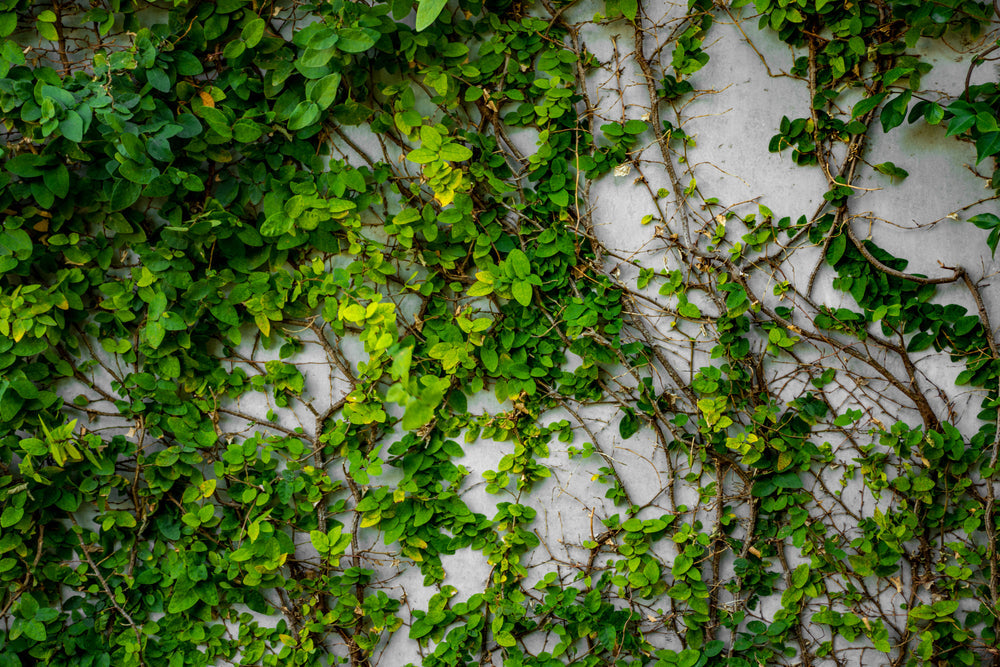 Climbers
 Flowering
 Grasses & Ferns
 Popular
-
Pines & Conifers
Pines & Conifers
 Pines
Pines
 Spruce & Fir
 Cypress
 Thuja
Thuja
 Redwood | Sequoia
-
Specimen
FREE DELIVERY OVER £350
Search results
Search results


Japanese Maple 'Trompenburg' | Acer palmatum - Bushy - Height 140-160cm - 35lt
£495.00
Unit price perJapanese Maple 'Trompenburg' | Acer palmatum - Bushy - Height 140-160cm - 35lt
£495.00
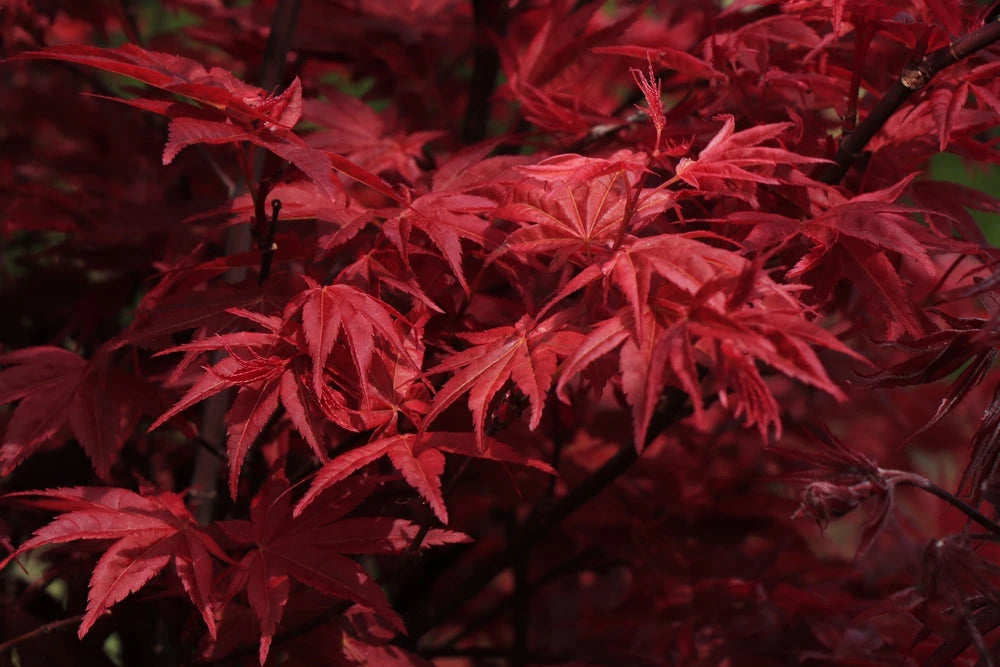
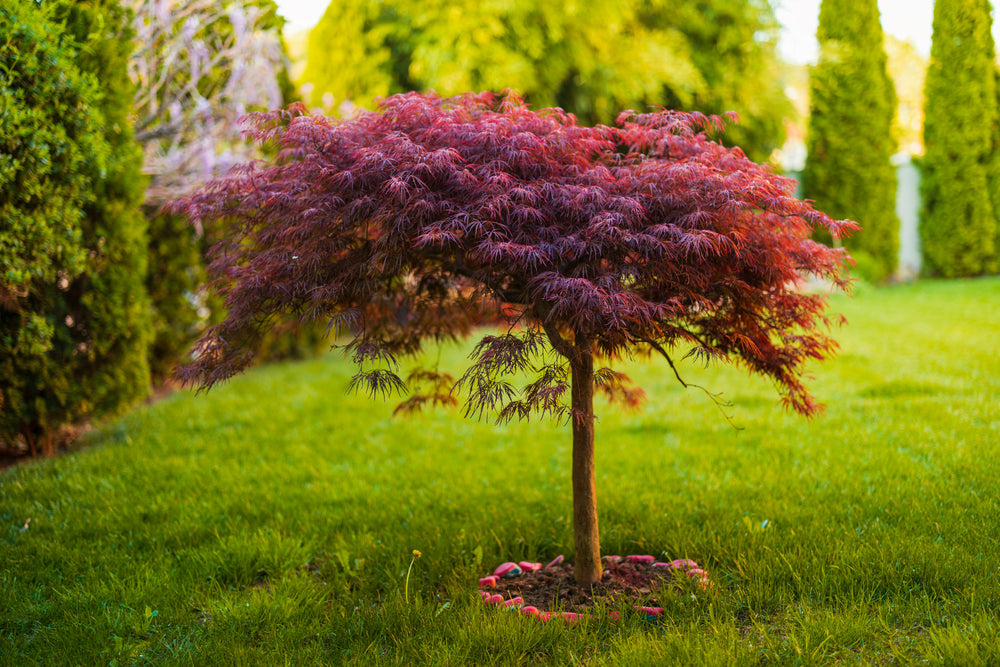
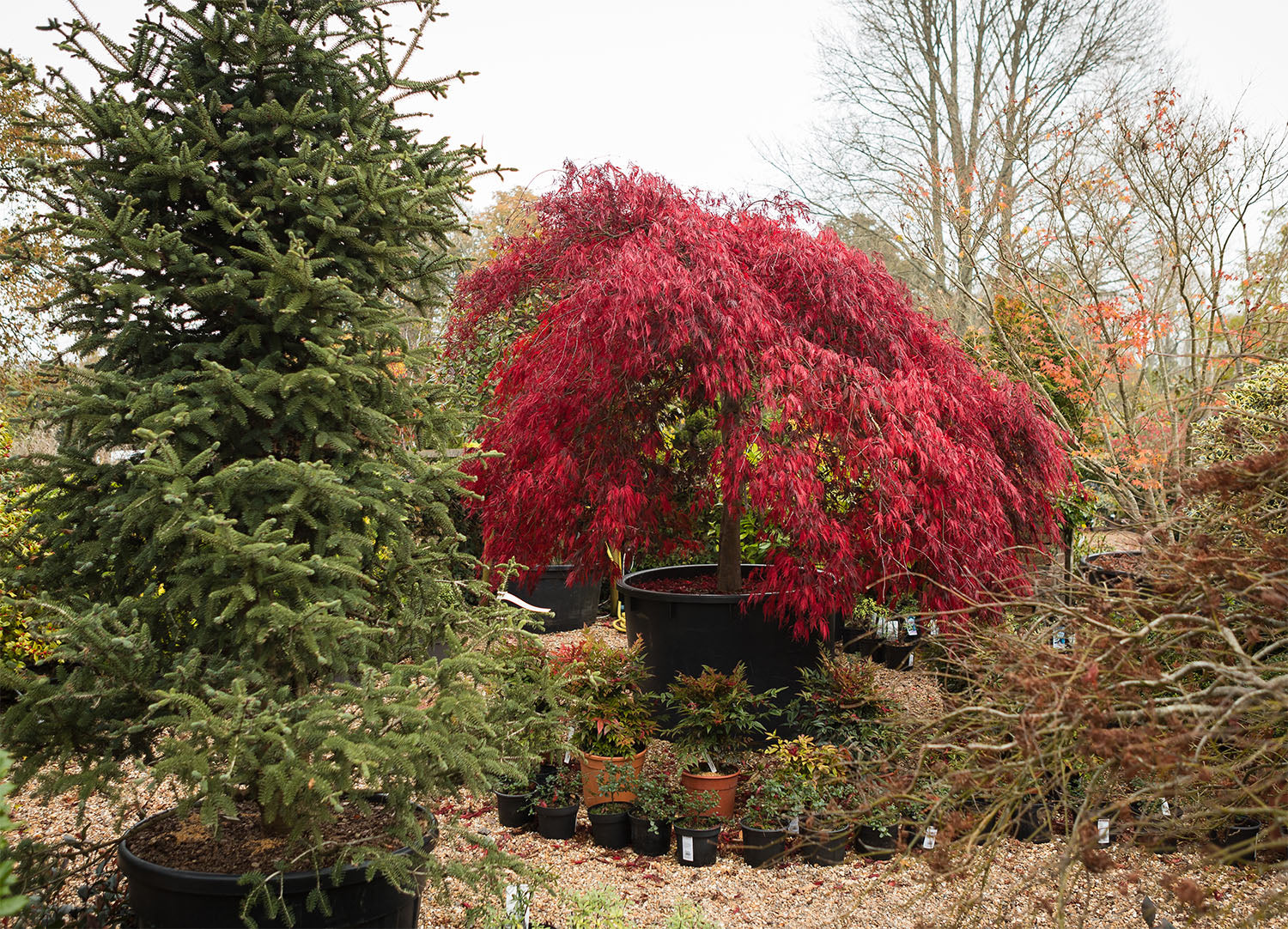
Unit price perAcer palmatum 'Trompenburg' is a unique Japanese maple, valued for its deeply lobed, glossy leaves and rich seasonal color. Emerging in spring with a deep burgundy-red, the foliage maintains its striking hue through summer, developing a rich crimson in autumn. The leaves are distinctively curled, giving them a sculptural, three-dimensional effect that adds texture and interest to any landscape. Growing to about 15-18 feet, 'Trompenburg' has an upright, spreading form that suits both garden beds and container planting. This hardy tree thrives in well-drained soil with partial shade to protect its vibrant color. With its unusual foliage, easy-care requirements, and dynamic color change, Acer palmatum 'Trompenburg' is an excellent choice for adding character and beauty to diverse garden settings.


Red Oak | Quercus Rubra - Established - Girth 6-8cm - Height 250-310cm - 30lt
£270.00
Unit price perRed Oak | Quercus Rubra - Established - Girth 6-8cm - Height 250-310cm - 30lt
£270.00
Unit price perQuercus rubra, commonly known as the Northern Red Oak, is a majestic deciduous tree native to North America, including parts of the United States and Canada. This oak species belongs to the Fagaceae family and is renowned for its striking appearance, impressive size, and ecological significance.
Mature Quercus Rubra trees can reach heights of up to 100 feet (30 meters) and possess a wide, rounded crown that provides ample shade during the summer months. Its leaves, which are alternately arranged along the branches, are deeply lobed with pointed tips and possess a vibrant green colour in the spring and summer. However, during the autumn season, they transform into a breath taking spectacle of crimson and red hues, making it a popular choice for ornamental landscaping.
The bark of the Northern Red Oak is dark brown, often becoming rough and deeply furrowed with age, adding to its visual appeal. The tree produces acorns as its fruit, which are an essential food source for numerous wildlife species, including squirrels, deer, and birds. This contributes to its ecological significance by supporting local ecosystems.
Quercus rubra prefers well-drained soils and can adapt to a variety of soil types, making it a hardy and resilient tree species. It thrives in full sun to partial shade, making it versatile in different environmental conditions.
Quercus rubra stands as a symbol of strength, resilience, and natural beauty. Its presence in North American forests and landscapes enriches the environment and provides valuable resources for both wildlife and human use. This iconic tree embodies the timeless beauty of nature and its vital role in sustaining the ecosystems it inhabits.
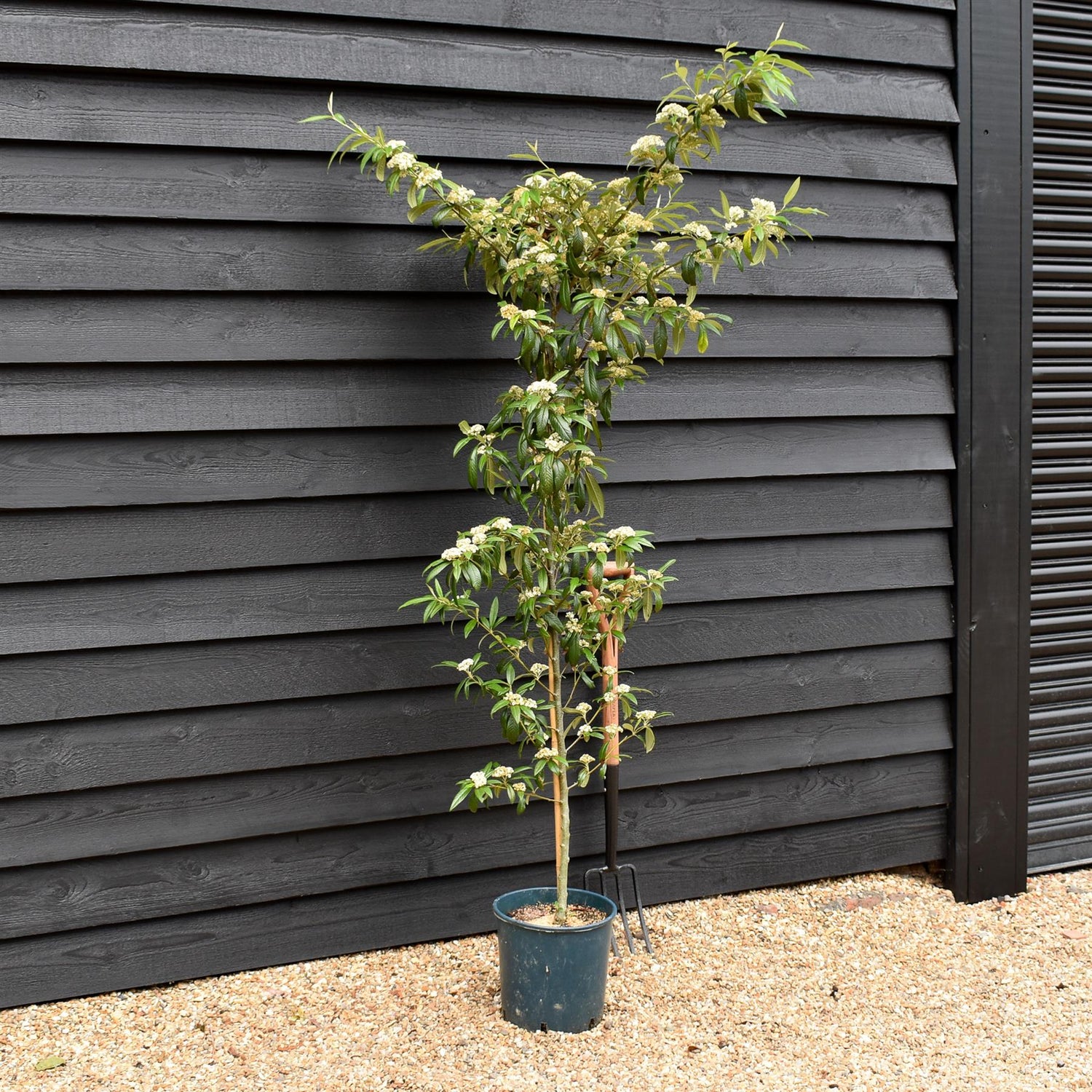


Cotoneaster 'Rothschildianus' | Willow-Leaved Cotoneaster - Height 160-180cm - 12lt
£82.00
Unit price perCotoneaster 'Rothschildianus' | Willow-Leaved Cotoneaster - Height 160-180cm - 12lt
£82.00
Unit price per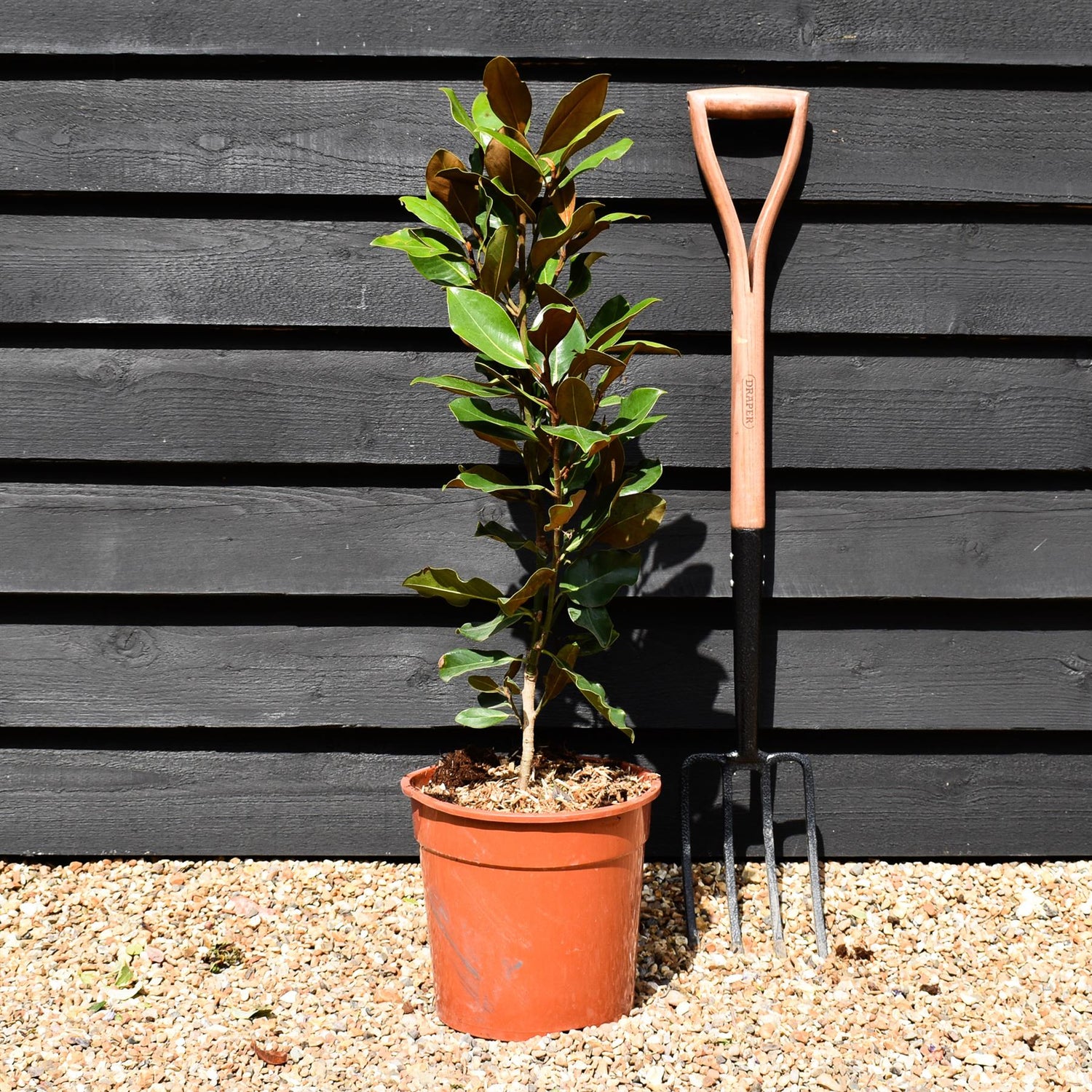
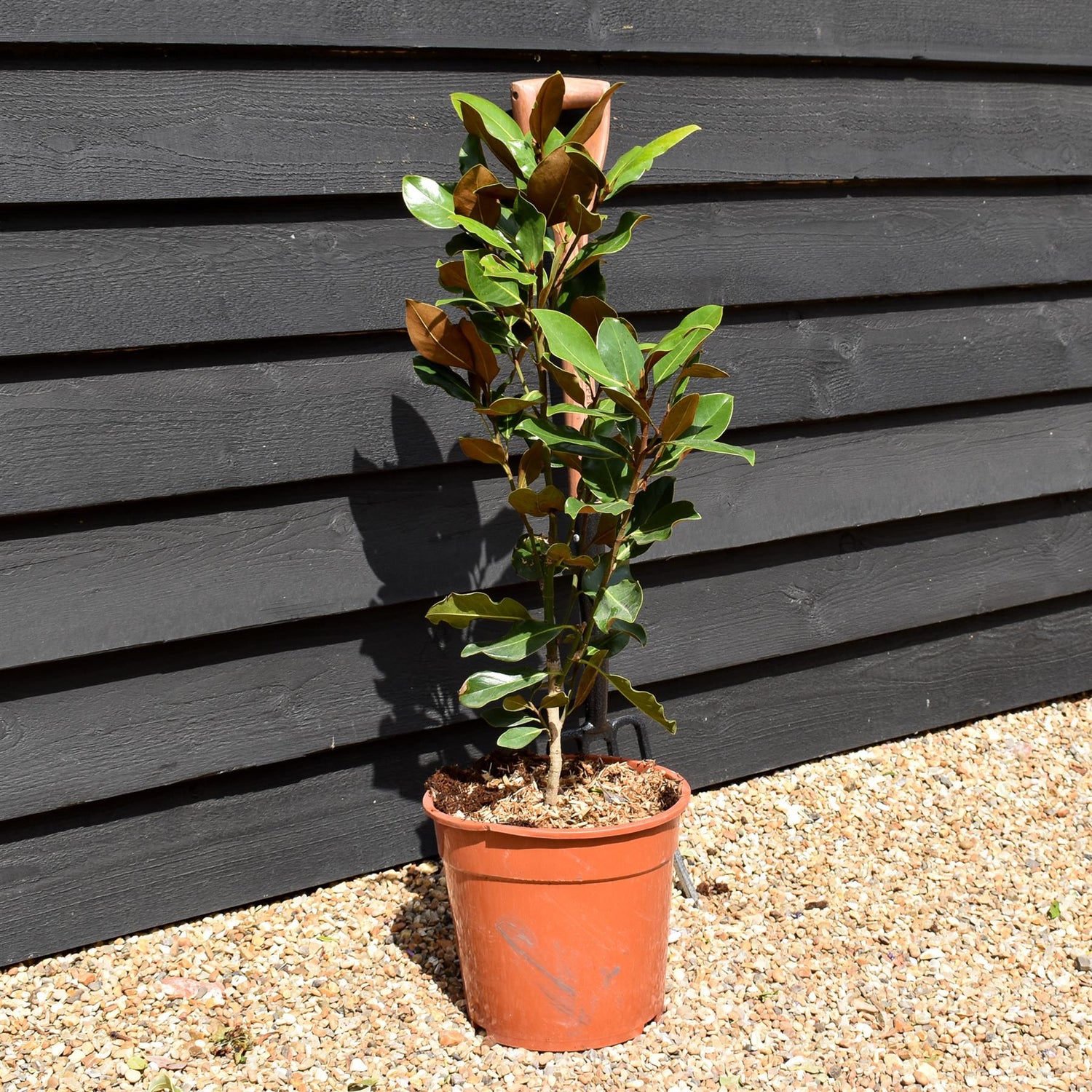
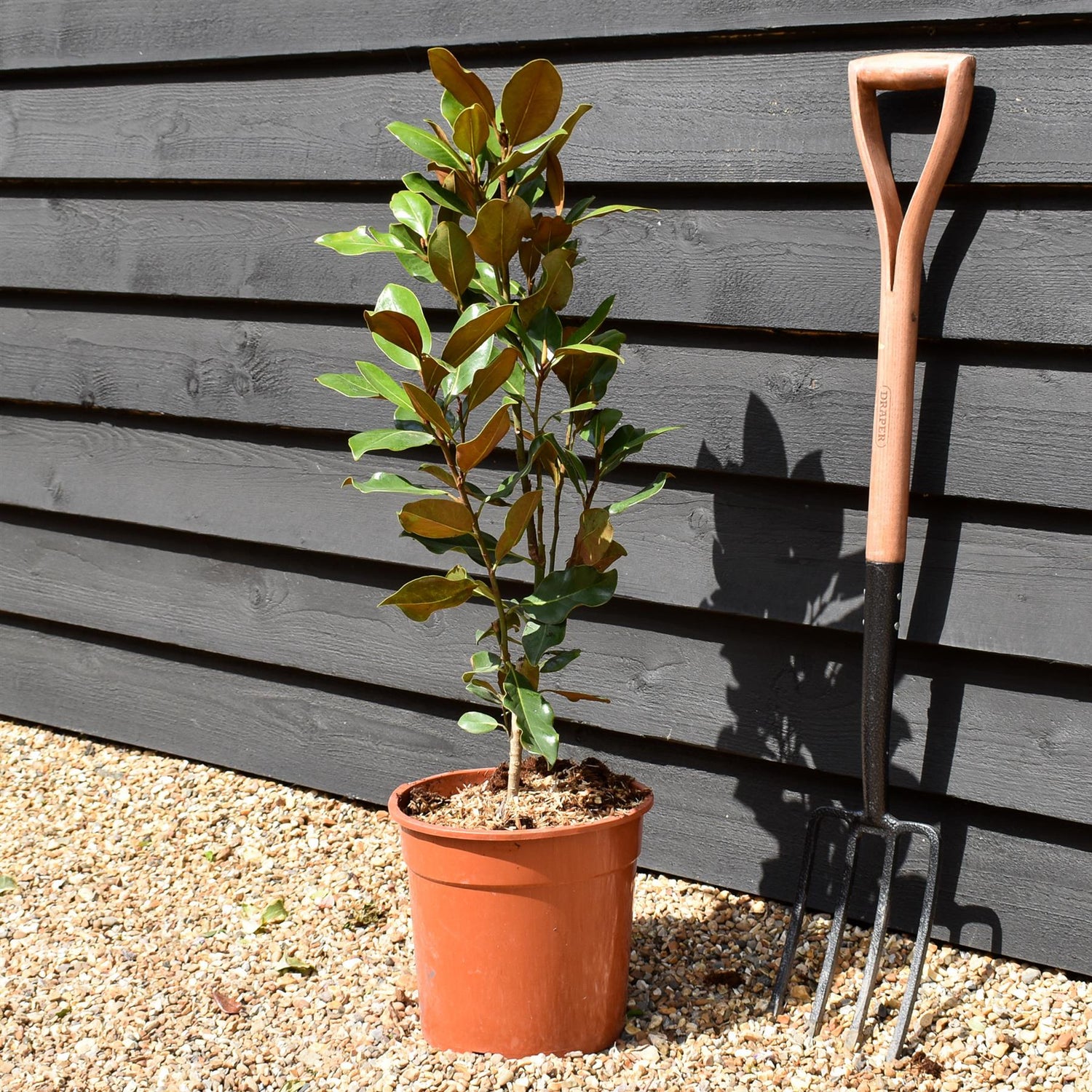
Magnolia grandiflora 'Galissonniere' - Bush - Height 70-80cm - 10lt
£60.00
Unit price perMagnolia grandiflora 'Galissonniere' - Bush - Height 70-80cm - 10lt
£60.00
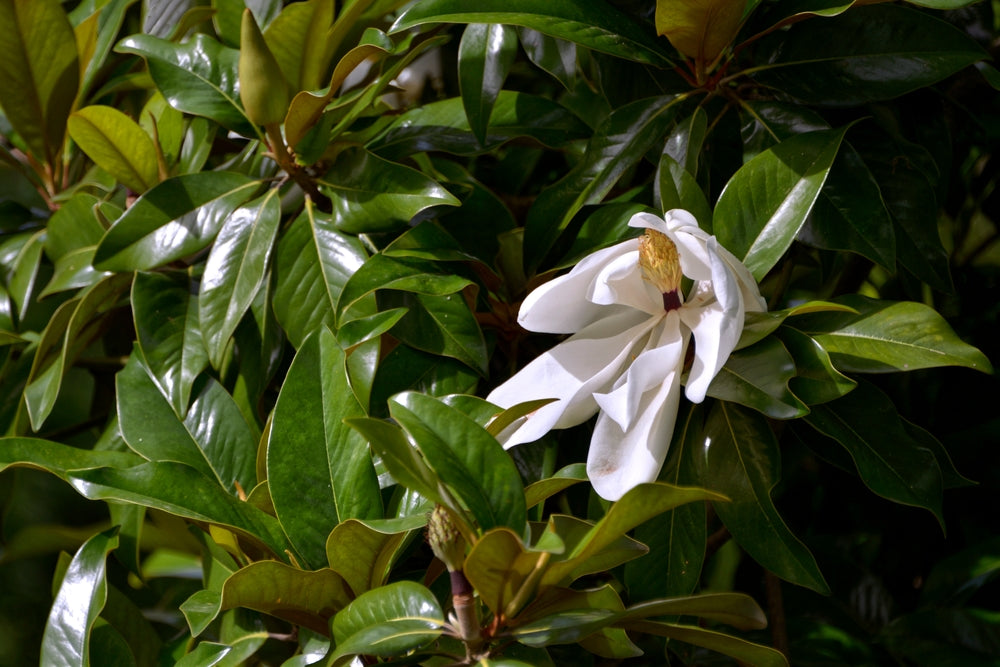
Unit price perMagnolia grandiflora 'Galissonniere' is an exotic evergreen tree of conical to spreading pyramidal habit, with thick, leathery, glossy green leaves, velvety haired and rusty-brown beneath. Very large, saucer-shaped, creamy-white flowers with purple stamens bloom in summer and early autumn. Their fragrance is strong and pleasant.
Magnolia grandiflora 'Galissonniere' is easily grown in a wide range of soils, but prefers hummus-rich, slightly acidic, moist, and well-drained soils. Once established, it can withstand some drought. It thrives in full sun and partial shade.
It has very good cold tolerance, but needs to be sheltered from harsh, dry winds. Low maintenance, it doesn’t require much pruning. Magnolia grandiflora 'Galissonniere' is a French variety of Southern Magnolia cultivated 150 years ago. It’s an excellent ornamental tree, often grown against the wall, rarely free-standing. Great for informal, cottage, woodland, and urban gardens. Excellent for beds and borders, informal hedges and screens, and for growing in containers.


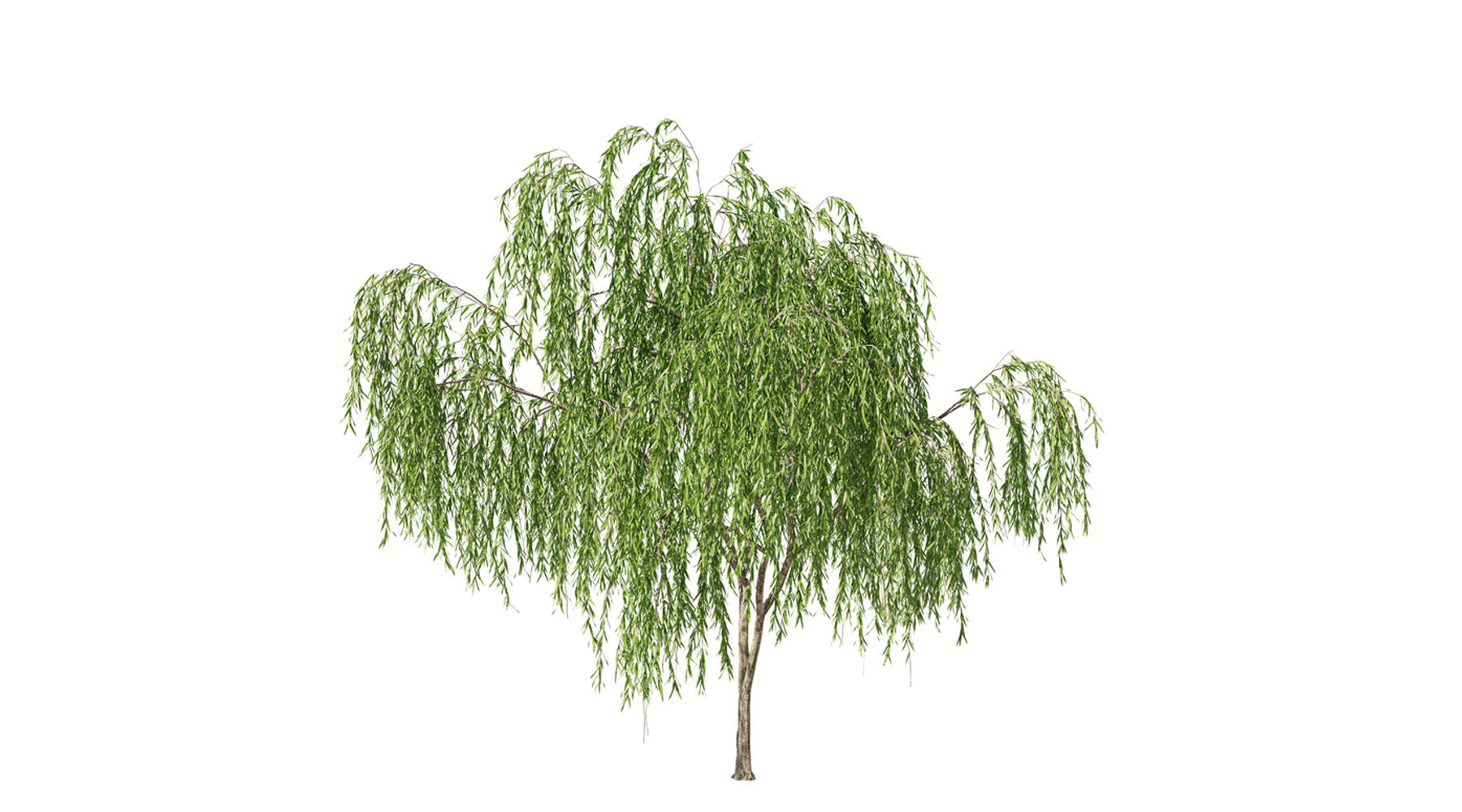
Salix Chrysocoma | Golden Weeping Willow - Height 175-200cm, 10lt
£84.00
Unit price perSalix Chrysocoma | Golden Weeping Willow - Height 175-200cm, 10lt
£84.00
Unit price per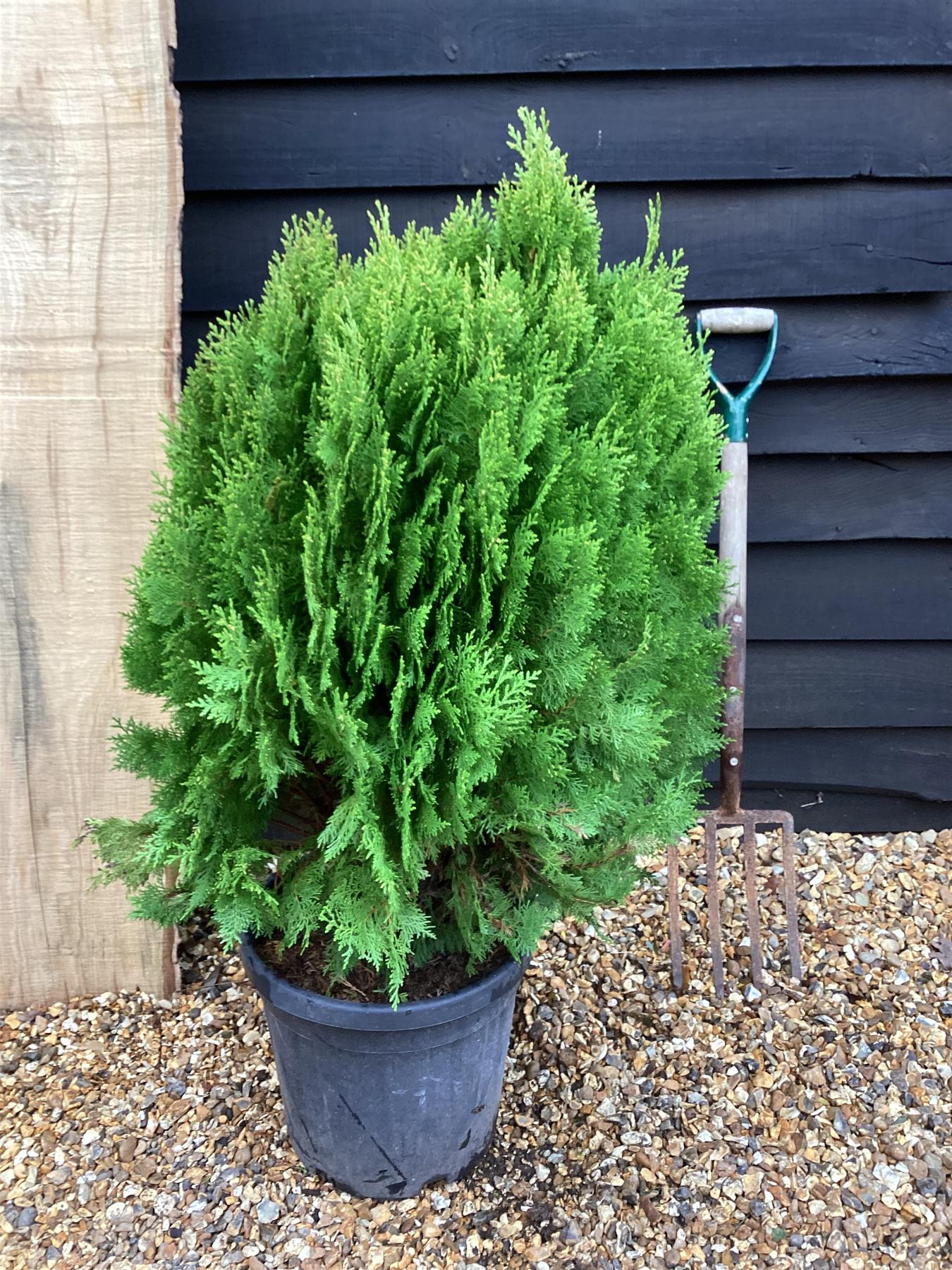


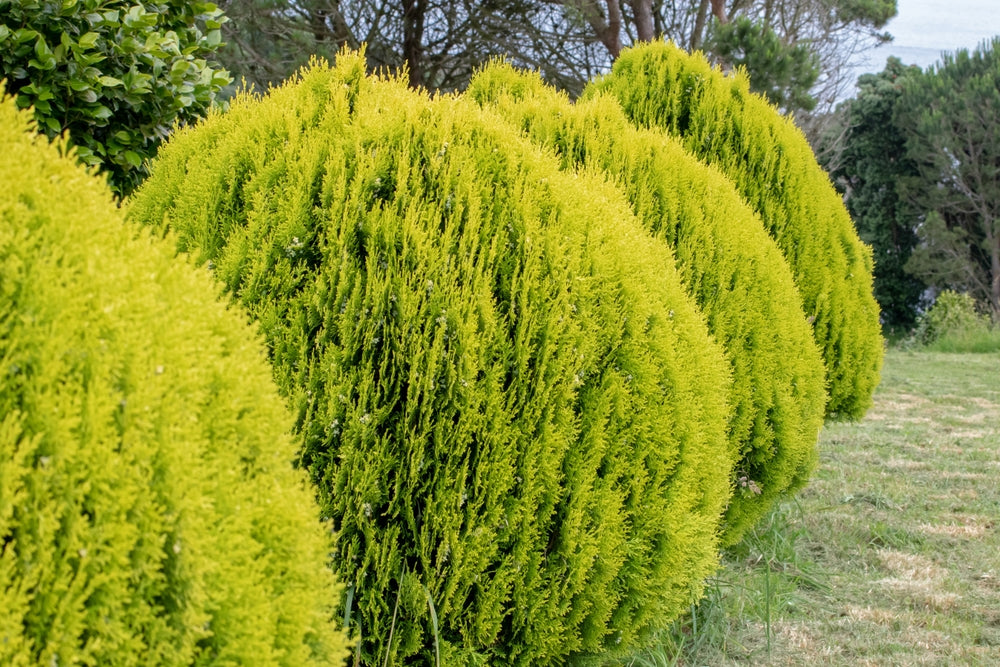
Thuja orientalis 'Aurea Nana' - 50-60cm, 25lt
£130.00
Unit price perThuja orientalis 'Aurea Nana' - 50-60cm, 25lt
£130.00
Unit price per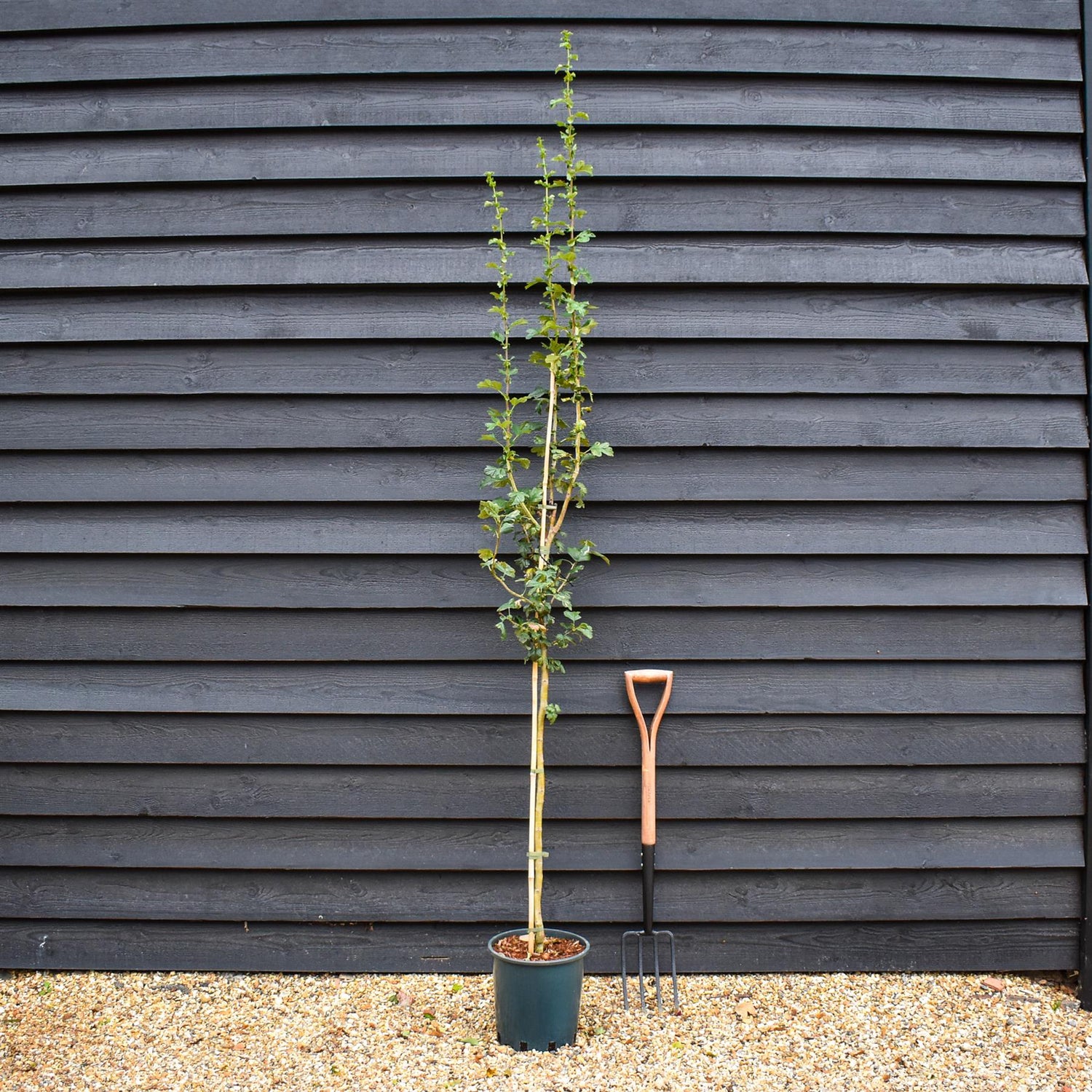
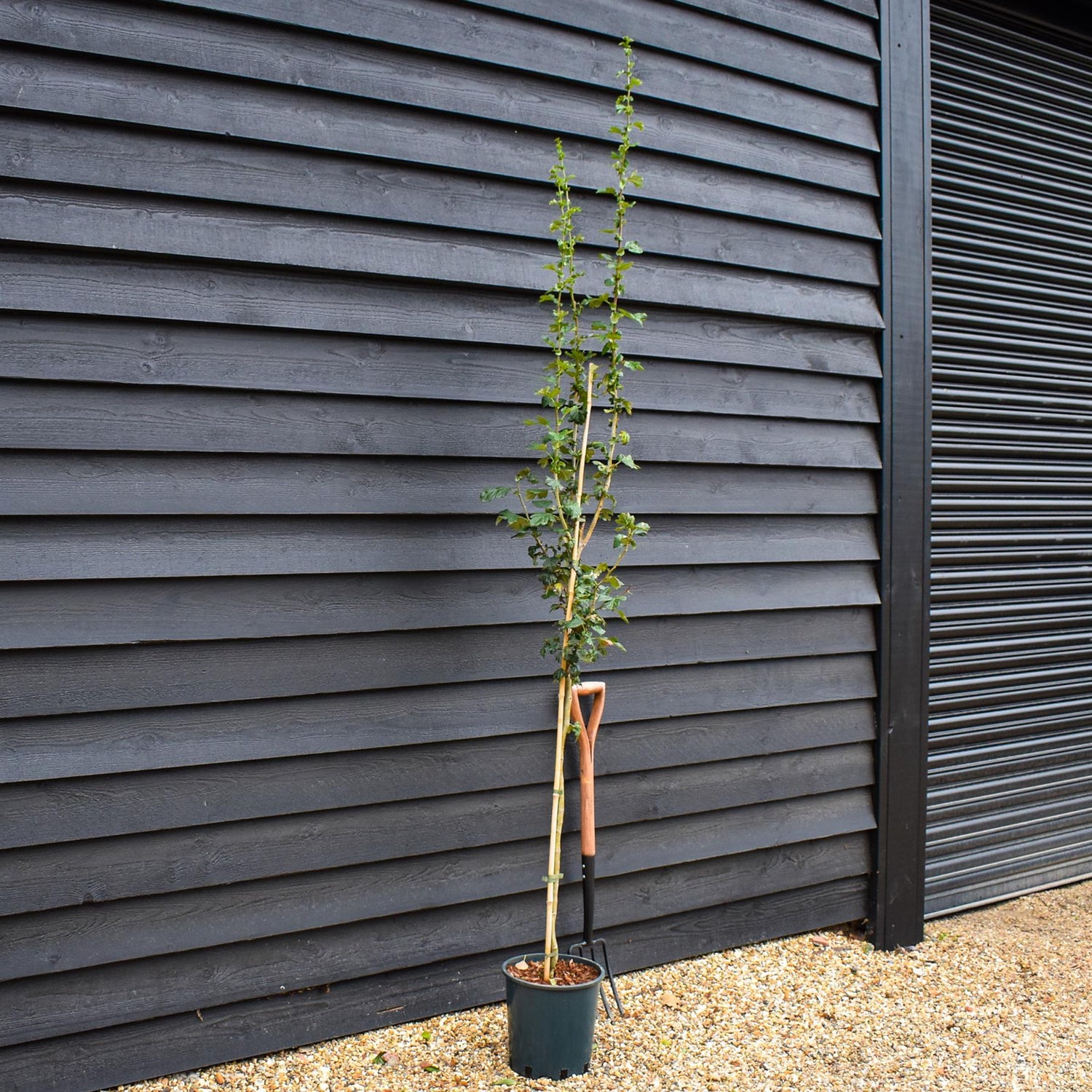
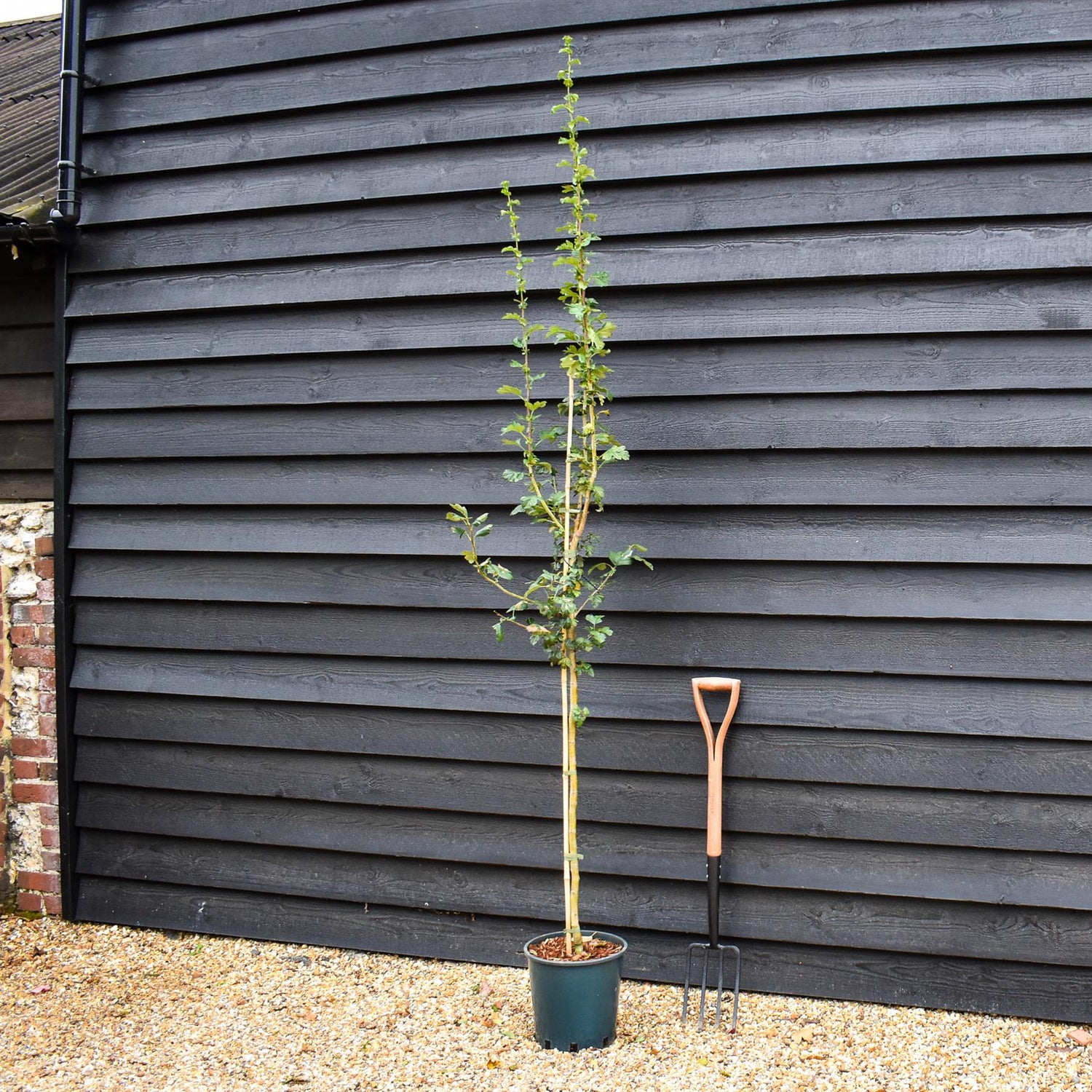
Crataegus Laevigata 'Paul's Scarlet' | Hawthorn 'Paul's Scarlet' - Height 160-180cm, 12lt
£94.00
Unit price perCrataegus Laevigata 'Paul's Scarlet' | Hawthorn 'Paul's Scarlet' - Height 160-180cm, 12lt
£94.00
Unit price perCrataegus laevigata 'Paul's Scarlet' is a small, rounded, deciduous tree with a dense, rounded crown and ascending, thorny branches with deeply lobed, glossy, emerald green leaves that turn yellow and bronze in autumn. Masses of beautiful, double, scarlet-rose flowers bloom in clusters in late spring, covering the whole crown and creating a spectacular display. The blossoms are followed by black red fruits in autumn.
Crataegus laevigata 'Paul's Scarlet' is easily grown in any type of soil, as long as it is well-drained. It prefers full sun and best flowers occur in full sun, but the plant tolerates partial shade. It is tough and resilient, adaptable to all kinds of growing conditions including coastal, exposed, or polluted. Low maintenance, requires minimal pruning. Crataegus laevigata 'Paul's Scarlet', is a beautiful, tough ornamental tree, great addition to any garden. Perfect as a specimen tree in cottage or urban gardens. It can be also used for hedges and screens.


Hoop Pine | Araucaria 'Cunninghami' - Colonial Pine - House Plant - Height 30-40cm - 1lt
£66.00
Unit price perHoop Pine | Araucaria 'Cunninghami' - Colonial Pine - House Plant - Height 30-40cm - 1lt
£66.00
Unit price perAraucaria ‘Cunninghami’ is an elegant evergreen plant with a neat, clear stem and a beautifully structured crown of layered, soft green foliage. Its distinctive architectural form makes it an excellent choice for bringing height, texture and year-round greenery into the home.
With its small clear stem, this Araucaria has a particularly attractive tree-like appearance, making it ideal for displaying in decorative pots where its form can be appreciated. It works well in bright, contemporary interiors, conservatories, hallways and larger living spaces, adding a natural focal point without appearing overly bushy.
For best results, position it in a bright room with plenty of indirect light. It can tolerate some direct sunlight, although strong afternoon sun through glass should be avoided. Allow the compost to dry slightly between waterings and avoid leaving the plant standing in water. Good drainage is important.
Slow-growing and relatively easy to care for, Araucaria ‘Cunninghami’ is a long-lasting house plant that can gradually develop into an impressive indoor specimen. Its evergreen foliage provides attractive colour throughout the year, while the clear stem gives it a sophisticated, tree-like character.


Picea abies 'Inversa' / Pendula| Norway spruce - Height 250-260cm - 150lt
£980.00
Unit price perPicea abies 'Inversa' / Pendula| Norway spruce - Height 250-260cm - 150lt
£980.00
Unit price per


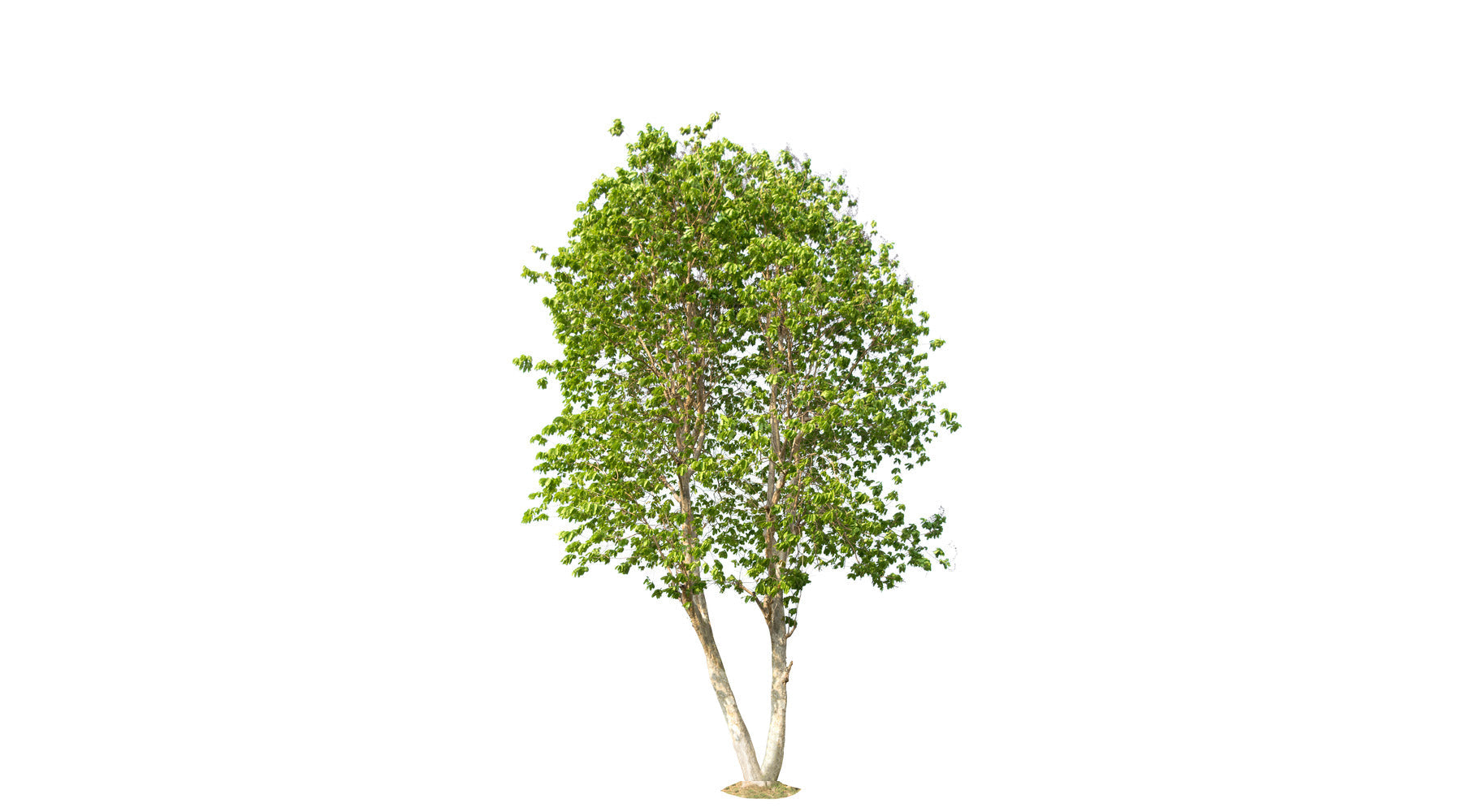
Paper Birch | Betula Papyrifera - Height 170-200cm - Girth 4cm - 10lt
£92.00
Unit price perPaper Birch | Betula Papyrifera - Height 170-200cm - Girth 4cm - 10lt
£92.00
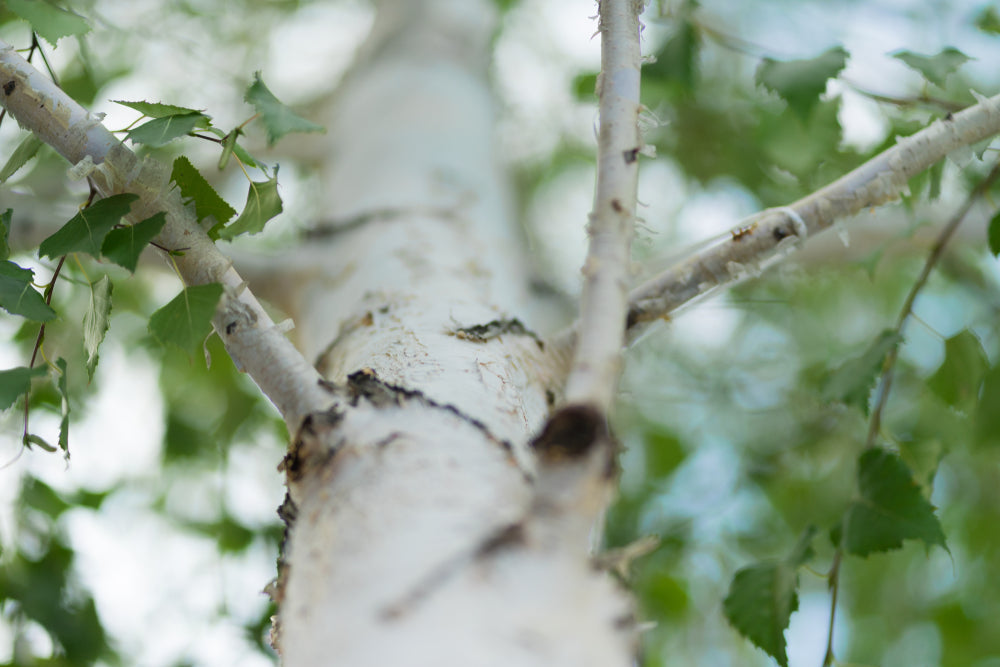
Unit price perBetula papyrifera, commonly known as the paper birch or white birch, is a striking deciduous tree native to North America. It is best known for its distinctive white bark that peels in thin, paper-like layers, giving it a unique ornamental appeal throughout the year. This species typically grows quickly and can reach heights of 50 to 70 feet, with an open, airy canopy. Its dark green, serrated leaves turn a brilliant golden yellow in the fall, creating a beautiful seasonal display. Paper birch thrives in cool climates and is commonly found in northern forests, along streams, and in open woodlands. It prefers moist, well-drained soil and full sun but can adapt to various conditions. In addition to its aesthetic value, Betula papyrifera provides important ecological benefits, offering food and habitat for wildlife. It is also historically significant, as Indigenous peoples used its bark for canoes, containers, and writing surfaces.


Erman's Birch | Betula ermanii - Height 200-250cm - Girth 8-10cm - 45lt
£255.00
Unit price perErman's Birch | Betula ermanii - Height 200-250cm - Girth 8-10cm - 45lt
£255.00
Unit price per


Pink Flowering Hawthorn | Crataegus Laevigata 'Rosea Plena' - Height 220-250cm - Girth 6-8cm - 20lt
£160.00
Unit price perPink Flowering Hawthorn | Crataegus Laevigata 'Rosea Plena' - Height 220-250cm - Girth 6-8cm - 20lt
£160.00
Unit price perCrataegus laevigata 'Rosea Flore Pleno' is a small, highly ornamental, deciduous tree with rounded habit, thorny branches, and shallow, three-to-five-lobed, glossy green leaves that turn yellow and bronze in autumn. Masses of lovely, double pink flowers grouped in corymbs bloom in May and June creating a spectacular display. Blossoms are followed by bright red berries in autumn. Crataegus laevigata 'Rosea Flore Pleno' is not only beautiful, but tough and resilient. It is easily grown in any type of soil, as long as it is well-drained. It prefers full sun, but tolerates partial shade. It is adaptable to all kinds of growing conditions including coastal, exposed, or polluted. It needs to be sheltered from harsh winds. Low maintenance, doesn’t require much pruning. Crataegus laevig 'Rosea Flore Pleno' is a wonderful ornamental tree, perfect as a specimen plant in small, informal, or urban gardens. Suitable for coastal areas. Great for beds and borders, hedges and screens.


Alnus Incana - Grey Alder tree - Clear Stem - Standard - Girth 12-14cm - Height 450-480cm - 70lt
£390.00
Unit price perAlnus Incana - Grey Alder tree - Clear Stem - Standard - Girth 12-14cm - Height 450-480cm - 70lt
£390.00
Unit price perAlnus incana, commonly known as grey alder, is a deciduous tree belonging to the birch family, Betulaceae. Native to Europe, Asia, and North America, it is a resilient species often found in riparian zones, wetlands, and areas with moist soils. This medium-sized tree typically grows to heights of 15 to 25 metres, with a slender trunk and smooth, greyish-brown bark, which often develops fine fissures with age.
The leaves of Alnus incana are oval to elliptic in shape, measuring 5 to 10 centimetres in length. They are characterised by their serrated margins and a dark green upper surface, with a paler, slightly downy underside, giving them a distinct two-tone appearance. The leaves emerge in early spring and typically turn yellow before falling in autumn.
Grey alder is monoecious, meaning that both male and female reproductive structures are found on the same tree. The male catkins, which are long and pendulous, appear in early spring before the leaves, while the smaller, more upright female catkins develop into woody cones that persist on the tree through the winter. These cones release small winged seeds, which are dispersed by wind and water.
One of the notable features of Alnus incana is its ability to fix nitrogen through a symbiotic relationship with the bacterium *Frankia*. This allows it to thrive in nutrient-poor soils and contribute to soil fertility, making it a valuable species for land restoration and erosion control.
Grey alder is often planted in landscaping and reforestation projects, particularly in areas prone to flooding or soil degradation. Its rapid growth, hardiness, and ecological benefits make it an important species in maintaining the health of wetland ecosystems.


Cotinus coggygria 'Golden Spirit' -'3lt
£18.00
Unit price perCotinus coggygria 'Golden Spirit' -'3lt
£18.00
Unit price perCotinus coggygria 'Golden Spirit', commonly known as the Golden Spirit smokebush, is a deciduous shrub admired for its striking foliage and unique flowering. This cultivar stands out due to its vibrant golden-yellow leaves, which provide a dazzling display from spring through autumn.
In the spring, new leaves emerge in a bright lime-green hue, maturing to a rich golden-yellow as the season progresses. These leaves are oval-shaped with a slight waviness at the edges, adding texture and interest to the plant. During autumn, the foliage transforms again, taking on hues of orange, red, and purple, offering a spectacular end-of-season show.
The Golden Spirit smokebush grows to a height and spread of approximately 2.5 to 3 metres, making it an excellent choice for both small and large gardens. It thrives in full sun to partial shade and prefers well-drained soil. Once established, it is relatively drought-tolerant, adding to its versatility in various garden settings.
One of the most captivating features of Cotinus coggygria 'Golden Spirit' is its airy, plume-like flower clusters that appear in early summer. These flowers, though individually insignificant, collectively form large, fluffy panicles resembling puffs of smoke, hence the common name "smokebush." The flowers are initially greenish-pink, fading to a soft beige as they age, and they add a whimsical, cloud-like quality to the shrub.
In addition to its aesthetic appeal, Golden Spirit is a low-maintenance plant. It requires minimal pruning—usually just the removal of any dead or damaged wood and an occasional thinning to maintain its shape and vigour. This shrub is also resistant to most pests and diseases, making it a reliable choice for gardeners.
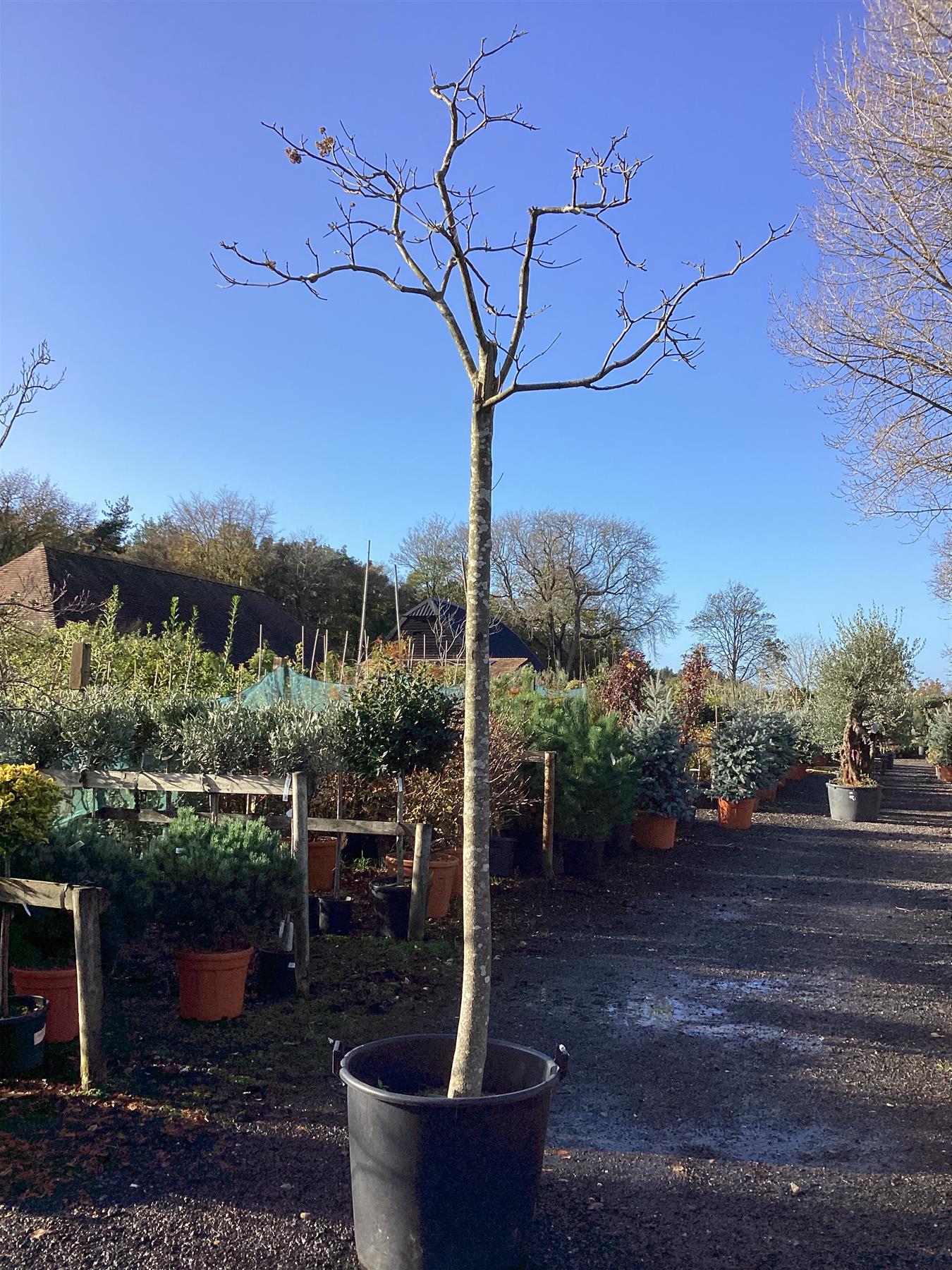
Halesia | Carolina silverbell - 300-350cm, 90lt
£365.00
Unit price perHalesia | Carolina silverbell - 300-350cm, 90lt
£365.00
Unit price perHalesia, or Silverbell, is a small genus of five species (H. carolina, H. diptera, H. macgregorii, H. tetraptera, and H. monticola) of large, deciduous shrubs or small trees with grey bark, and simple, ovate, green leaves, that turn yellow in autumn and fall off early. Attractive, hanging, bell-shaped, white to pale pink flowers grow in clusters and bloom in spring. Flowers are followed by four-winged (or two-winged), nut-like fruits in autumn and often remain on branches long into winter. Attractive to bees and squirrels. Halesia grows best in average, organically rich, slightly acidic, lime-free, moist but well-drained soils. It prefers partial shade, but tolerates full sun. Doesn’t have any serious pest or disease problems. Low maintenance plant, no routine pruning necessary. Halesia is a wonderful shrub or small tree perfect as an understory plant, for shrub borders, stream banks, or woodland gardens. Great as a specimen plant for the lawn.


Magnolia Susan - Bushy - Height 110-150cm - 18lt
£120.00
Unit price perMagnolia Susan - Bushy - Height 110-150cm - 18lt
£120.00
Unit price per


Japanese Maple | Acer palmatum 'Fire Cracker' - Tree - Height 60-70cm - 5lt
£50.00
Unit price perJapanese Maple | Acer palmatum 'Fire Cracker' - Tree - Height 60-70cm - 5lt
£50.00
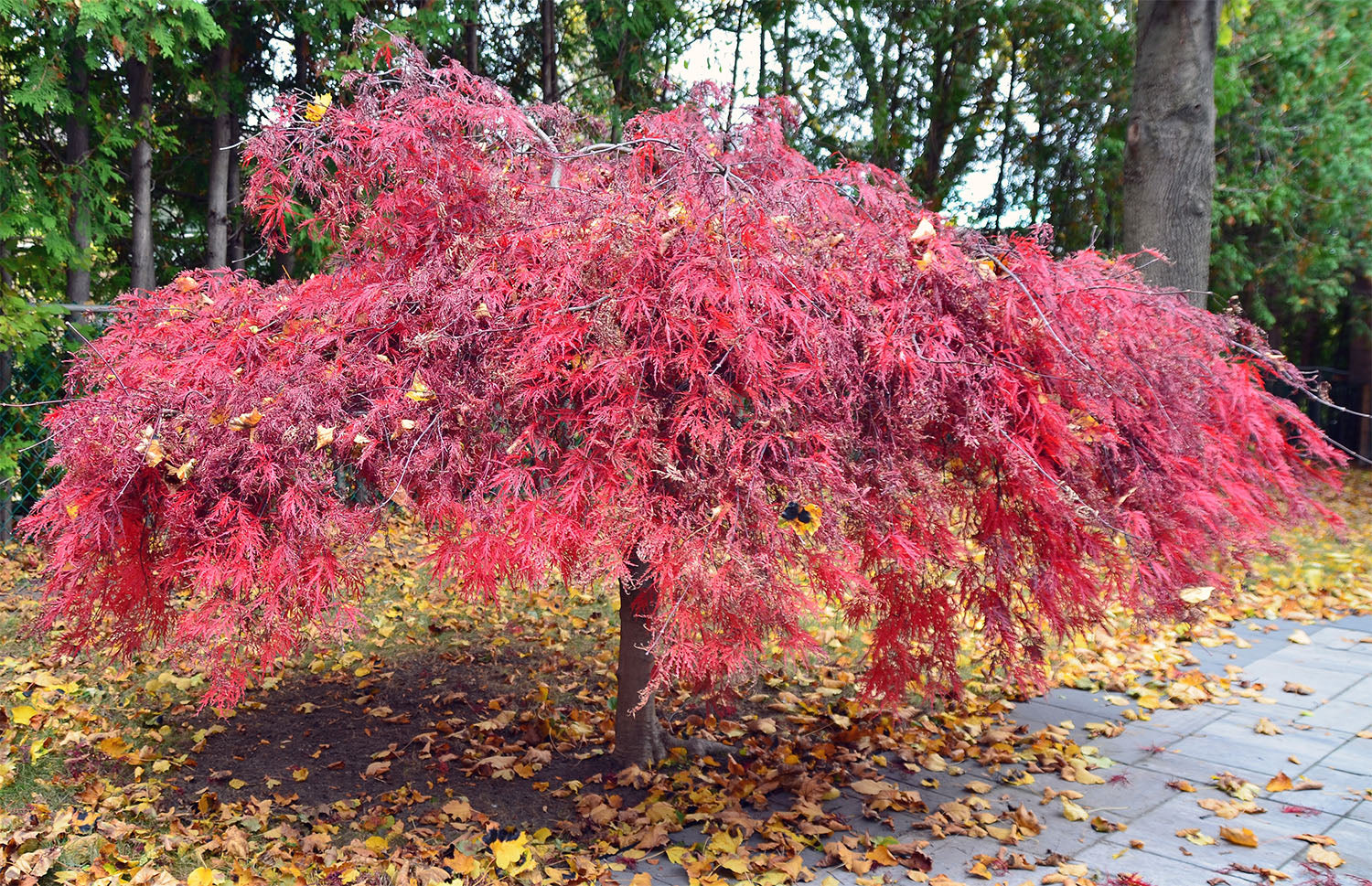
Unit price perAcer palmatum 'Fire Cracker' is a graceful and eye-catching Japanese maple admired for its finely dissected foliage and elegant cascading form. This deciduous ornamental tree produces delicate lace-like leaves that emerge rich crimson-red in spring, maintaining their vibrant colouring throughout the summer months. As autumn arrives, the foliage intensifies into brilliant scarlet and fiery red tones, creating a dramatic seasonal display.
Its naturally arching habit gives the plant a soft, flowing appearance, making it an excellent focal point in small gardens, Japanese-inspired landscapes, courtyard settings, or large decorative containers. The finely textured leaves contrast beautifully with evergreen shrubs, gravel gardens, and woodland planting schemes.
‘Fire Cracker’ thrives in moist, fertile, well-drained soil and prefers a sheltered position in partial shade, where the foliage is protected from scorching sun and drying winds. Slow growing and relatively compact, it is easy to maintain and suitable for gardens where space is limited. The attractive branching structure also provides winter interest, ensuring year-round ornamental value and refined architectural beauty.


Norfolk Island Pine - Araucaria 'Heterophylla' - House Plant - Height 120-130cm - Width 90-70cm - Pot 20cm
£105.00
Unit price perNorfolk Island Pine - Araucaria 'Heterophylla' - House Plant - Height 120-130cm - Width 90-70cm - Pot 20cm
£105.00
Unit price perAraucaria heterophylla, commonly known as the Norfolk Island pine, is a striking evergreen conifer that makes an excellent indoor ornamental due to its symmetrical, tiered branching and soft, needle-like foliage. Its classic pyramidal form adds architectural interest and a sense of elegance to interiors, making it a popular choice for homes, offices, and conservatories.
Indoors, Araucaria heterophylla thrives in bright, indirect light. While it can tolerate some direct sunlight, prolonged exposure to strong sun may cause browning of the foliage. It prefers a consistent, moderate indoor temperature and does not fare well in cold drafts or sudden temperature fluctuations. Higher humidity levels encourage optimal growth, making occasional misting or placement near a humidifier beneficial in drier environments.
A well-draining potting mix is essential to prevent root rot, and the plant should be watered regularly, keeping the soil evenly moist but not waterlogged. Fertilising during the growing season supports healthy growth and vibrant foliage.
With its elegant form, slow but steady growth, and low-maintenance care requirements, Araucaria heterophylla provides a long-lasting, visually appealing evergreen presence indoors, enhancing both contemporary and traditional interior spaces.


Magnolia Yulan - Girth 16cm - 450-460cm - 110lt
£890.00
Unit price perMagnolia Yulan - Girth 16cm - 450-460cm - 110lt
£890.00
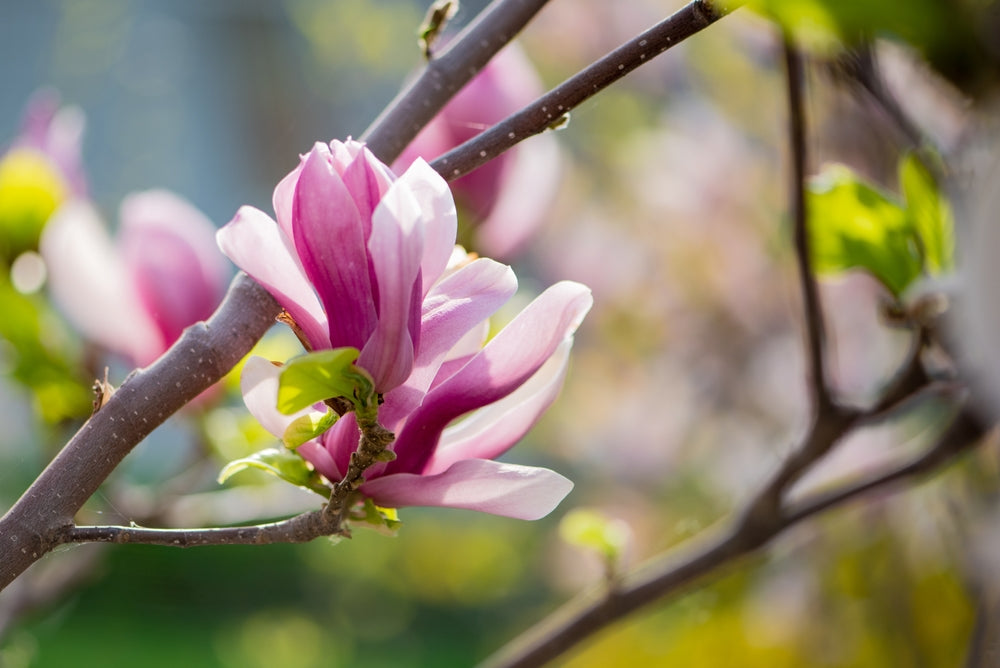
Unit price perMagnolia Yulan is a stunning flowering tree that belongs to the Magnoliaceae family. It is native to China, particularly the Yunnan Province, and is widely cultivated for its ornamental value. The tree is known for its large, fragrant, and showy white flowers that bloom in late spring to early summer.
The Magnolia Yulan tree typically grows to a height of 30-40 feet, with a spread of 20-30 feet. It has an upright, pyramidal shape when young, and as it matures, it forms a broad, spreading crown. The tree has a smooth, grayish-brown bark, and its leaves are large, ovate, and glossy green, measuring up to 8 inches long.
One of the most striking features of the Magnolia Yulan tree is its flowers. The flowers are cup-shaped and can measure up to 8 inches in diameter. They are pure white, with a slight pinkish tint at the base, and emit a sweet, lemony fragrance. The flowers bloom in late spring to early summer, and their beauty attracts bees, butterflies, and other pollinators.
The Magnolia Yulan tree prefers full sun to partial shade and well-drained soil that is slightly acidic. It is a relatively low-maintenance tree and requires only occasional pruning to maintain its shape. It is also tolerant of drought and heat, making it an excellent choice for gardens in warmer regions.
In summary, the Magnolia Yulan tree is a beautiful and elegant tree that is prized for its large, fragrant, and showy white flowers. It is a low-maintenance tree that can thrive in a range of growing conditions, making it a popular choice for gardens and landscapes.
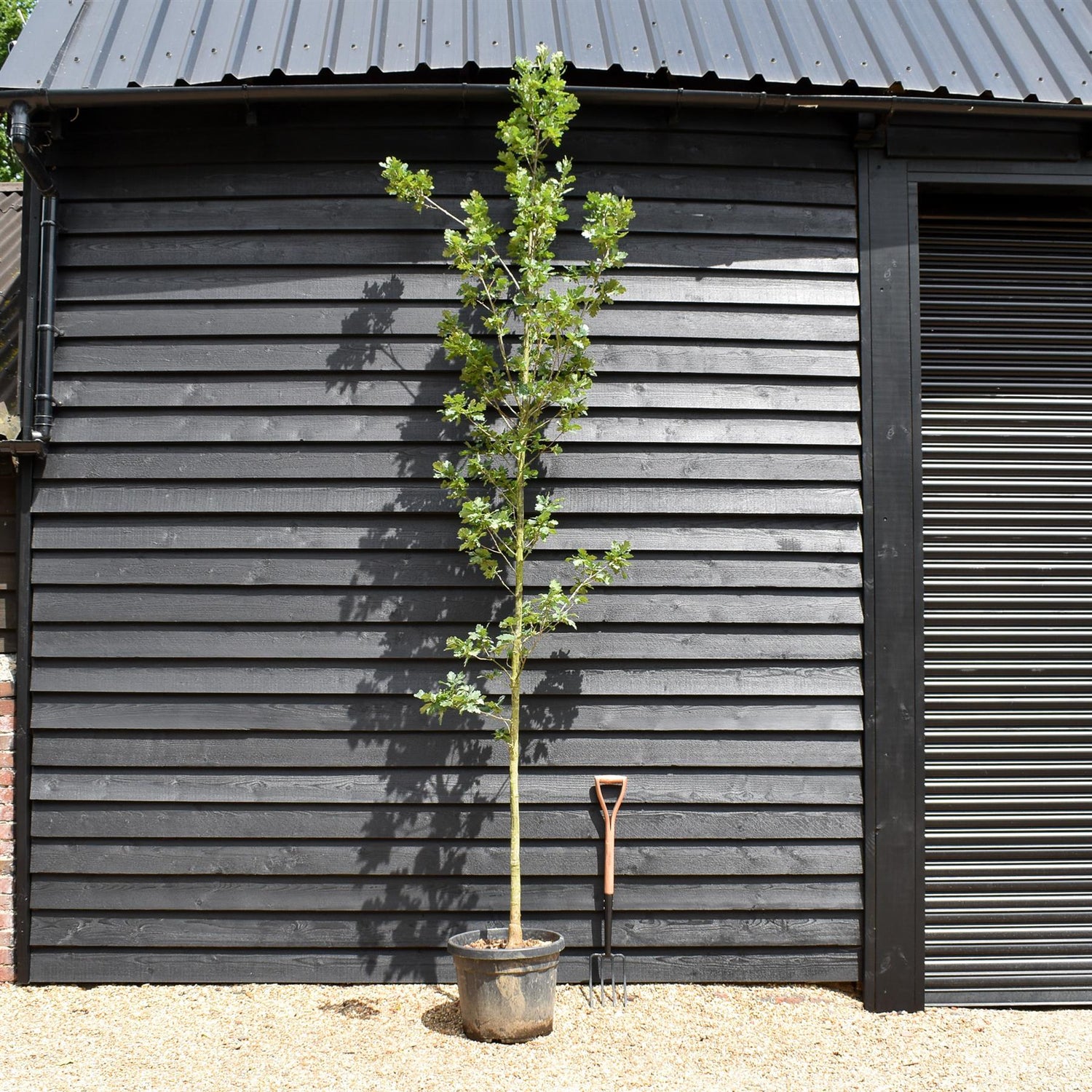


Turkey oak | Quercus cerris - Height 300-350cm - Girth 10-12cm - 45lt
£345.00
Unit price perTurkey oak | Quercus cerris - Height 300-350cm - Girth 10-12cm - 45lt
£345.00
Unit price perQuercus cerris, commonly known as the Turkey oak, is a robust and fast-growing deciduous tree native to southeastern Europe and Asia Minor. It is widely cultivated across Europe for its adaptability and ornamental value. The tree features deeply lobed, glossy green leaves that often persist into winter, and rough, deeply fissured bark that adds texture and character. One of its most distinctive features is its acorns, which are enclosed in a spiky, moss-like cup, giving the tree a unique appearance in autumn. Turkey oak can reach heights of 65 to 100 feet, making it suitable for large landscapes, parks, and avenues. It grows well in a variety of soils, including poor or dry conditions, and tolerates urban environments and pollution. While not native to the UK, it has been widely planted there since the 18th century. Quercus cerris also provides valuable habitat and food for wildlife, supporting biodiversity.