

-
Trees
Trees
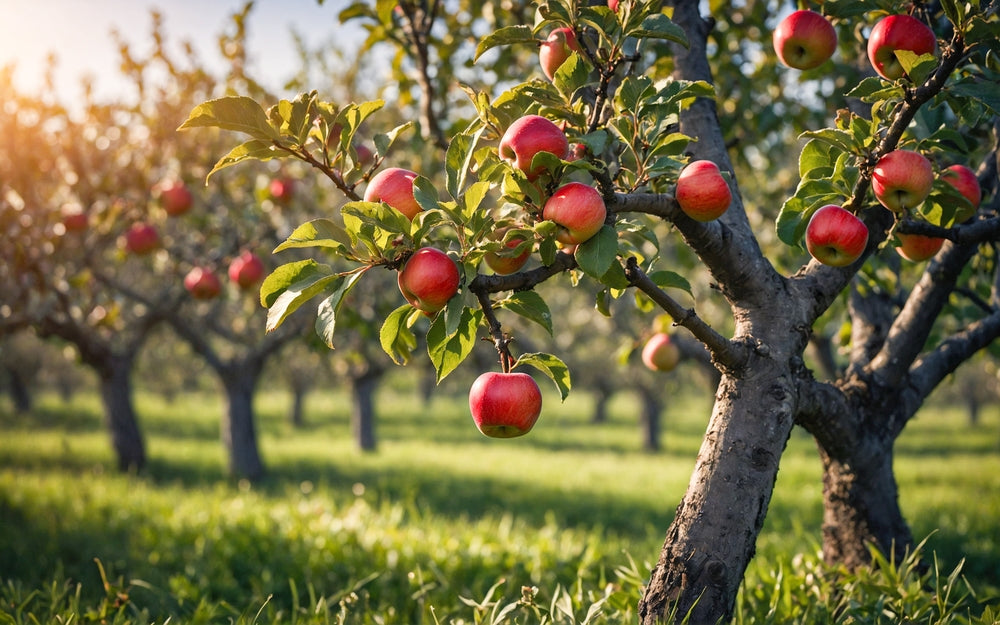 Fruit Trees
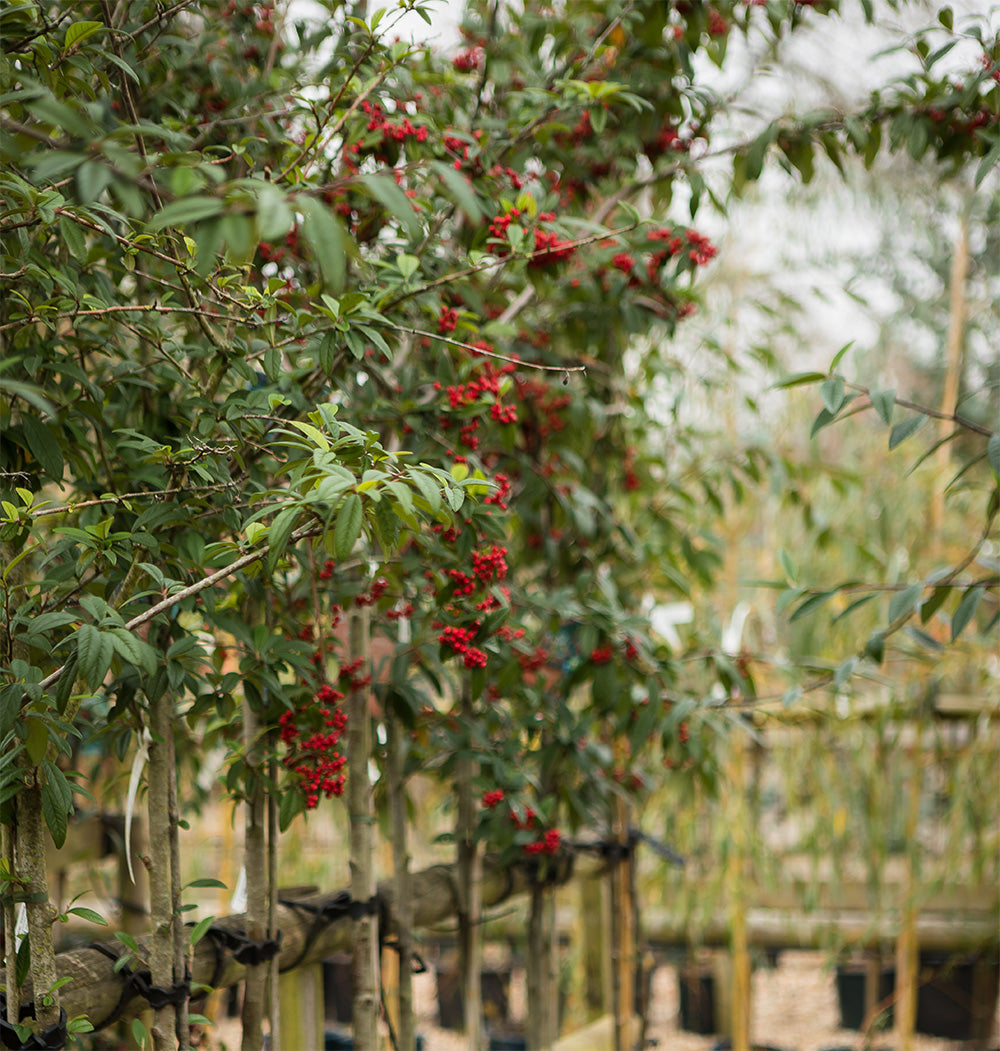 Ornamental
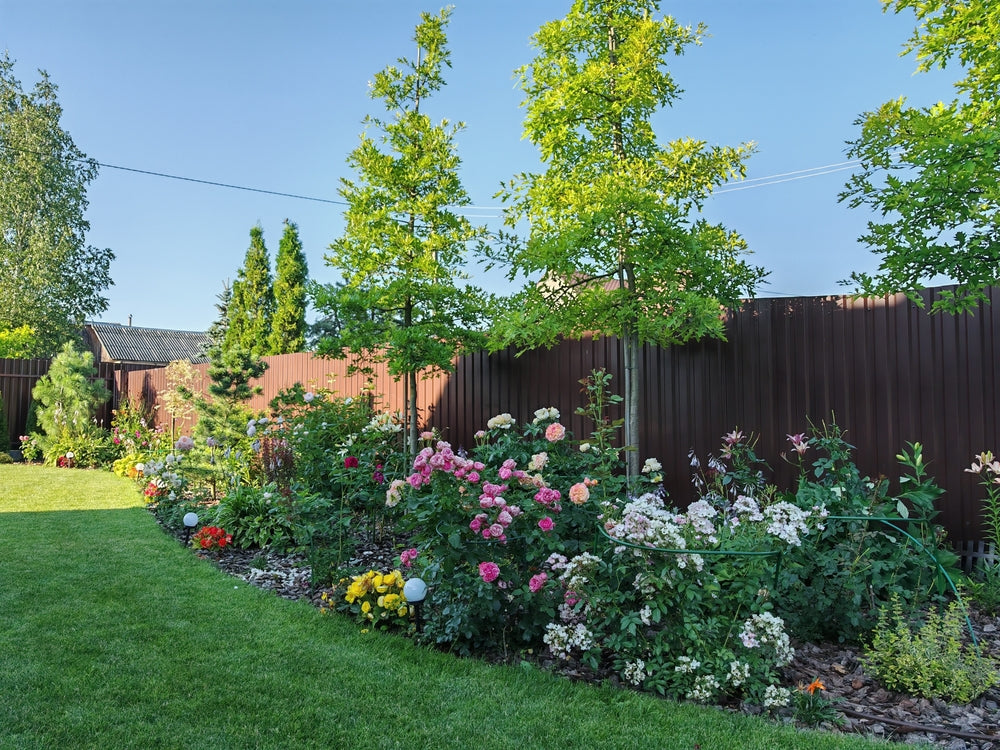 Screening
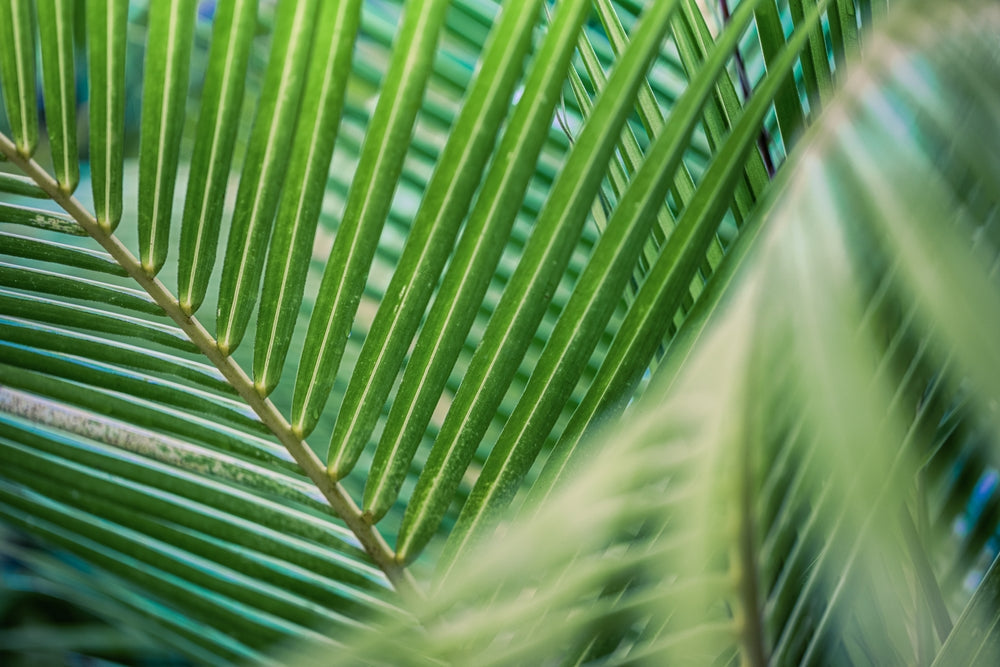 Palms
By FeaturesBy Shape
Palms
By FeaturesBy Shape -
Shrubs
Shrubs
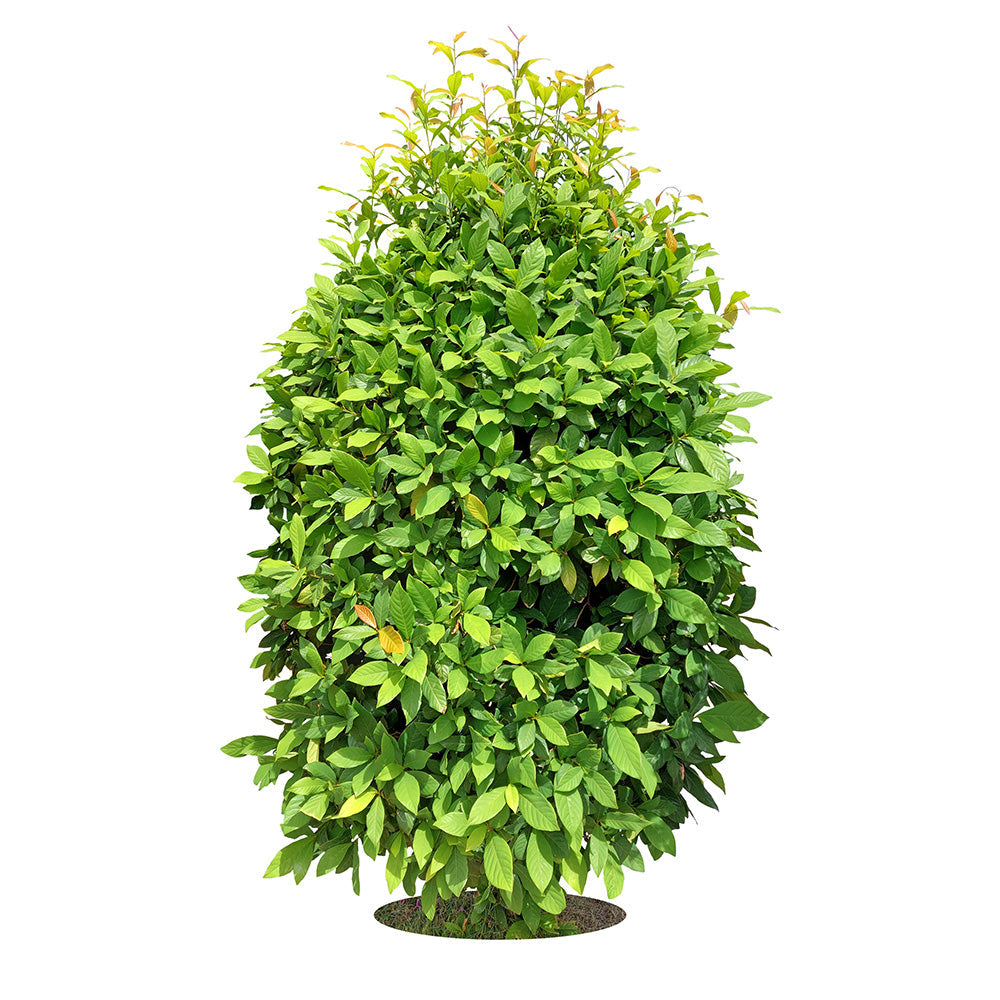 Large shrubs
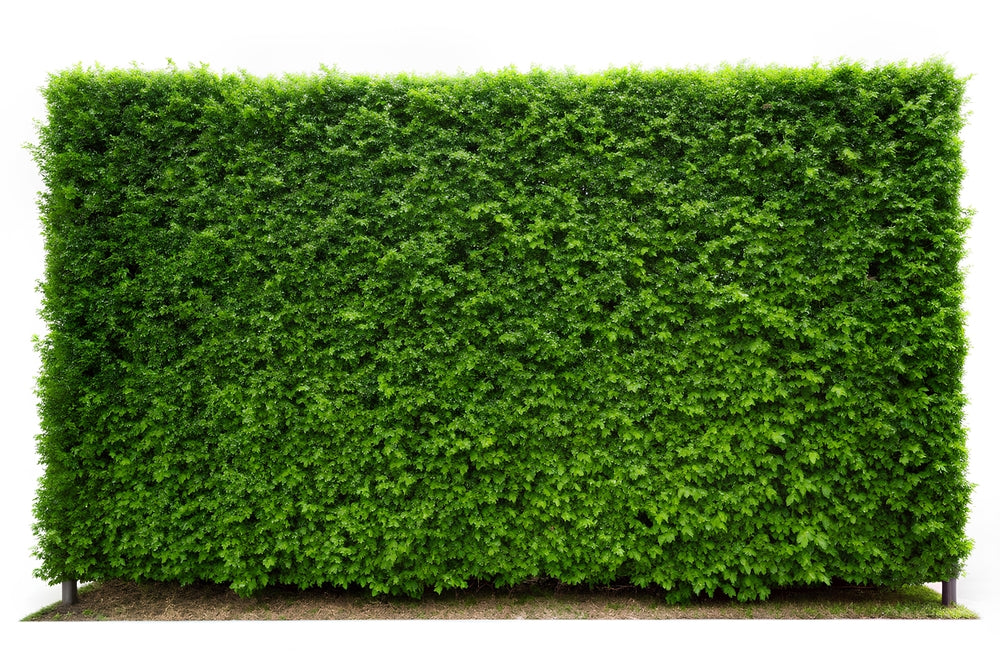 Hedging
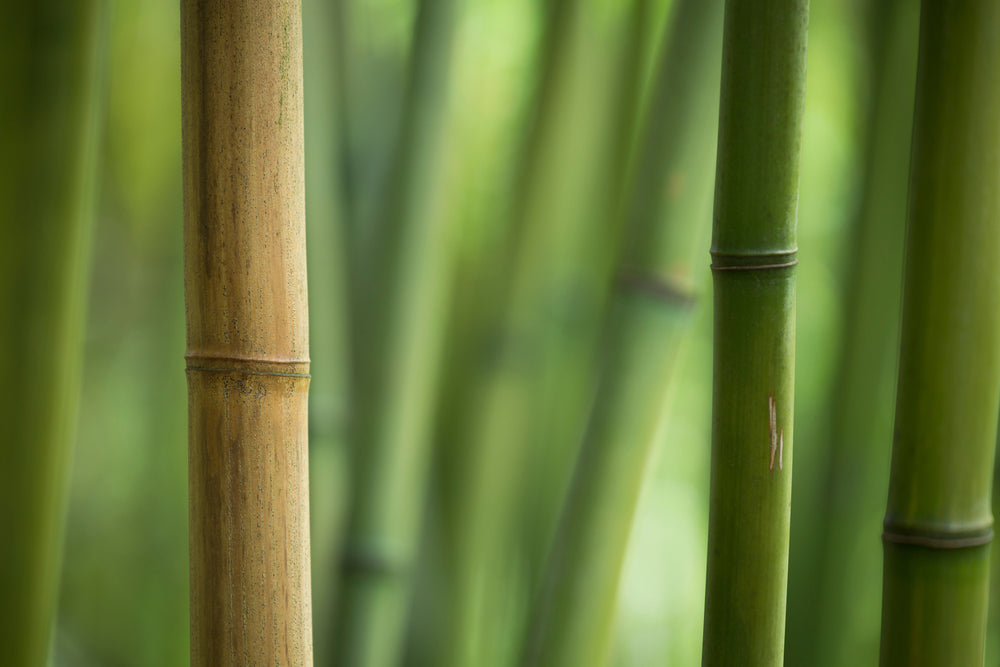 Bamboo
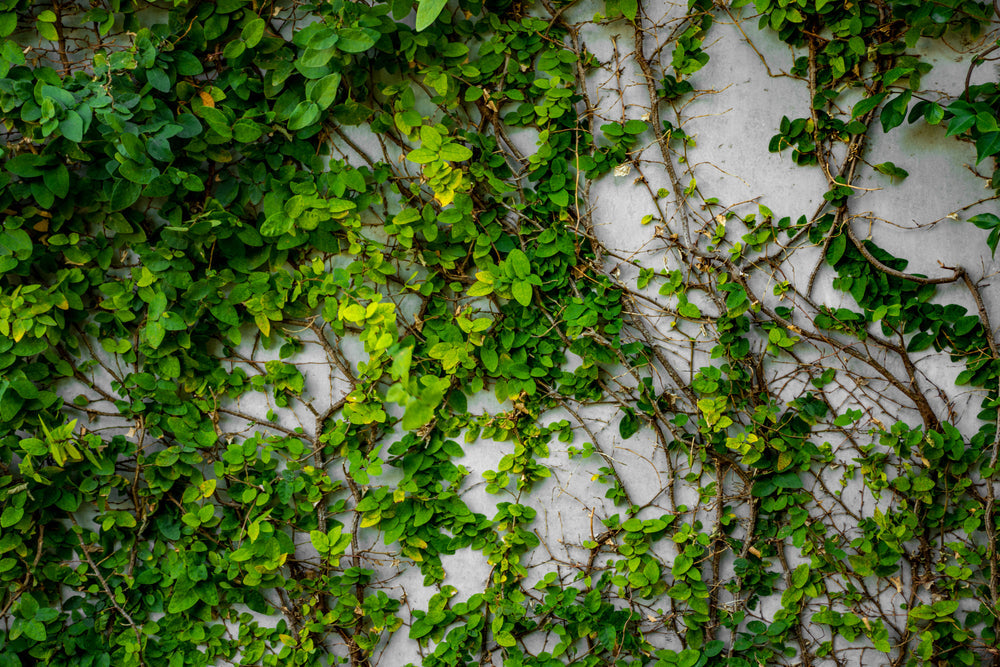 Climbers
 Flowering
 Grasses & Ferns
 Popular
-
Pines & Conifers
Pines & Conifers
 Pines
Pines
 Spruce & Fir
 Cypress
 Thuja
Thuja
 Redwood | Sequoia
-
Specimen
FREE DELIVERY OVER £350
Search results
Search results


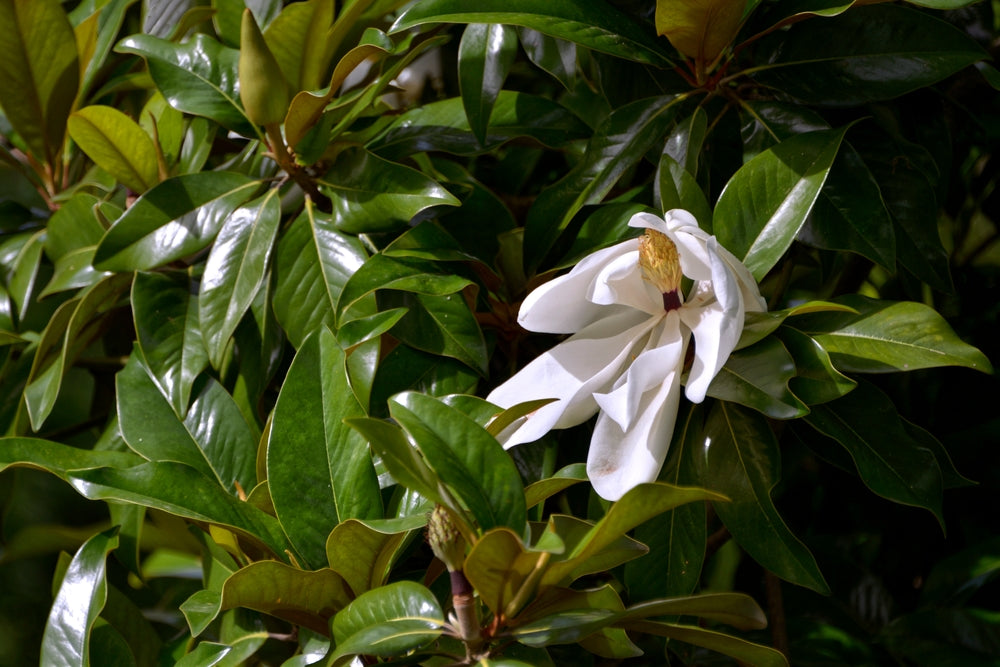
Magnolia grandiflora 'Galissonniere' is an exotic evergreen tree of conical to spreading pyramidal habit, with thick, leathery, glossy green leaves, velvety haired and rusty-brown beneath. Very large, saucer-shaped, creamy-white flowers with purple stamens bloom in summer and early autumn. Their fragrance is strong and pleasant.
Magnolia grandiflora 'Galissonniere' is easily grown in a wide range of soils, but prefers hummus-rich, slightly acidic, moist, and well-drained soils. Once established, it can withstand some drought. It thrives in full sun and partial shade. It has very good cold tolerance, but needs to be sheltered from harsh, dry winds. Low maintenance, it doesn’t require much pruning. Magnolia grandiflora 'Galissonniere' is a French variety of Southern Magnolia cultivated 150 years ago. It’s an excellent ornamental tree, often grown against the wall, rarely free-standing. Great for informal, cottage, woodland, and urban gardens. Excellent for beds and borders, informal hedges and screens, and for growing in containers.


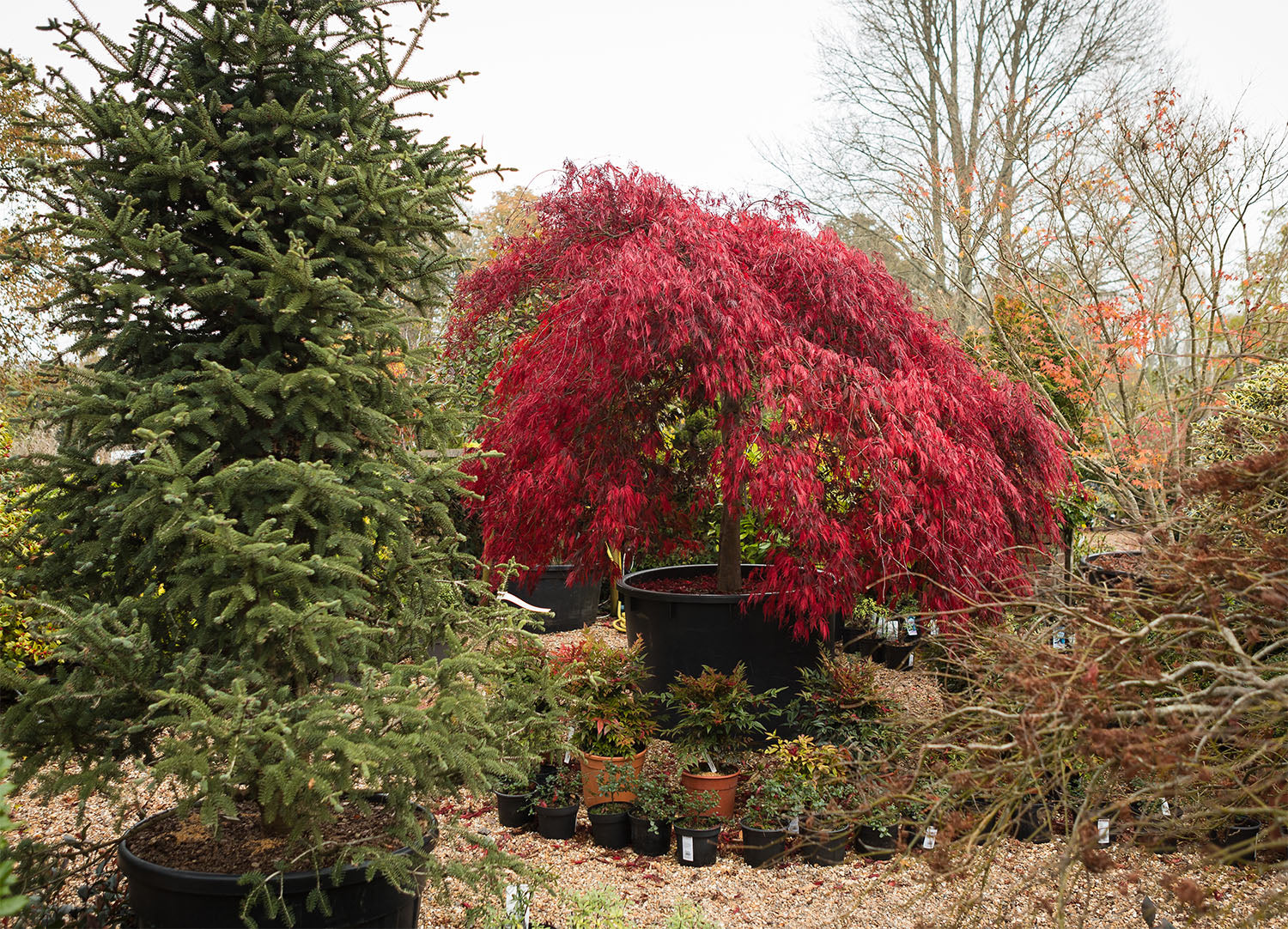
Acer palmatum 'Skeeters Broom' - Bushy - Height 190-200cm - 55lt
£495.00
Unit price perAcer palmatum 'Skeeters Broom' - Bushy - Height 190-200cm - 55lt
£495.00
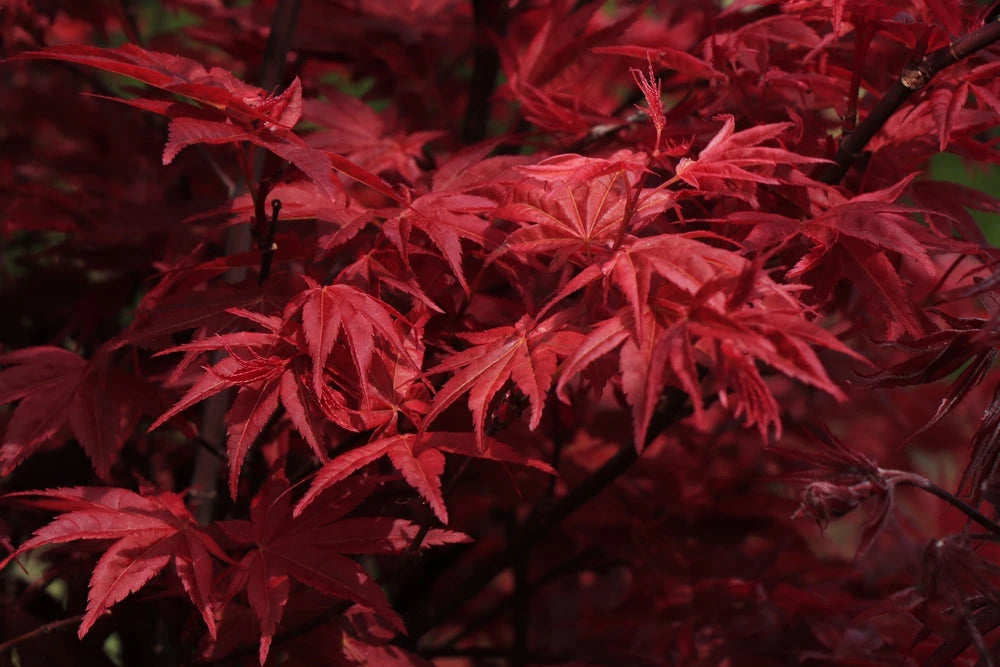
Unit price perAcer palmatum 'Skeeters Broom' is a unique and stunning cultivar of the Japanese maple tree. This deciduous tree is prized for its striking, bright red foliage that emerges in the spring and turns a deeper shade of red in the fall. The leaves are deeply lobed and delicate, creating a graceful and elegant appearance.
'Skeeters Broom' is a slow-growing tree that typically reaches a height of 6 to 8 feet and a spread of 4 to 6 feet, making it a perfect choice for smaller gardens, courtyards, or even containers. It has a compact and upright growth habit, with branches that grow vertically, giving it a narrow and columnar shape.
This Japanese maple is a low-maintenance tree that prefers partial shade and well-drained soil. It is hardy in zones 5-9 and can tolerate both cold winters and hot summers. 'Skeeters Broom' is also known for its excellent resistance to pests and diseases, making it a reliable addition to any landscape.
Overall, Acer palmatum 'Skeeters Broom' is a striking and unique cultivar that is sure to catch the eye of any passerby. Its compact size, easy care, and stunning foliage make it an excellent choice for gardens of all sizes and styles.


Albizia Julibrissin Summer Chocolate | Silk Tree - Clear Stem - Girth 6-8cm - Height 250-270cm - 30lt
£325.00
Unit price perAlbizia Julibrissin Summer Chocolate | Silk Tree - Clear Stem - Girth 6-8cm - Height 250-270cm - 30lt
£325.00
Unit price perThe Albizia julibrissin 'Summer Chocolate', commonly known as the Persian Silk Tree or Mimosa, is a striking ornamental tree with unique, dark foliage. Native to Asia, this deciduous tree has gained popularity in gardens due to its dramatic appearance and relatively low-maintenance nature.
'Summer Chocolate' stands out for its distinctive leaves, which are deep burgundy to chocolate-brown, creating a bold contrast against the more typical green foliage seen in many gardens. The fern-like, feathery leaves give the tree an elegant, airy appearance, especially when they sway gently in the wind. These leaves can grow up to 45 cm in length and close up at night, a characteristic known as nyctinasty.
During the summer months, from June to September, the tree produces a profusion of fluffy, pompom-like flowers that are pale pink in colour, reminiscent of silk threads. These flowers sit in clusters atop the branches, providing a beautiful contrast to the dark foliage. They are lightly scented and attractive to pollinators such as bees and butterflies, making the tree a great choice for wildlife-friendly gardens.
In terms of growth, 'Summer Chocolate' can reach a height of 4 to 6 metres, making it suitable for smaller gardens or as a specimen tree. It prefers full sun and well-drained soil but is adaptable to a range of soil types. Hardy in UK climates, it may benefit from some protection from harsh winter winds.
Overall, Albizia julibrissin 'Summer Chocolate' is a visually stunning tree that combines beauty with the benefit of attracting pollinators, adding a sense of tropical elegance to gardens. Its unusual foliage colour and delicate flowers make it a focal point in any landscape.
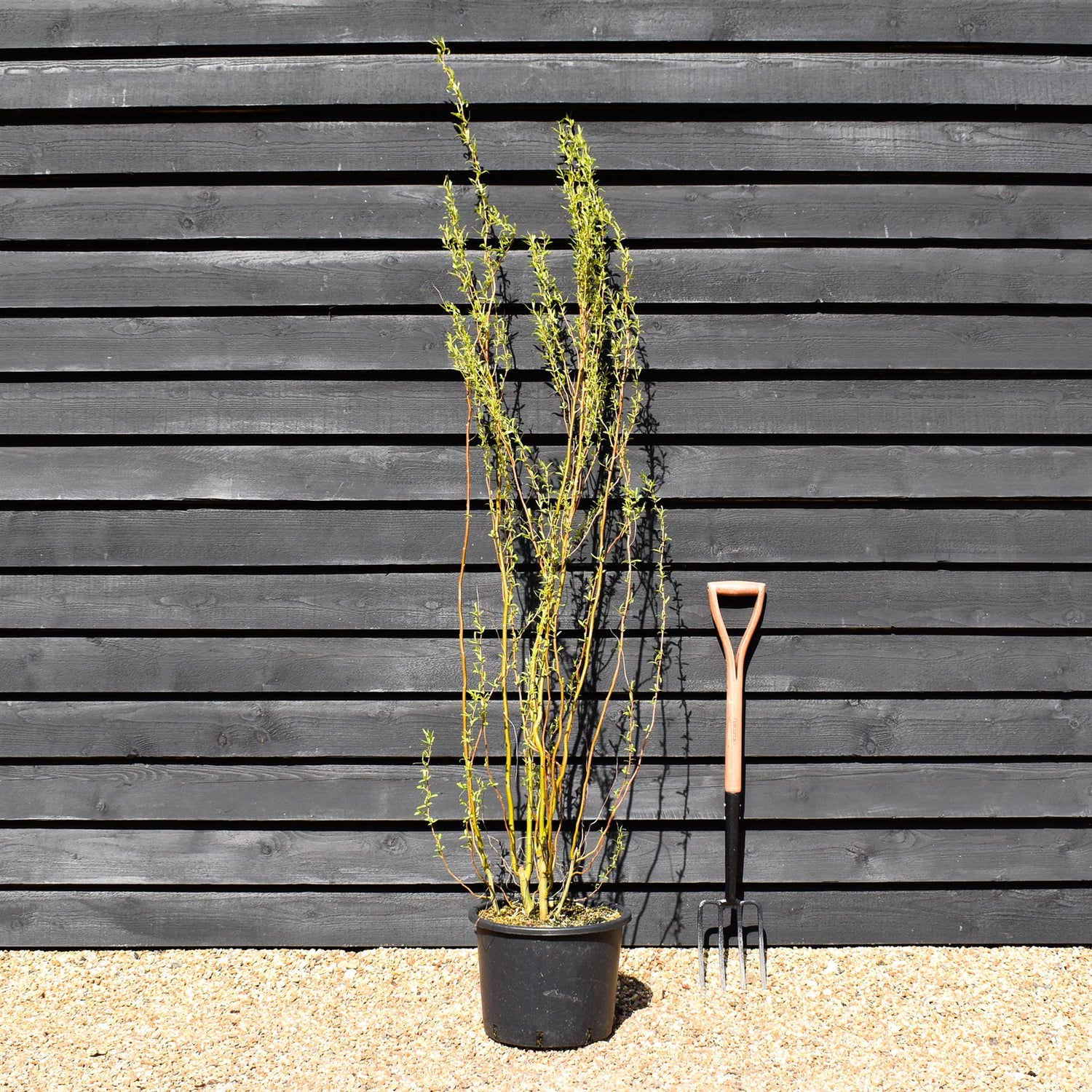


Salix babylonica var. pekinensis 'Tortuosa' | Corkscrew Willow - Height 175-195cm - 20lt
£160.00
Unit price perSalix babylonica var. pekinensis 'Tortuosa' | Corkscrew Willow - Height 175-195cm - 20lt
£160.00
Unit price per


Laburnum x watereri 'Vossii' | Golden Chain Tree - Clear Stem - Girth 8-10cm - Height 380-400cm - 45lt
£425.00
Unit price perLaburnum x watereri 'Vossii' | Golden Chain Tree - Clear Stem - Girth 8-10cm - Height 380-400cm - 45lt
£425.00
Unit price perLaburnum x watereri 'Vossii' is a cultivar of Laburnum x watereri and the best known Laburnum. It’s an attractive, large, deciduous shrub or small tree of bushy, spreading, capricious growing habit, vase-shaped crown, and glossy, deep-green leaves. Spectacular, long, dropping clusters of slightly scented, pea-like, golden yellow flowers bloom in spring, and are followed by attractive bean-like pods.
Laburnum x watereri 'Vossii' thrives in rich, fertile, medium moisture, well-drained soils. It likes full sun, but in hot areas, it appreciates some afternoon shade. It doesn’t like heat and humidity, but is tolerant of frost, winds, urban conditions, and de-icing salt. Its roots can sometimes be badly anchored. A very tough and hardy plant. All parts of the palnt are toxic to humans and animals. This stunning shrub with its rich, dense, golden yellow flower clusters resembling golden chains, is great as a specimen plant, but can also be trained for arbours and pergolas.


Magnolia grandiflora 'Galissonniere' is an exotic evergreen tree of conical to spreading pyramidal habit, with thick, leathery, glossy green leaves, velvety haired and rusty-brown beneath. Very large, saucer-shaped, creamy-white flowers with purple stamens bloom in summer and early autumn. Their fragrance is strong and pleasant.
Magnolia grandiflora 'Galissonniere' is easily grown in a wide range of soils, but prefers hummus-rich, slightly acidic, moist, and well-drained soils. Once established, it can withstand some drought. It thrives in full sun and partial shade. It has very good cold tolerance, but needs to be sheltered from harsh, dry winds. Low maintenance, it doesn’t require much pruning. Magnolia grandiflora 'Galissonniere' is a French variety of Southern Magnolia cultivated 150 years ago. It’s an excellent ornamental tree, often grown against the wall, rarely free-standing. Great for informal, cottage, woodland, and urban gardens. Excellent for beds and borders, informal hedges and screens, and for growing in containers.


Scarlet oak | Quercus coccinea - Height 140-160cm - Girth 4-6cm - Pot Grown - 10lt
£135.00
Unit price perScarlet oak | Quercus coccinea - Height 140-160cm - Girth 4-6cm - Pot Grown - 10lt
£135.00
Unit price perQuercus coccinea, known as the scarlet oak, is a stunning deciduous tree native to North America and admired for its brilliant seasonal display. In spring and summer, its deeply lobed green leaves form a graceful canopy, but it is in autumn that the tree reveals its true brilliance—transforming into fiery shades of scarlet, crimson, and deep red. This spectacular burst of color makes the scarlet oak a cherished symbol of vitality, transformation, and natural beauty. Its strong wood, hardy growth, and deep root system reflect resilience and endurance, qualities that have long connected this oak to strength and stability. Thriving in upland soils and sunlit environments, Quercus coccinea also plays an important ecological role, supporting wildlife and enriching landscapes with its vibrant presence. With its striking appearance and enduring symbolism, the scarlet oak embodies the essence of boldness, energy, and timeless connection to the natural world.


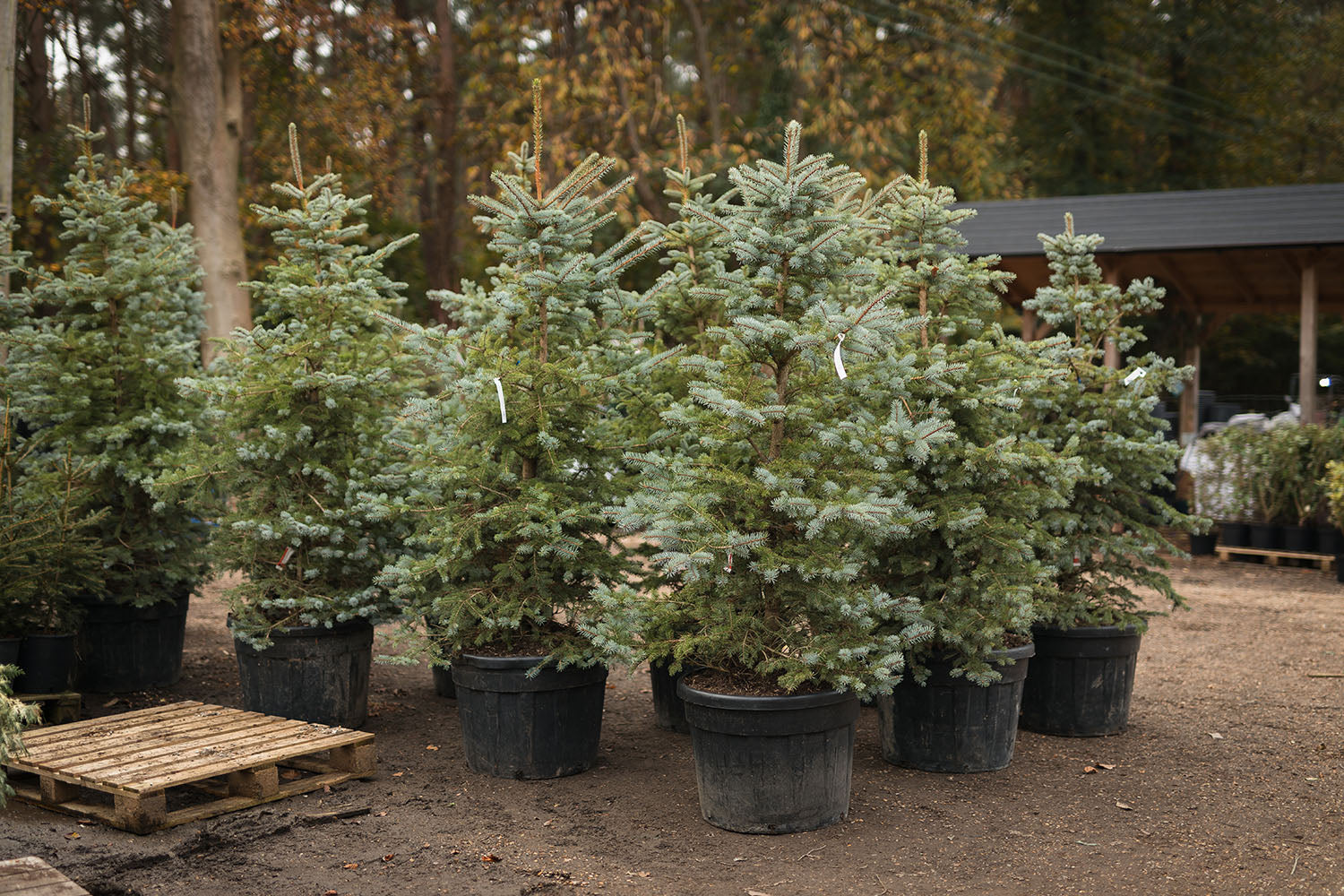
Picea Omorika Nana | Dwarf Serbian Spruce - Height 80cm - 20lt
£258.00
Unit price perPicea Omorika Nana | Dwarf Serbian Spruce - Height 80cm - 20lt
£258.00
Unit price perPicea omorika ‘Nana’, commonly known as the dwarf Serbian spruce, is a beautiful compact evergreen conifer prized for its elegant shape, attractive foliage and excellent garden performance in the UK. This slow-growing variety is a smaller form of the native Serbian spruce, making it ideal for gardens where space is limited but year-round structure and interest are required.
Unlike the larger Serbian spruce, which can become a substantial tree, ‘Nana’ forms a dense, rounded to broadly conical shrub with a neat, architectural habit. It typically grows to around 1.5–3 metres in height and width over many years, making it well suited to smaller gardens, mixed borders, rockeries, Japanese-style planting schemes and large containers.
The foliage is one of its most appealing features. The short, fine needles are arranged densely along the branches, displaying a rich green colour on the upper surface with distinctive silvery-white bands underneath. This creates a shimmering effect as the branches move in the breeze, giving the plant a refined and elegant appearance throughout the year. The attractive colouring provides excellent contrast when planted alongside flowering shrubs, ornamental grasses or darker-leaved evergreens.
Picea omorika ‘Nana’ is a hardy and reliable plant, tolerating UK winters well and performing best in a sunny or partially shaded position. It prefers a moist but well-drained soil and is adaptable to a range of soil types, including clay soils, provided drainage is adequate. Once established, it requires very little maintenance and naturally maintains its attractive shape without regular pruning.
This dwarf Serbian spruce is also well suited to urban gardens, as it handles pollution and exposed conditions better than many conifers. It makes an excellent low-maintenance specimen plant, adding evergreen interest, texture and form to the garden all year round.
A versatile and elegant conifer, Picea omorika ‘Nana’ is an excellent choice for gardeners looking for a distinctive evergreen that offers beauty, structure and long-term reliability without becoming too large.


Cercidiphyllum japonicum | Japanese Katsura Tree - Clear Stem - Girth 8-10cm - Height 340-360cm - 45lt
£410.00
Unit price perCercidiphyllum japonicum | Japanese Katsura Tree - Clear Stem - Girth 8-10cm - Height 340-360cm - 45lt
£410.00
Unit price per


Alnus Incana - Grey Alder tree - Clear Stem - Standard - Girth 12-14cm - Height 450-480cm - 70lt
£390.00
Unit price perAlnus Incana - Grey Alder tree - Clear Stem - Standard - Girth 12-14cm - Height 450-480cm - 70lt
£390.00
Unit price perAlnus incana, commonly known as grey alder, is a deciduous tree belonging to the birch family, Betulaceae. Native to Europe, Asia, and North America, it is a resilient species often found in riparian zones, wetlands, and areas with moist soils. This medium-sized tree typically grows to heights of 15 to 25 metres, with a slender trunk and smooth, greyish-brown bark, which often develops fine fissures with age.
The leaves of Alnus incana are oval to elliptic in shape, measuring 5 to 10 centimetres in length. They are characterised by their serrated margins and a dark green upper surface, with a paler, slightly downy underside, giving them a distinct two-tone appearance. The leaves emerge in early spring and typically turn yellow before falling in autumn.
Grey alder is monoecious, meaning that both male and female reproductive structures are found on the same tree. The male catkins, which are long and pendulous, appear in early spring before the leaves, while the smaller, more upright female catkins develop into woody cones that persist on the tree through the winter. These cones release small winged seeds, which are dispersed by wind and water.
One of the notable features of Alnus incana is its ability to fix nitrogen through a symbiotic relationship with the bacterium *Frankia*. This allows it to thrive in nutrient-poor soils and contribute to soil fertility, making it a valuable species for land restoration and erosion control.
Grey alder is often planted in landscaping and reforestation projects, particularly in areas prone to flooding or soil degradation. Its rapid growth, hardiness, and ecological benefits make it an important species in maintaining the health of wetland ecosystems.
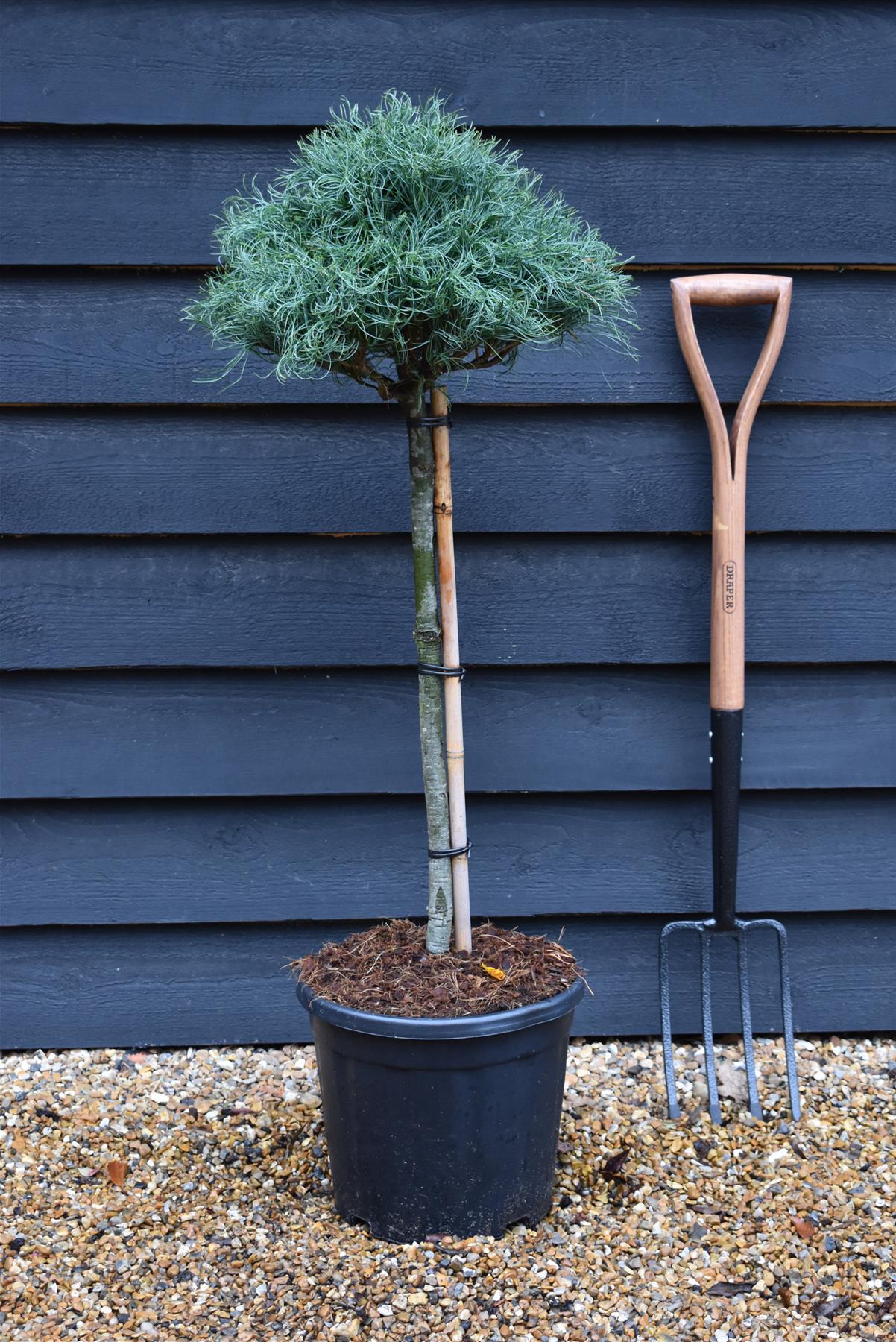
Pinus strobus 'Squiggles' - 60cm Clear Stem - Height 90cm - 15lt
£120.00
Unit price perPinus strobus 'Squiggles' - 60cm Clear Stem - Height 90cm - 15lt
£120.00
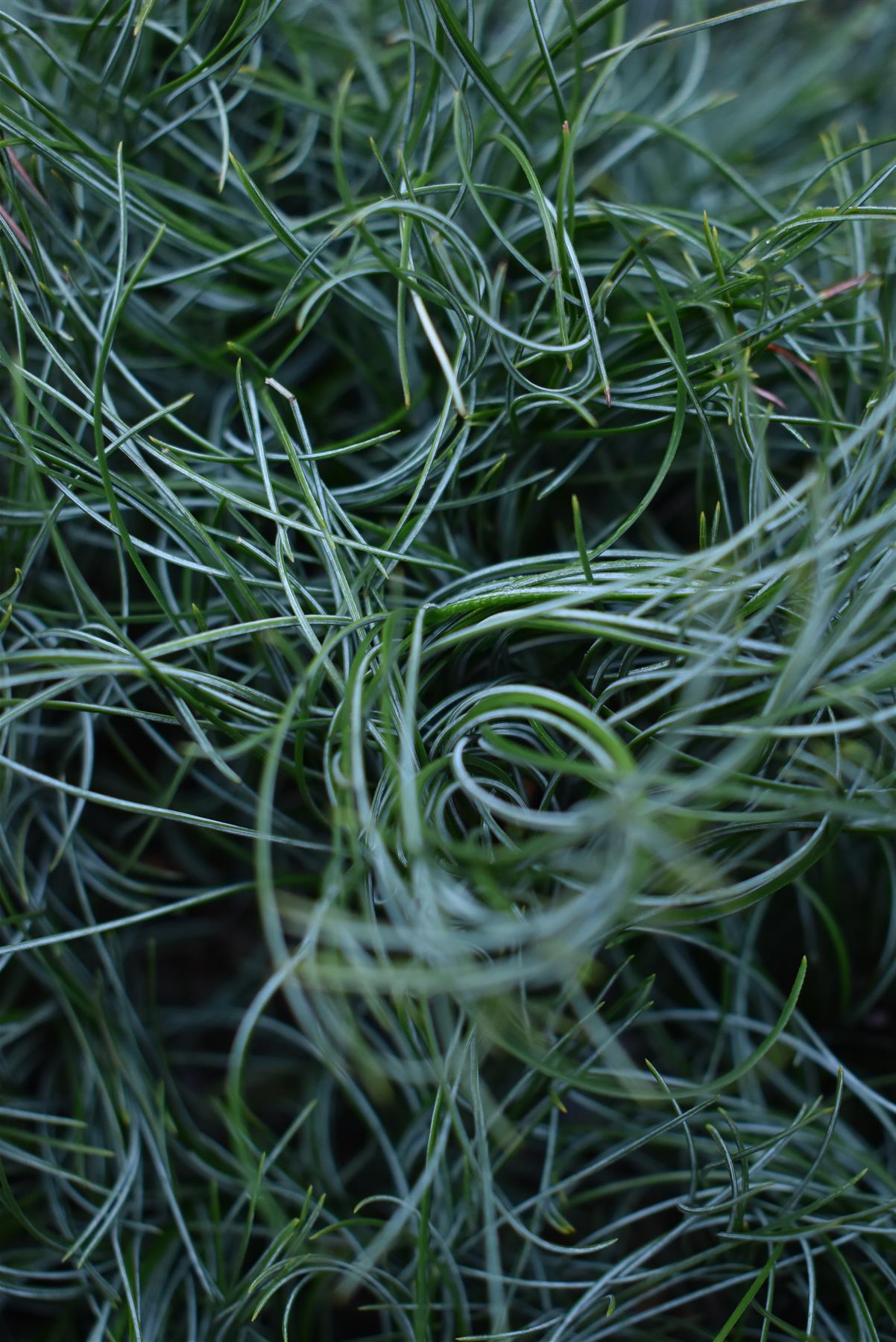
Unit price perPinus strobus, commonly known as Eastern white pine, produces distinctive "squiggles" that are most noticeable in the spring and early summer. These squiggles are the immature, pollen-bearing male cones (known as catkins), which hang in clusters from the branches. They start out as small, greenish-yellow structures, often curling or curving, giving them a squiggly appearance. As they mature, these catkins release copious amounts of fine, yellow pollen that can be seen dusting the ground, cars, and nearby surfaces during peak pollination.
The squiggles can vary in size, typically ranging from 1 to 2 centimetres in length. Their twisted, sometimes irregular shape makes them stand out against the linear, needle-like foliage of the tree. Once the pollen is released, the squiggles wither and eventually fall off the tree, often accumulating in significant quantities on the ground beneath.
Pinus strobus is a dominant tree in many North American forests, but it can also be found in parks, gardens, and managed landscapes in the UK. The squiggles are a seasonal feature that many people in the UK might notice, especially during windy days when the pollen is easily carried through the air.
In addition to their role in reproduction, these male cones are a subtle indicator of the health and maturity of the tree. A robust display of squiggles generally suggests a healthy tree that is capable of producing sufficient pollen for reproduction. Their unusual, curly shapes add an element of visual interest to the tree, although they are often overlooked in favour of the more recognisable long cones and soft, blue-green needles of the Eastern white pine.


Catalpa Bignonioides (Ovata) Tree | Indian bean tree - Standard - Mature Tree - Height 350cm - 150lt
£725.00
Unit price perCatalpa Bignonioides (Ovata) Tree | Indian bean tree - Standard - Mature Tree - Height 350cm - 150lt
£725.00
Unit price per


Erman's Birch | Betula ermanii - Height 200-250cm - Girth 8-10cm - 45lt
£255.00
Unit price perErman's Birch | Betula ermanii - Height 200-250cm - Girth 8-10cm - 45lt
£255.00
Unit price per


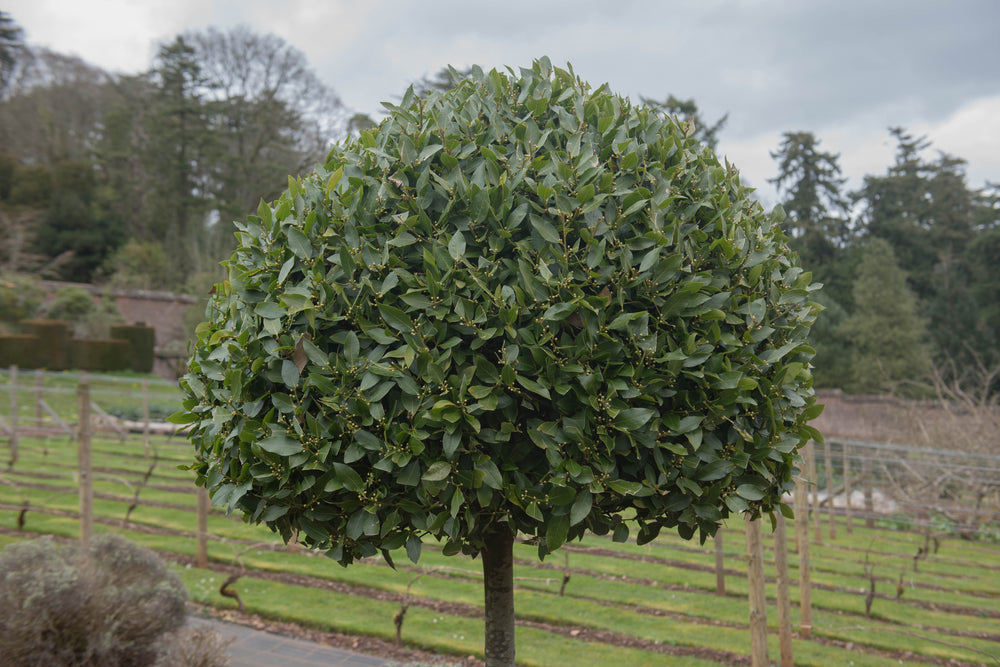
Laurus Nobilis - Clear Stem (65cm)| Bay laurel tree - Height 130-135cm - 18lt
£105.00
Unit price perLaurus Nobilis - Clear Stem (65cm)| Bay laurel tree - Height 130-135cm - 18lt
£105.00
Unit price per


Cercidiphyllum japonicum | Japanese Katsura Tree - Height 140-220cm - 20lt
£105.00
Unit price perCercidiphyllum japonicum | Japanese Katsura Tree - Height 140-220cm - 20lt
£105.00
Unit price per


Acer Platanoides 'Drummondii' | Norway Maple 1/2 std Clear Stem - 150-180cm, 10lt
£358.00
Unit price perAcer Platanoides 'Drummondii' | Norway Maple 1/2 std Clear Stem - 150-180cm, 10lt
£358.00
Unit price per


Photinia 'Atropurpurea Nana' | Japanese barberry 'Atropurpurea Nana' Half Standard - Height 120-130cm, - 30lt
£140.00
Unit price perPhotinia 'Atropurpurea Nana' | Japanese barberry 'Atropurpurea Nana' Half Standard - Height 120-130cm, - 30lt
£140.00
Unit price per


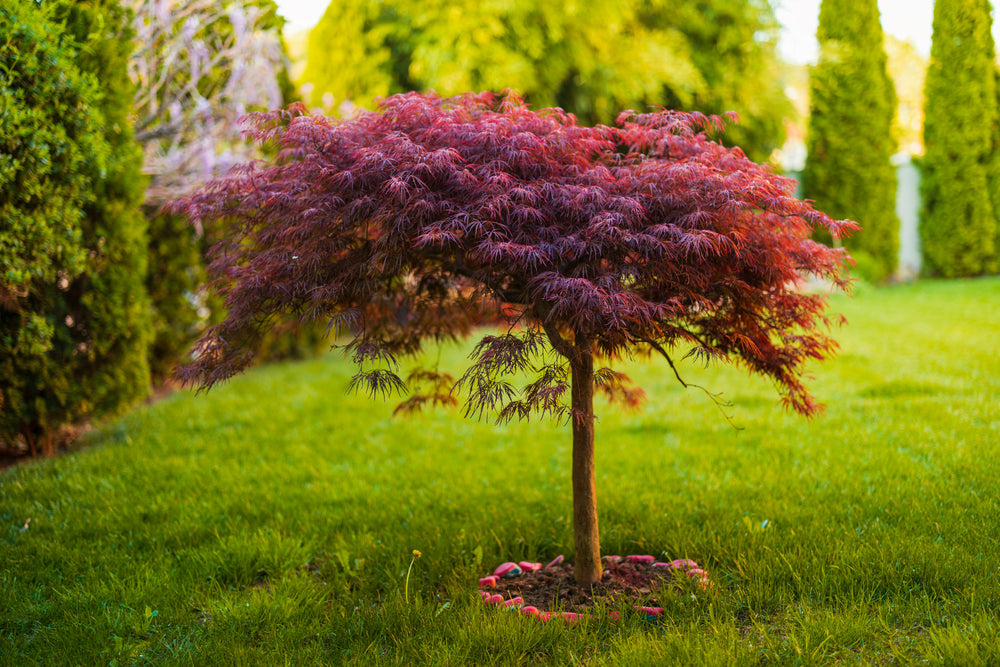
Laceleaf Japanese maple | Acer palmatum Dissectum - - Clear Stem 20cm - Height 50-80cm - 5lt
£50.00
Unit price perLaceleaf Japanese maple | Acer palmatum Dissectum - - Clear Stem 20cm - Height 50-80cm - 5lt
£50.00
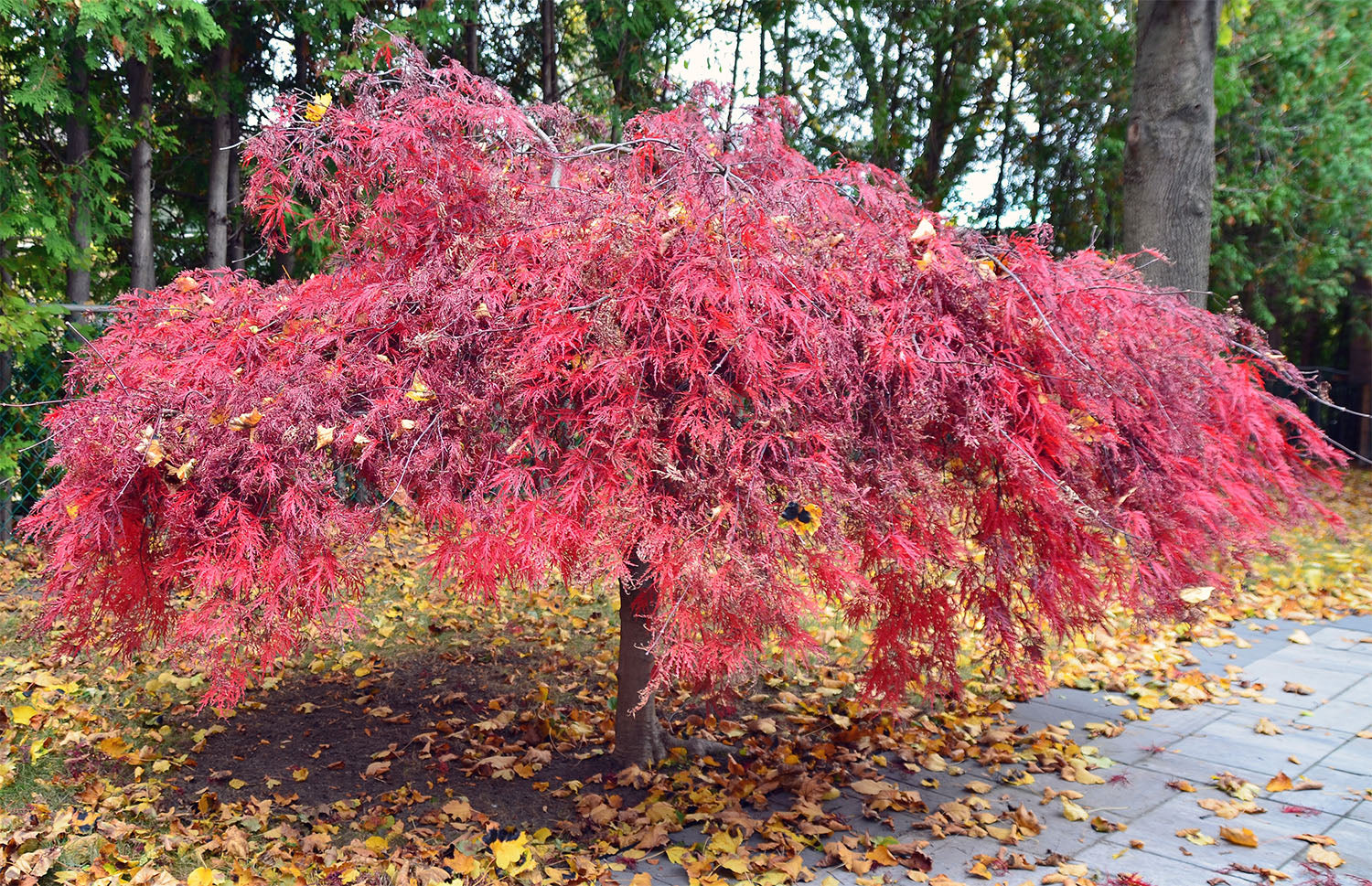
Unit price perAcer palmatum dissectum, commonly known as the laceleaf Japanese maple, is a popular ornamental tree renowned for its intricate, finely divided foliage. This deciduous shrub or small tree is part of the Aceraceae family and originates from Japan, Korea, and China. It typically grows to a height of 2 to 3 meters (6 to 10 feet) with a similar spread, making it a perfect choice for small gardens and container planting.
The leaves of Acer palmatum dissectum are deeply lobed and serrated, resembling delicate lace. Throughout the seasons, the foliage transitions from a vibrant green in spring and summer to spectacular shades of red, orange, and purple in autumn, providing year-round interest. The tree's cascading, weeping habit adds an elegant and graceful element to any landscape design.
Acer palmatum dissectum prefers a position in partial shade with well-drained, moist soil. It is relatively low-maintenance, requiring minimal pruning to maintain its shape. This tree is also known for its resilience to pests and diseases. Its compact size and striking appearance make it an excellent choice for adding structure and color to garden borders, patios, and rockeries in British gardens.
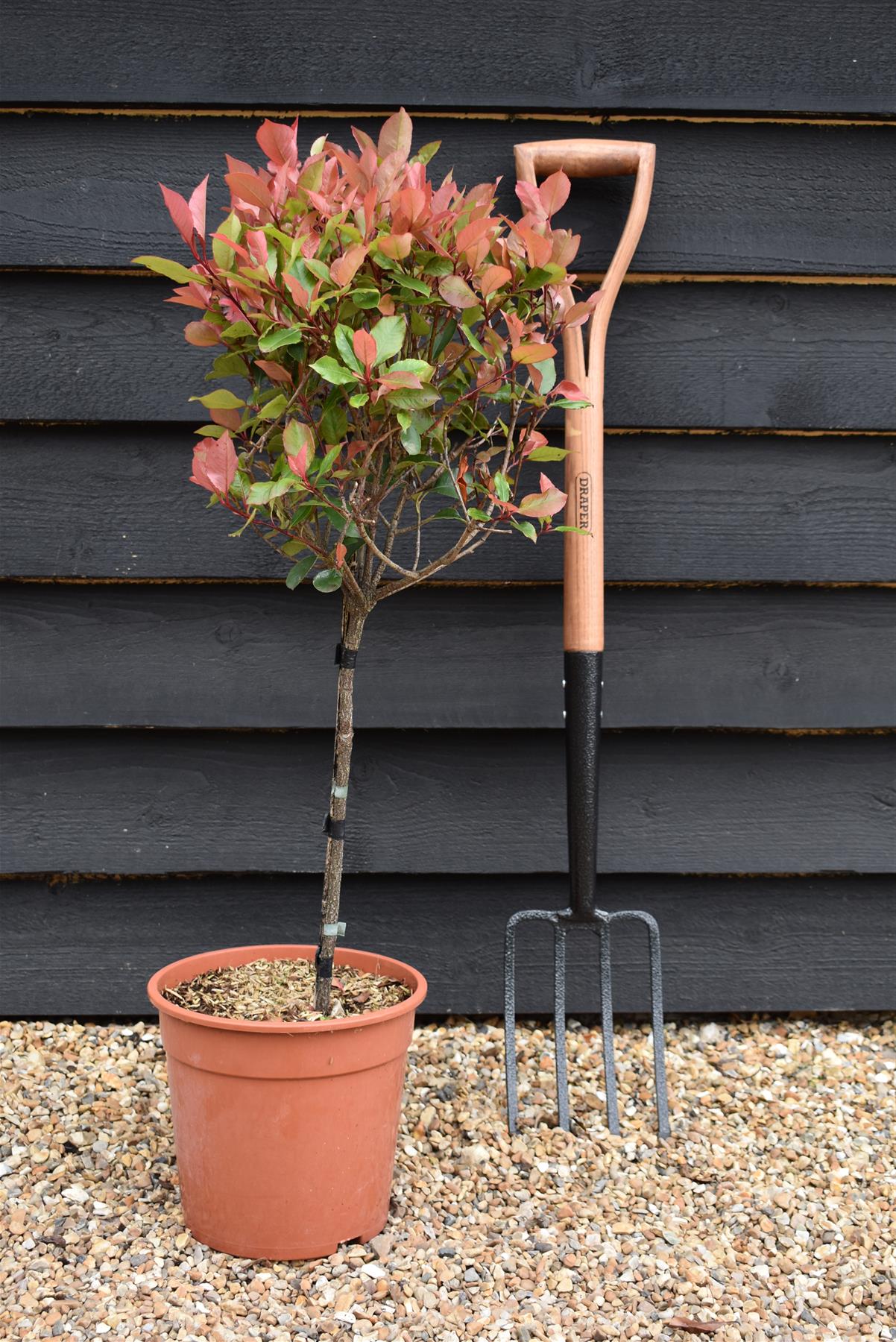
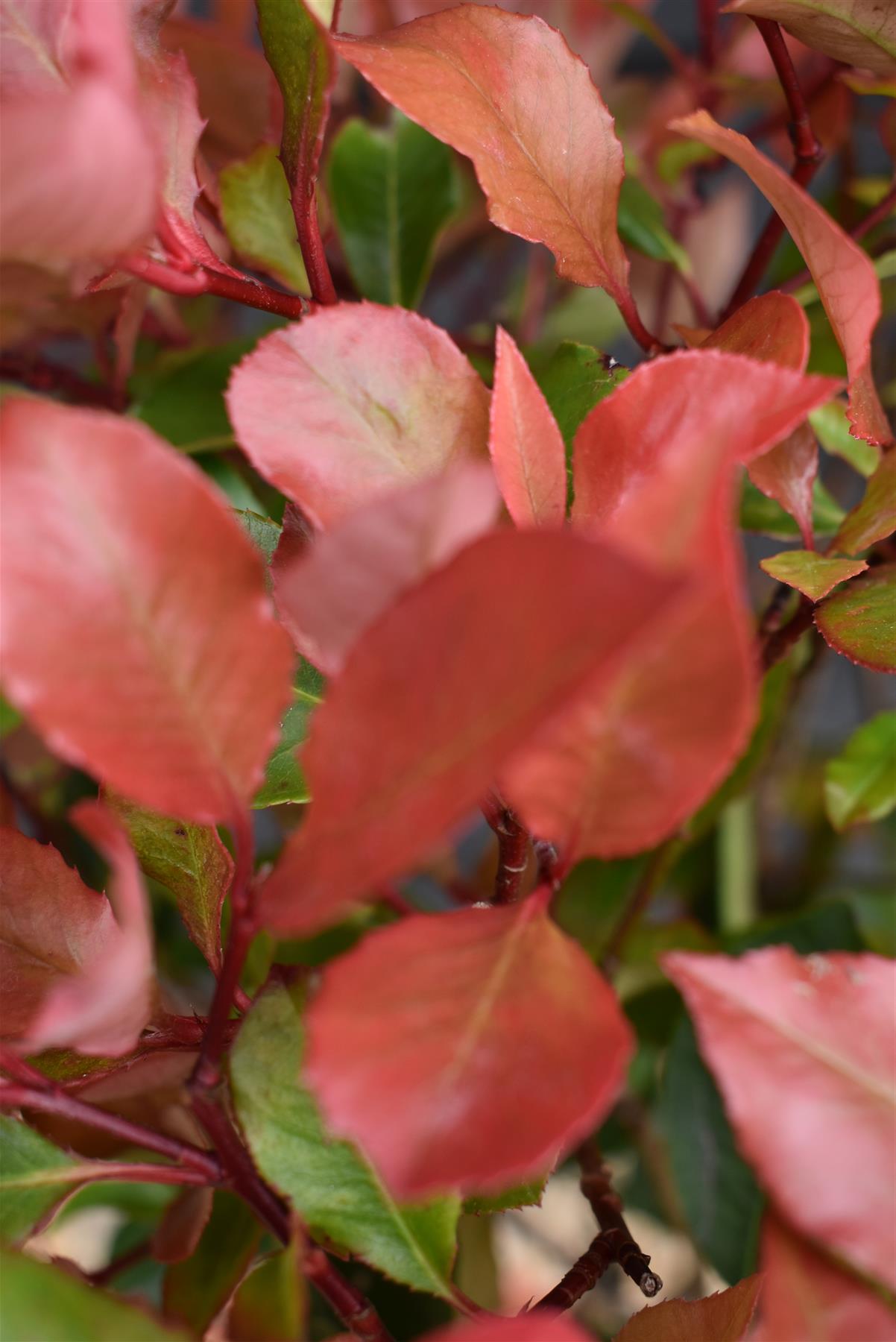
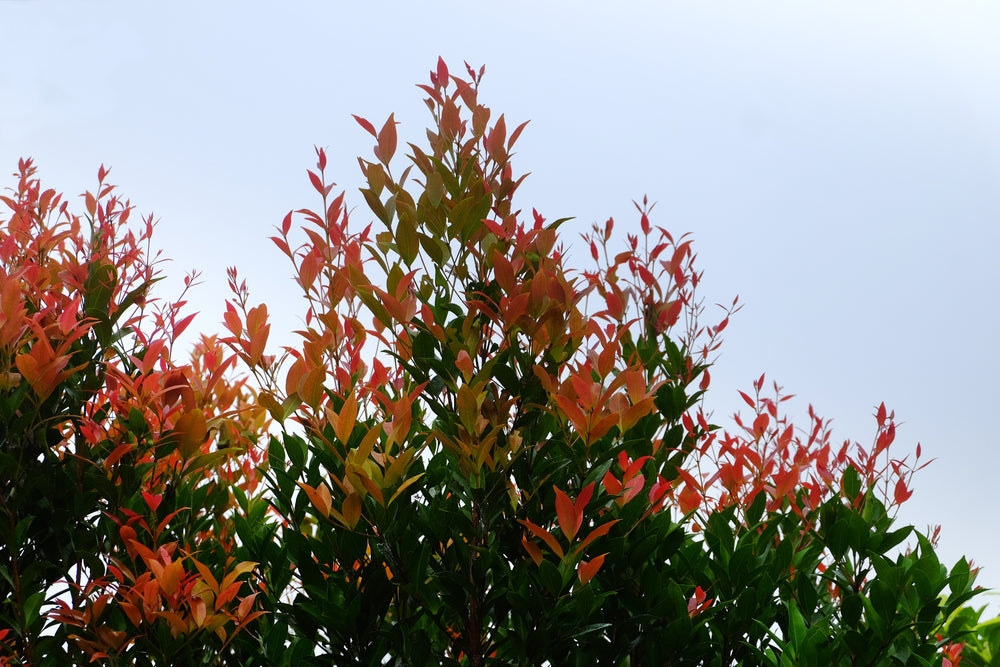
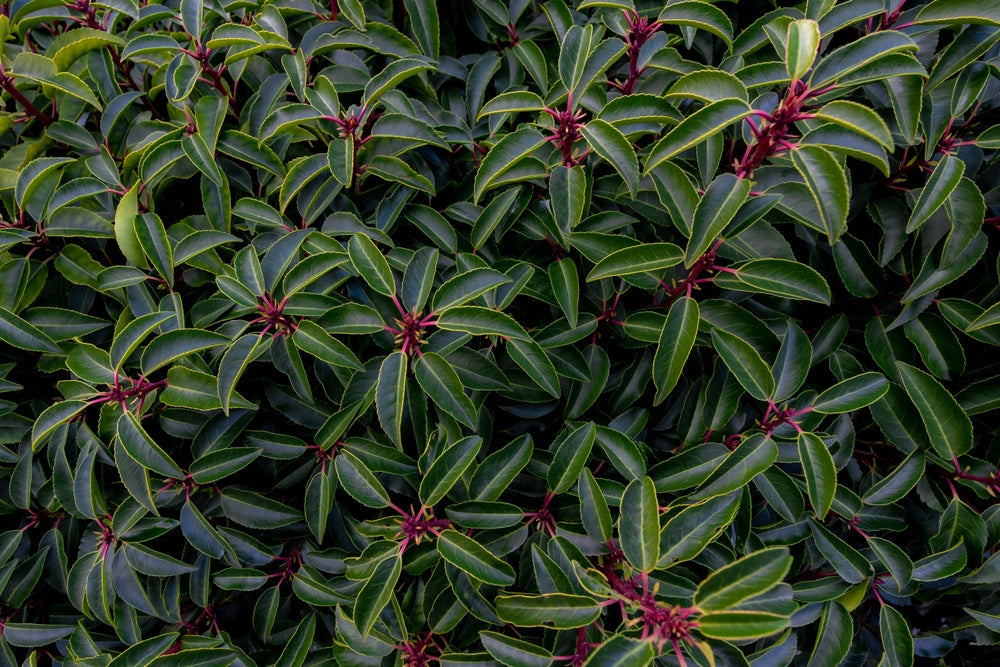
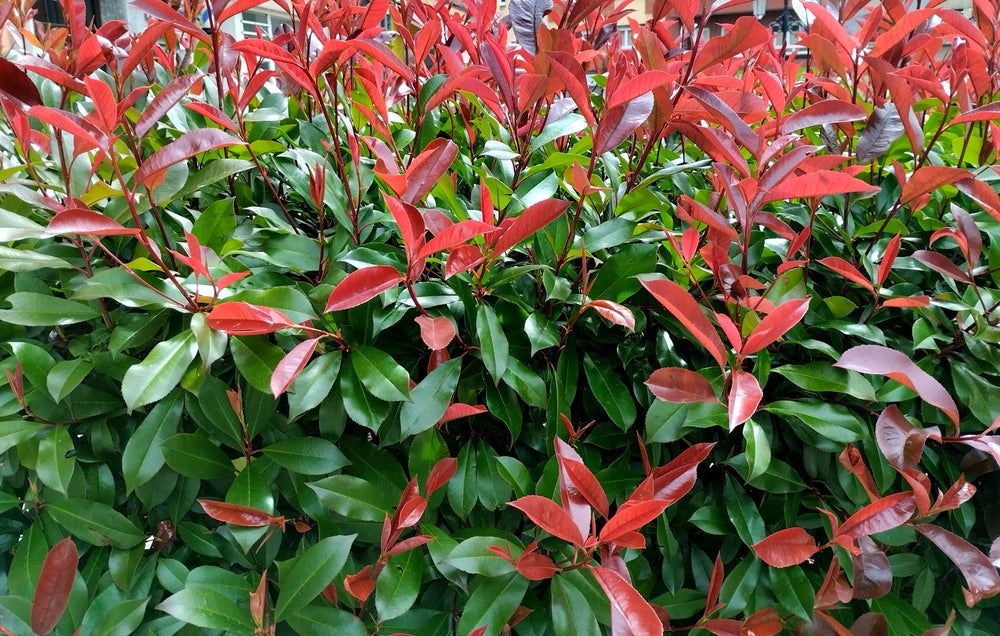
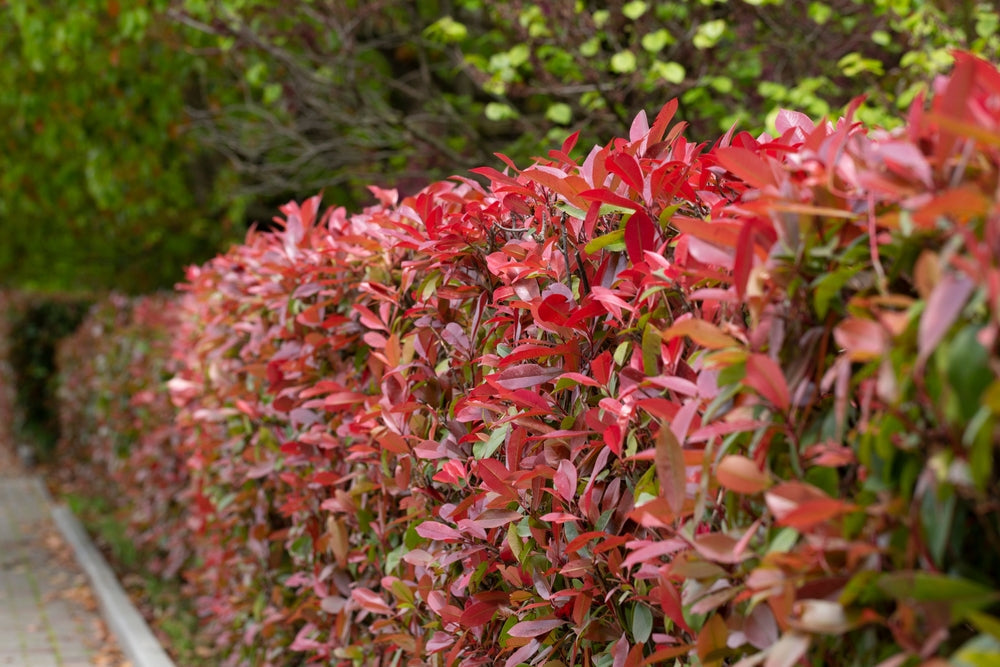
Photinia x fraseri 'Red Robin' on a small 40cm clear stem with a total height of 80cm is a striking ornamental plant, perfect for website descriptions. This plant features a clear, straight stem that is 40cm in height, supporting a dense, rounded crown of glossy leaves. The young foliage emerges in a bright, vibrant red, creating a striking contrast against the older, dark green leaves. As the plant matures, the leaves gradually turn to a deep, rich green, maintaining their glossy sheen.
With a total height of 80cm, this Photinia is compact and ideal for small gardens, patios, or as a potted plant. It's a versatile shrub, popular for its year-round interest and low maintenance requirements. It thrives in well-drained soil and prefers a position in full sun to partial shade, where its colors are most vibrant.
Its ability to withstand pruning makes it a popular choice for creating structured looks or hedges. The plant also produces small white flowers in the spring, although these are often overshadowed by the stunning foliage. This Photinia x fraseri 'Red Robin' is an excellent choice for anyone looking to add a splash of color and elegance to their garden or outdoor space.


Alnus Cordata - Alder tree - Height 300-350cm - 30lt
£260.00
Unit price perAlnus Cordata - Alder tree - Height 300-350cm - 30lt
£260.00
Unit price perAlnus cordata, commonly known as the Italian alder, is a medium to large deciduous tree native to southern Italy and parts of Corsica. It belongs to the Betulaceae family and is highly valued for its ability to thrive in poor soils and challenging environmental conditions. This species is often planted for ornamental purposes, soil improvement, and as a windbreak due to its robust growth and adaptability.
The tree can reach heights of up to 25-30 metres (82-98 feet) with a trunk diameter of about 1 metre (3.3 feet). It has a relatively narrow, conical crown, which makes it an attractive choice for landscaping in urban and rural environments. The bark is smooth and greyish-brown when young, developing shallow fissures with age.
Alnus cordata is noted for its distinctive heart-shaped (cordate) leaves, which are bright green and glossy, measuring 7-12 cm in length. Unlike some other alders, the leaves of A. cordata remain on the tree until late autumn, giving it an extended season of greenery. In spring, it produces small, inconspicuous catkins, with male catkins being pendulous and yellowish, and female catkins more compact and upright. These develop into small, woody cones that persist on the tree through winter.
One of the key characteristics of Alnus cordata is its nitrogen-fixing ability. Like other alders, it forms a symbiotic relationship with the bacterium Frankia, which allows it to fix atmospheric nitrogen into the soil. This quality makes it an excellent species for improving soil fertility, particularly in degraded or nutrient-poor areas.
Overall, the Italian alder is a resilient and versatile tree, well-suited to a variety of landscapes, including wet or compacted soils, and is an important species for ecological restoration projects.