

-
Trees
Trees
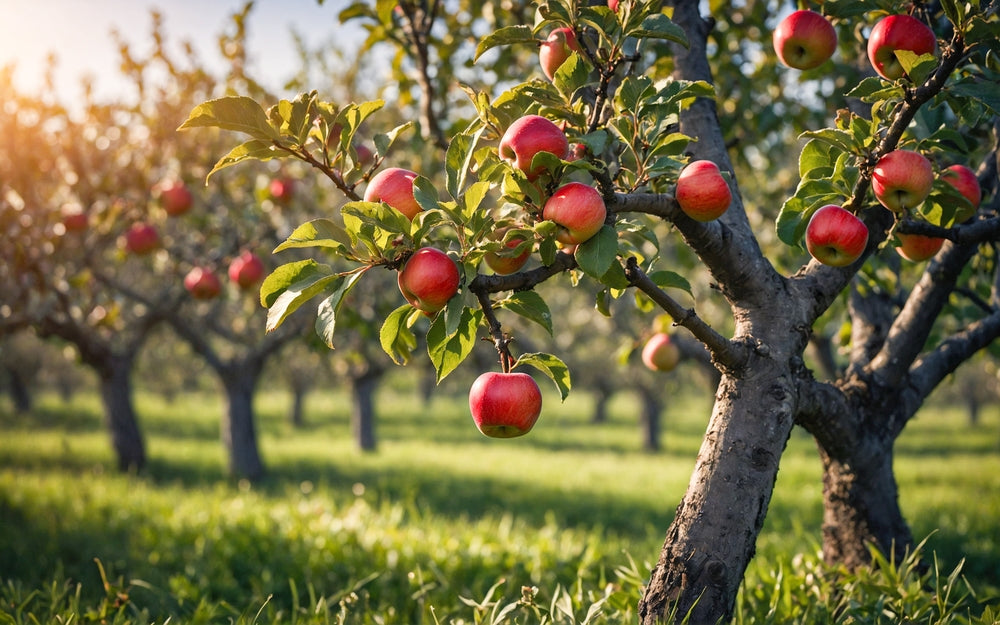 Fruit Trees
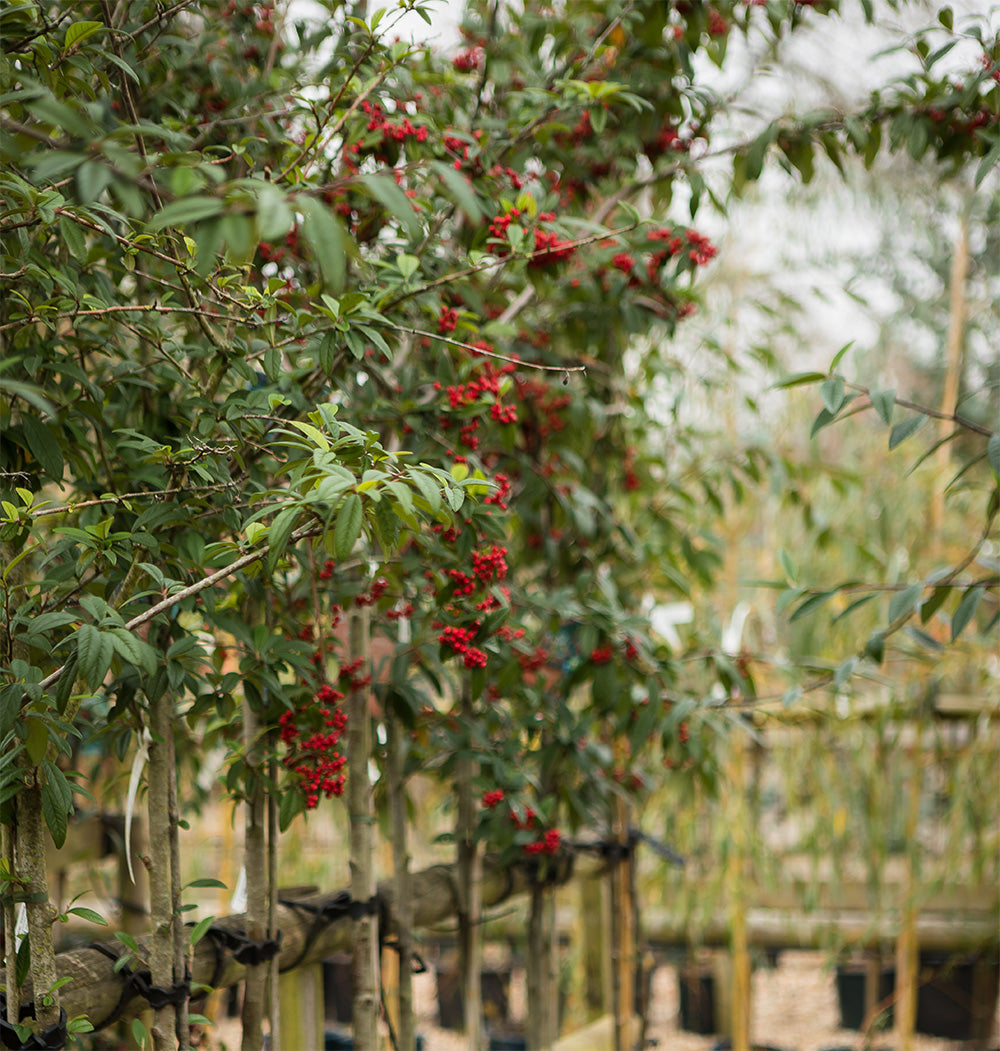 Ornamental
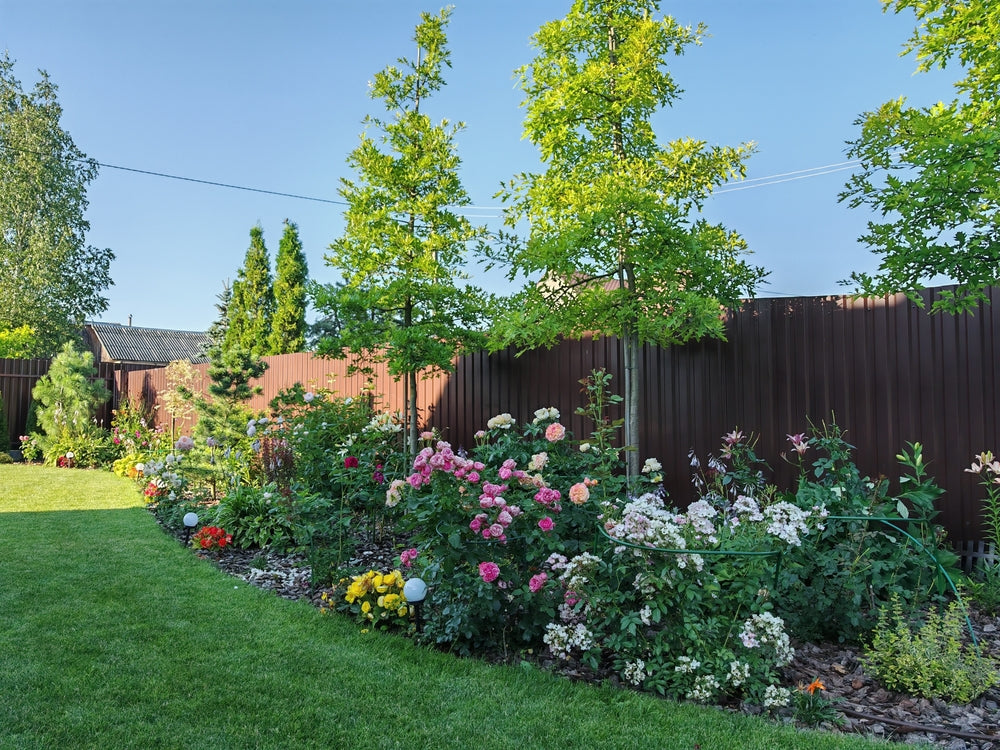 Screening
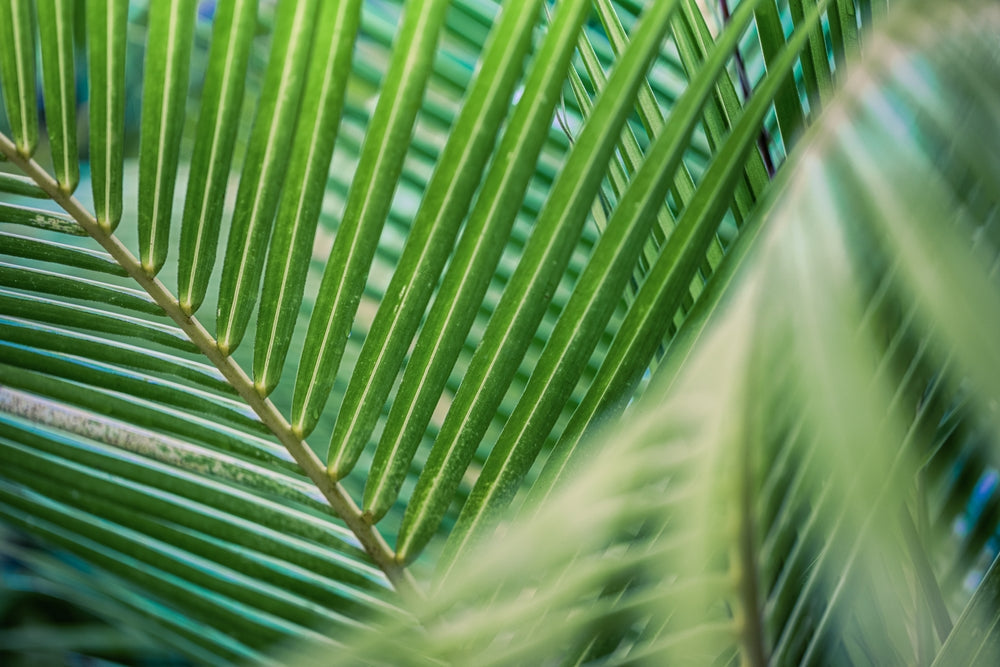 Palms
By FeaturesBy Shape
Palms
By FeaturesBy Shape -
Shrubs
Shrubs
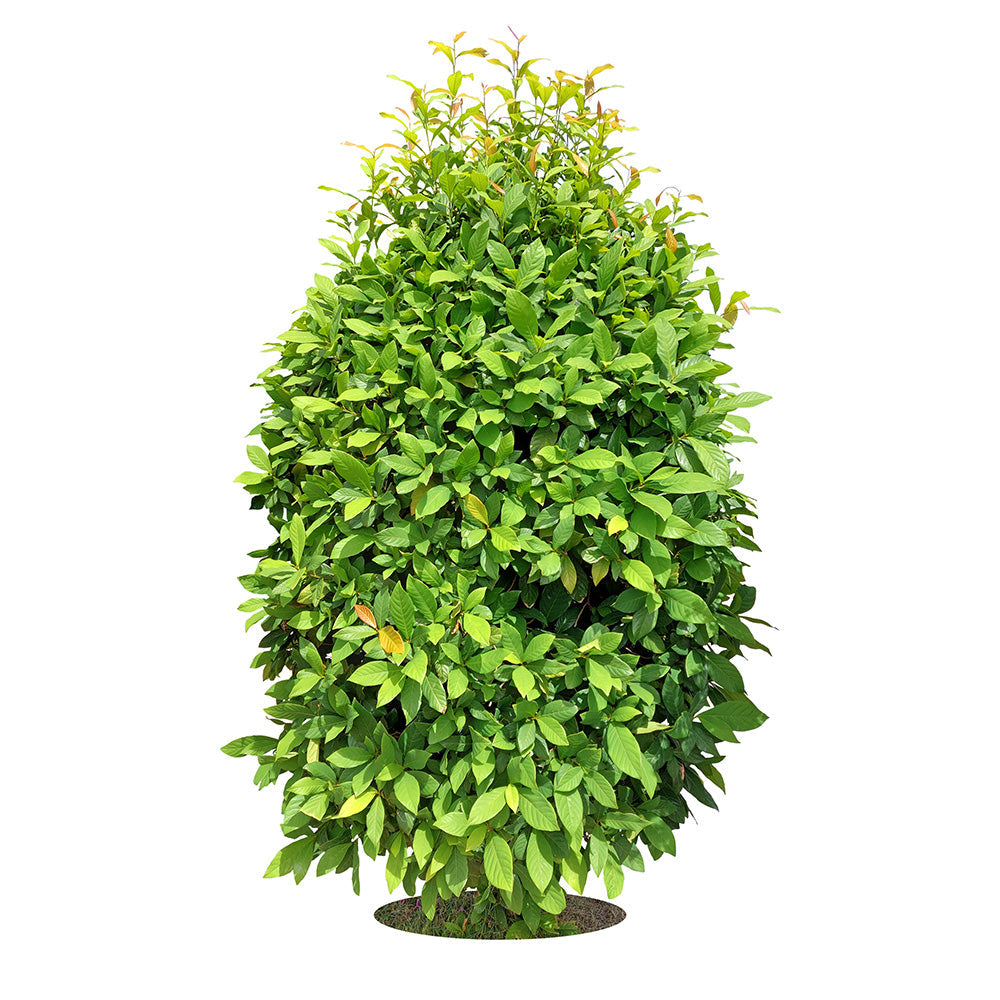 Large shrubs
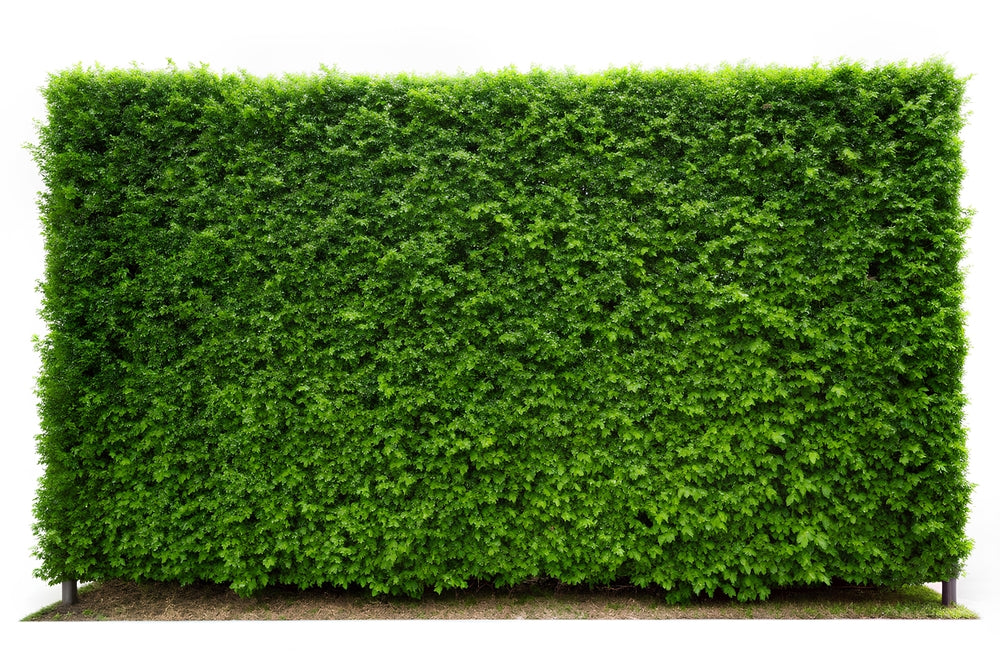 Hedging
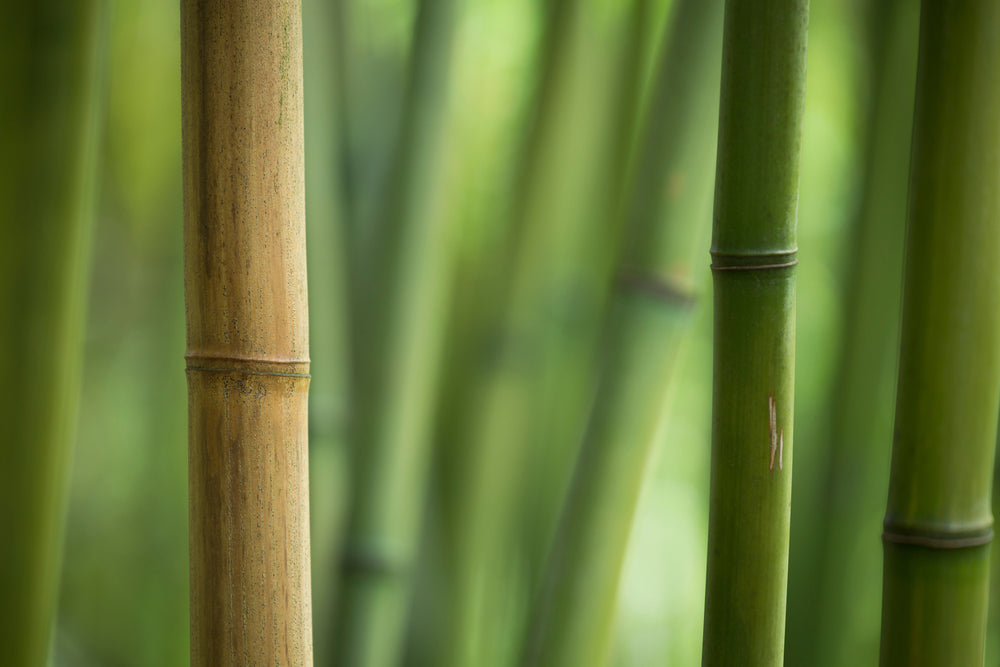 Bamboo
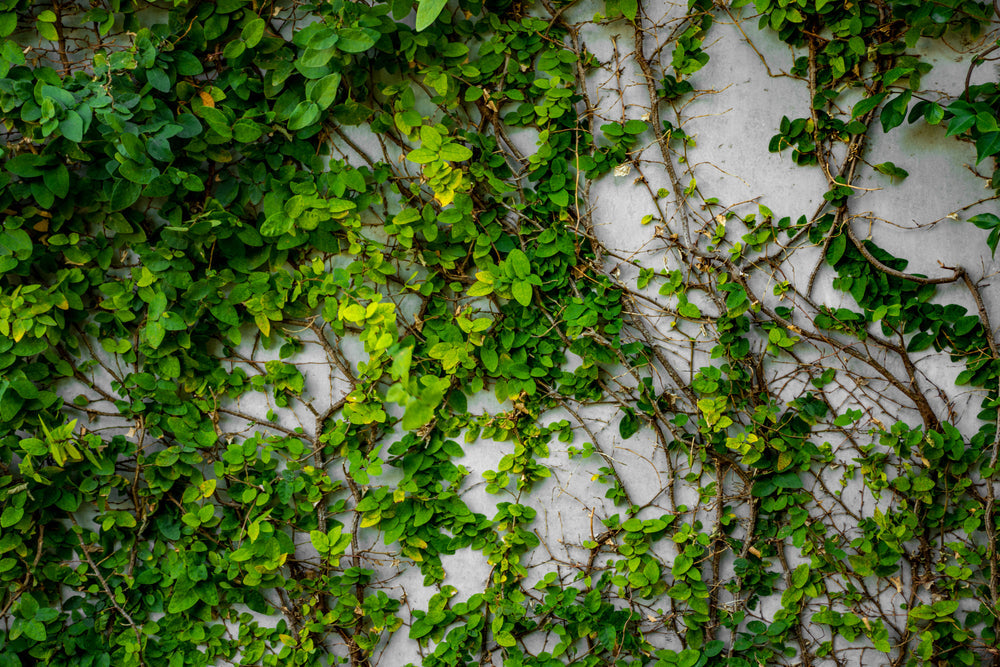 Climbers
 Flowering
 Grasses & Ferns
 Popular
-
Pines & Conifers
Pines & Conifers
 Pines
Pines
 Spruce & Fir
 Cypress
 Thuja
Thuja
 Redwood | Sequoia
-
Specimen
FREE DELIVERY OVER £350
Search results
Search results


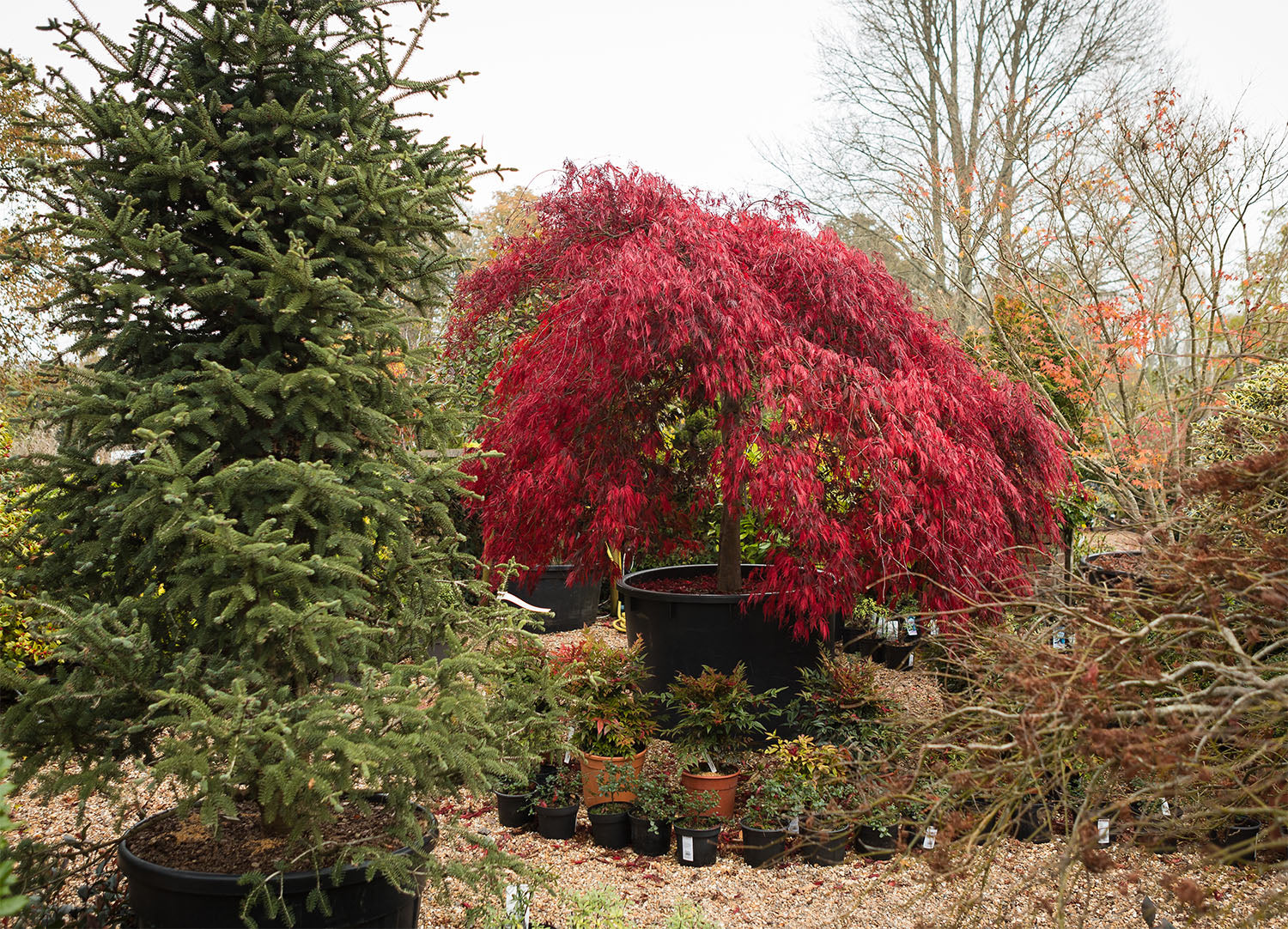
Acer palmatum 'Fireglow' - Height 165-175cm - 55lt
£495.00
Unit price perAcer palmatum 'Fireglow' - Height 165-175cm - 55lt
£495.00
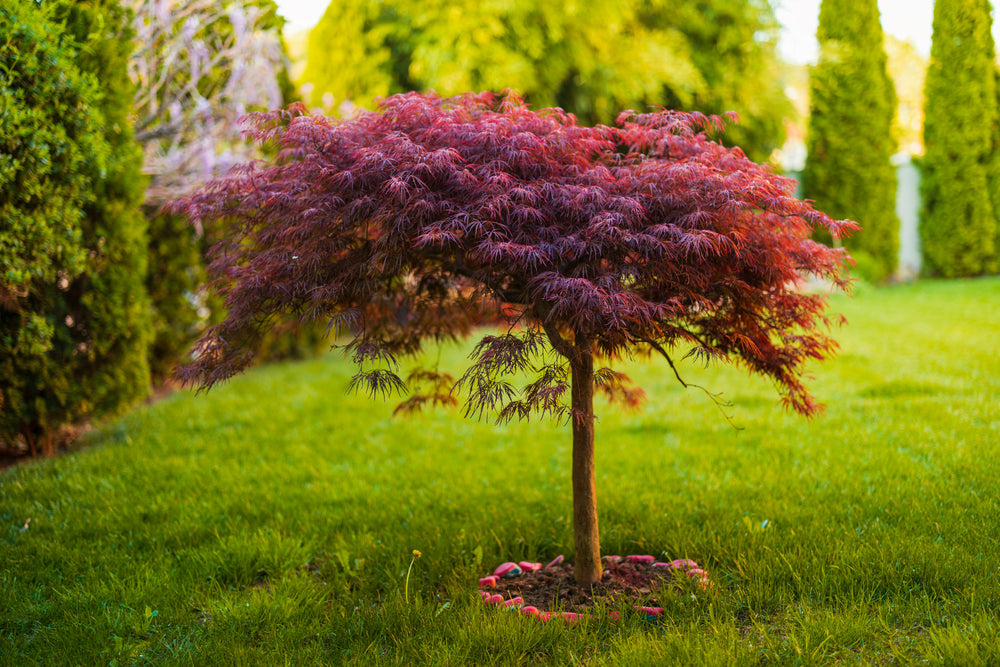
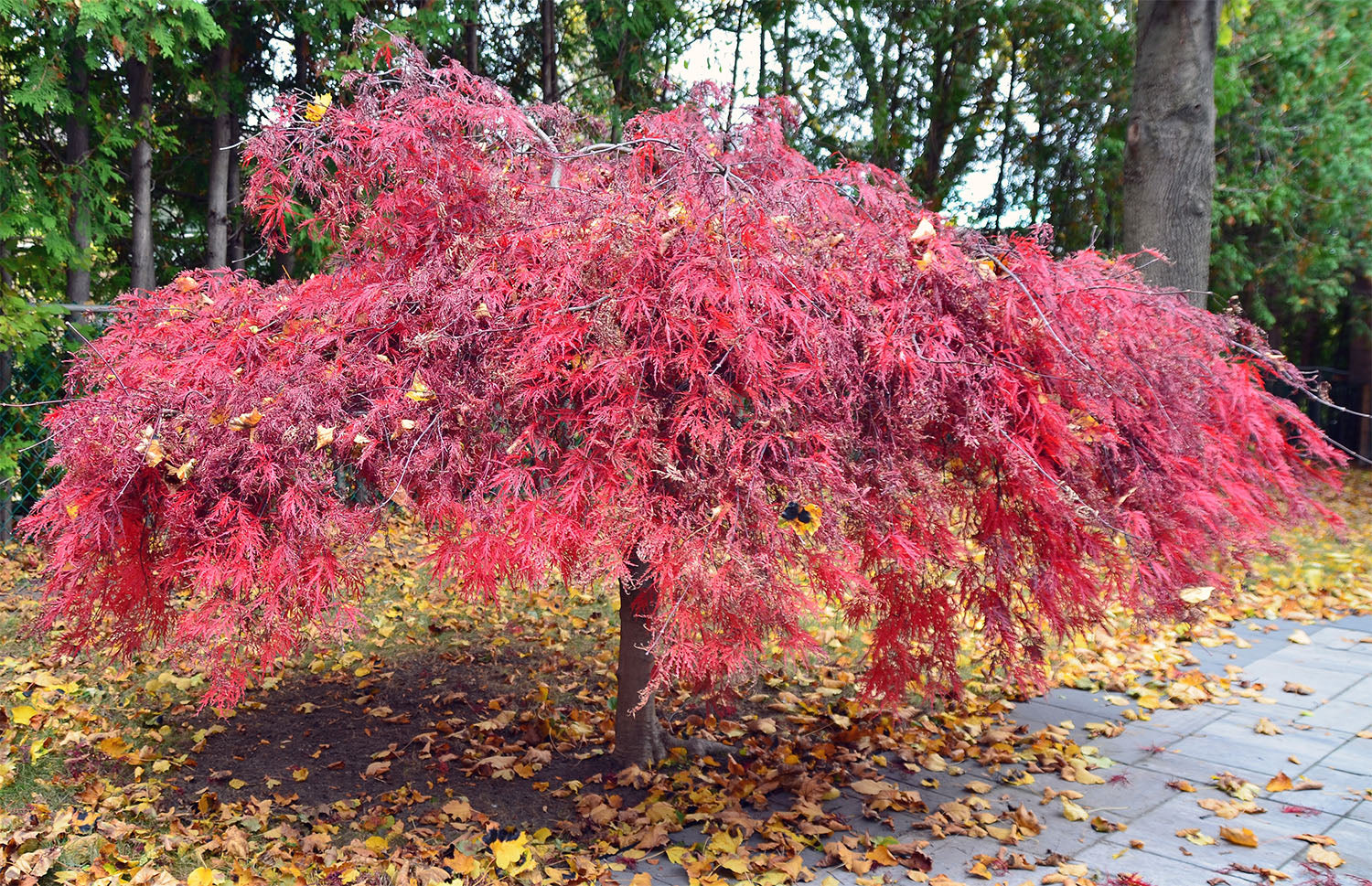
Unit price perAcer palmatum 'Fireglow', commonly known as the Fireglow Japanese Maple, is a deciduous shrub or small tree celebrated for its vibrant foliage and graceful form. Reaching an ultimate height and spread of approximately 4 metres over 10 to 20 years, it presents a bushy, upright habit suitable for various garden settings.
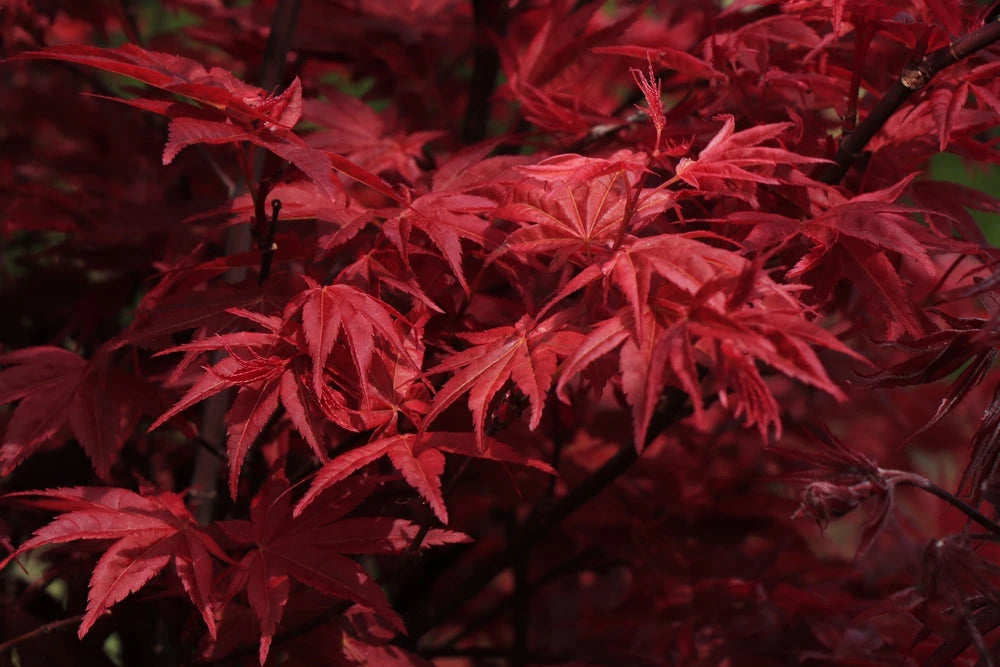
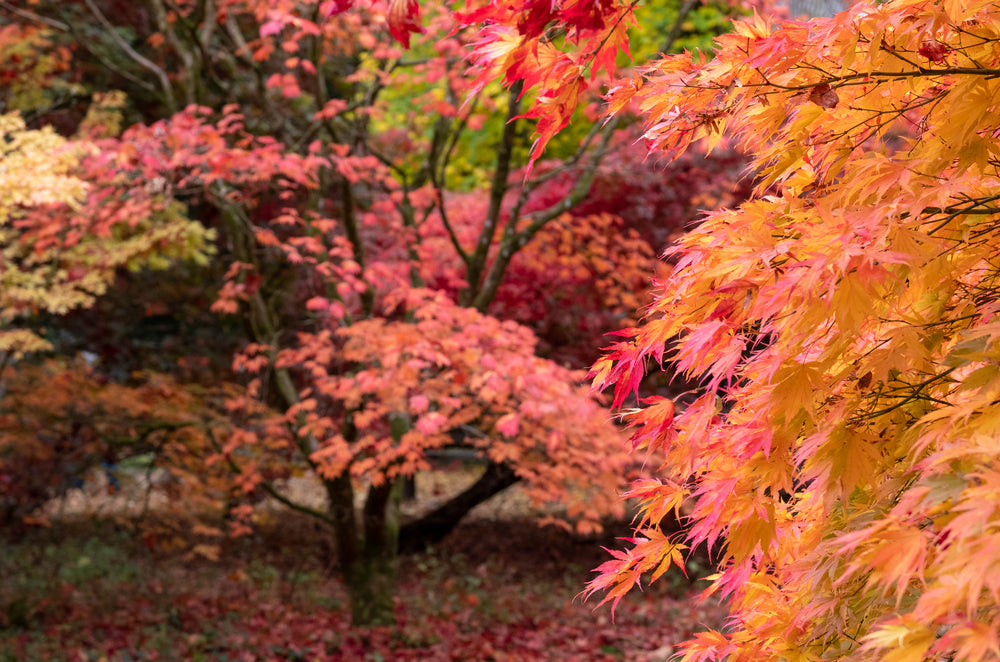
The leaves of 'Fireglow' are deeply lobed, typically with 5 to 7 slender, pointed lobes. In spring, the foliage emerges with a pinkish-red hue, grlly maturing to dark green heavily flushed with dark red during the summer months. As autumn approaches, the leaves transition to a string purple-red, offena dynamic display of colour throughout the growing season.
This cultivar is noted for its relatively thin leaves, which allow sunlight to filter through, creating a luminous effect that enhances its fiery appearance—hence the name Fireglow'. This chartistic is particularly pronounced when the tree is positioned to catch the morning or evening sun, making the foliage ar as though it's glowing.
'Fireglow' is appreciated for its moderate growth rate and wbranched structure, forming a broad crown at maturity. Its size and form make it an excellent choice for providing shade in small courtyards and patios.
In terms of cultivation, 'Fireglow' thrives in moist but well-drained soils and can be grown in full sun or partial shade. Whe it is more sun-tort than some other Japanese Maple cultivars, providing some protection from harsh afternoon sunlight can help prevent leaf scorch. Mulching around base helps retain soil moisture and keep the roots cool. This cultivar is hardy in most parts of the UK. It is relatively low-maintenance, requiring little pruning—typically limited to removing dead or crossing branches to maintain its shape. If pruning is necessary, it should be done during the dormant season, avoidg early spring whenhsap is rising. Regular watering during dry periods and fertilising in spring before the leaves emerge will support healthy growth.
This cultivar is versatile in garden design, serving well as a specimen plant in cottage, city, or Japanese-themed gardens. Its vibrant foliage provides a striking contrast when paired with plants that have green or variegated leaves, enhancing the overall visual interest of the landscape.
In summary, Acer palmatum 'Fireglow' offers a combination of aesthetic appeal and adaptability, making it a valuable addition to various garden settings.


Acer palmatum 'Katsura' | Katsura Japanese Maple Bushy - Height 180-200cm - 55lt
£495.00
Unit price perAcer palmatum 'Katsura' | Katsura Japanese Maple Bushy - Height 180-200cm - 55lt
£495.00
Unit price per


Pinus parviflora 'Negishi' | Japanese white pine - Height 80cm-90cm - Width 50cm-60cm - 20lt
£260.00
Unit price perPinus parviflora 'Negishi' | Japanese white pine - Height 80cm-90cm - Width 50cm-60cm - 20lt
£260.00
Unit price per


Pinus mugo 'Jakobsen' - Height 30-40cm - Width 30cm-40cm - 8lt
£110.00
Unit price perPinus mugo 'Jakobsen' - Height 30-40cm - Width 30cm-40cm - 8lt
£110.00
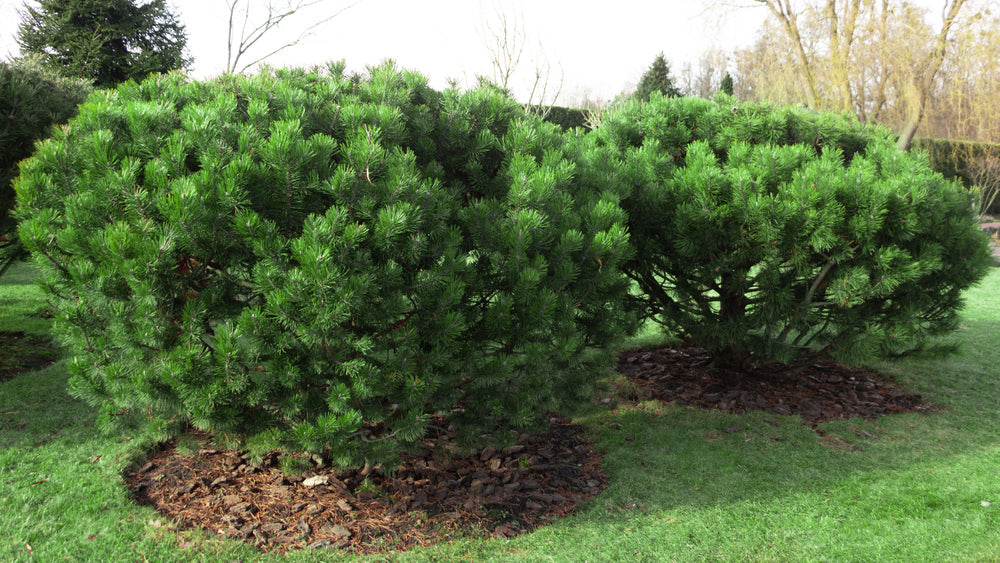
Unit price perPinus mugo 'Jacobsen', also known as Jacobsen Dwarf Pine, is a compact, slow-growing evergreen conifer that belongs to the Pinaceae family. This cultivar was first discovered by the Danish nurseryman, Mogens H. Jacobsen in the 1960s.
The Jacobsen Dwarf Pine is a small shrub or tree that typically reaches a height of 2-3 feet and a width of 3-5 feet when fully mature. It has a dense and bushy habit, with short and twisted needles that are arranged in pairs on the stems. The needles are dark green in color and measure about 1 inch in length.
This cultivar is known for its interesting bark, which is reddish-brown and develops shallow grooves as it ages. It also produces small, oval-shaped cones that are about 1 inch long and have a light brown color.
Jacobsen Dwarf Pine is a hardy plant that can tolerate a wide range of soil conditions, including poor, sandy, and acidic soils. It prefers full sun to partial shade and is generally drought-tolerant once established.
Because of its small size and slow growth rate, Jacobsen Dwarf Pine is an excellent choice for small gardens, rock gardens, and container plantings. It can also be used as a low-maintenance groundcover or as an accent plant in a mixed border.
In summary, Pinus mugo 'Jacobsen' is a compact and attractive evergreen conifer with twisted needles, interesting bark, and small cones. It is a hardy and versatile plant that can be used in a variety of garden settings and is particularly well-suited for small gardens and containers.
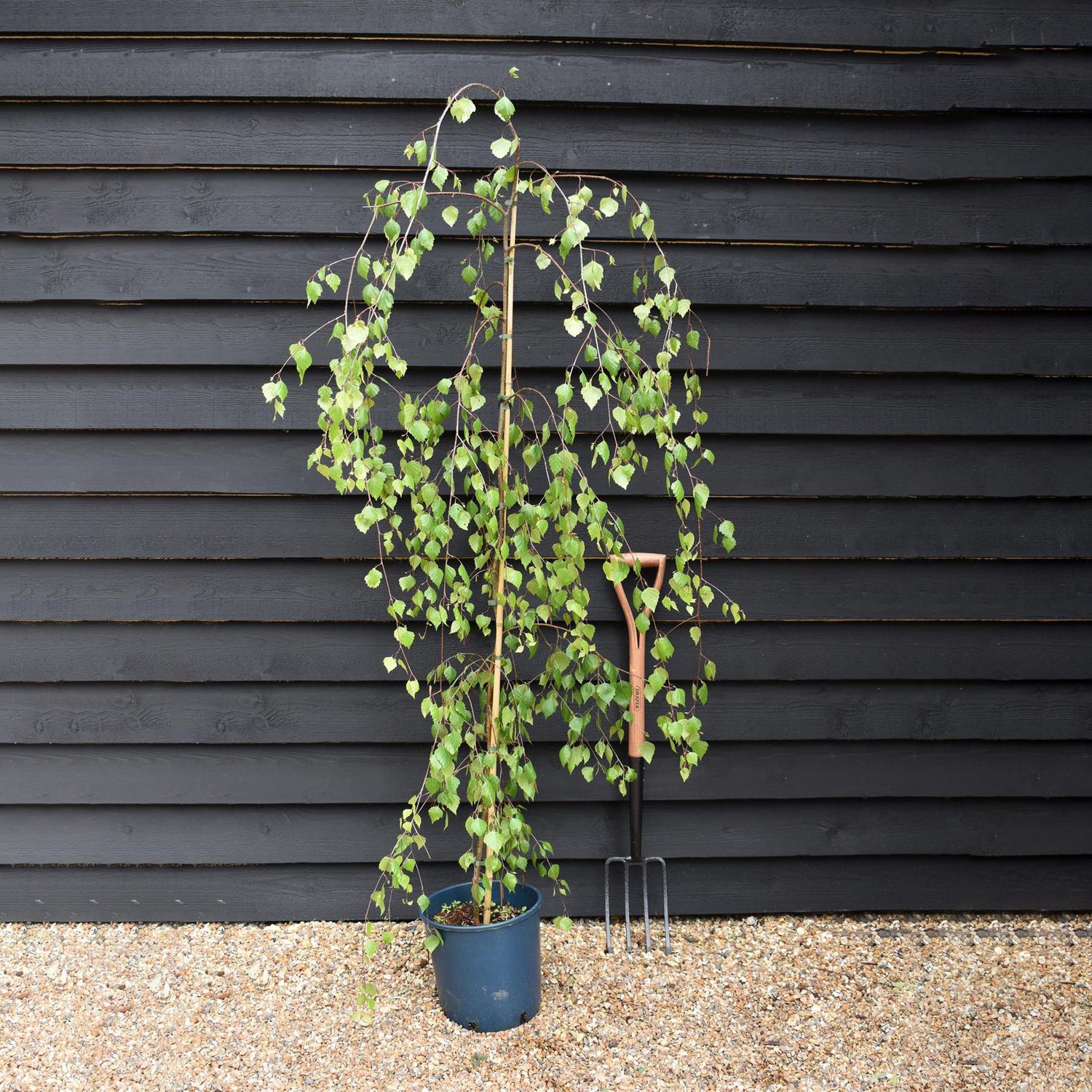


Young’s Weeping Silver Birch | Betula pendula Youngii - Height 120-150cm - 10lt
£94.00
Unit price perYoung’s Weeping Silver Birch | Betula pendula Youngii - Height 120-150cm - 10lt
£94.00
Unit price per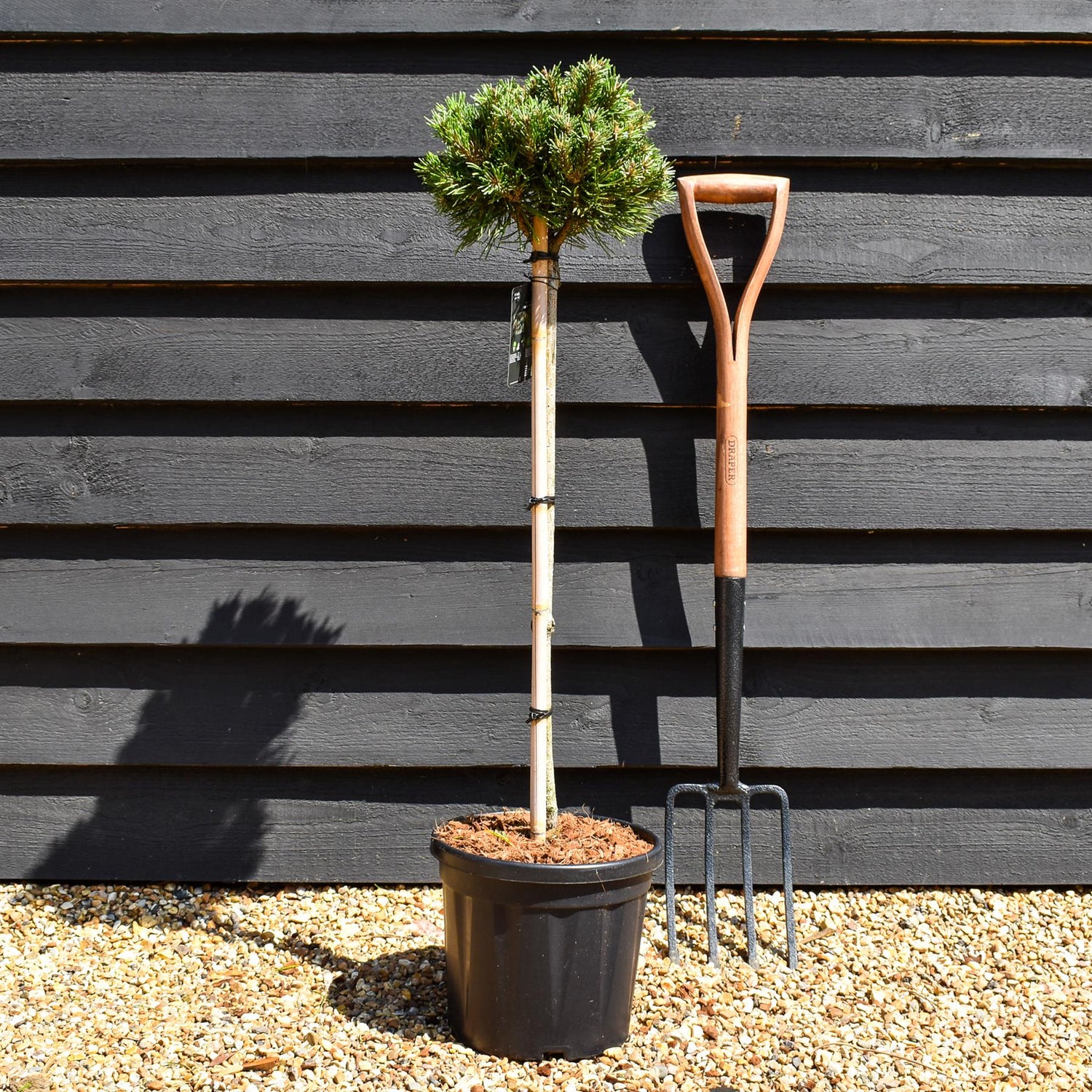
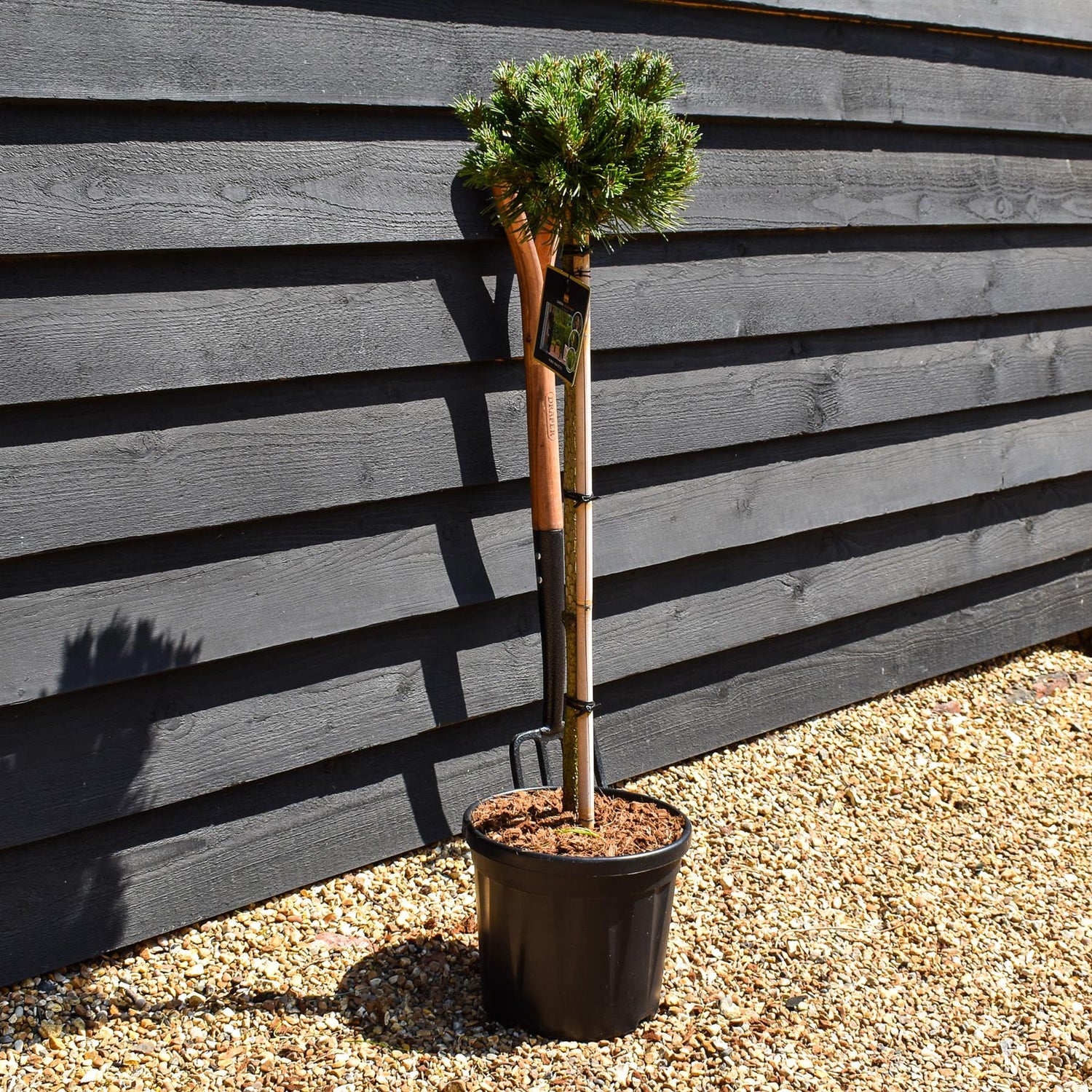
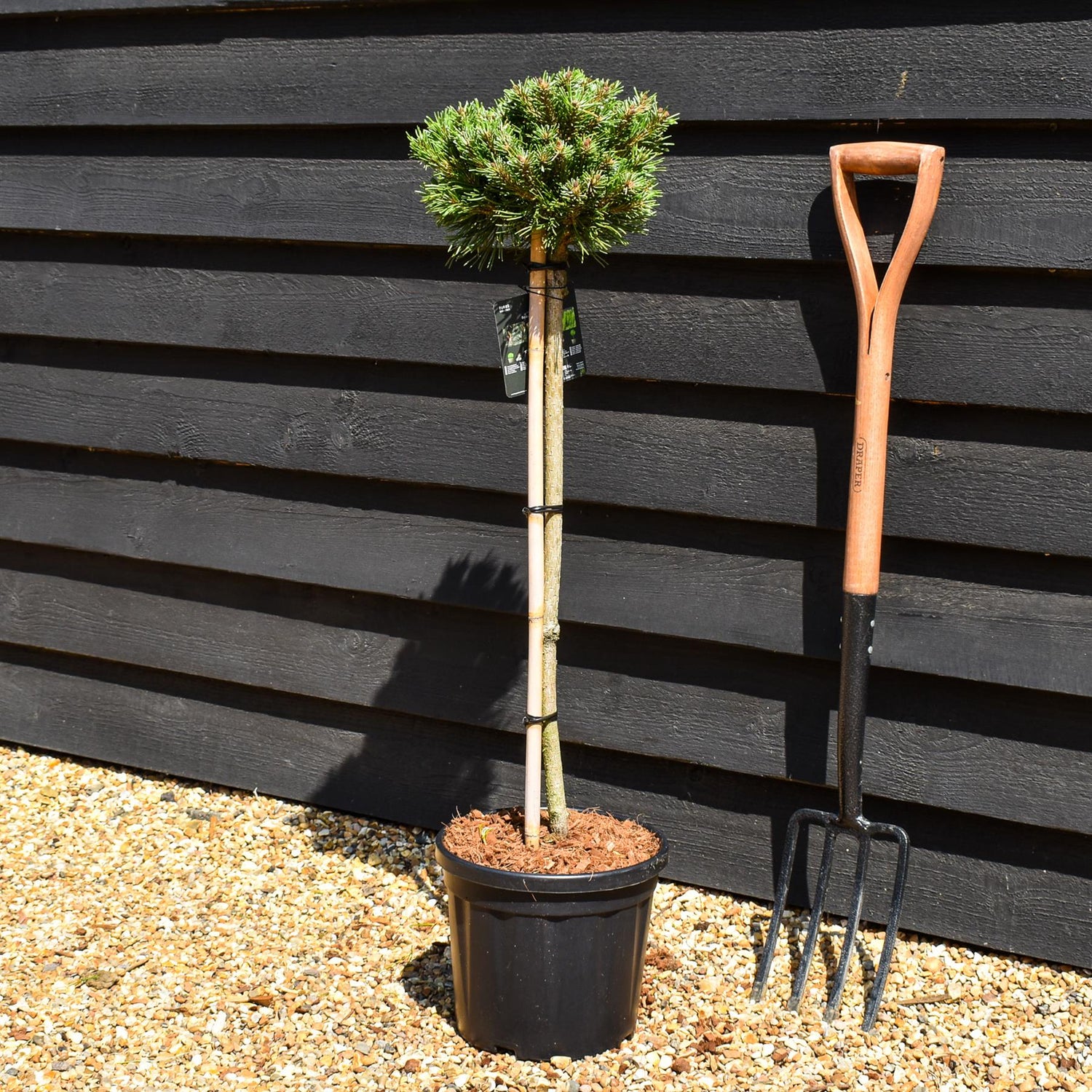
Pinus uncinata 'Wiel' - Clear Stem 60cm - Girth 6cm - Height 80-90cm - 8lt
£127.00
Unit price perPinus uncinata 'Wiel' - Clear Stem 60cm - Girth 6cm - Height 80-90cm - 8lt
£127.00
Unit price perPinus ‘Wiel’ is a compact, slow-growing conifer ideal for small gardens, rockeries, and architectural planting schemes. This dwarf pine features dense, rich green needles that provide year-round color and texture, forming a rounded to slightly irregular shape that adds character and structure to any landscape. Its tidy, low-maintenance habit makes it perfect for modern, minimalist, or traditional gardens where space is limited but visual interest is desired.
Typically reaching just 3 to 5 feet in height and spread over many years, ‘Wiel’ is an excellent choice for front borders, raised beds, or as a specimen in containers. It thrives in full sun and well-drained soil, showing good tolerance to drought, wind, and poor soil once established. A hardy plant, it is well-suited to colder climates and exposed positions.
‘Wiel’ requires minimal pruning and is naturally neat, making it an ideal selection for low-maintenance gardeners. Its evergreen foliage provides winter interest, and its compact form contrasts beautifully with softer perennials or groundcovers. Pinus ‘Wiel’ offers structure, longevity, and year-round appeal, making it a valuable addition to a wide variety of garden styles.
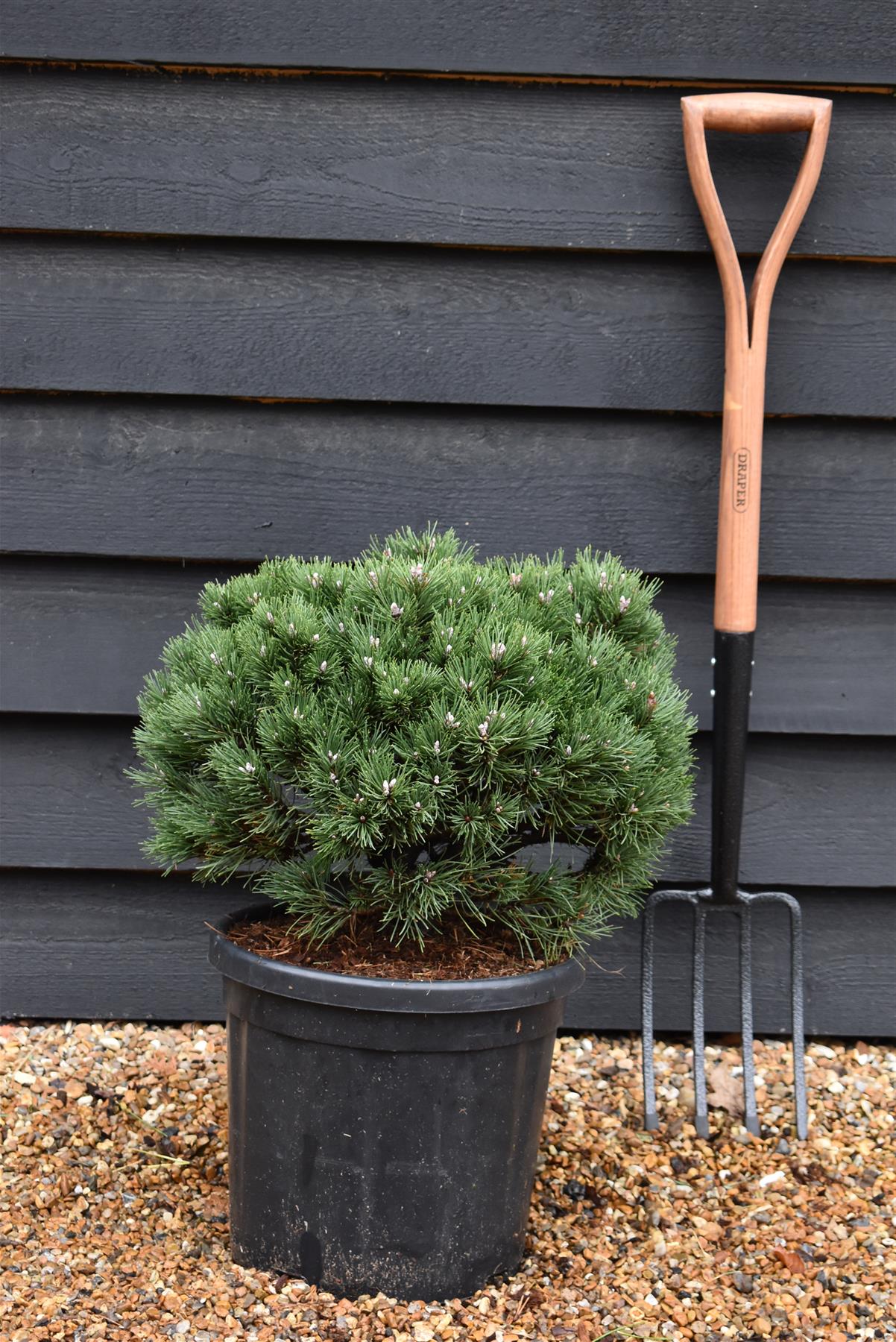
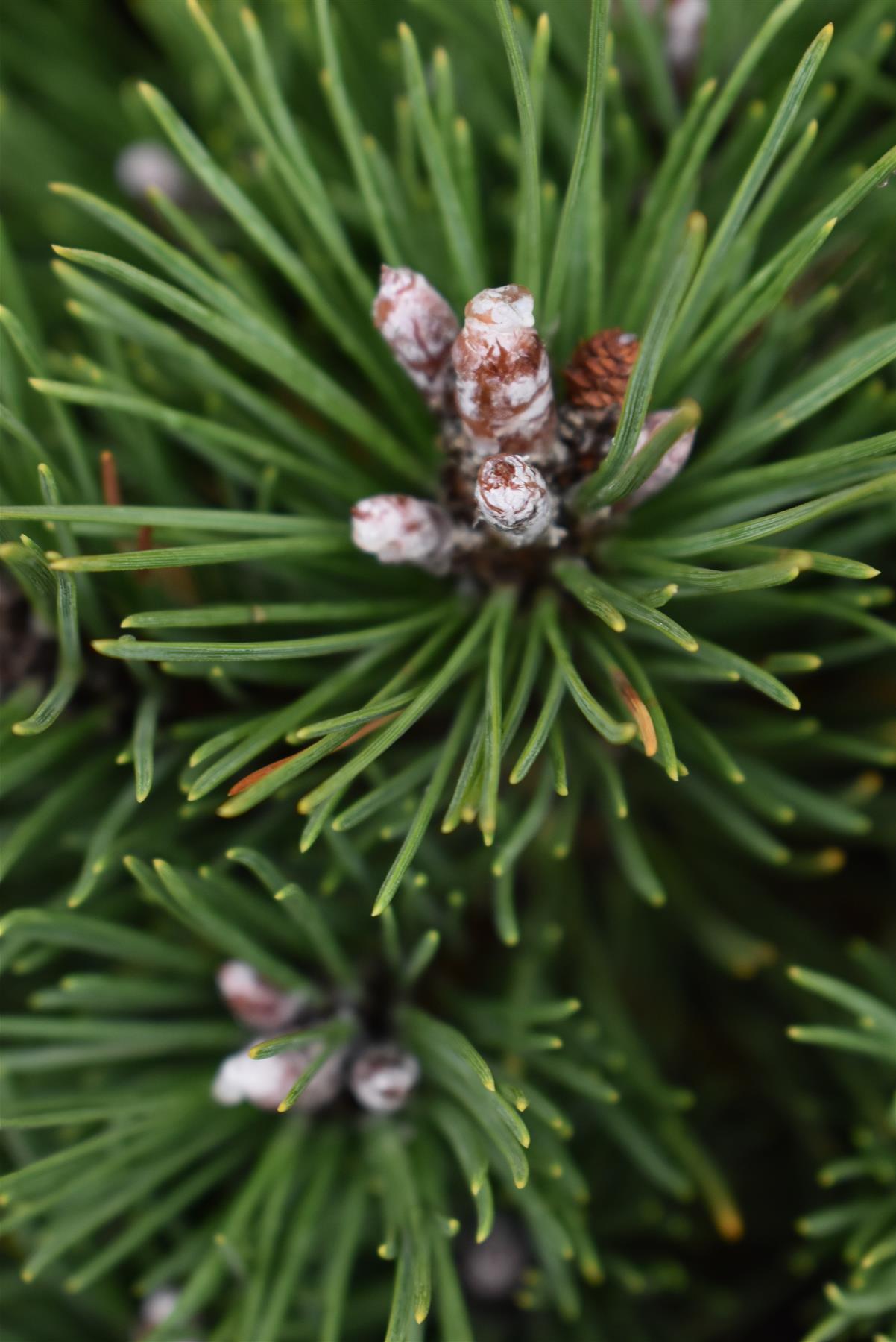
Pinus uncinata 'Heideperle' | Mountain pine - Height 50-60cm - 18lt
£142.00
Unit price perPinus uncinata 'Heideperle' | Mountain pine - Height 50-60cm - 18lt
£142.00
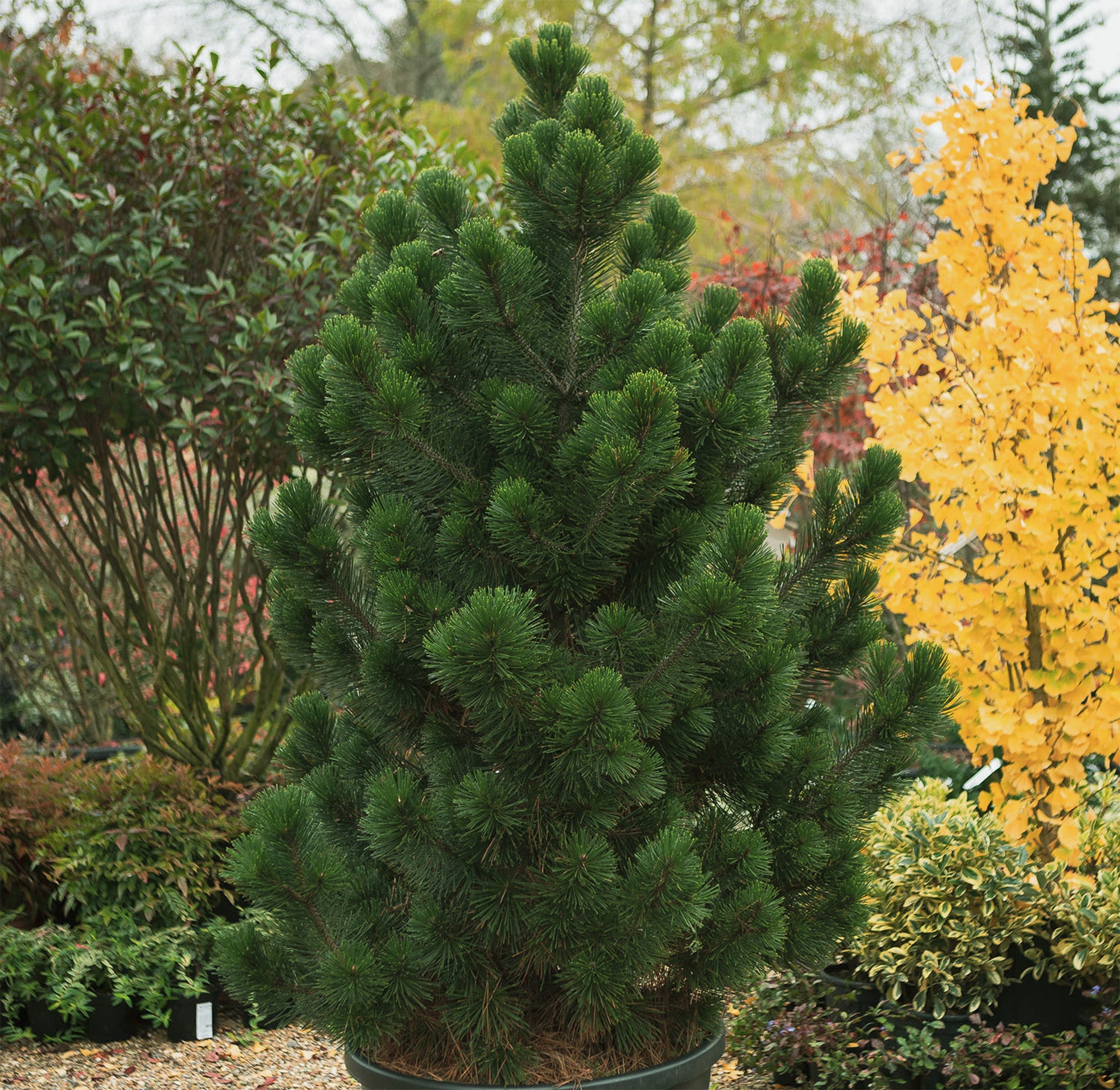
Unit price perPinus uncinata 'Heideperle' is a small, slow-growing evergreen tree that belongs to the Pinaceae family. It is commonly known as the mountain pine, and it is native to the Pyrenees Mountains of Europe. 'Heideperle' is a cultivar of Pinus uncinata, which is a species that is often used for ornamental purposes due to its attractive appearance and ease of cultivation.
The 'Heideperle' cultivar is a particularly striking plant, with dense, blue-green needles that grow to a length of about 5 cm. These needles are held in bundles of two, and they have a slightly twisted appearance that gives the tree a unique texture. In the spring, the tree produces small, yellowish-green flowers that are followed by small, egg-shaped cones that measure about 3-4 cm in length.
'Heideperle' is a slow-growing tree, typically reaching a height of only 2-3 meters after 10 years. It has a compact, conical shape, and its foliage is very dense, making it an excellent choice for use as a specimen tree in a garden or as part of a mixed planting. It is also commonly used in rock gardens and alpine gardens due to its ability to thrive in harsh, rocky environments.
This cultivar prefers well-drained soil and full sun to partial shade. It is relatively tolerant of drought and cold, making it an excellent choice for gardens in areas with harsh winter conditions. 'Heideperle' is also resistant to most common pests and diseases, making it a low-maintenance plant that is easy to care for.
Overall, Pinus uncinata 'Heideperle' is an attractive and versatile tree that is well-suited to a variety of garden settings. Its unique texture and compact size make it an excellent choice for use as a specimen plant, and its hardy nature and low-maintenance requirements make it a great addition to any garden.
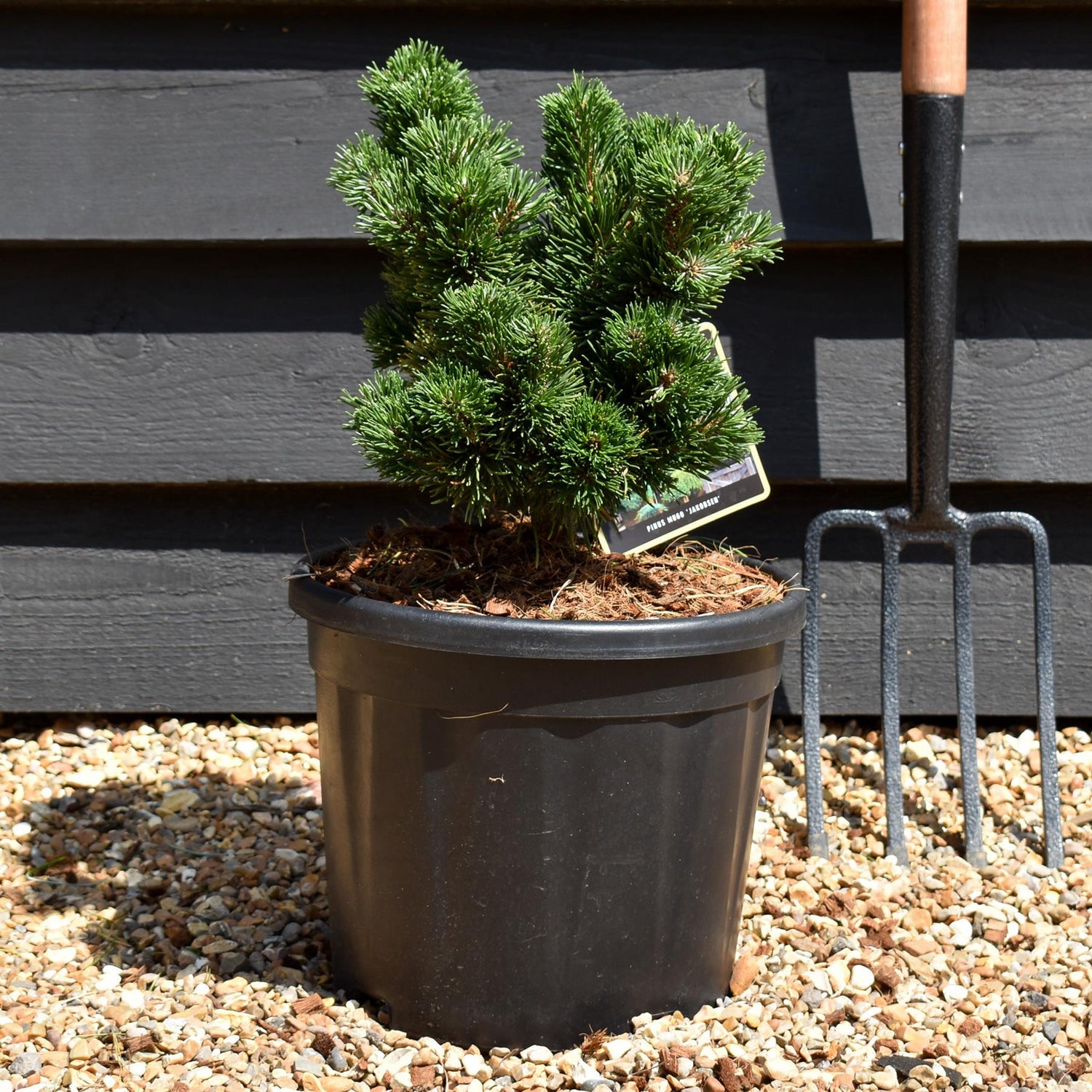
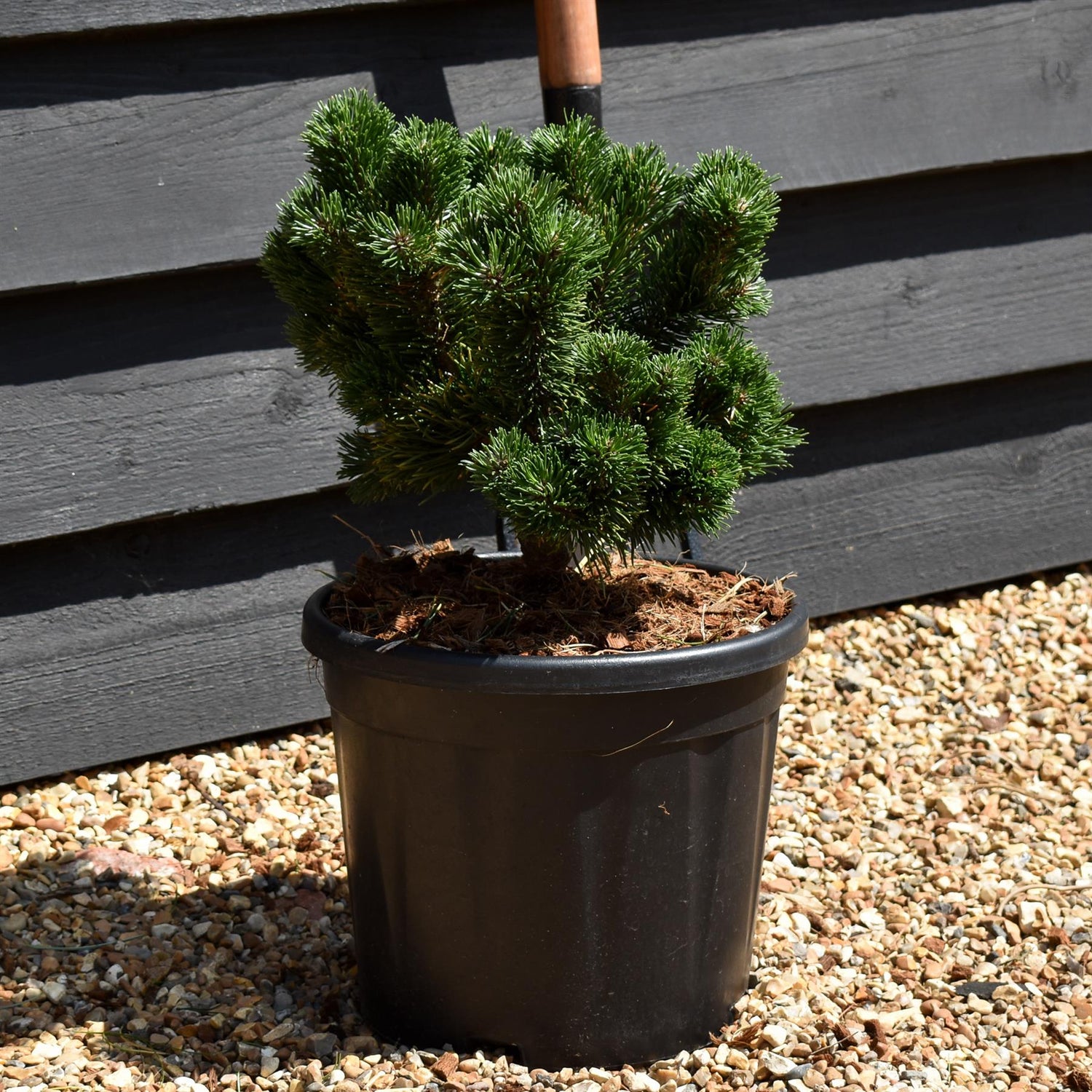
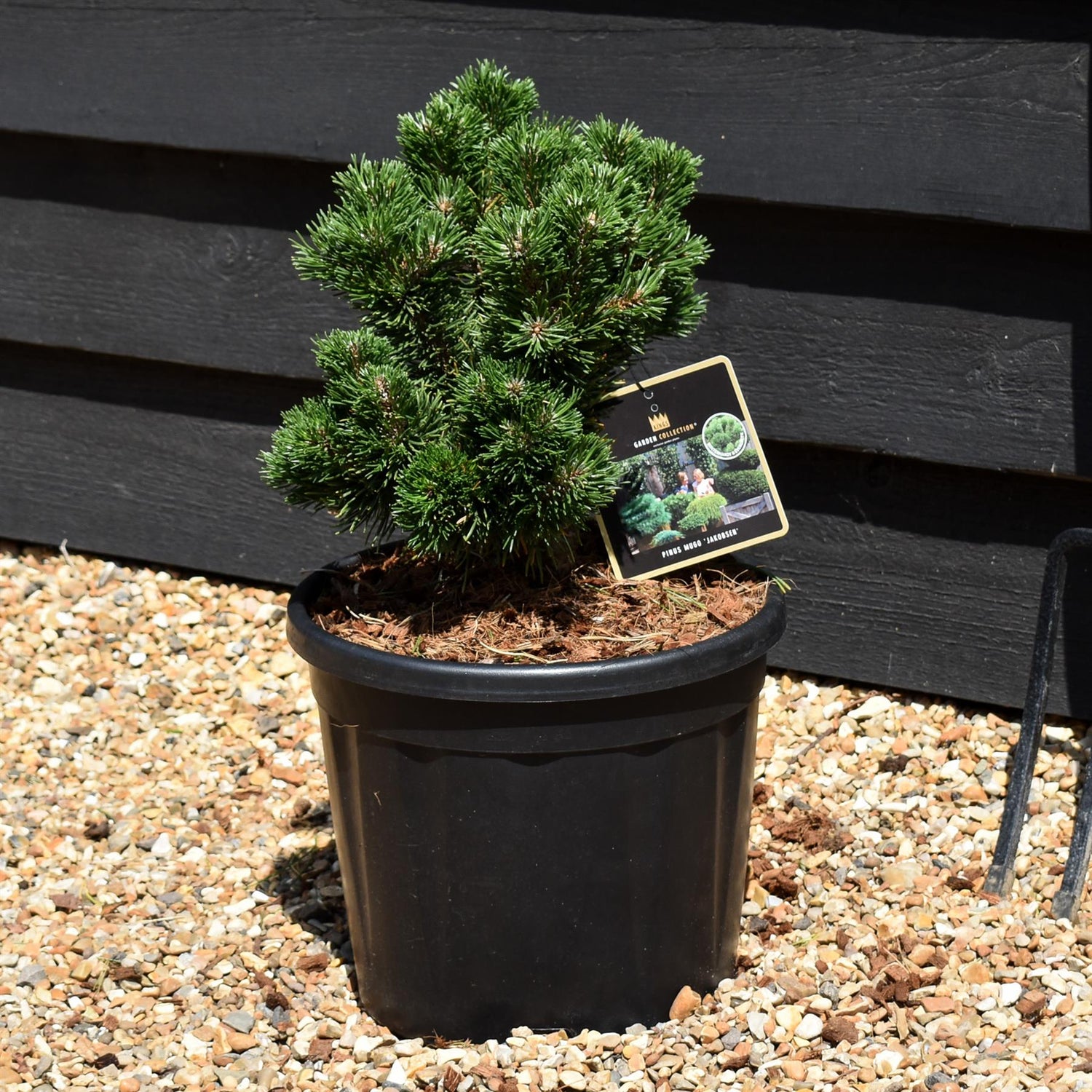
Pinus mugo 'Jakobsen' - Height 20-30cm - Width 30cm - 11lt
£104.00
Unit price perPinus mugo 'Jakobsen' - Height 20-30cm - Width 30cm - 11lt
£104.00
Unit price perPinus mugo 'Jacobsen', also known as Jacobsen Dwarf Pine, is a compact, slow-growing evergreen conifer that belongs to the Pinaceae family. This cultivar was first discovered by the Danish nurseryman, Mogens H. Jacobsen in the 1960s.
The Jacobsen Dwarf Pine is a small shrub or tree that typically reaches a height of 2-3 feet and a width of 3-5 feet when fully mature. It has a dense and bushy habit, with short and twisted needles that are arranged in pairs on the stems. The needles are dark green in color and measure about 1 inch in length.
This cultivar is known for its interesting bark, which is reddish-brown and develops shallow grooves as it ages. It also produces small, oval-shaped cones that are about 1 inch long and have a light brown color.
Jacobsen Dwarf Pine is a hardy plant that can tolerate a wide range of soil conditions, including poor, sandy, and acidic soils. It prefers full sun to partial shade and is generally drought-tolerant once established.
Because of its small size and slow growth rate, Jacobsen Dwarf Pine is an excellent choice for small gardens, rock gardens, and container plantings. It can also be used as a low-maintenance groundcover or as an accent plant in a mixed border.
In summary, Pinus mugo 'Jacobsen' is a compact and attractive evergreen conifer with twisted needles, interesting bark, and small cones. It is a hardy and versatile plant that can be used in a variety of garden settings and is particularly well-suited for small gardens and containers.


Fagus Sylvatica Purpurea | Copper Beech - Height 110-130cm - 12lt
£83.00
Unit price perFagus Sylvatica Purpurea | Copper Beech - Height 110-130cm - 12lt
£83.00
Unit price per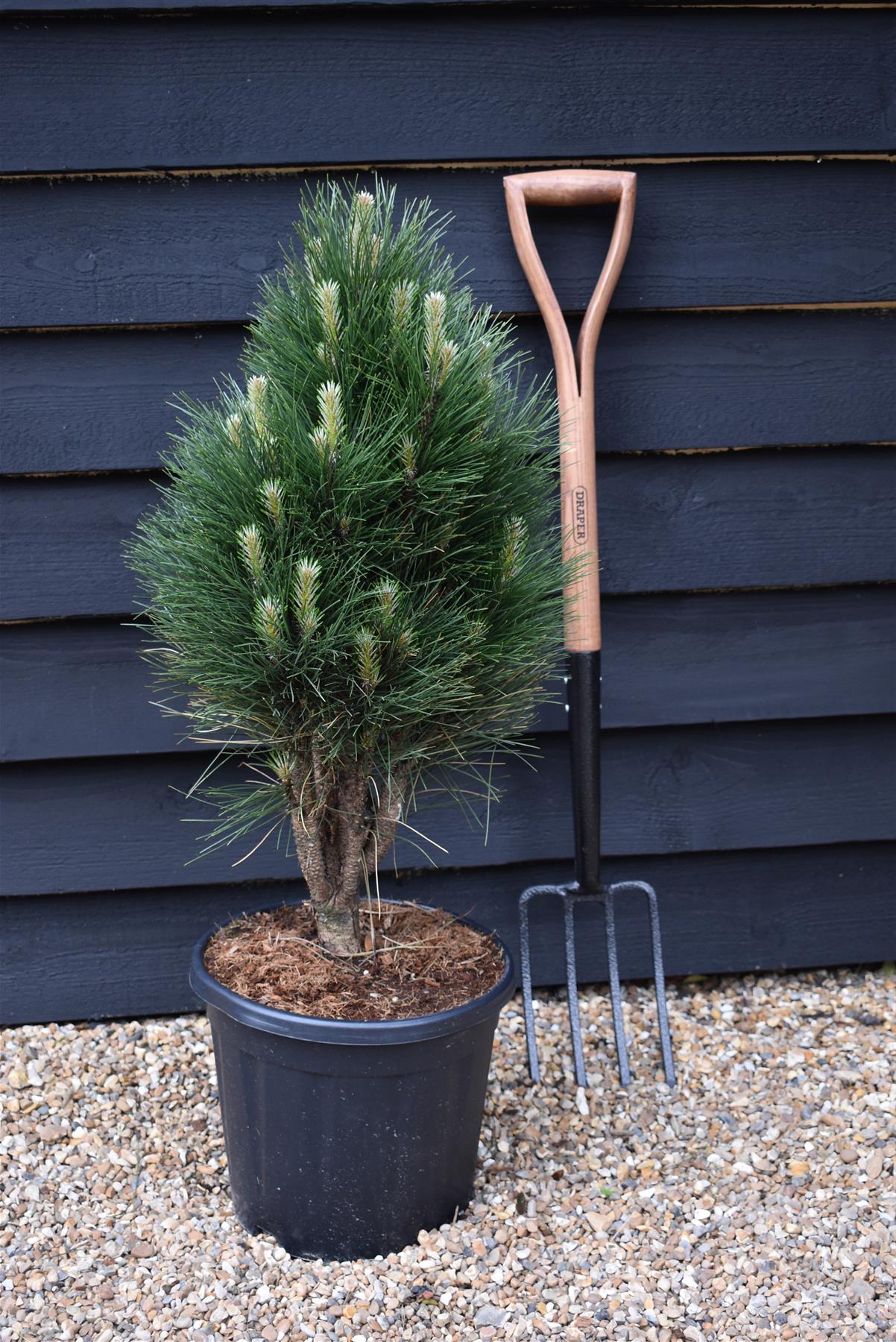
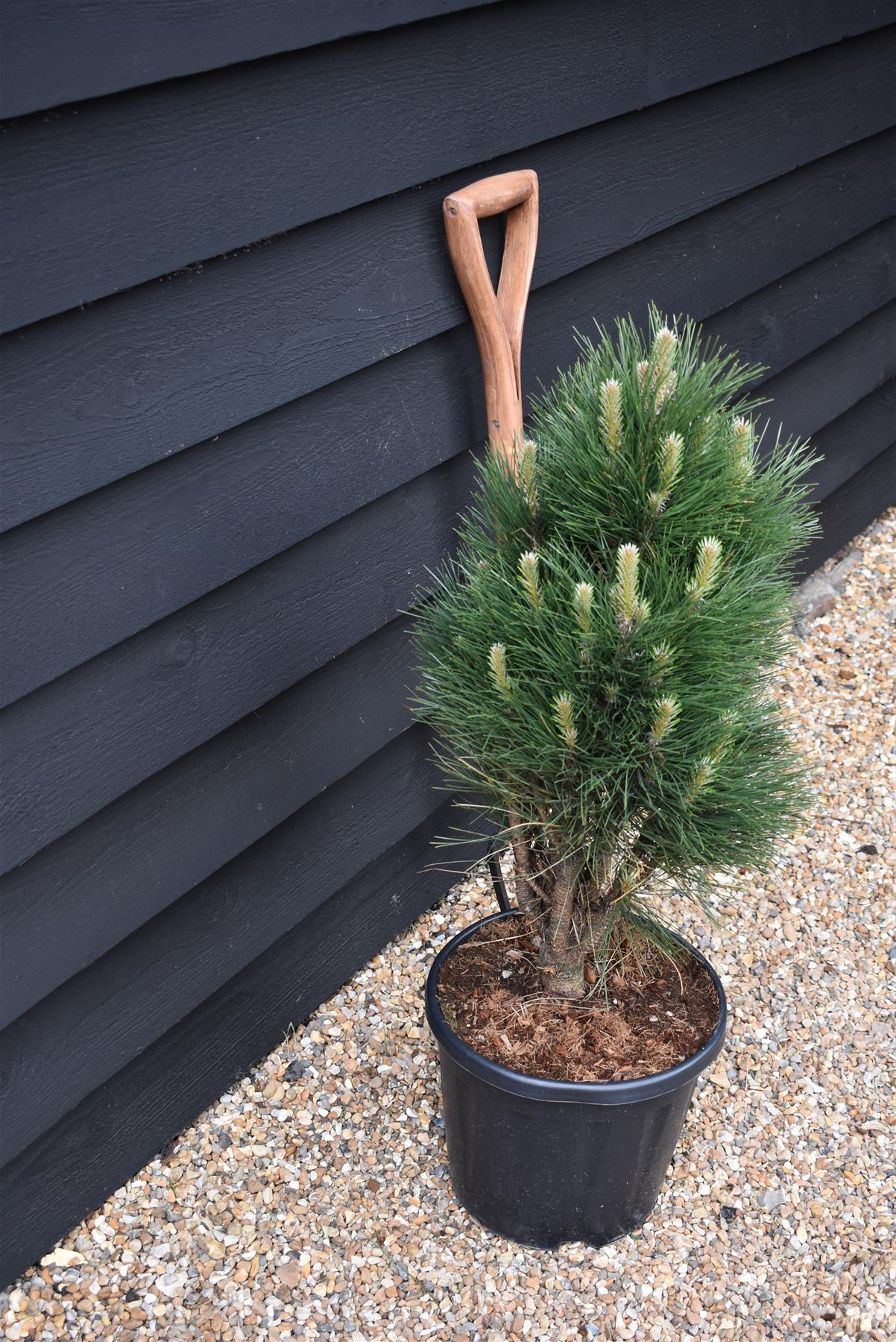
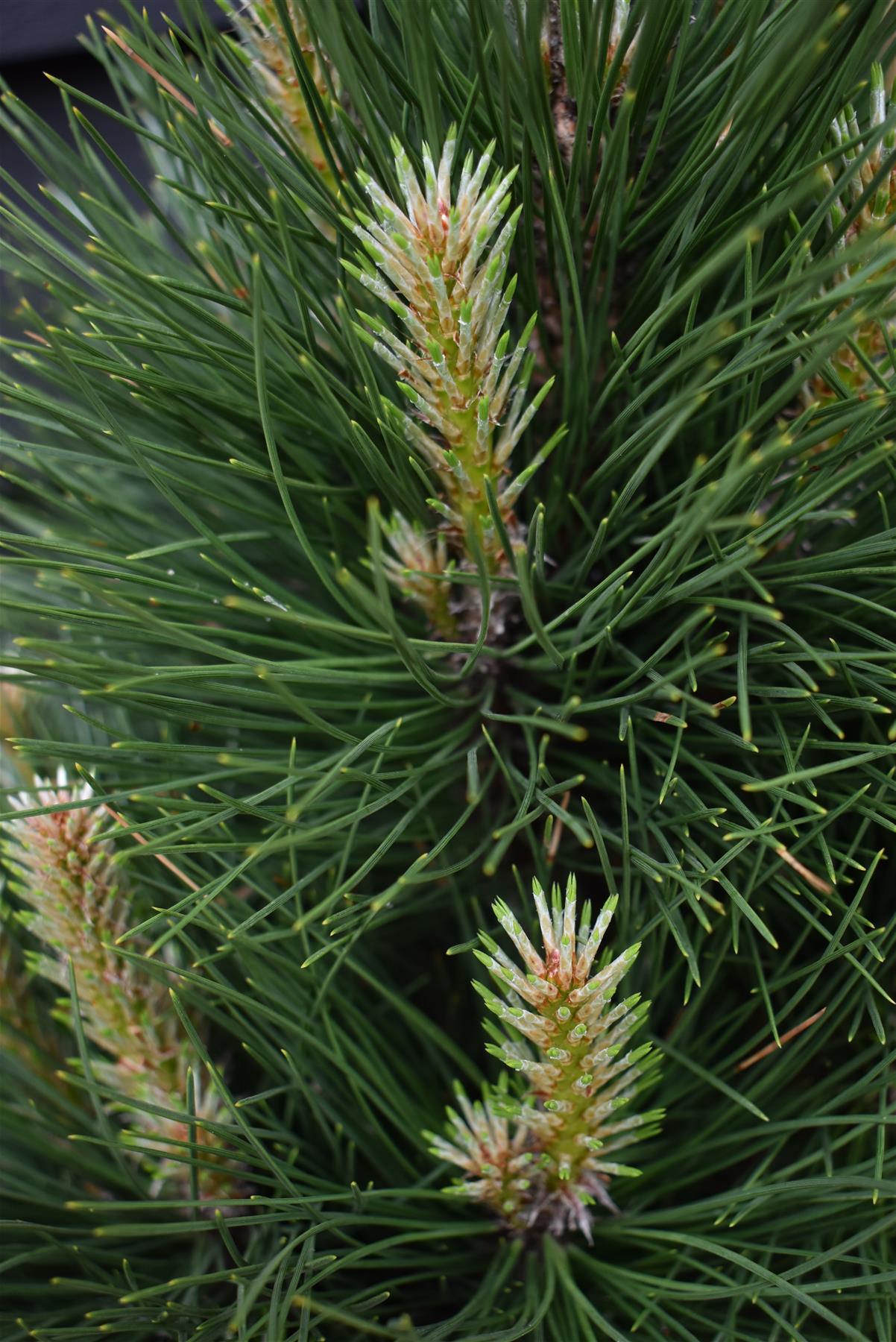
Pinus nigra 'Green Tower' | Austrian pine - Height 70-80cm - Width 30-40cm - 15lt
£104.00
Unit price perPinus nigra 'Green Tower' | Austrian pine - Height 70-80cm - Width 30-40cm - 15lt
£104.00
Unit price per


Downy Oak | Italiak Oak | Quercus pubescens - Height 180-200cm - Girth 6-8cm - Pot Grown - 10lt
£132.00
Unit price perDowny Oak | Italiak Oak | Quercus pubescens - Height 180-200cm - Girth 6-8cm - Pot Grown - 10lt
£132.00
Unit price perQuercus pubescens, commonly known as the downy oak, is a majestic deciduous tree native to the warm, sunlit landscapes of southern Europe. It is instantly recognizable by its softly textured, velvety leaves when young, which later mature into a rich green canopy that shifts to golden tones in autumn. Its thick, rugged bark and deeply rooted strength make it a symbol of resilience, endurance, and natural harmony. The downy oak thrives in limestone-rich soils and sun-drenched environments, embodying adaptability and a close connection to the land. For centuries, it has been valued not only for its ecological importance but also for its cultural symbolism—representing longevity, stability, and balance. Quercus pubescens brings with it the essence of Mediterranean heritage and timeless nature, making it an inspiring element for sustainable, eco-conscious products that draw on tradition while embracing the future. A true emblem of strength and beauty.


Aspen | Populus tremula - Height 200-220cm - 4-5 years old - Feathered - Very well rooted -Pot Grown - 12lt
£72.00
Unit price perAspen | Populus tremula - Height 200-220cm - 4-5 years old - Feathered - Very well rooted -Pot Grown - 12lt
£72.00
Unit price perPot grown from seed here at the Arundel Arboretum, very well rooted and hardened.
Populus tremula, commonly known as the trembling aspen or quaking aspen, is a deciduous tree native to various regions across the Northern Hemisphere, including the United Kingdom. It belongs to the genus Populus and is renowned for its distinctive quivering leaves, which flutter in even the slightest breeze, giving rise to its evocative common names.
The trembling aspen typically reaches heights of 20 to 25 meters, although some specimens can grow taller under optimal conditions. Its slender trunk is often pale grey or white with black knots, and it tends to have a narrow crown with branches that ascend in a graceful, upward fashion.
One of the most striking features of the trembling aspen is its leaves. They are roughly triangular in shape with finely serrated edges, and they have a flat petiole that causes them to flutter and tremble in the wind. This unique characteristic helps to distinguish the tree from other species in its range.
In the spring, the trembling aspen produces catkins, which are long, drooping clusters of small flowers. These flowers are an important source of pollen for bees and other pollinators. Later in the season, the tree develops small, round fruits containing tiny seeds surrounded by cottony fluff, aiding in wind dispersal.
Trembling aspens typically thrive in moist, well-drained soils in locations such as riverbanks, wetlands, and mixed woodlands. They are relatively fast-growing and can colonize disturbed areas quickly, making them an important pioneer species in forest ecosystems.
In addition to their ecological significance, trembling aspens also hold cultural and historical importance. They feature prominently in folklore and mythology in various cultures, often symbolizing resilience, regeneration, and transformation.


Acer griseum | Paperback Maple - Height 135-145cm - 20lt
£200.00
Unit price perAcer griseum | Paperback Maple - Height 135-145cm - 20lt
£200.00
Unit price per

Taxus baccata | Common Yew - Bushy - Pot Grown - Height 80-90cm - 12lt
£72.00
Unit price perTaxus baccata | Common Yew - Bushy - Pot Grown - Height 80-90cm - 12lt
£72.00
Unit price per


Acer griseum | Paperback Maple - 210-230cm - 50lt
£795.00
Unit price perAcer griseum | Paperback Maple - 210-230cm - 50lt
£795.00
Unit price per


Juniperus scopulorum 'Skyrocket' - Conifer - Height 190-210cm - 35lt
£193.00
Unit price perJuniperus scopulorum 'Skyrocket' - Conifer - Height 190-210cm - 35lt
£193.00
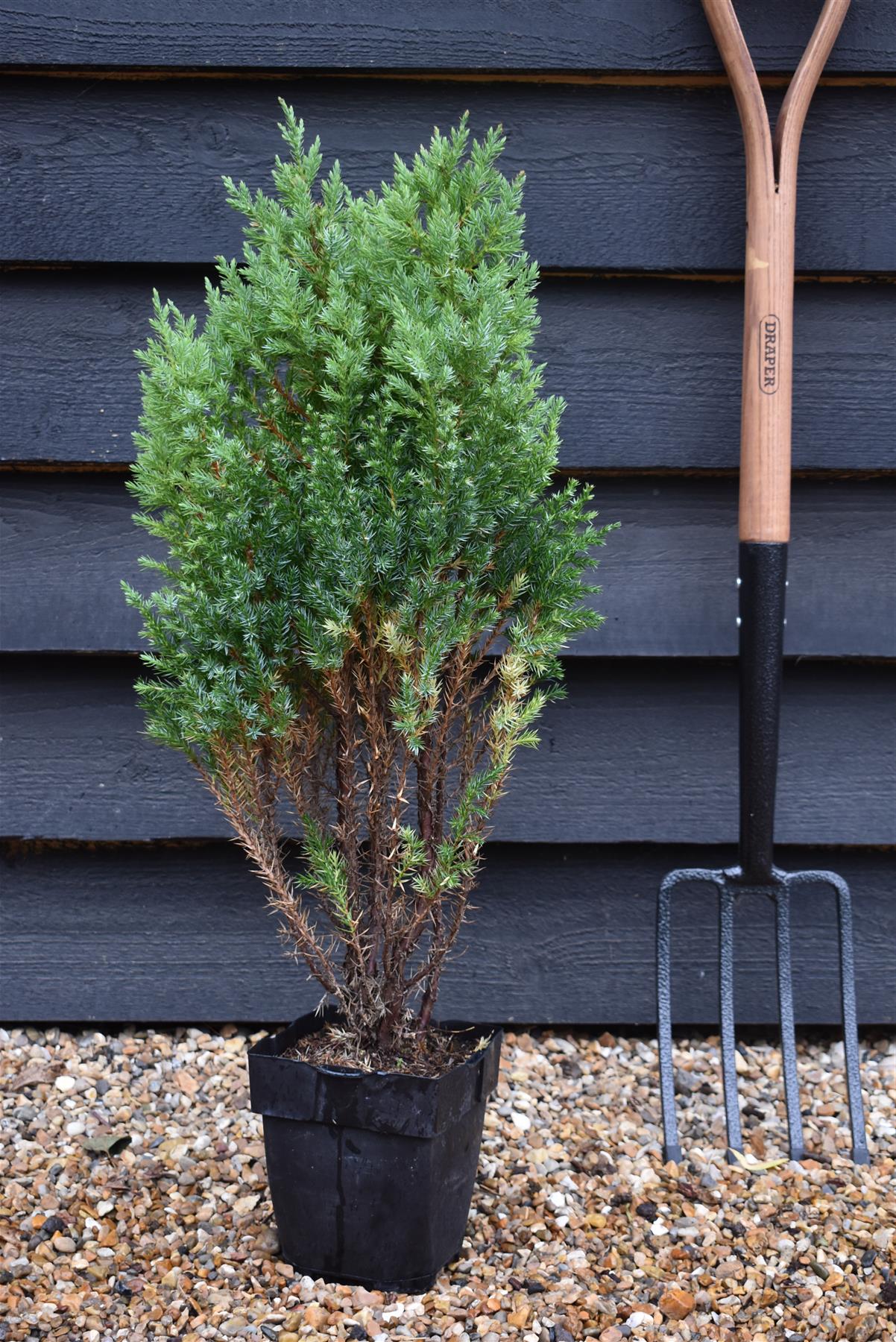
Unit price perJuniperus scopulorum 'Skyrocket,' commonly known as the Skyrocket Juniper, is a striking evergreen shrub that has gained popularity in British gardens for its unique and captivating appearance. This particular juniper variety offers a range of features that make it a valuable addition to the UK landscape.
One of the standout characteristics of the Skyrocket Juniper is its narrow, columnar growth habit. It forms a tall, slender silhouette with dense, blue-green foliage that remains vibrant year-round. This growth pattern makes it an ideal choice for gardens with limited space or for those looking to add vertical interest to their landscape. Its elegant shape and compact size are well-suited for both formal and contemporary garden designs.
This juniper is well-suited to the UK climate. It is hardy and can withstand the challenging conditions often experienced in British gardens, including cold temperatures and exposure to wind and salt spray in coastal areas. Its resilience and adaptability ensure that it thrives in a variety of soil types, provided they are well-drained.
Maintaining the Skyrocket Juniper is relatively straightforward. It has a slow to moderate growth rate, which means it won't require frequent pruning. Occasional trimming may be necessary to maintain its slender form and to remove any dead or damaged branches. Its low-maintenance nature makes it a practical choice for gardeners looking for an attractive yet hassle-free addition to their outdoor space.
As an evergreen, the Skyrocket Juniper provides year-round visual interest. Its blue-green foliage remains vibrant even during the winter months when many other plants have lost their leaves. This feature ensures that it continues to contribute to the garden's aesthetic appeal throughout the year.
In addition to its ornamental qualities, the Skyrocket Juniper is known for its versatility. It can be used as a standalone specimen plant, a focal point in a garden bed, or planted in rows to create a unique and stylish privacy screen or windbreak. Its narrow profile makes it an excellent choice for lining driveways, walkways, or framing entrances.


Pinus nigra 'Oregon Green' | Austrian pine 'Oregon Green' - Height 70-80cm - 12lt
£159.00
Unit price perPinus nigra 'Oregon Green' | Austrian pine 'Oregon Green' - Height 70-80cm - 12lt
£159.00
Unit price per


Japanese Maple | Acer palmatum 'Bloodgood' - Bushy - Height 160-180cm - 55lt
£495.00
Unit price perJapanese Maple | Acer palmatum 'Bloodgood' - Bushy - Height 160-180cm - 55lt
£495.00
Unit price per


Japanese Maple | Acer palmatum - Very Bushy - Height 100-130cm - 35lt
£470.00
Unit price perJapanese Maple | Acer palmatum - Very Bushy - Height 100-130cm - 35lt
£470.00
Unit price per


Aspen | Populus tremula - Height 130-160cm - 2-3 years old - Pot Grown - 10lt
£48.00
Unit price perAspen | Populus tremula - Height 130-160cm - 2-3 years old - Pot Grown - 10lt
£48.00
Unit price perPopulus tremula, commonly known as the trembling aspen or quaking aspen, is a deciduous tree native to various regions across the Northern Hemisphere, including the United Kingdom. It belongs to the genus Populus and is renowned for its distinctive quivering leaves, which flutter in even the slightest breeze, giving rise to its evocative common names.
The trembling aspen typically reaches heights of 20 to 25 meters, although some specimens can grow taller under optimal conditions. Its slender trunk is often pale grey or white with black knots, and it tends to have a narrow crown with branches that ascend in a graceful, upward fashion.
One of the most striking features of the trembling aspen is its leaves. They are roughly triangular in shape with finely serrated edges, and they have a flat petiole that causes them to flutter and tremble in the wind. This unique characteristic helps to distinguish the tree from other species in its range.
In the spring, the trembling aspen produces catkins, which are long, drooping clusters of small flowers. These flowers are an important source of pollen for bees and other pollinators. Later in the season, the tree develops small, round fruits containing tiny seeds surrounded by cottony fluff, aiding in wind dispersal.
Trembling aspens typically thrive in moist, well-drained soils in locations such as riverbanks, wetlands, and mixed woodlands. They are relatively fast-growing and can colonize disturbed areas quickly, making them an important pioneer species in forest ecosystems.
In addition to their ecological significance, trembling aspens also hold cultural and historical importance. They feature prominently in folklore and mythology in various cultures, often symbolizing resilience, regeneration, and transformation.