

-
Trees
Trees
 Fruit Trees
 Ornamental
 Screening
 Palms
By FeaturesBy Shape
-
Shrubs
Shrubs
 Large shrubs
 Hedging
 Bamboo
 Climbers
 Flowering
 Grasses & Ferns
 Popular
-
Pines & Conifers
Pines & Conifers
 Pines
 Spruce & Fir
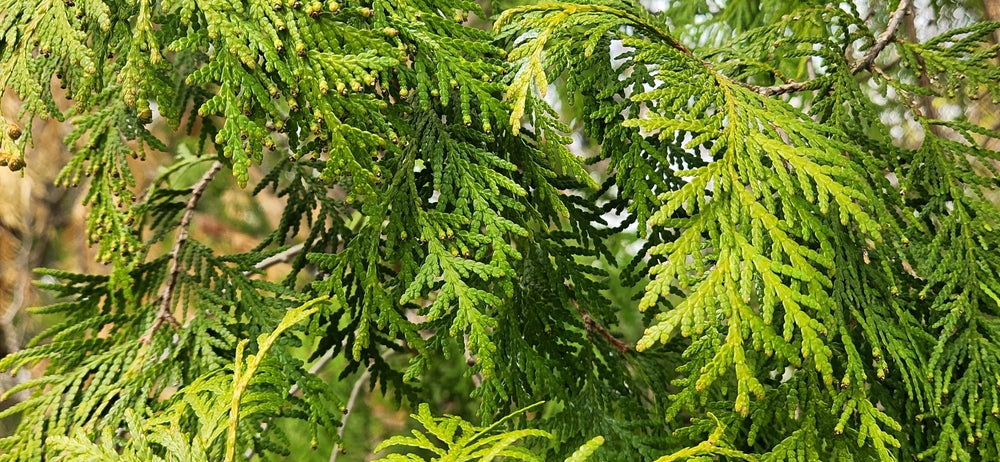 Cypress
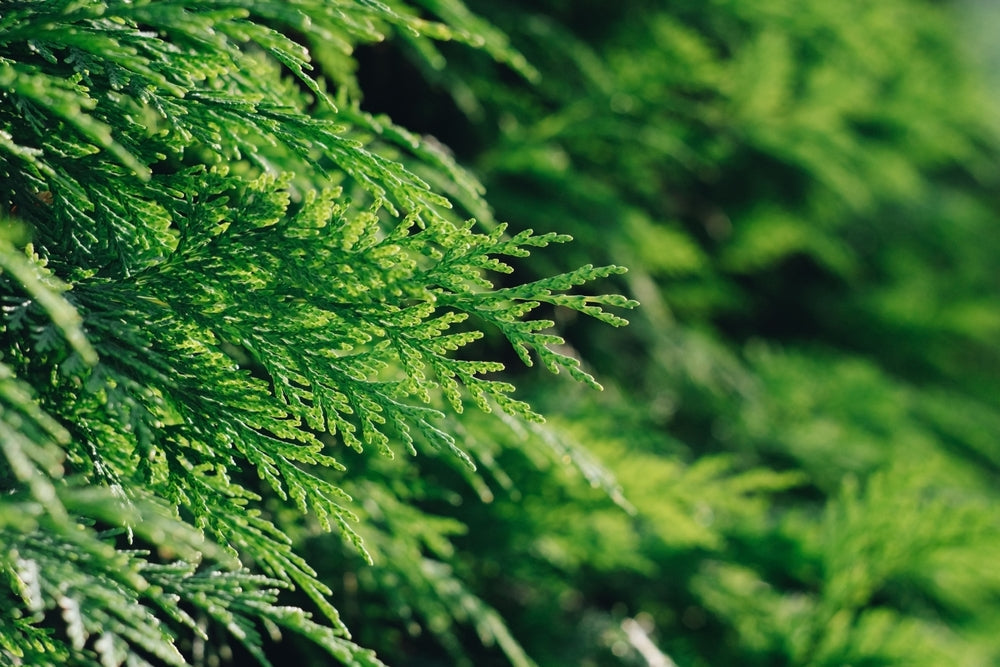 Thuja
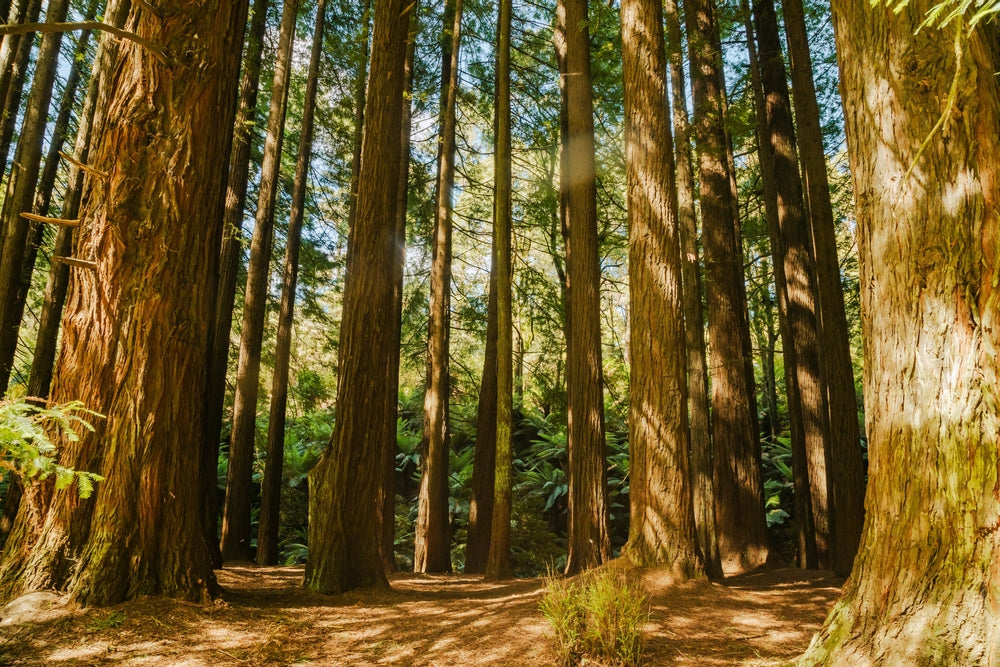 Redwood | Sequoia
-
Specimen
FREE DELIVERY OVER £350
Search results
Search results


Judas tree | Cercis siliquastrum - Girth 5-6cm - 290-300cm - 30lt
£225.00
Unit price perJudas tree | Cercis siliquastrum - Girth 5-6cm - 290-300cm - 30lt
£225.00
Unit price perCercis siliquastrum, commonly known as the Judas tree or love tree, is a deciduous tree native to the Mediterranean region, including parts of Southern Europe and Western Asia. It is a member of the bean family (Fabaceae) and is known for its vibrant, pink-purple flowers and heart-shaped leaves. The Judas tree can grow up to 10 meters tall and has a spreading, umbrella-shaped crown. Its bark is smooth and grey-brown, and its branches are often twisted and gnarled, adding to its aesthetic appeal. The tree typically blooms in early spring, before its leaves appear, producing an abundance of small, pink-purple flowers that grow in clusters on the branches and trunk. These flowers are a valuable source of nectar for bees and other pollinators. After flowering, the tree produces flattened, brown seed pods that hang from the branches throughout the summer. These pods can be several centimetres long and contain numerous small seeds. The Judas tree is a popular ornamental tree in gardens and parks, where it is valued for its attractive appearance and early spring flowering. It prefers full sun or partial shade and well-drained soil, and is generally hardy and easy to grow.


Pinus wallichiana - Bhutan Pine - Height 50-75cm - 12lt
£160.00
Unit price perPinus wallichiana - Bhutan Pine - Height 50-75cm - 12lt
£160.00
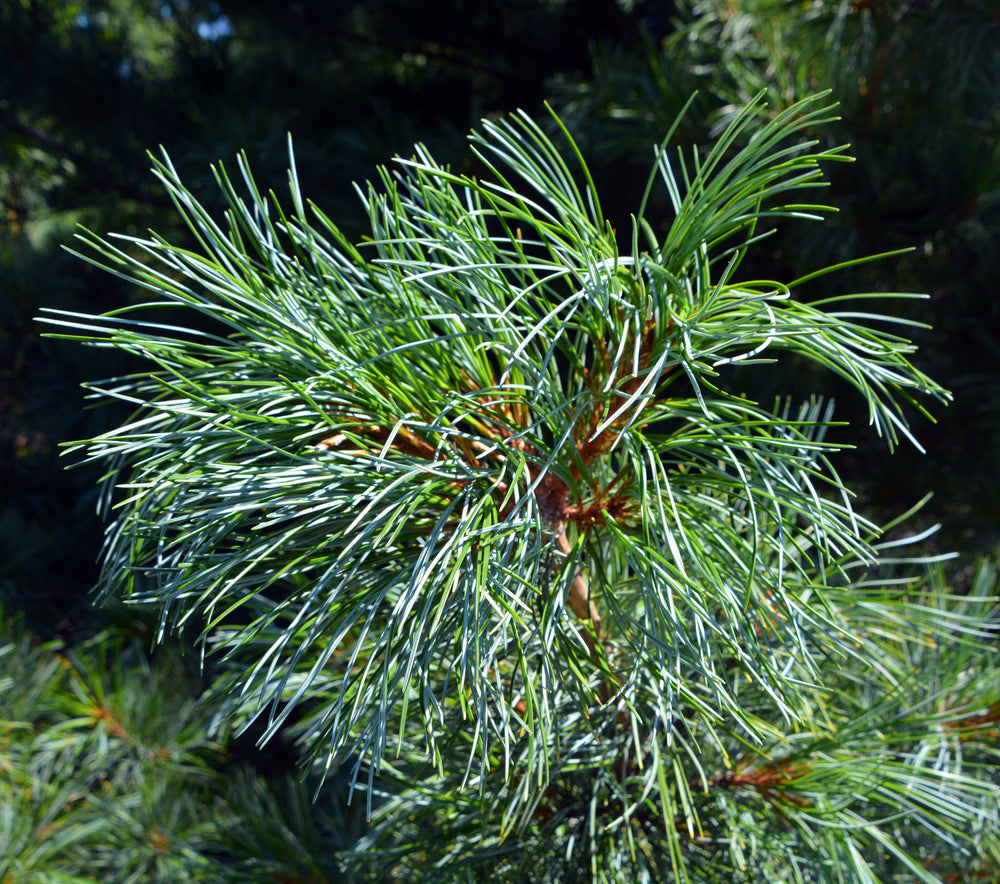
Unit price perPinus wallichiana, commonly known as the Bhutan Pine, is a majestic and elegant evergreen conifer well suited to large gardens, parklands, and naturalistic landscapes. Native to the Himalayas, it is admired for its graceful, conical form, long soft blue-green needles, and layered, slightly pendulous branches, which give it a serene and ornamental presence throughout the year.
Bhutan Pine thrives in full sun and prefers well-drained soil, although it is adaptable to a variety of soil types, including sandy or moderately poor ground. It is hardy once established, tolerating cold winters and exposed positions, making it a reliable choice for temperate climates. Its growth habit is upright but relaxed, and mature trees develop a broad, elegant crown that adds structure and vertical interest to the garden.
This pine works particularly well as a specimen tree where it can be fully appreciated, or as part of a woodland-style planting scheme. Its soft, cascading foliage allows dappled light beneath, creating a tranquil, airy atmosphere. With minimal maintenance, strong architectural form, and year-round ornamental appeal, Bhutan Pine provides a striking focal point and a sense of timeless serenity in spacious garden landscapes.


Laburnum x watereri 'Vossii' | Golden Chain Tree -Shrub - Height 90-120cm - 20lt
£105.00
Unit price perLaburnum x watereri 'Vossii' | Golden Chain Tree -Shrub - Height 90-120cm - 20lt
£105.00
Unit price perLaburnum x watereri 'Vossii' is a cultivar of Laburnum x watereri and the best known Laburnum. It’s an attractive, large, deciduous shrub or small tree of bushy, spreading, capricious growing habit, vase-shaped crown, and glossy, deep-green leaves. Spectacular, long, dropping clusters of slightly scented, pea-like, golden yellow flowers bloom in spring, and are followed by attractive bean-like pods.
Laburnum x watereri 'Vossii' thrives in rich, fertile, medium moisture, well-drained soils. It likes full sun, but in hot areas, it appreciates some afternoon shade. It doesn’t like heat and humidity, but is tolerant of frost, winds, urban conditions, and de-icing salt. Its roots can sometimes be badly anchored. A very tough and hardy plant. All parts of the palnt are toxic to humans and animals. This stunning shrub with its rich, dense, golden yellow flower clusters resembling golden chains, is great as a specimen plant, but can also be trained for arbours and pergolas.


Dryopteris affinis | Golden Shield Fern - 20-30cm - 2lt
£18.00
Unit price perDryopteris affinis | Golden Shield Fern - 20-30cm - 2lt
£18.00
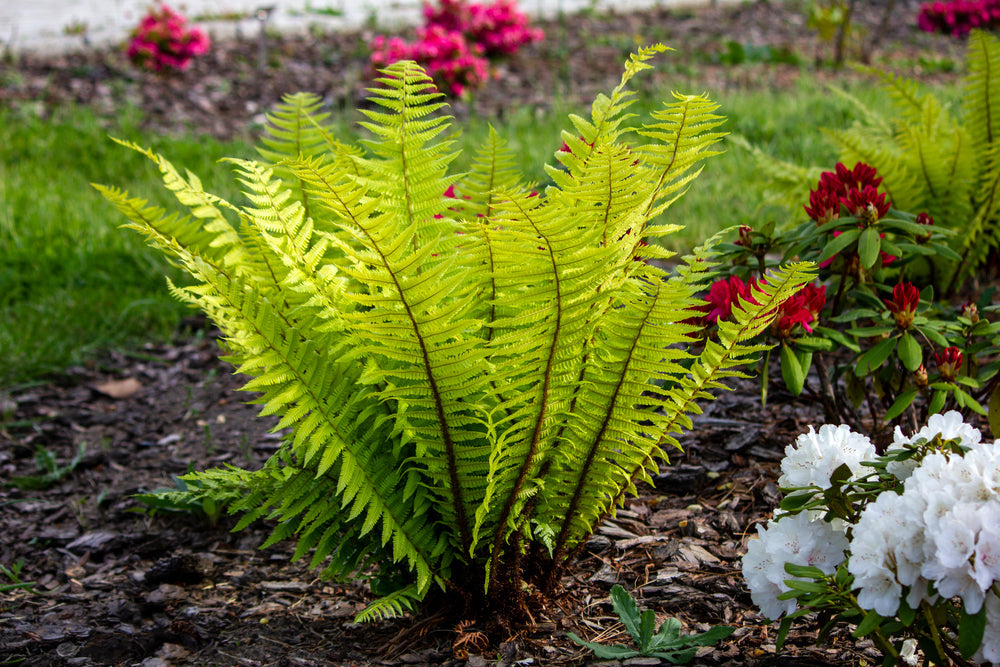
Unit price perDryopteris affinis 'The King', is a handsome and distinctive evergreen fern valued for its strong structure and attractively crested fronds. It belongs to the golden male fern group and is particularly appreciated for the decorative tips that give the plant an elegant yet slightly unusual appearance.
This fern forms a substantial clump of arching fronds that emerge from a central crown. Each frond is a rich, glossy green and can reach around 60–120 cm in length, creating a bold, architectural presence in shaded areas of the garden. The defining feature of this cultivar lies in the crested ends of the fronds and pinnae, where the leaflets divide into small tufted or tasselled tips. These crests give the plant a softly ruffled outline and add a layer of visual interest compared with standard forms of the species.
As an evergreen fern, it provides year-round structure and foliage in suitable conditions. Fresh new fronds unfurl in spring, often appearing slightly lighter green before deepening in colour as they mature. Older fronds can remain attractive through winter, though some gardeners choose to remove any tired foliage in early spring to allow the new growth to be seen clearly.
Dryopteris affinis ‘Cristata’ thrives in partial to full shade and prefers moist, humus-rich, well-drained soil. It is particularly well suited to woodland gardens, shaded borders, or naturalistic planting schemes where its bold texture contrasts beautifully with finer foliage plants. It combines well with hostas, hellebores and other shade-loving perennials, helping to create layered planting with varied forms and textures.
This fern is generally hardy and reliable in the UK climate, requiring little maintenance once established. Its robust habit, evergreen character and distinctive crested fronds make it a valuable structural plant for shaded garden spaces.
Overall, Dryopteris affinis ‘Cristata’ is admired for its durability, ornamental foliage and ability to bring year-round interest and texture to sheltered, shady areas of the garden


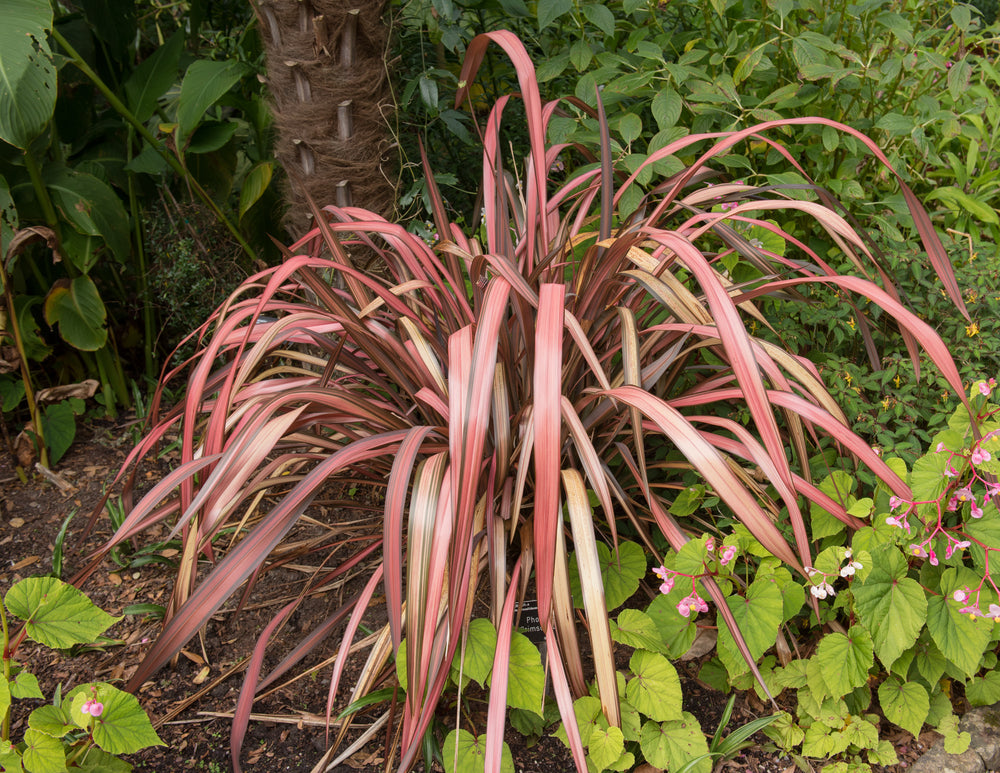
Cordyline australis | Cabbage palm
£18.00
Unit price perCordyline australis | Cabbage palm
£18.00
Unit price per


Cherry | Prunus Royal Burgundy - Clear Stem 120cm - Girth 6-8cm - Height 170-180cm - 10lt
£135.00
Unit price perCherry | Prunus Royal Burgundy - Clear Stem 120cm - Girth 6-8cm - Height 170-180cm - 10lt
£135.00
Unit price per

Miscanthus sinensis 'Red Chief' - Grass - Deciduous Perennial - 5lt
£28.00
Unit price perMiscanthus sinensis 'Red Chief' - Grass - Deciduous Perennial - 5lt
£28.00
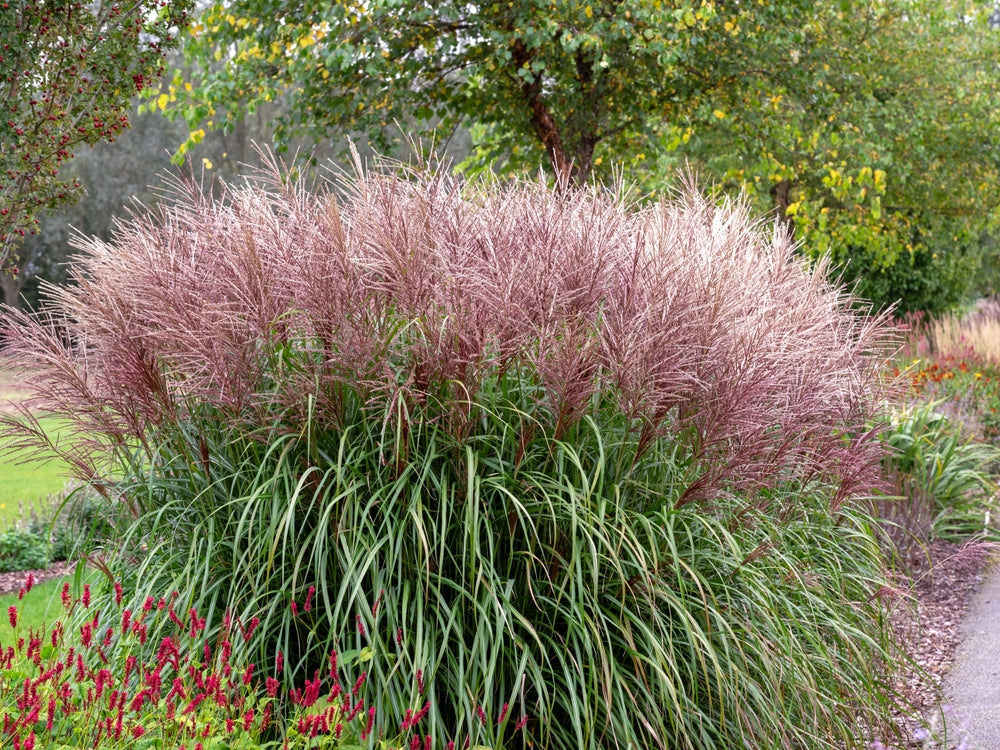
Unit price perMiscanthus sinensis 'Red Chief' is a compact, striking ornamental grass valued for its bold seasonal colour and graceful structure. It forms a dense, arching clump of narrow green leaves with a strong upright yet flowing habit, making it ideal for adding movement and texture to garden planting schemes without overwhelming smaller spaces.
From late summer into autumn, sturdy stems rise above the foliage carrying rich, deep red flower plumes that gradually soften to silvery tones as they mature. These plumes persist well into winter, providing continued architectural interest even after the growing season has ended. In autumn, the foliage often takes on warm golden and bronze hues, enhancing its visual appeal.
This cultivar performs best in full sun and well-drained soil, where it develops its most vibrant flower colour and strongest form. It is hardy, reliable, and low maintenance, requiring only a late winter or early spring cutback to ground level before fresh shoots emerge.
Perfect for contemporary borders, prairie-style plantings, or mixed perennial schemes, Miscanthus ‘Red Chief’ brings structure, seasonal drama, and year-round interest to a wide range of garden designs.


Cotoneaster 'horizontalis' - Height 10-20cm Width - 15-50cm - 3lt
£16.00
Unit price perCotoneaster 'horizontalis' - Height 10-20cm Width - 15-50cm - 3lt
£16.00
Unit price perCotoneaster horizontalis, commonly known as rock cotoneaster or wall spray, is a species of flowering plant in the Rosaceae family. Native to parts of western China, it has become a popular choice in gardens and landscapes due to its hardiness and distinctive appearance.
This deciduous shrub grows in a herringbone pattern, with branches that spread horizontally, forming a low, dense, and attractive ground cover. Typically reaching heights of 0.5-1 metre and spreading up to 2 metres, Cotoneaster horizontalis is well-suited for rockeries, slopes, and as a ground cover for larger garden areas.
Note: Due to vigorous growth of the plant in the first year, its size may vary from 15 cm to 50 cm in width, depending on the season (it generally reaches around 50 cm towards autumn).
The small, glossy, oval-shaped leaves of Cotoneaster horizontalis turn a striking red or purple in the autumn, adding vibrant colour to the garden. In late spring to early summer, the plant produces tiny pinkish-white flowers. Though not particularly showy, these flowers are a valuable source of nectar for pollinators such as bees. By late summer to autumn, the flowers give way to small, bright red berries that persist into winter. These berries are not only visually appealing but also provide food for birds, contributing to local biodiversity.
Cotoneaster horizontalis is known for its adaptability and resilience. It can thrive in various soil types, including poor, dry, and alkaline soils. It prefers full sun but can tolerate partial shade. Additionally, it is relatively low-maintenance, requiring minimal pruning. However, it is advisable to trim back any excessively long or untidy branches to maintain its shape and encourage denser growth.
One concern with Cotoneaster horizontalis is its potential invasiveness. In some regions, it can spread beyond garden boundaries, particularly in areas with mild climates. As a result, gardeners should monitor its growth and manage its spread to prevent it from becoming a nuisance.
Overall, Cotoneaster horizontalis is a versatile and attractive plant, offering year-round interest with its foliage, flowers, and berries. It is an excellent choice for gardeners looking to add texture and colour to their landscapes.


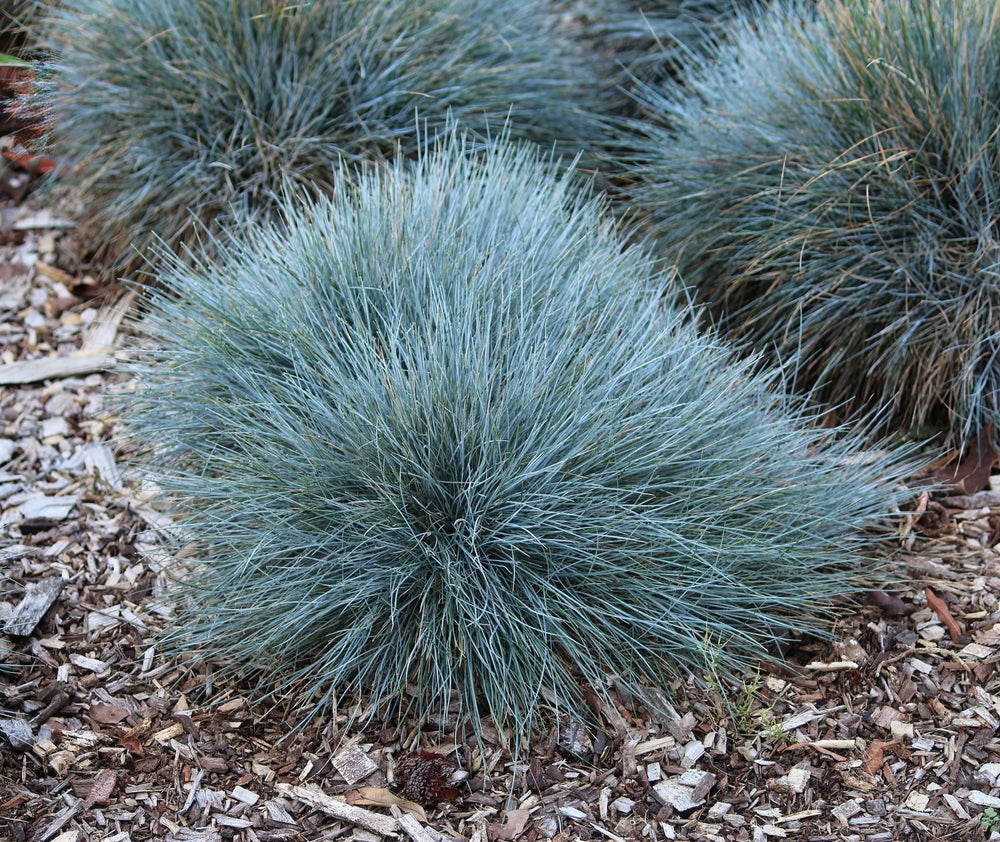
Juniperus 'Blue Alps' - Height 15-20cm - 3ltt
£18.00
Unit price perJuniperus 'Blue Alps' - Height 15-20cm - 3ltt
£18.00
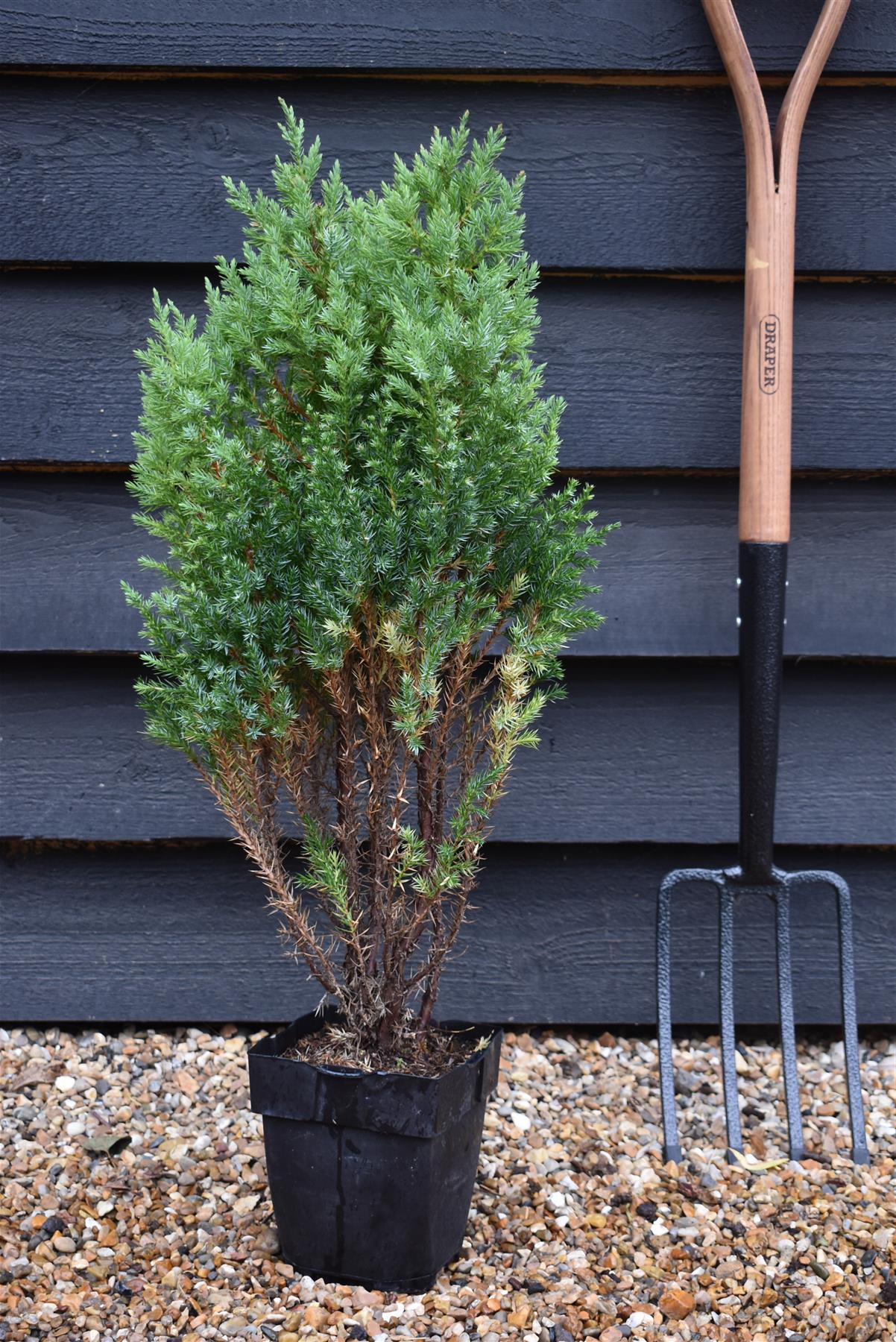
Unit price perThe Juniperus chinensis 'Blue Alps', commonly known as Juniper ‘Blue Alps’, is an attractive evergreen conifer valued with striking blue-grey foliage and hardy nature. It is a vigorous and adaptable shrub that provides year-round structure, colour, and texture in a wide range of garden settings.
This juniper has a naturally bushy and slightly spreading habit, typically reaching around 2–4 metres in height with a similar spread when fully mature. Its branches form a dense, layered shape, creating a strong architectural presence in borders or landscape planting. The foliage consists of sharp, needle-like leaves that are silvery blue to blue-green in colour, giving the plant its distinctive cool-toned appearance. In bright sunlight the colour is particularly striking, often contrasting beautifully with greener shrubs and perennials nearby.
One of the main strengths of Juniper ‘Blue Alps’ is its hardiness and tolerance of difficult conditions. It thrives in full sun and prefers well-drained soil, but it can cope with poorer soils, dry conditions, and exposed sites once established. This makes it a practical choice for coastal gardens, gravel gardens, and low-maintenance planting schemes. The plant is also relatively drought tolerant, requiring little watering once it has settled into its growing position.
Juniper ‘Blue Alps’ is often used as a specimen shrub, in mixed borders, or as part of a conifer bed. It also works well for screening or informal hedging due to its dense growth. Because it maintains its foliage throughout the year, it offers consistent colour and structure during the winter months when many other plants are dormant.
Maintenance is minimal. Occasional light pruning may be carried out to control size or shape, but heavy pruning into old wood should be avoided as regrowth can be slow. Overall, Juniper ‘Blue Alps’ is a reliable, resilient, and visually distinctive shrub, making it an excellent choice for gardeners seeking year-round interest with minimal effort.


Caryopteris - clandonensis (Bluebeard) 'Kew Blue' - 10/20cm, 2lt
£18.00
Unit price perCaryopteris - clandonensis (Bluebeard) 'Kew Blue' - 10/20cm, 2lt
£18.00
Unit price perCaryopteris - clandonensis (Bluebeard) 'Kew Blue' is a compact, deciduous shrub with rounded habit, small, toothed, oval, grey-green leaves, and attractive clusters of dark blue flowers that bloom in late summer and early autumn when few other shrubs are in bloom.
Caryopteris – clandonensis 'Kew Blue' loves full sun. It can grow in any type of soil as long as it is well-drained, but prefers moderately fertile, light, medium moisture soil. It is very easy to grow and low maintenance. Generally, pest-free and disease-free. Very attractive to bees and butterflies. Resistant to drought and frost but should be protected from harsh winds. In colder areas, best to be planted near a sheltered wall.
Caryopteris - clandonensis (Bluebeard) 'Kew Blue' is an excellent addition to any sunny garden. Great choice for cottage and urban gardens, suitable for coastal areas. Perfect for flower beds and borders, perennial and shrub borders, and for growing in containers.


Daphne transatlantica Pink Fragrance - 15-25cm - 2lt
£28.00
Unit price perDaphne transatlantica Pink Fragrance - 15-25cm - 2lt
£28.00
Unit price per

Nyssa sylvatica | Black Gum Tree - Height 350-400cm, 110lt
£565.00
Unit price perNyssa sylvatica | Black Gum Tree - Height 350-400cm, 110lt
£565.00
Unit price per


Pittosporum tenuifolium 'Elizabeth' - Height 25-35cm - 2lt
£18.00
Unit price perPittosporum tenuifolium 'Elizabeth' - Height 25-35cm - 2lt
£18.00
Unit price per


Japanese maple 'Shaina' | Acer palmatum - Bushy - Height 180-190cm - 55lt
£495.00
Unit price perJapanese maple 'Shaina' | Acer palmatum - Bushy - Height 180-190cm - 55lt
£495.00
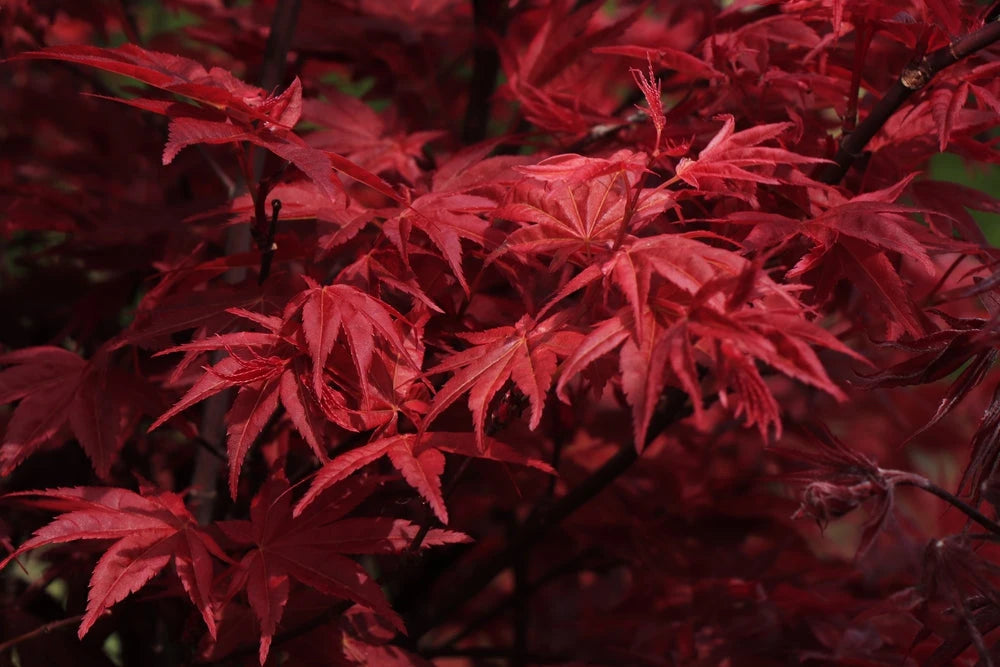
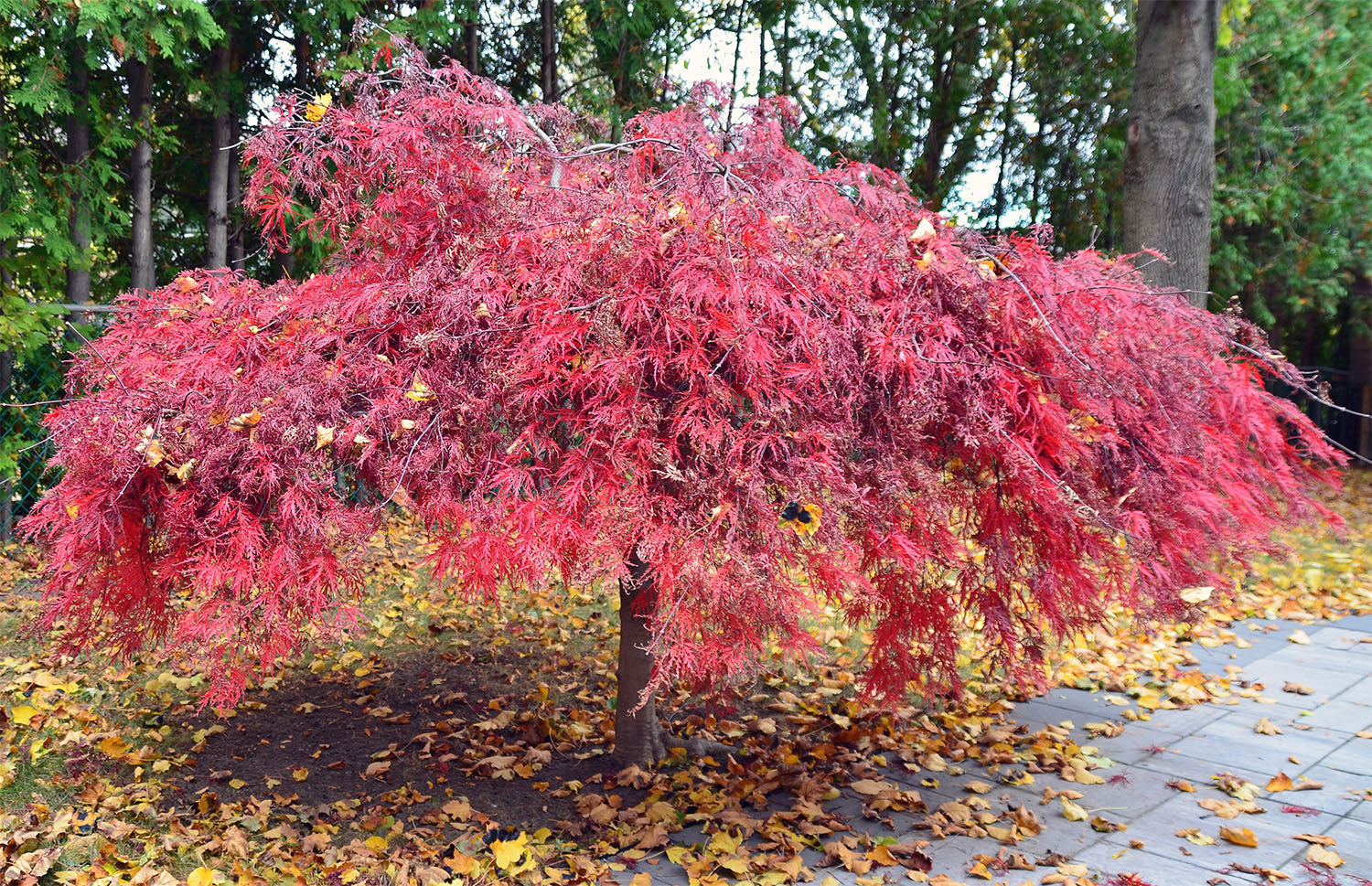
Unit price perAcer palmatum 'Shaina' is a slow-growing, dense, compact, upright, slightly columnar, deciduous shrub or small tree with globe-shaped habit and beautiful, narrowly lobed, deeply-divided leaves, bright red in spring, ruby red in summer, crimson red in autumn. Small, inconspicuous flowers bloom in spring and are followed by winged seed pods.
Acer palmatum 'Shaina' prefers fertile, humus-rich, loamy or sandy, slightly acidic, moist, well-drained soils. It thrives in partial shade but is adaptable to full sun. Best leaf colour is achieved in partial shade. Excessive exposure to sun or lack of soil moisture can cause leaf scorch. It is resistant to frost, but has to be protected from harsh winds. Low maintenance plant, needs little to no pruning.
Japanese maple 'Shaina' is a gorgeous red-leaved Japanese maple perfect for small informal, cottage, urban, gravel or Japanese-style gardens. Great for beds and borders. Excellent for growing in containers.


Euonymus alatus | Winged Spindle Tree - Height 120cm -30lt
£245.00
Unit price perEuonymus alatus | Winged Spindle Tree - Height 120cm -30lt
£245.00
Unit price per


Hydrangea paniculata 'Diamantino' - Stem 100cm - Height 140-160cm - 15lt
£155.00
Unit price perHydrangea paniculata 'Diamantino' - Stem 100cm - Height 140-160cm - 15lt
£155.00
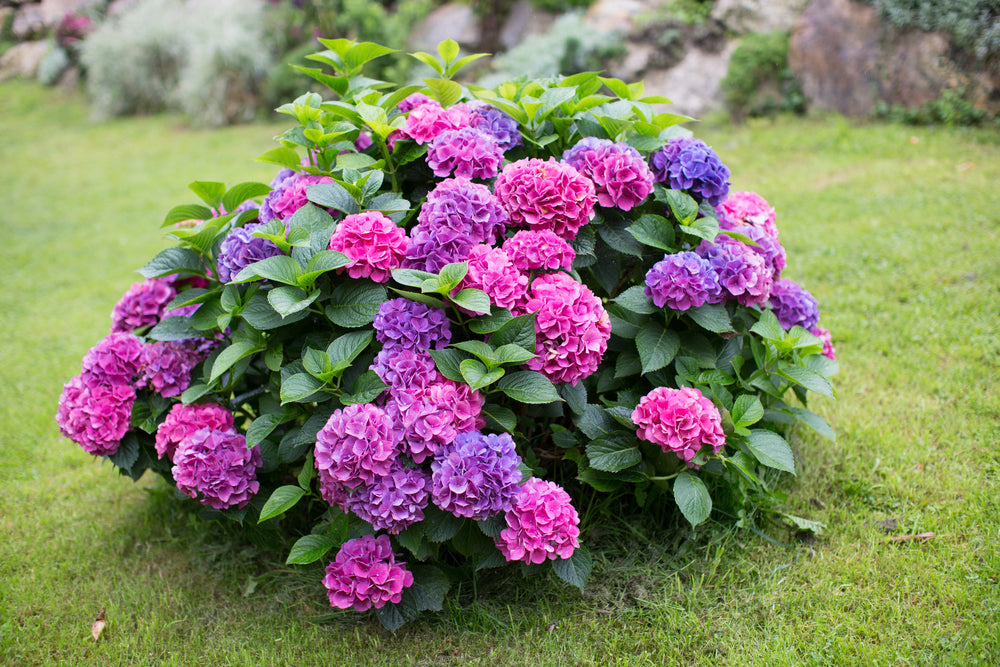
Unit price perHydrangea paniculata on a clear stem, often referred to as a standard or tree-form hydrangea, is a versatile and elegant choice for a wide range of garden styles. Its distinctive shape features a single, clear trunk topped with a full, rounded canopy of vibrant green leaves and large, conical flower heads. Throughout summer, these blooms emerge in shades of creamy white, gradually maturing to soft pinks or blush tones as the season progresses, providing long-lasting seasonal interest.
This plant is highly suitable for gardens of all sizes because of its compact footprint and vertical emphasis, which make it ideal for smaller spaces or as a focal point in larger borders. It thrives in both modern and traditional settings, fitting seamlessly into formal designs or more relaxed cottage gardens. Its height and form also make it perfect for planting in pots or as a statement feature by entrances, patios, or pathways. Hardy and low-maintenance, it tolerates a variety of soils, enjoys full sun to partial shade, and rewards gardeners with stunning flowers and structure year after year.


Abies koreana 'Ice Breaker' - Height 15cm - Width 20-25cm - 8lt
£126.00
Unit price perAbies koreana 'Ice Breaker' - Height 15cm - Width 20-25cm - 8lt
£126.00
Unit price per


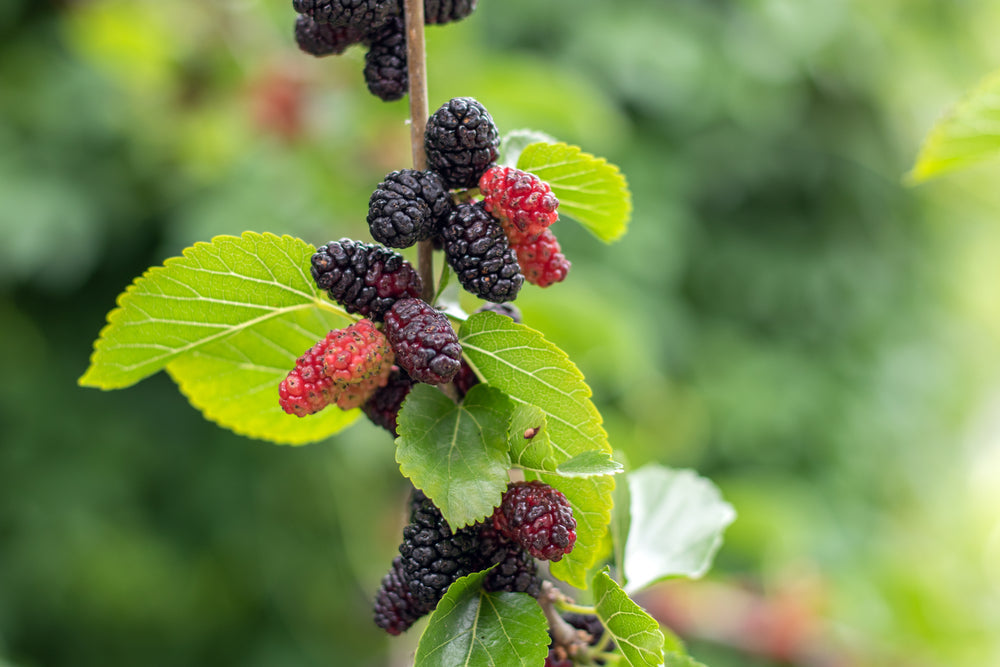
Morus Alba | White Mulberry - Girth 21cm - Clear Stem 190cm - Height 390-410cm - 130lt
£545.00
Unit price perMorus Alba | White Mulberry - Girth 21cm - Clear Stem 190cm - Height 390-410cm - 130lt
£545.00
Unit price per


Wisteria brachybotrys 'Iko yama Fuji' - Cane - Height 200-250cm - 7lt
£98.00
Unit price perWisteria brachybotrys 'Iko yama Fuji' - Cane - Height 200-250cm - 7lt
£98.00
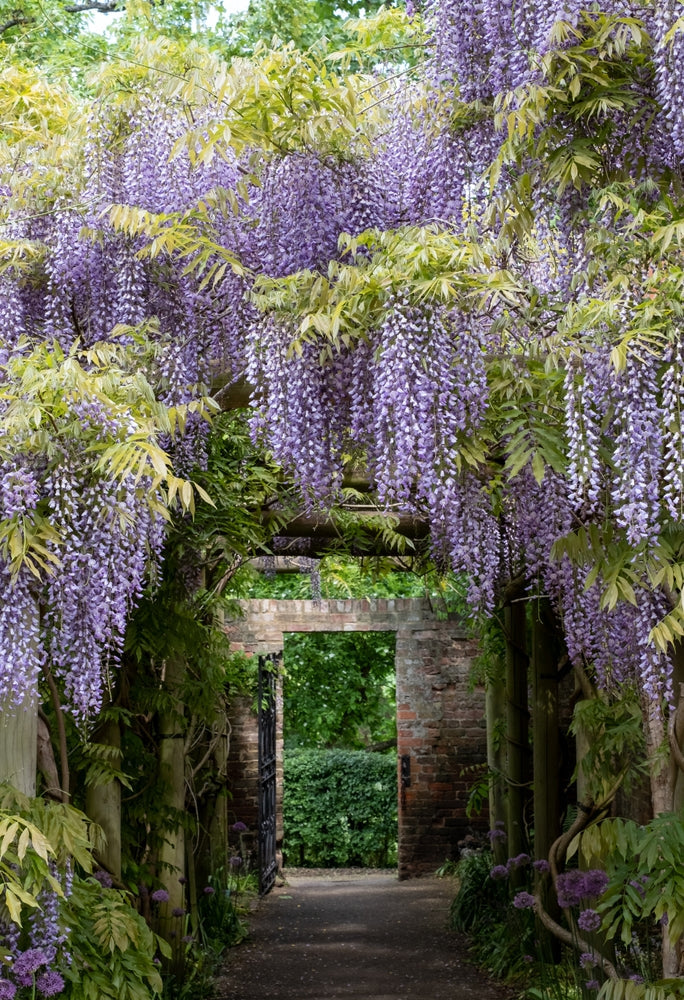
Unit price perWisteria brachybotrys 'Iko yama fuji' is a captivating flowering plant that belongs to the pea family, Fabaceae. It is known for its elegant, cascading clusters of fragrant, violet-blue flowers that drape gracefully from its branches. The 'Iko yama fuji' variety is particularly notable for its stunning display and is often cultivated as an ornamental plant in gardens and landscapes.
The term "half standard clear stem" refers to a specific pruning technique applied to this Wisteria variety, shaping it into a unique form. In this context, a clear stem means that the lower portion of the plant has been trained to have an upright growth habit, devoid of any lateral branches or foliage. This clear stem creates a distinct visual effect, accentuating the beauty of the cascading flowers that appear above it.
The term "half standard" indicates that the clear stem has been pruned to a specific height, typically around three to four feet (90-120 cm) above the ground. This pruning method creates a visually appealing feature, allowing the flowering portion of the Wisteria to be showcased more prominently. The clear stem also facilitates ease of maintenance and enhances the plant's overall form and structure.
The 'Iko yama fuji' Wisteria itself is a deciduous vine with pinnate leaves consisting of numerous leaflets. The foliage emerges in spring, creating a lush green backdrop for the spectacular floral display that follows. The flowers, which typically appear in late spring or early summer, are abundant and borne in pendulous racemes that can reach up to a foot (30 cm) or more in length.
The enchanting violet-blue flowers of Wisteria brachybotrys 'Iko yama fuji' are highly fragrant, filling the air with a delightful scent. They attract pollinators like bees and butterflies, adding to the plant's ecological value. Additionally, the flowers give way to velvety, elongated seed pods that develop later in the season, contributing to the overall visual interest of the plant.
The 'Iko yama fuji' Wisteria, with its half standard clear stem, offers a captivating combination of structural elegance and abundant floral beauty. Whether used as a focal point in a garden or as a decorative feature in a landscape, this cultivar adds a touch of sophistication and charm to any setting. With proper care and maintenance, this extraordinary plant can provide years of enjoyment and become a cherished highlight of outdoor spaces.


Swamp White Oak | Quercus bicolor - Height 140-160cm - Pot Grown - 10lt
£135.00
Unit price perSwamp White Oak | Quercus bicolor - Height 140-160cm - Pot Grown - 10lt
£135.00
Unit price perThe swamp white oak is a stately, long-lived tree native to North America, prized for both beauty and resilience. Its distinctive two-toned leaves—deep green above, silvery white beneath—create a striking display that shifts to rich golden hues in fall. Naturally thriving in wetlands and floodplains, this oak adapts easily to a wide range of soils and conditions, offering shade and strength in urban landscapes, parks, or natural settings.
Beyond its ornamental charm, the swamp white oak provides essential habitat and food for wildlife, with acorns that nourish birds and mammals alike. As it matures, it develops a broad, rounded crown that delivers reliable shade and an impressive presence in any landscape. Hardy, versatile, and ecologically valuable, Quercus bicolor is more than just a tree—it’s an investment in beauty, biodiversity, and sustainability for generations to come.