

-
Trees
Trees
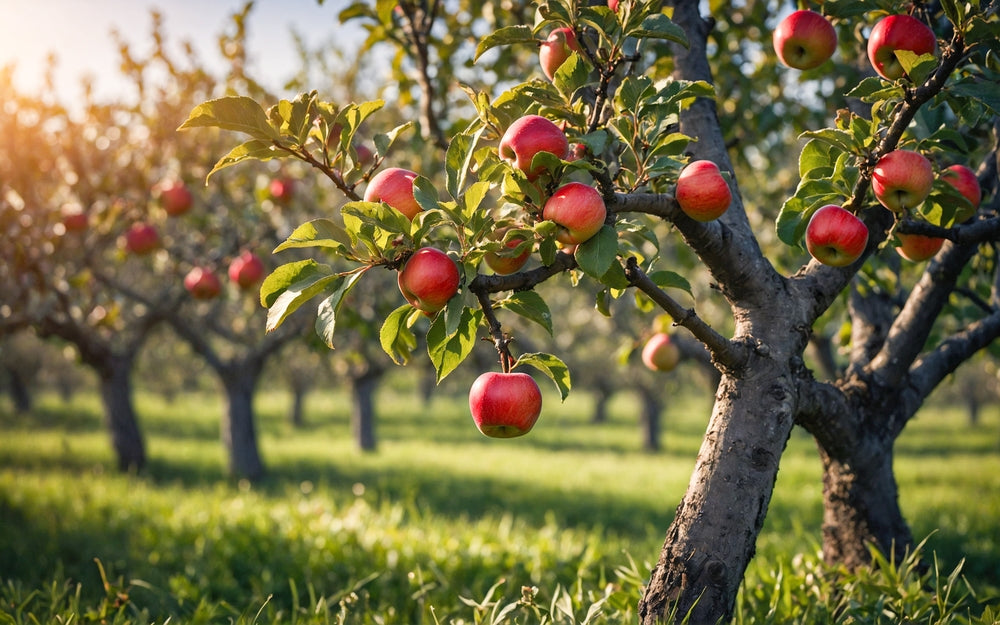 Fruit Trees
 Ornamental
 Screening
 Palms
By FeaturesBy Shape
-
Shrubs
Shrubs
 Large shrubs
 Hedging
 Bamboo
 Climbers
 Flowering
 Grasses & Ferns
 Popular
-
Pines & Conifers
Pines & Conifers
 Pines
 Spruce & Fir
 Cypress
 Thuja
 Redwood | Sequoia
-
Specimen
FREE DELIVERY OVER £350
Search results
Search results


Euonymus alatus | Winged Spindle Tree - Bush - Large Shrub - Height 180-200cm - 90lt
£468.00
Unit price perEuonymus alatus | Winged Spindle Tree - Bush - Large Shrub - Height 180-200cm - 90lt
£468.00
Unit price per


Ligustrum lucidum Variegatum - Bush - Height 190-200cm - 55lt
£250.00
Unit price perLigustrum lucidum Variegatum - Bush - Height 190-200cm - 55lt
£250.00
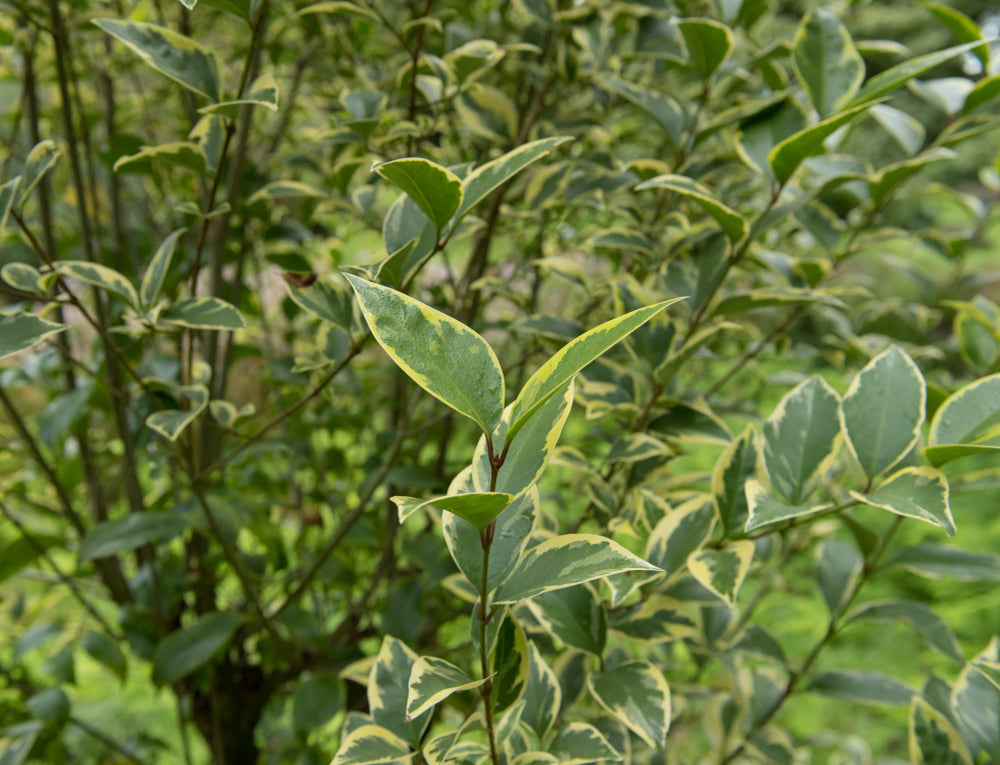
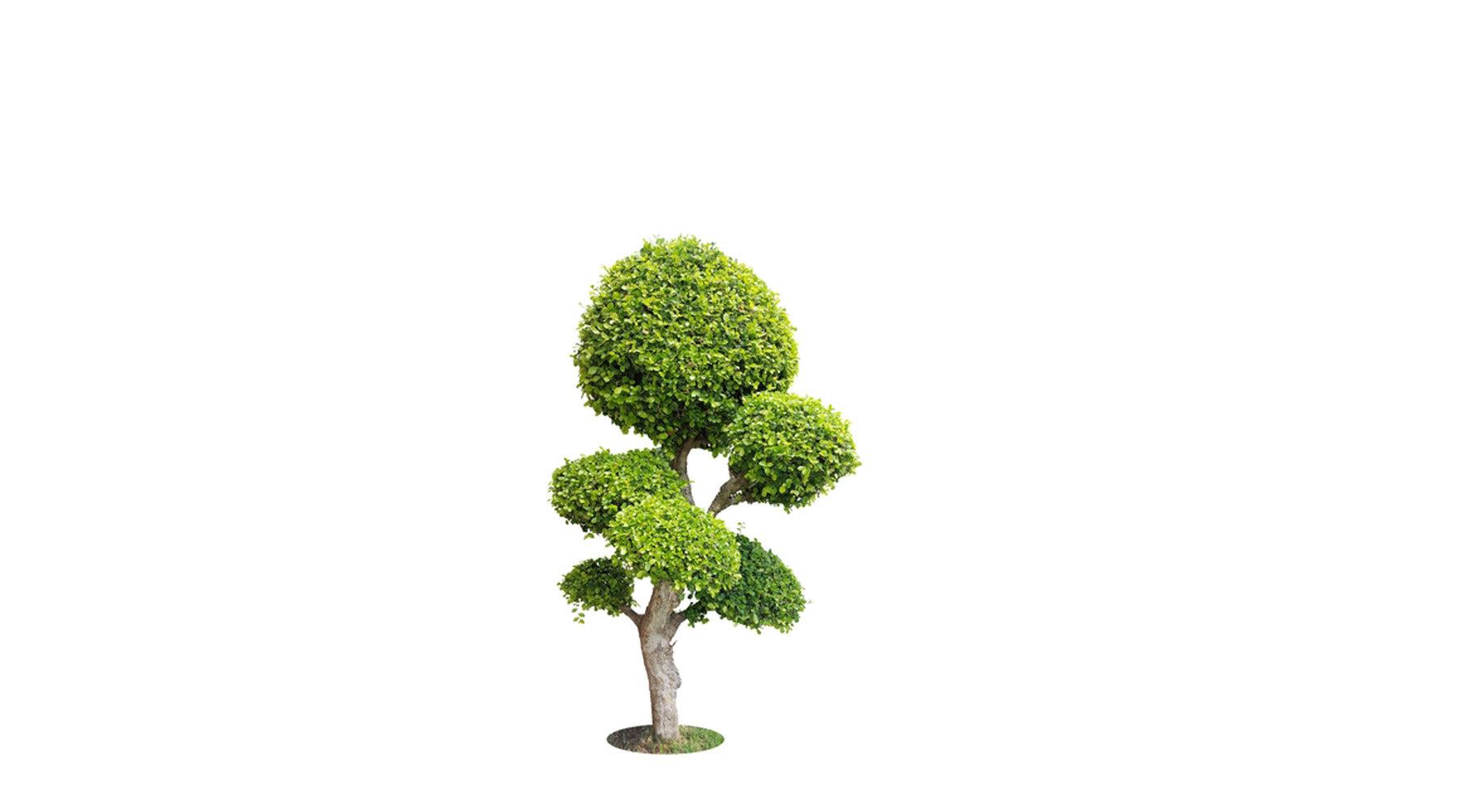
Unit price perLigustrum lucidum 'Variegatum' Standard, at approximately 300cm tall, is an ideal choice for gardens needing elegant structure and effective screening. This evergreen tree features a dense, rounded crown elevated on a clear stem, creating a formal, lollipop-shaped standard that brings height and architectural interest to the landscape. The variegated foliage—glossy green leaves edged in creamy white—adds year-round brightness and contrast, making it visually appealing in all seasons.
Well-suited to urban and suburban gardens, this Ligustrum tolerates pollution, pruning, and a variety of soil types, provided they are well-drained. It thrives in full sun to partial shade and is relatively low-maintenance once established. In summer, it produces small, fragrant white flowers that attract pollinators, followed by dark berries which add further seasonal interest.
Its dense canopy makes it excellent for privacy screening, windbreaks, or as a focal point in formal garden designs. Whether used in rows along boundaries or as standalone specimens in courtyards and patios, Ligustrum lucidum 'Variegatum' Standard trees provide reliable structure, year-round color, and an elegant solution for screening and ornamental planting.


Cornus Rutgersensis Stellar Pink | Beni-Fuji Dogwood - 50-80cm - 7lt
£85.00
Unit price perCornus Rutgersensis Stellar Pink | Beni-Fuji Dogwood - 50-80cm - 7lt
£85.00
Unit price perCornus kousa 'Beni-fuji' is a captivating cultivar of the Japanese dogwood, admired for its stunning seasonal display and manageable size, making it a versatile addition to gardens large and small. This deciduous small tree or large shrub is native to East Asia, where it thrives in woodlands and temperate climates. 'Beni-fuji' is celebrated for its graceful form, vibrant foliage, and striking flowers.
In late spring to early summer, the tree showcases an impressive display of star-shaped bracts that surround its small, inconspicuous green flowers. These bracts, a hallmark of Cornus kousa, emerge in shades of pink to rosy red, deepening as they mature. The blooms sit atop horizontal branches, creating a layered, tiered effect that adds structural elegance to its appearance.
As the seasons progress, 'Beni-fuji' transforms further. By late summer, the tree produces small, strawberry-like fruits, which are edible and can attract birds to the garden. In autumn, its foliage takes centre stage, turning rich shades of crimson, orange, and scarlet, providing a final burst of colour before winter dormancy.
This cultivar prefers well-drained, fertile soil and thrives in full sun to partial shade, making it relatively easy to accommodate in a range of garden settings. It has a compact growth habit, typically reaching a height of 3-4 metres, making it suitable for smaller gardens or as a specimen plant in borders.
Cornus kousa 'Beni-fuji' is not only ornamental but also resilient, tolerating a range of soil types and proving relatively disease-resistant. Its year-round appeal—flowering in summer, fruiting in autumn, and showcasing vibrant foliage—ensures its popularity among gardeners seeking a dynamic and visually rewarding plant for their landscape.


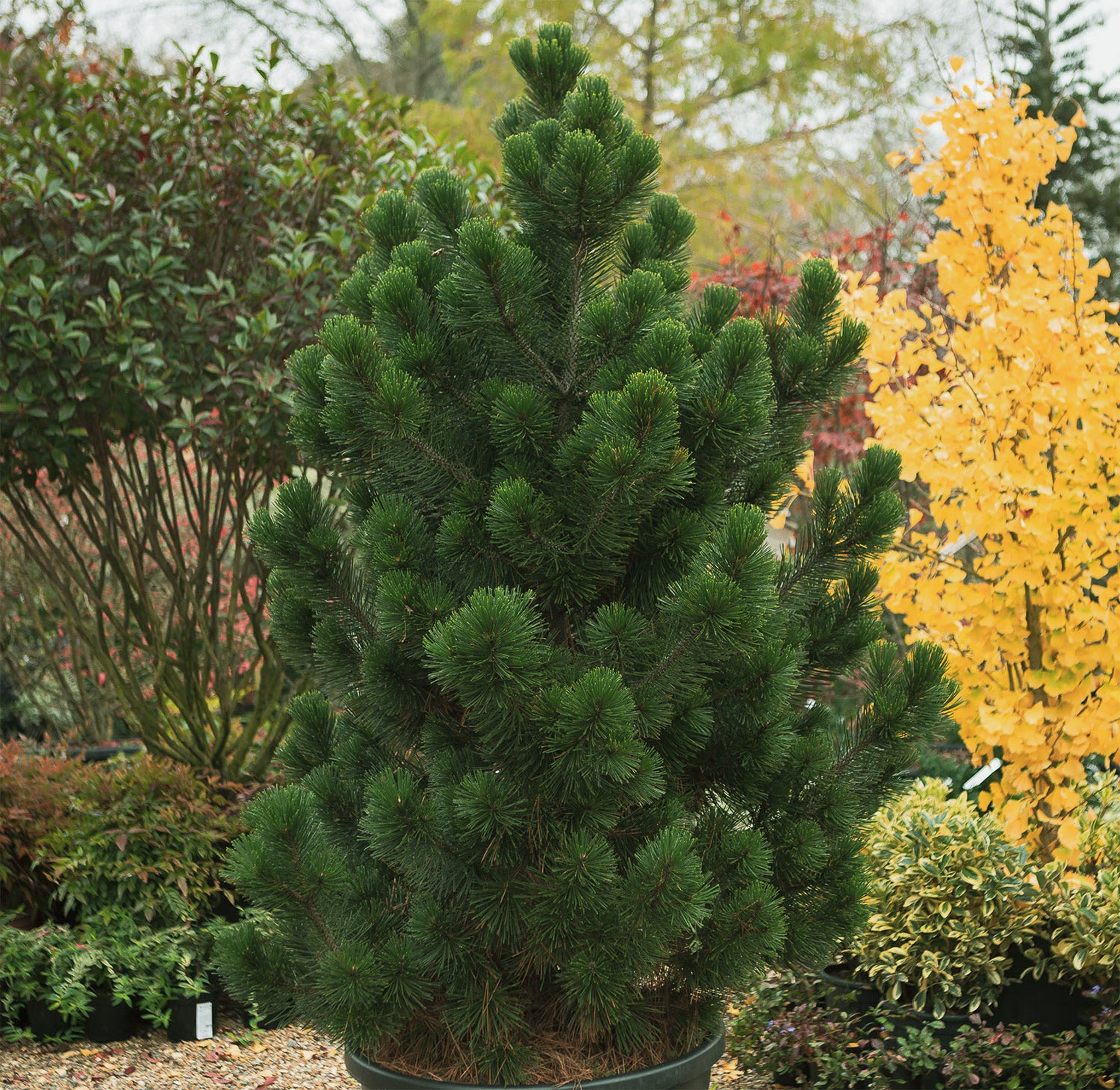
Pinus nigra 'Komet' - 100-120cm - 18lt
£165.00
Unit price perPinus nigra 'Komet' - 100-120cm - 18lt
£165.00
Unit price perPinus nigra 'Komet' is a stunning cultivar of the Pinus nigra species, commonly known as the Austrian or Black Pine. This striking ornamental tree stands out due to its striking conical form, fast growth rate, and dense foliage, making it a favorite among gardeners and landscapers alike. Native to Europe and Asia, the Austrian Pine thrives in a variety of environmental conditions, including rocky or sandy soils and urban areas with high levels of pollution.
The 'Komet' variety is characterized by its compact, pyramidal shape and distinct upward-curving branches, which give the tree its celestial namesake. This cultivar can reach heights of up to 30-40 feet (9-12 meters), with a spread of about 15-20 feet (4.5-6 meters). Its attractive form makes it an ideal candidate for use as a specimen tree, a privacy screen, or even as part of a larger garden design.
The foliage of the Pinus nigra 'Komet' is particularly striking, with dark green needles that measure 3-6 inches (7.5-15 cm) in length, arranged in bundles of two. These long, robust needles are accompanied by a dense arrangement of buds, which appear prominently on the tree during the winter months. The tree's bark is also visually interesting, with a rich, dark grey color and a plated or scaly texture that becomes more pronounced as the tree matures.
In addition to its aesthetic appeal, Pinus nigra 'Komet' boasts a relatively high tolerance to a variety of environmental stressors, including drought, air pollution, and saline soils. This adaptability makes it well-suited for urban landscapes and challenging planting sites.
When planting Pinus nigra 'Komet', it is essential to select a location with well-drained soil and ample room for the tree to grow to its full height and spread. Although this cultivar is more resistant to pests and diseases than some other conifers, it is still essential to monitor the tree for signs of infestation or illness, such as needle cast or pine wilt. Pruning is generally minimal and should focus on maintaining the tree's overall shape and removing dead or damaged branches.
In conclusion, the Pinus nigra 'Komet' is a magnificent addition to any garden or landscape, offering year-round visual interest with its conical form, dense foliage, and distinctive branching pattern. Its hardiness and adaptability to various environmental conditions make it a popular choice for urban planting and challenging sites, ensuring that this celestial-inspired cultivar continues to shine bright in gardens across the globe.


European Hornbeam | Carpinus Betulus - Feathered - Girth 8-10cm - Height 220-280cm - 30lt
£190.00
Unit price perEuropean Hornbeam | Carpinus Betulus - Feathered - Girth 8-10cm - Height 220-280cm - 30lt
£190.00
Unit price per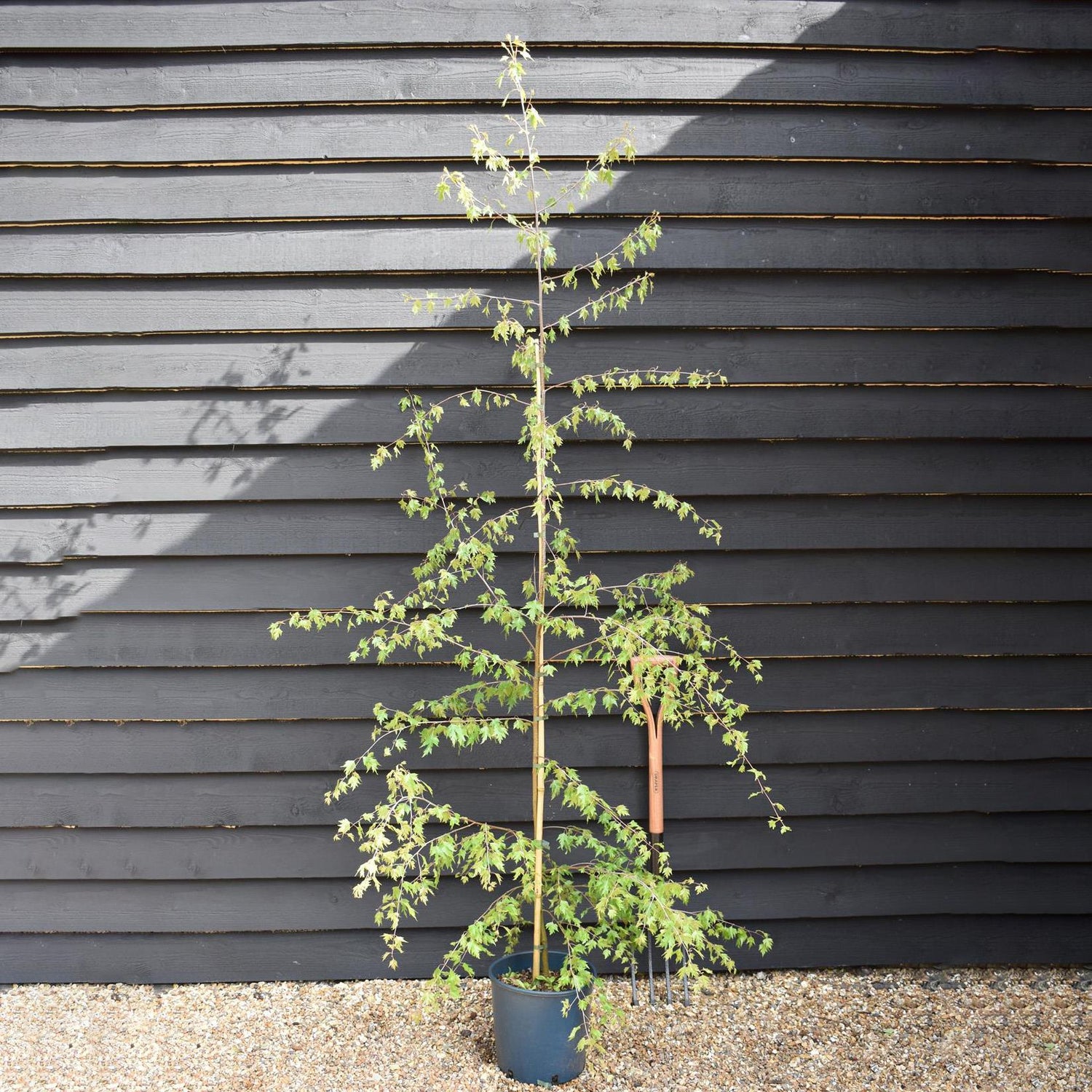
Silver Birch 'Dalecarlica' | Betula pendula - Height 220-250cm 10lt
£88.00
Unit price perSilver Birch 'Dalecarlica' | Betula pendula - Height 220-250cm 10lt
£88.00
Unit price perBetula pendula 'Dalecarlica,' commonly known as the Swedish Birch or Dalecarlian Birch, is a striking deciduous tree cultivar celebrated for its distinctive appearance and adaptability to a wide range of growing conditions. This cultivar is a popular choice among landscape designers and garden enthusiasts for its unique characteristics.
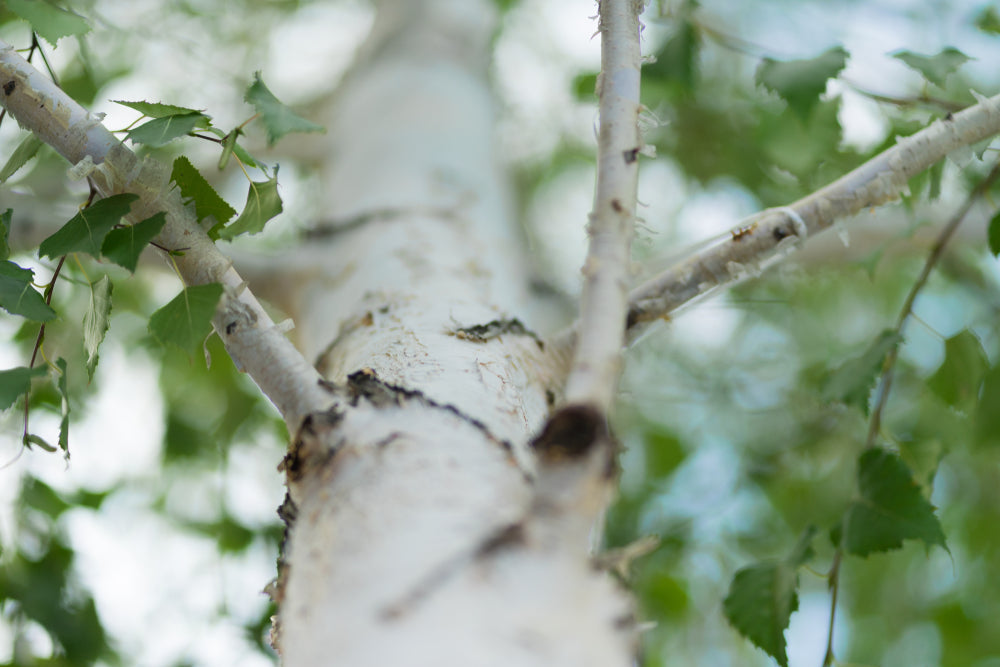
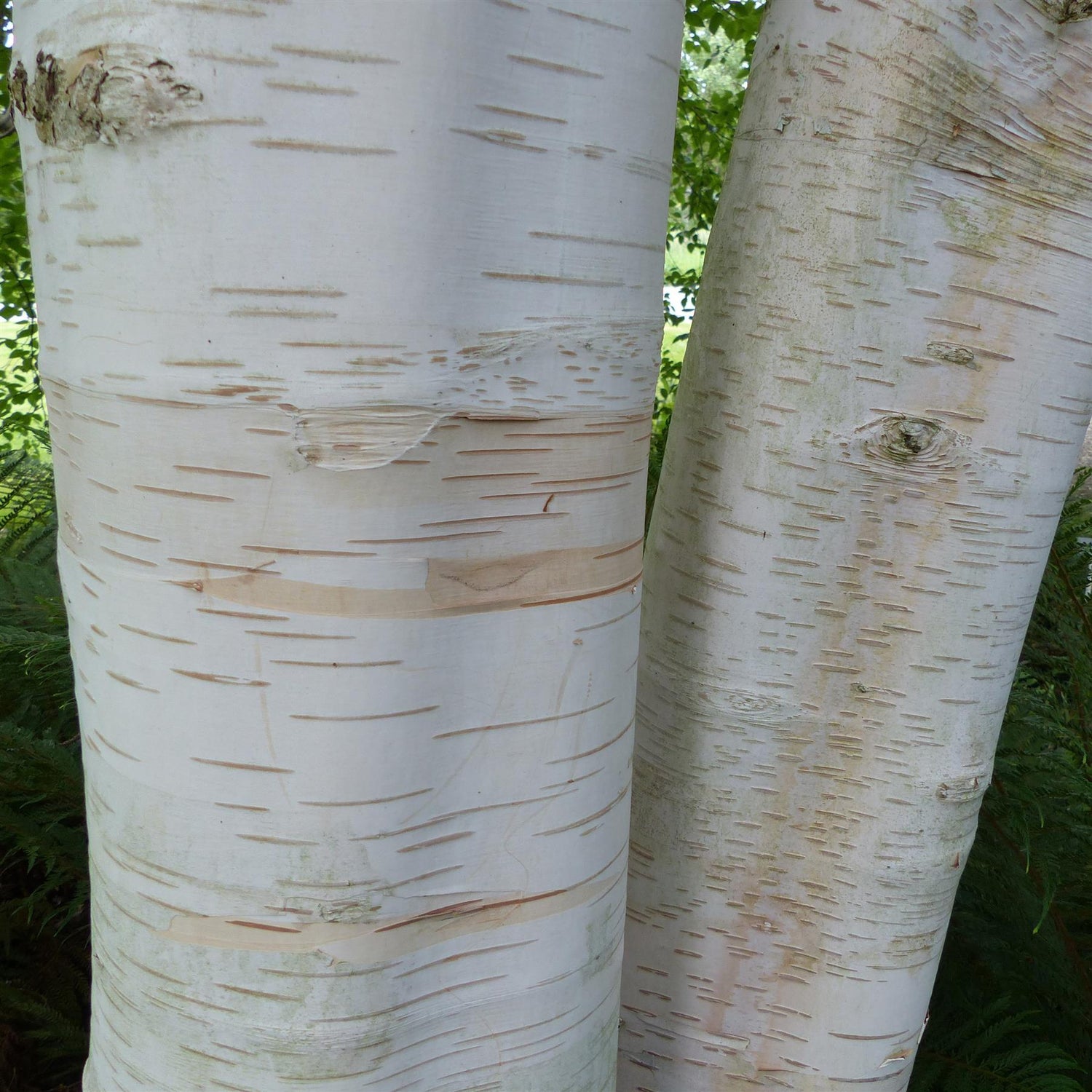
Dalecarlian Birch typically reaches a height of 40 to 50 feet (12 to 15 meters) with a graceful, upright, and slightly weeping form. Its slender branches elegantly arch downwards, creating a charming pendulous effect. The bark of this birch variety is a standout feature, characterized by its creamy-white colour with dark, diamond-shaped fissures that become more pronounced with age. This contrast between the bark's white background and dark patterns creates a visually striking tree year-round.
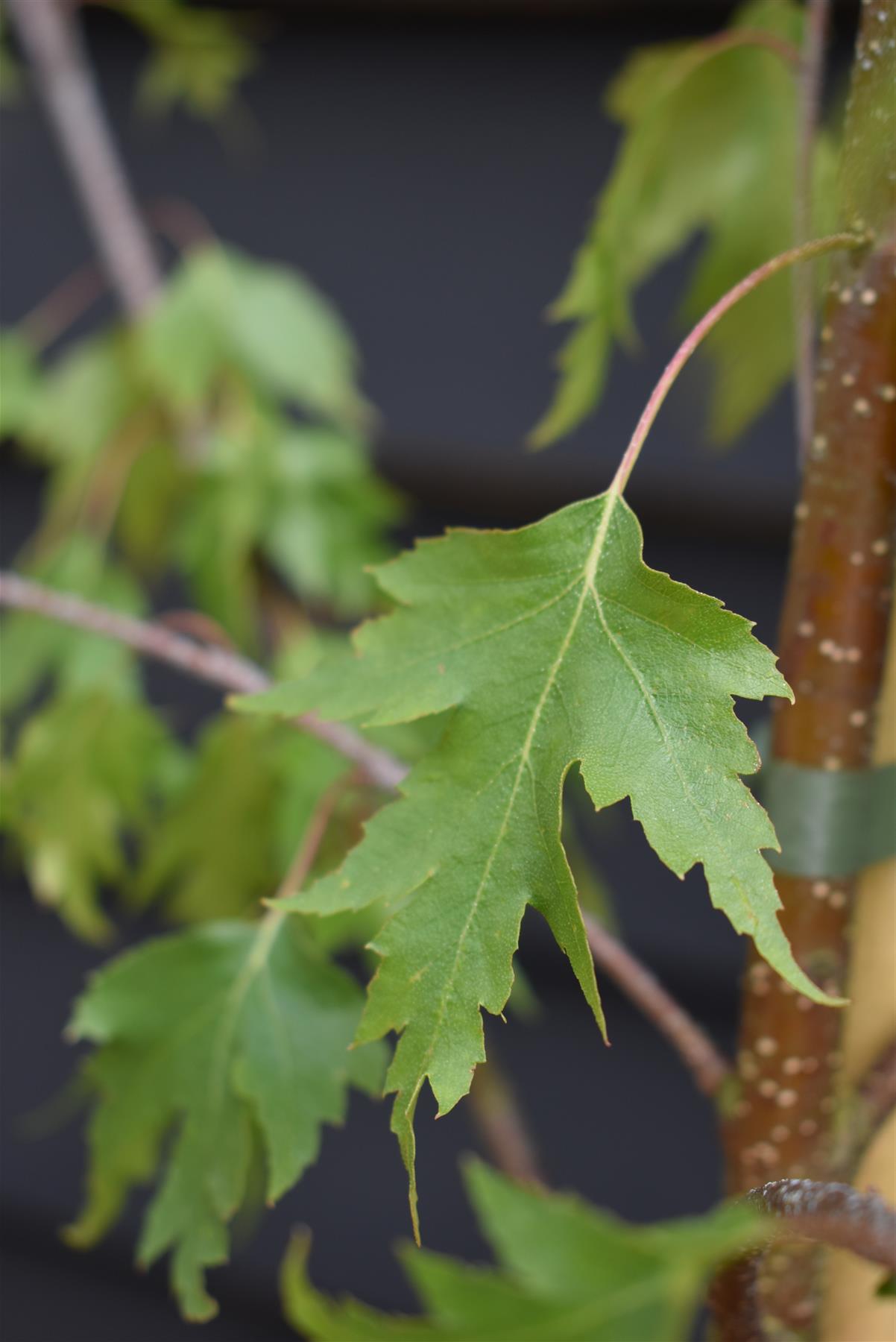
The foliage of Betula pendula 'Dalecarlica' consists of small, diamond-shaped leaves that are bright green in the spring and summer. In the fall, these leaves transition to a stunning golden-yellow colour, providing a spectacular display of autumnal beauty. The delicate leaves rustle gently in the breeze, adding to the tree's overall appeal.
One of the advantages of this cultivar is its adaptability to various soil types and moisture conditions. Swedish Birch thrives in full sun to partial shade and is tolerant of a wide range of soil pH levels. It can tolerate moist to well-drained soils, making it suitable for a variety of garden settings, including urban environments, parks, and residential landscapes.
Betula pendula 'Dalecarlica' is known for its low maintenance requirements. While it benefits from occasional pruning to maintain its shape and remove dead or diseased branches, it generally requires minimal care.
In summary, Betula pendula 'Dalecarlica,' or the Swedish Birch, is a visually captivating and adaptable tree cultivar known for its graceful pendulous form, distinctive bark, and golden autumn foliage. Its ability to thrive in diverse soil and light conditions makes it a versatile choice for a wide range of garden and landscape applications, while its unique aesthetic qualities make it a cherished addition to outdoor spaces.


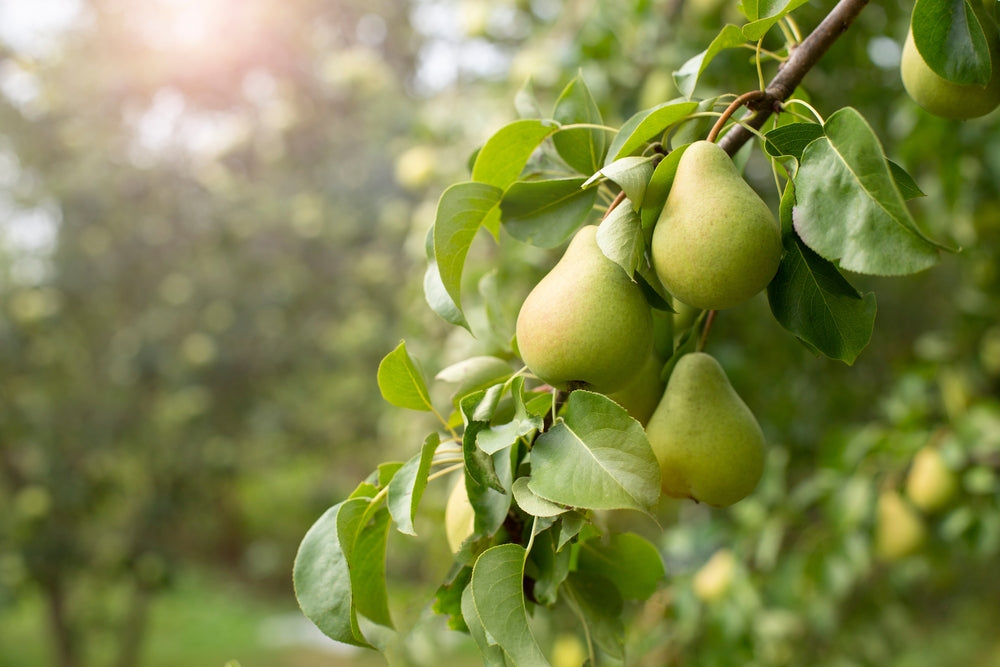
Pear 'Williams' | Pyrus communis Williams - Height 140-180cm Width 80-100cm - 20lt
£94.00
Unit price perPear 'Williams' | Pyrus communis Williams - Height 140-180cm Width 80-100cm - 20lt
£94.00
Unit price per


Pear 'Conference' | Pyrus communis - Height 160-180cm - 20lt
£94.00
Unit price perPear 'Conference' | Pyrus communis - Height 160-180cm - 20lt
£94.00
Unit price per


Picea abies 'Inversa' / Pendula| Norway spruce - Height 110-120cm - 35lt
£390.00
Unit price perPicea abies 'Inversa' / Pendula| Norway spruce - Height 110-120cm - 35lt
£390.00
Unit price perPicea abies ‘Inversa’ is a striking, architectural evergreen that brings drama and elegance to a garden throughout the year. Unlike typical upright conifers, this distinctive weeping Norway spruce produces cascading branches that fall vertically, creating a sculptural, almost waterfall-like effect. Its ultimate height depends on training; when staked, it can reach 4–6 metres over time, while remaining relatively narrow, making it ideal for smaller gardens where vertical interest is desired without excessive spread.
Hardy and reliable in UK conditions, ‘Inversa’ thrives in full sun or light shade and prefers moist, well-drained soil. It performs particularly well in larger borders, gravel gardens, or as a focal point in lawn settings. The deep green needles provide year-round structure and contrast beautifully with ornamental grasses, maples, or winter-stem shrubs.
This cultivar is also suitable for contemporary landscapes where strong form and texture are key. Low maintenance once established, it requires minimal pruning beyond shaping and training. For gardens seeking character, movement, and evergreen presence in all seasons, ‘Inversa’ offers a truly distinctive and dependable choice.


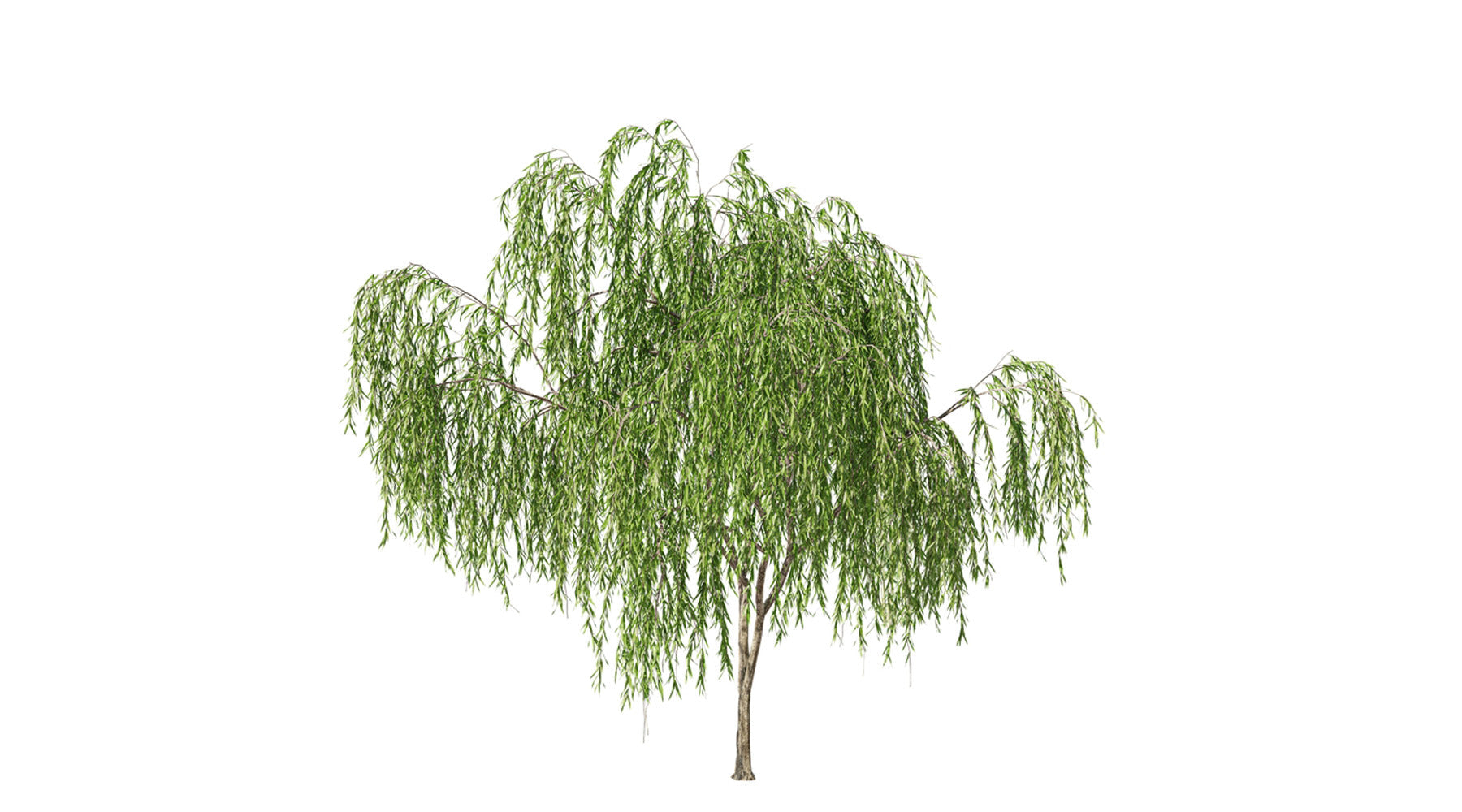
Morus alba 'Pendula' | Weeping White Mulberry - Girth 30cm - Height 350-360cm - 130lt
£720.00
Unit price perMorus alba 'Pendula' | Weeping White Mulberry - Girth 30cm - Height 350-360cm - 130lt
£720.00
Unit price per


Portuguese Laurel | Prunus lusitanica 'Angustifolia' - Bushy - Height 160-170cm - Width 110-120cm - 130lt
£655.00
Unit price perPortuguese Laurel | Prunus lusitanica 'Angustifolia' - Bushy - Height 160-170cm - Width 110-120cm - 130lt
£655.00
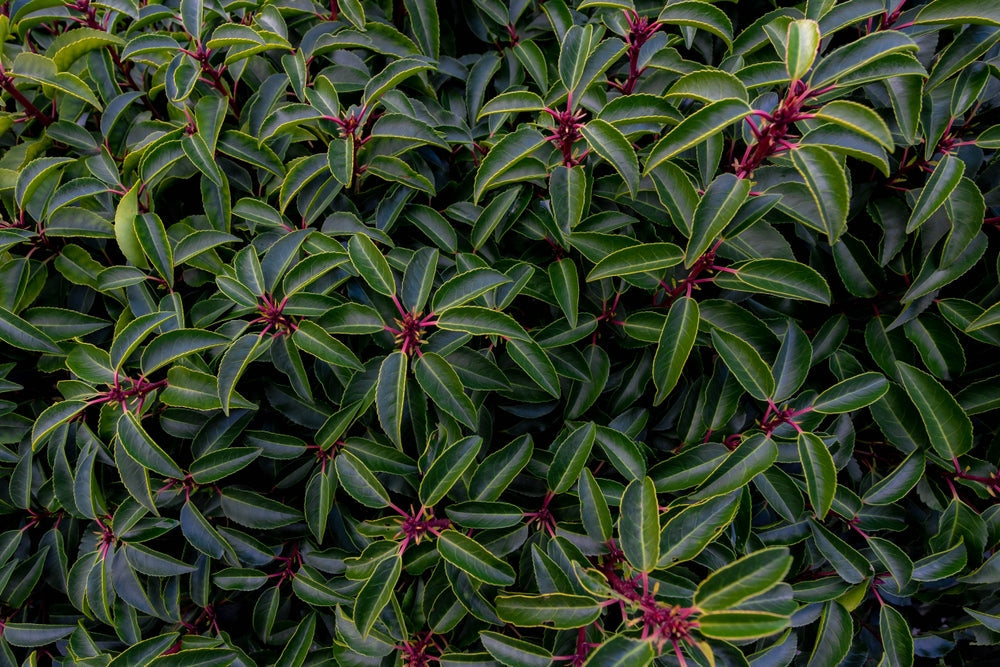
Unit price perPrunus lusitanica 'Angustifolia' is a dense, neat and tidy, evergreen shrub or small tree of compact, rounded to conical habit, with narrow, long, glossy, dark green leaves. Young stems are vivid red. Small, fragrant, creamy-white flowers bloom in late spring or early summer and are followed by dark purple berries in autumn. Attractive to pollinators and birds.
Prunus lusitanica 'Angustifolia' is adaptable to a wide range of soils and conditions. It thrives in fertile, moist, well-drained soil, and grows well in full sun or partial shade. It is resistant to frost, but doesn’t’ like very exposed sites, therefore, needs to be sheltered from strong winds. Low maintenance plant, tolerant of hard pruning. Portuguese Laurel 'Angustifolia', differs from the classic variety for its greater density and narrower leaves. It is, therefore, superb for formal hedges. It forms great windbreaks and privacy screens. It reduces noise and pollution. It can be grown as a topiary tree.


Apple tree 'James Grieve' | Malus domestica - M26 - Semi-Dwarfing - Height 150-160cm - 12lt
£86.00
Unit price perApple tree 'James Grieve' | Malus domestica - M26 - Semi-Dwarfing - Height 150-160cm - 12lt
£86.00
Unit price perJames Grieve Apple is a hardy, deciduous tree suitable for cold climate zones. It is best grown in northerly areas with cold winters, moderate summer temperatures, and medium to high humidity. It’s an old apple variety, raised in 1893. in Edinburgh, Scotland, by James Grieve from pollination of Cox’s Orange Pippin and most likely Pott’s Seedling apple. Generally, a resilient plant, it needs some protection from harsh winds. It’s a good polliniser for other apples. It cannot be found in supermarkets because it is sensitive to pressure and easily bruised and cannot sustain supermarket handling.
James Grieve apples are medium to large, yellow-green, speckled and striped orange-red, with creamy, refreshing and very juicy flesh. At the beginning of season, it is sharp and perfect for cooking, retaining its shape when cooked. After a few weeks, it becomes milder and sweeter, like a firm pear in texture.
M26 is a semi-dwarfing rootstock (smaller than MM106) used for apple trees, particularly in orchards and home gardens. It produces trees 10-12 feet in height, making them easier to manage and harvest. M26 ensures early fruit production, good anchorage, and medium vigor. However, it requires staking during early years and is moderately susceptible to fire blight.


Euonymus alatus | Winged Spindle Tree - Shrub - Height 40-60cm - 10lt
£83.00
Unit price perEuonymus alatus | Winged Spindle Tree - Shrub - Height 40-60cm - 10lt
£83.00
Unit price per


Sorbus aucuparia Sheerwater Seedling | Rowan | Mountain Ash - Height 160-180cm - 12lt
£85.00
Unit price perSorbus aucuparia Sheerwater Seedling | Rowan | Mountain Ash - Height 160-180cm - 12lt
£85.00
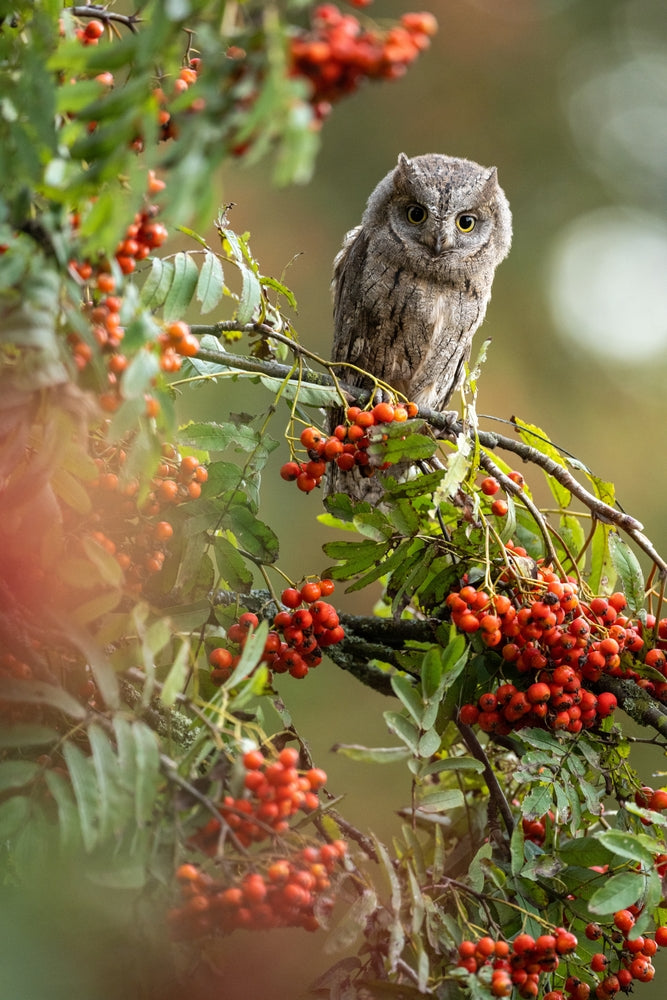
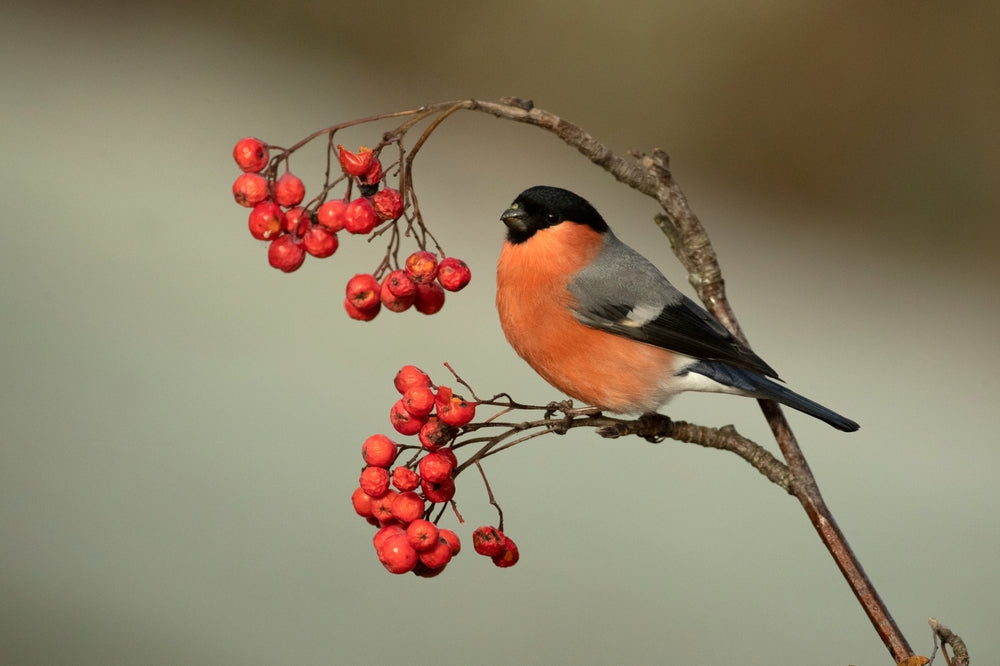
Unit price perSorbus aucuparia 'Sheerwater Seedling' is a decorative and hardy variety of rowan, or mountain ash tree, particularly noted for its profuse clusters of bright red berries and lush, pinnate, green leaves. Originating in Europe, this cultivar is recognized for its more compact and upright growth habit, making it suitable for smaller gardens or landscapes. It typically reaches heights of around 15 meters.
The 'Sheerwater Seedling' unfolds its beauty in every season. In spring, it brings forth dense clusters of creamy-white flowers, attracting a myriad of pollinators. As summer progresses, these flowers give way to vibrant, red berries, which become a primary food source for birds, especially in winter months. By autumn, the foliage turns into a fiery spectacle of oranges, reds, and yellows, creating a striking contrast with the bold berries.
Besides its aesthetic attributes, the 'Sheerwater Seedling' is valued for its adaptability and resilience. It thrives in a range of soil types, and its robust nature allows it to withstand urban pollution and harsh weather conditions. The resilience and prolific berry production make it a valuable addition to wildlife gardens, providing shelter and sustenance to various bird species and other fauna. Its attractive features and hardiness make it a popular choice for both ornamental and ecological plantings.


Pineapple guava | Feijoa sellowiana - Height 100-140cm Width 40-50cm Girth 6-8cm Stem 60-80cm - 15lt
£170.00
Unit price perPineapple guava | Feijoa sellowiana - Height 100-140cm Width 40-50cm Girth 6-8cm Stem 60-80cm - 15lt
£170.00
Unit price per


Apple tree 'Golden Delicious' | Malus Domestica - M26 - Semi-Dwarfing - Height 200-220cm - 12lt
£86.00
Unit price perApple tree 'Golden Delicious' | Malus Domestica - M26 - Semi-Dwarfing - Height 200-220cm - 12lt
£86.00
Unit price perMalus Domestica 'Golden Delicious’ is a heavily-producing, deciduous apple tree, with oval, dark green leaves and lovely, fragrant, white flowers blooming in April. Attractive to bees, butterflies, and hummingbirds. Flowers are followed by heavy and regular crops of greenish-yellow to golden-yellow, delicious, sweet, crispy, juicy, and aromatic apples. Malus Domestica 'Golden Delicious’ grows best in moderately fertile, neutral, deep, loamy, moist, well-drained soils. It thrives in full sun, but can adapt to partial shade. It requires cold winters for good fruit production, but it has to be sheltered from harsh winter winds. It is self-fertile but needs a pollinator of anther variety blooming at the same time for better crops. Regular pruning and fruit thinning are required to improve fruit size and quality. 'Golden Delicious' Apple is a wonderful, ornamental tree, a nice addition to any garden. It is primarily grown for its delicious fruit, perfect for eating fresh and great for cooking. One of the best apple varieties.
M26 is a semi-dwarfing rootstock (smaller than MM106) used for apple trees, particularly in orchards and home gardens. It produces trees 10-12 feet in height, making them easier to manage and harvest. M26 ensures early fruit production, good anchorage, and medium vigor. However, it requires staking during early years and is moderately susceptible to fire blight.


Apple tree 'Red Devil' | Malus domestica - M26 - Semi-Dwarfing - Height 180-190cm - 12lt
£86.00
Unit price perApple tree 'Red Devil' | Malus domestica - M26 - Semi-Dwarfing - Height 180-190cm - 12lt
£86.00
Unit price perRed Devil Apple plant is a deciduous, hardy, vigorous tree with a bushy, upright habit, attractive pink-white flowers, and stunning, deep red fruit. Its creamy flesh is white, but stained with red and produces beautiful pink juice. Red Devil apples ripen in mid-September and are harvested till mid-October. The fruit has juicy and moderately sweet and sharp taste with a hint of strawberry flavour. They store well and can be kept till January.
Red Devil Apple was bred by Hugh Ermen, in Faversham, Kent in 1975, and introduced in 1990 as an excellent, modern dessert apple. It is very resilient, generally disease-free, and adaptable to most weather conditions. It grows in almost any type of soil as long as it is moist and well-drained. It prefers full sun, but can tolerate partial shade. It is self-fertile and doesn’t need a pollination partner.
M26 is a semi-dwarfing rootstock (smaller than MM106) used for apple trees, particularly in orchards and home gardens. It produces trees 10-12 feet in height, making them easier to manage and harvest. M26 ensures early fruit production, good anchorage, and medium vigor. However, it requires staking during early years and is moderately susceptible to fire blight.


Cornus alba 'Kesselringii' | White dogwood 'Kesselringii' - Height - 100-110cm - 10lt
£75.00
Unit price perCornus alba 'Kesselringii' | White dogwood 'Kesselringii' - Height - 100-110cm - 10lt
£75.00
Unit price per


Pyrus calleryana 'Chanticleer' - Clear Stem - Standard - Height 290-310cm - 70lt
£375.00
Unit price perPyrus calleryana 'Chanticleer' - Clear Stem - Standard - Height 290-310cm - 70lt
£375.00
Unit price per


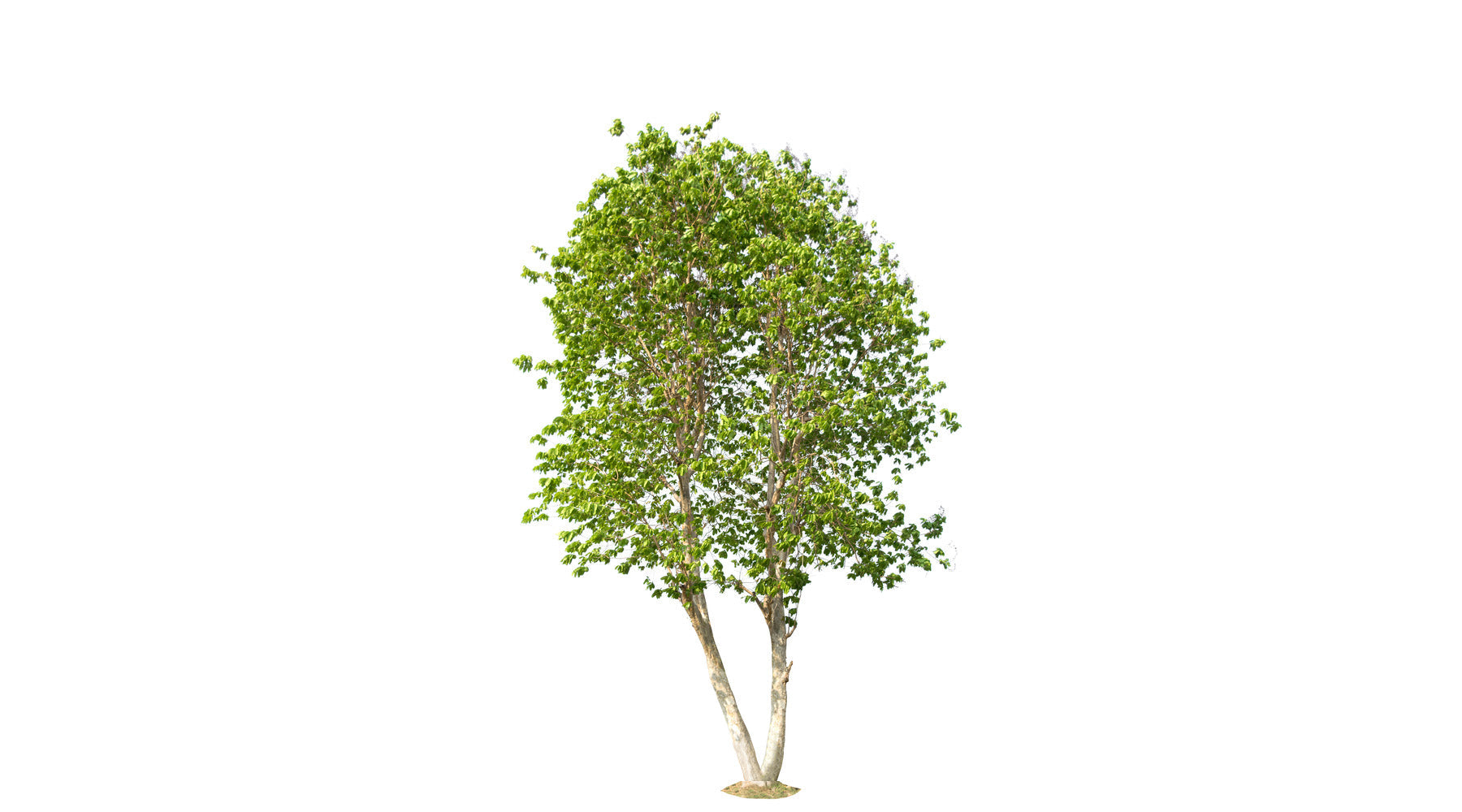
Sweet Chestnut | Castanea sativa - Multistem - Height 150-200cm - 12lt
£72.00
Unit price perSweet Chestnut | Castanea sativa - Multistem - Height 150-200cm - 12lt
£72.00
Unit price perCastanea sativa, commonly known as the sweet chestnut tree, is a majestic and long-lived species native to Europe and parts of Asia Minor. Belonging to the Fagaceae family, it stands as a symbol of strength and resilience in many cultures, with its towering stature and deeply furrowed bark.
The leaves of Castanea sativa are distinctively long and lance-shaped, with serrated edges that give them a rough texture. During the spring and summer, the canopy is adorned with clusters of creamy-white flowers, which give way to spiky green husks containing the prized sweet chestnuts in autumn.
Sweet chestnuts, often referred to simply as "chestnuts," have been a staple food source for centuries, cherished for their rich, nutty flavor and versatile culinary applications. Whether roasted over an open fire, boiled and mashed into a creamy puree, or incorporated into hearty stews and stuffing recipes, chestnuts are celebrated in both sweet and savory dishes throughout the UK.
Beyond their culinary significance, sweet chestnut trees play a vital ecological role, providing habitat and sustenance for a diverse array of wildlife. Birds, such as blue tits and nuthatches, feast on the tree's seeds, while small mammals like squirrels rely on them as a seasonal food source.
Despite their resilience, sweet chestnut trees face threats from various pests and diseases, including chestnut blight and ink disease, which have impacted populations in some regions. Conservation efforts aim to preserve these iconic trees and their valuable genetic diversity for future generations to enjoy.