
Search results
Search results
Musa basjoo | Japanese Banana - Double Trunk Tree - Height 180-230cm - 18lt
32500
£325.00
Unit price perMusa basjoo | Japanese Banana - Double Trunk Tree - Height 180-230cm - 18lt
32500
£325.00
Unit price per {
Alpine.store('xUpdateVariantQuanity').updateQuantity('template--24215847600506__main', '/products/musa-basjoo-japanese-banana-double-trunk-tree-height-180-230cm-18lt?_pos=1&_sid=4c36c8a5e&_ss=r');
});">
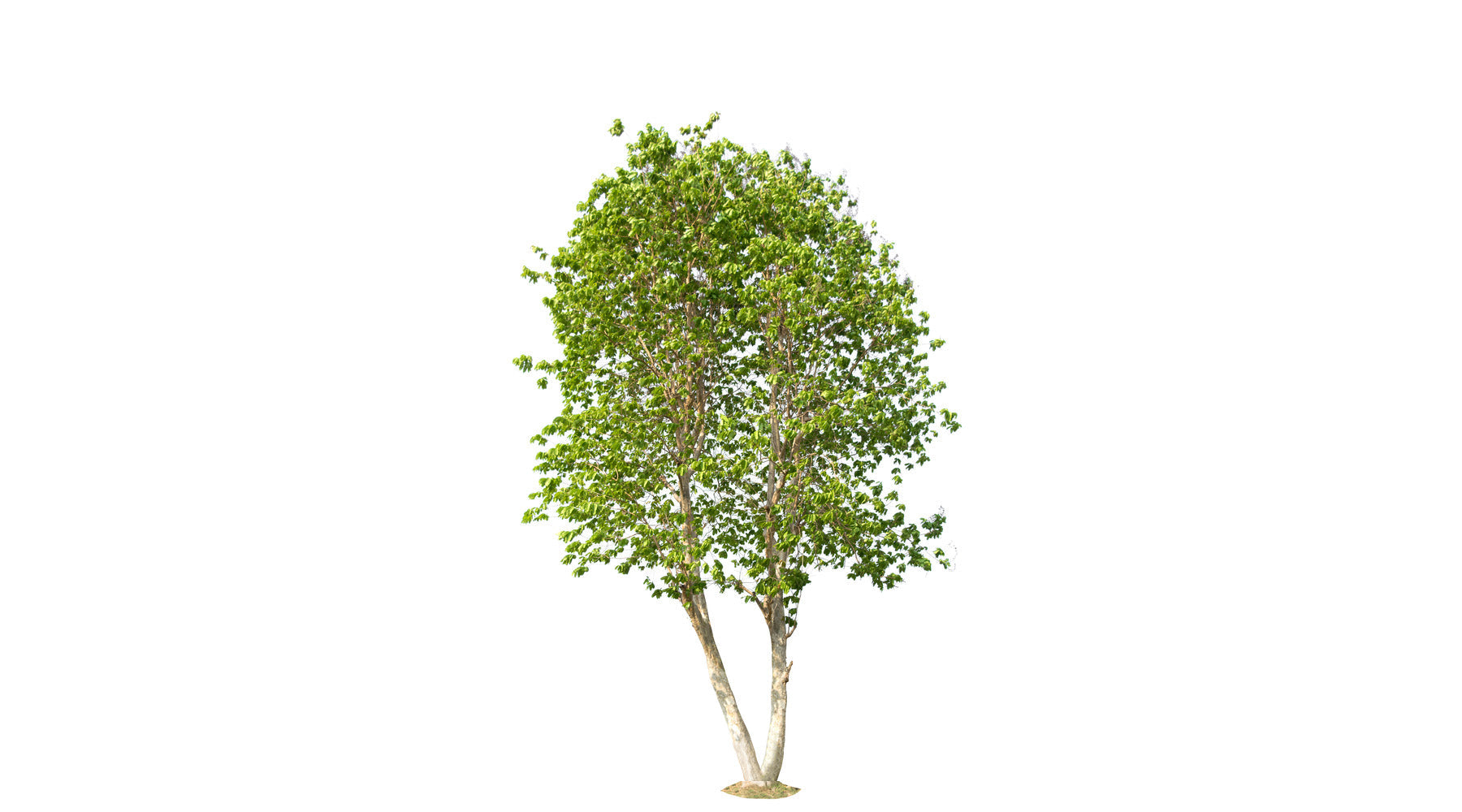
Musa basjoo, also known as the Japanese fiber banana or hardy banana, is a fascinating and beautiful plant that thrives in outdoor gardens. Native to Japan, China, and Korea, this ornamental plant is prized for its striking foliage, which resembles that of a tropical banana tree.
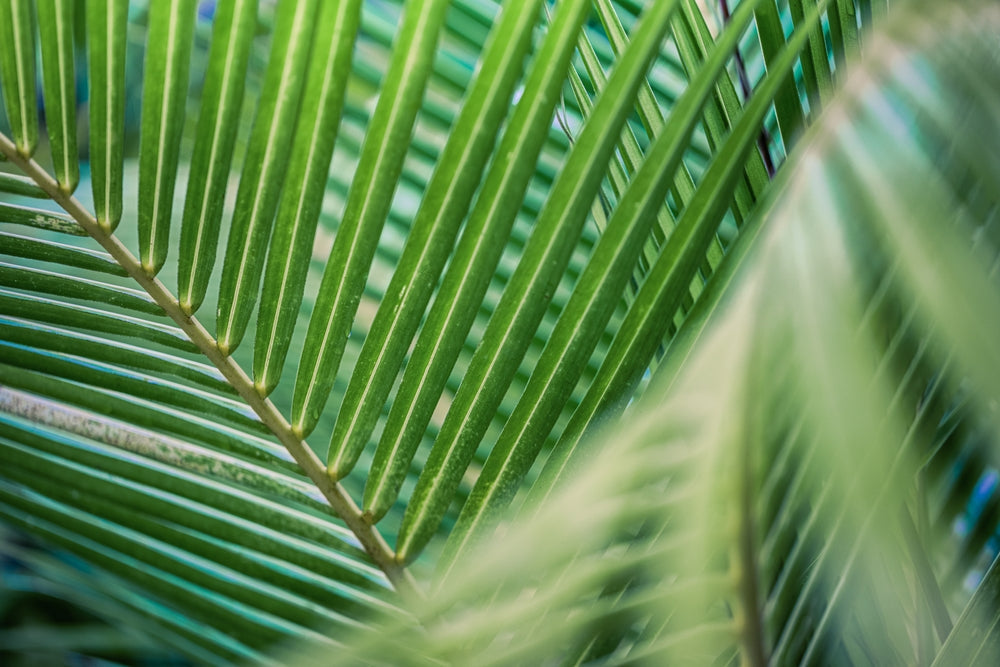
Musa basjoo typically grows to be between 6 and 10 feet tall, although it can grow larger in optimal conditions. Its large, broad leaves can reach lengths of up to 10 feet, and are a stunning shade of green. The leaves unfurl in a characteristic "V" shape, creating a lovely canopy that provides shade and shelter for smaller plants growing beneath it.
Despite its tropical appearance, Musa basjoo is actually highly adaptable and can grow in a wide range of climates. In fact, it is considered one of the hardiest banana plants, able to tolerate winter temperatures as low as -20 degrees Fahrenheit. This makes it an ideal choice for gardeners in colder climates who want to add a bit of tropical flair to their landscapes.
Musa basjoo produces long spikes of flowers in late summer, which are followed by small, non-edible bananas that are about 3 inches long. These bananas are not particularly tasty, but they add a unique touch to the garden and attract wildlife like birds and butterflies.
Caring for Musa basjoo is relatively easy. It prefers well-draining soil and plenty of sunlight, but can tolerate partial shade. It also requires regular watering and benefits from regular fertilization. In colder climates, it is recommended to cut back the leaves in the winter and cover the base of the plant with mulch to protect it from frost.
Overall, Musa basjoo is an excellent choice for gardeners who want to add a touch of the tropics to their outdoor spaces. With its striking foliage, hardiness, and adaptability, it is a truly unique and fascinating plant that is sure to be a conversation starter among visitors.
Photinia 'Atropurpurea Nana' | Japanese barberry - Half Standard - Height 140-150cm -25lt
12200
£122.00
Unit price perPhotinia 'Atropurpurea Nana' | Japanese barberry - Half Standard - Height 140-150cm -25lt
12200
£122.00
Unit price per {
Alpine.store('xUpdateVariantQuanity').updateQuantity('template--24215847600506__main', '/products/photinia-atropurpurea-nana-1-2-std-clear-stem-140-150cm-25lt?_pos=2&_sid=4c36c8a5e&_ss=r');
});">
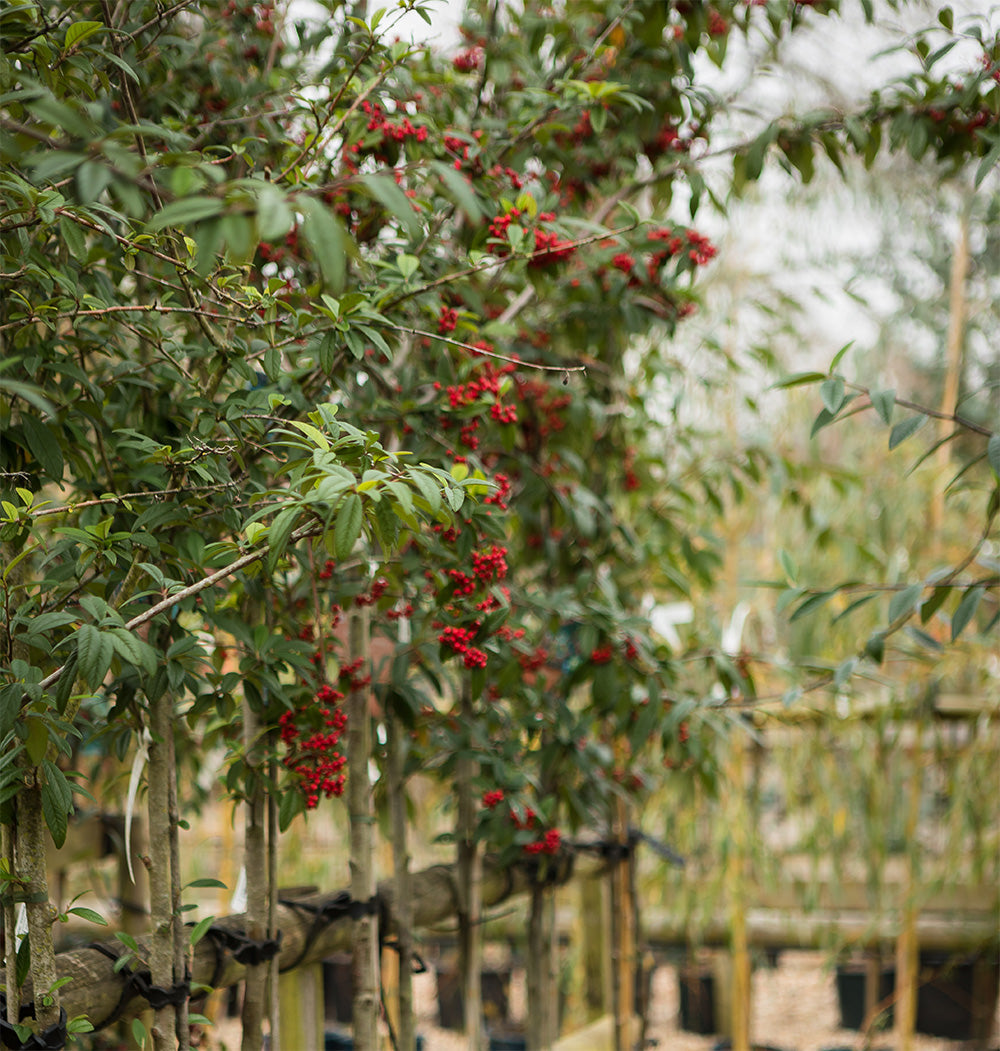
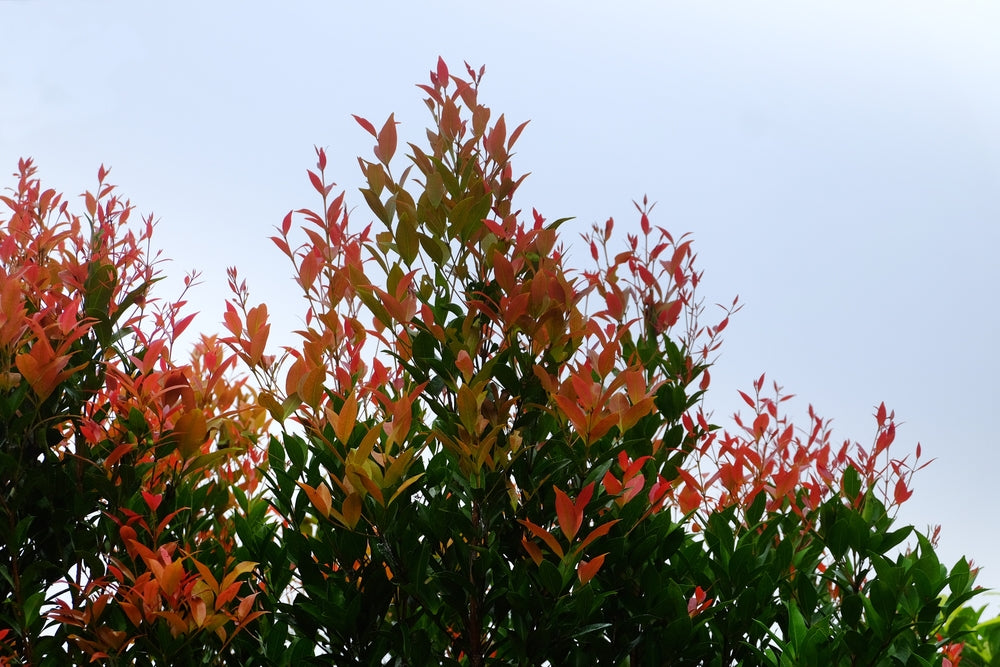
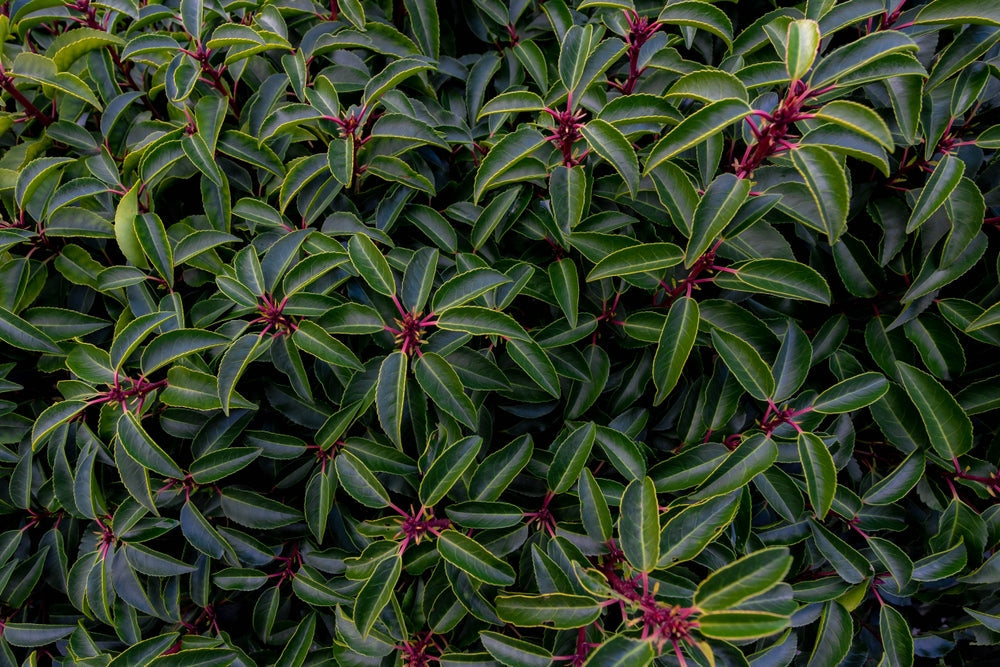
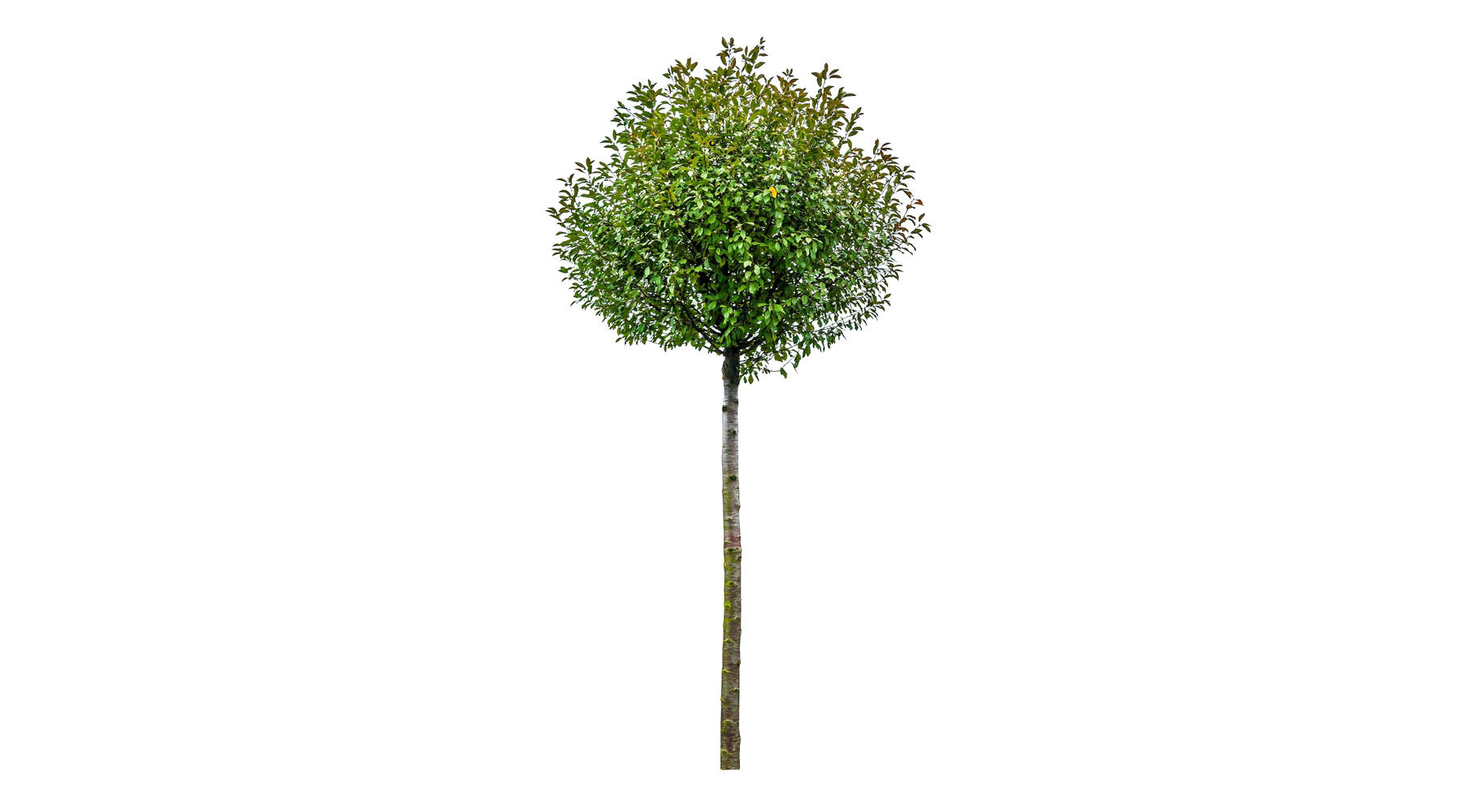
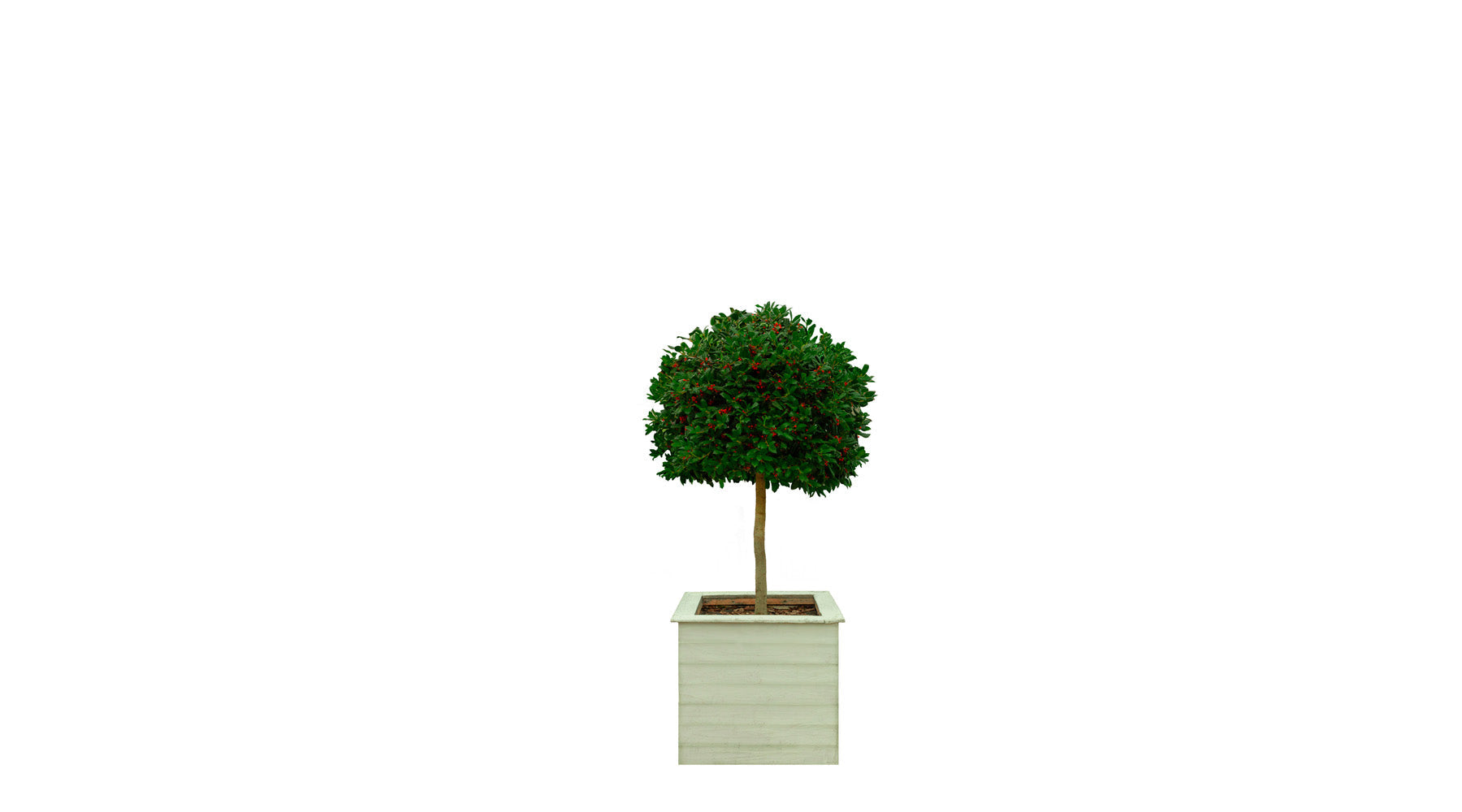
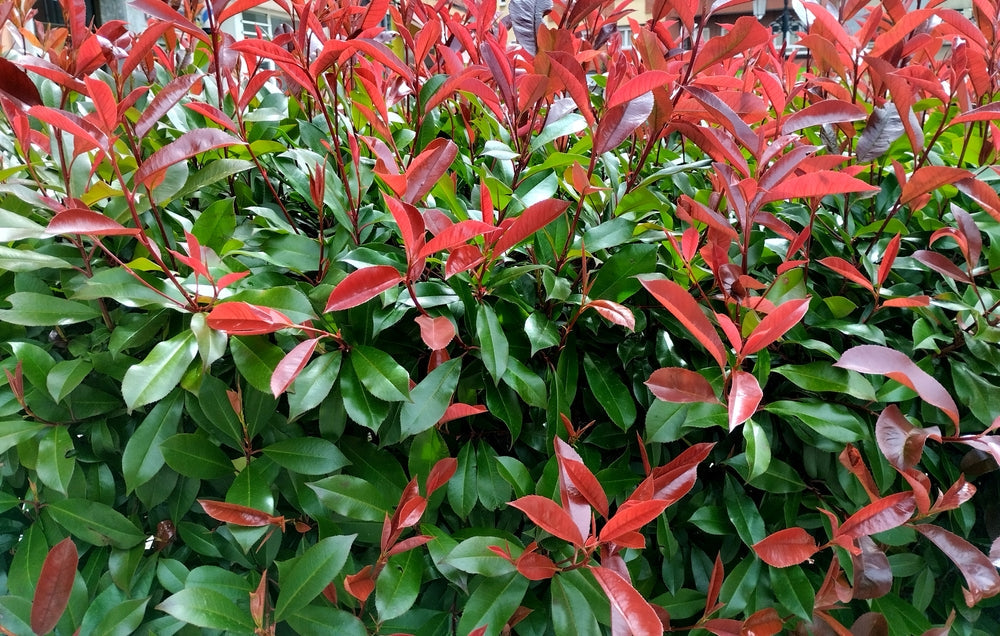
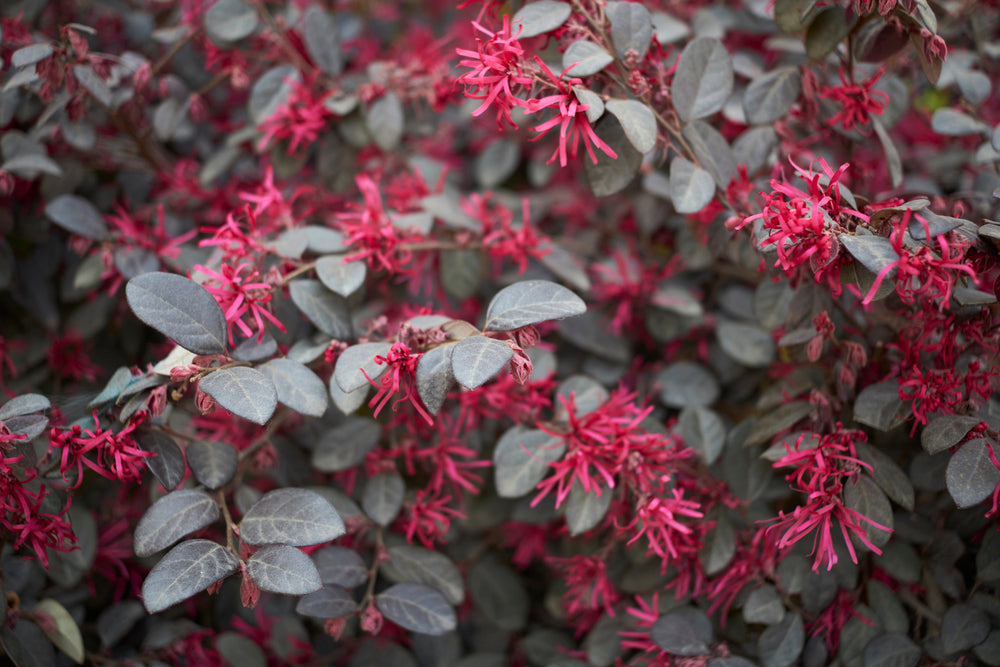
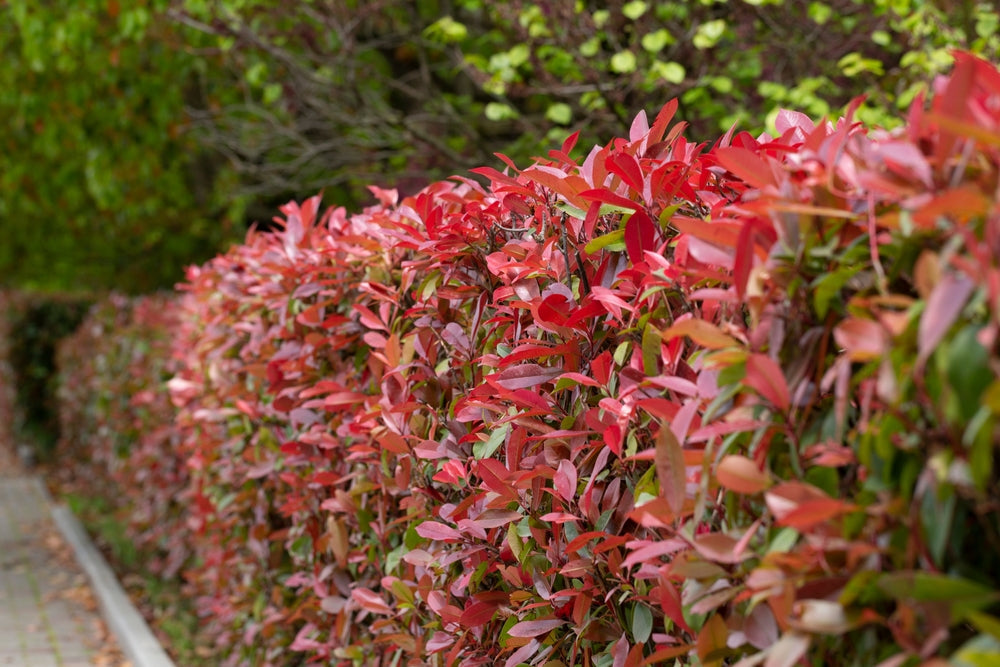
Photinia x fraseri 'Atropurpurea Nana' is an ornamental, upright, evergreen shrub or small tree with leathery, oval, glossy dark green leaves, bright red when young. Inconspicuous, small, creamy-white flowers bloom in April and May are sometimes followed by bright red berries. Spring pruning eliminates flowers and stimulates new red growth. Photinia x fraseri 'Atropurpurea Nana' grows best in average, fertile, slightly acidic, medium moisture, well-drained soils, but is adaptable to a wide range of soils, except waterlogged and compact. Once established, it is resistant of frost and drought. Young leaves may be damaged by late frosts, therefore it should be sheltered, especially from harsh winds. Easy to grow, low maintenance plant. Photinia x fraseri 'Atropurpurea Nana' is a lovely, colourful shrub, great as a specimen or accent plant, perfect for informal hedges and screens useful for noise reduction or wind protection. Excellent for cottage and urban gardens.
{
Alpine.store('xUpdateVariantQuanity').updateQuantity('template--24215847600506__main', '/products/photinia-atropurpurea-nana-japanese-barberry-atropurpurea-nana-1-2-std-120-130cm-30lt?_pos=3&_sid=4c36c8a5e&_ss=r');
});">
Photinia Atropurpurea Nana, commonly grown as a compact half standard tree, is an evergreen variety prized for its striking foliage. New growth emerges a vivid red to bronze-purple before maturing to a glossy deep green, providing year-round colour contrast on a single clear stem topped with a neat, rounded head. This dwarf cultivar maintains a dense, compact habit, making it well suited to smaller gardens or as a feature specimen where space is limited.
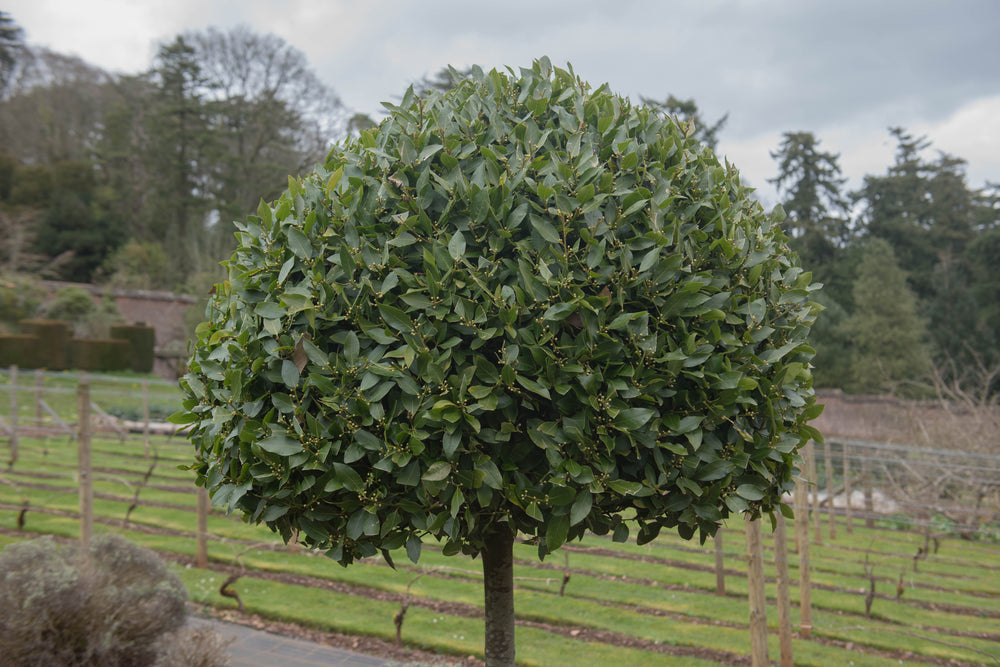
The foliage display is particularly striking in spring, when flushes of new red growth appear most vibrantly, and again after pruning as fresh leaves emerge. In late spring, small white flowers may appear in clusters, though the plant is primarily grown and valued for its foliage rather than its blooms.
The dense growth habit of this tree offers some shelter and nesting opportunities for small garden birds, while the flowers, when produced, can provide a minor source of nectar for pollinating insects.
Photinia Atropurpurea Nana adapts well to most well-drained garden soils and tolerates a sunny or partially shaded position. It is a versatile choice for patio containers, border planting, or as a standalone ornamental tree, bringing structured form and consistent colour interest throughout the seasons.
Serbian spruce 'Nana' | Picea omorika Nana - Height 80-100cm Width 60-80cm - 20lt
25800
£258.00
Unit price perSerbian spruce 'Nana' | Picea omorika Nana - Height 80-100cm Width 60-80cm - 20lt
25800
£258.00
Unit price per {
Alpine.store('xUpdateVariantQuanity').updateQuantity('template--24215847600506__main', '/products/picea-omorika-serbian-spruce-height-65cm-width-40-50cm-20lt?_pos=4&_sid=4c36c8a5e&_ss=r');
});">
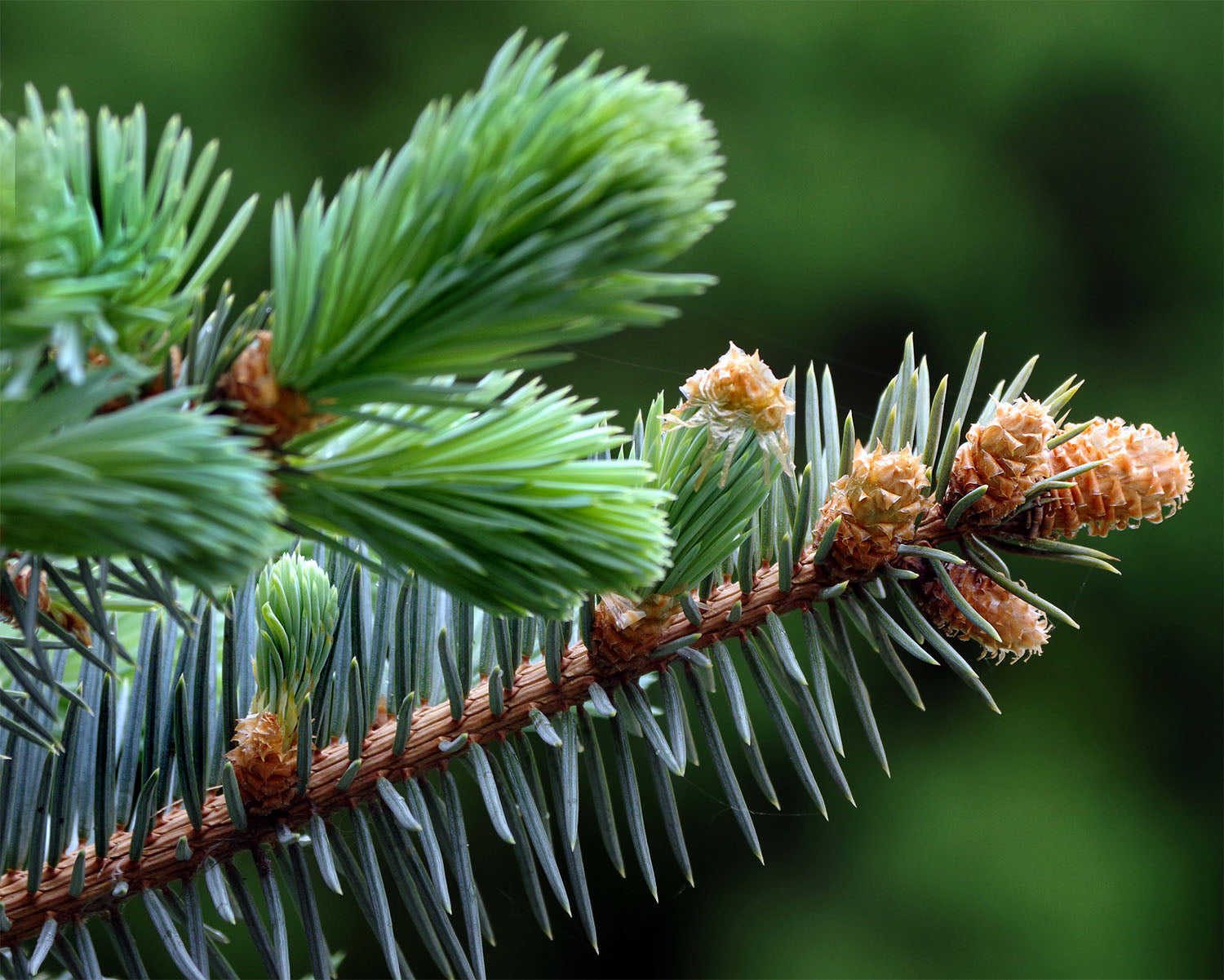
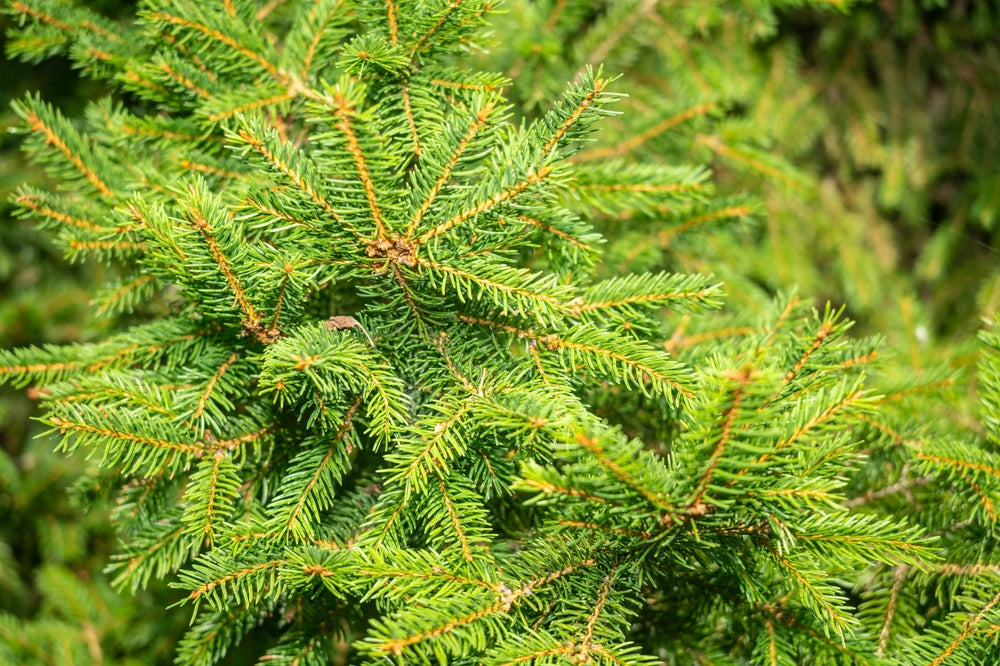
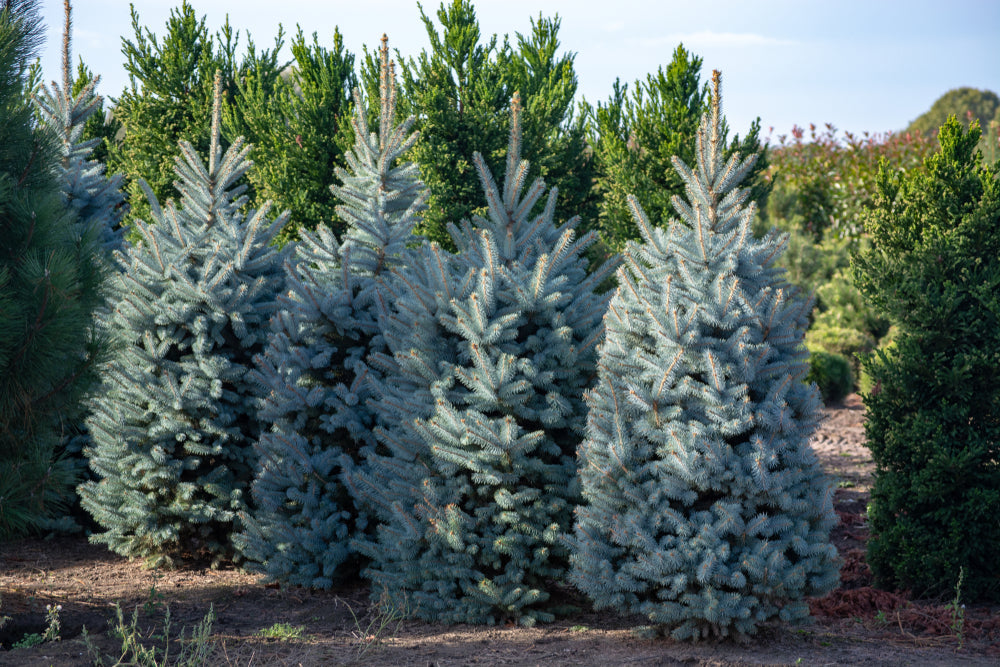
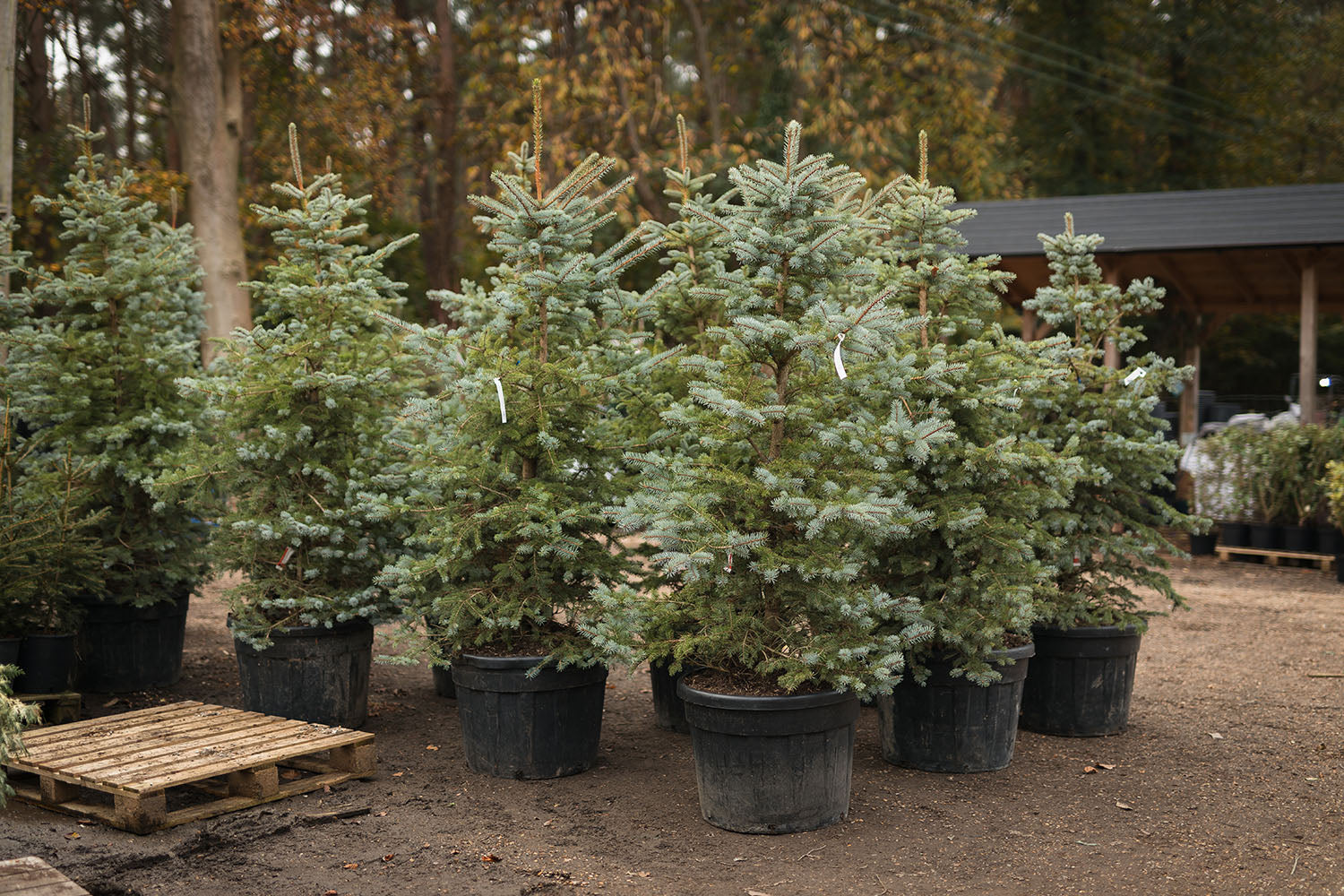
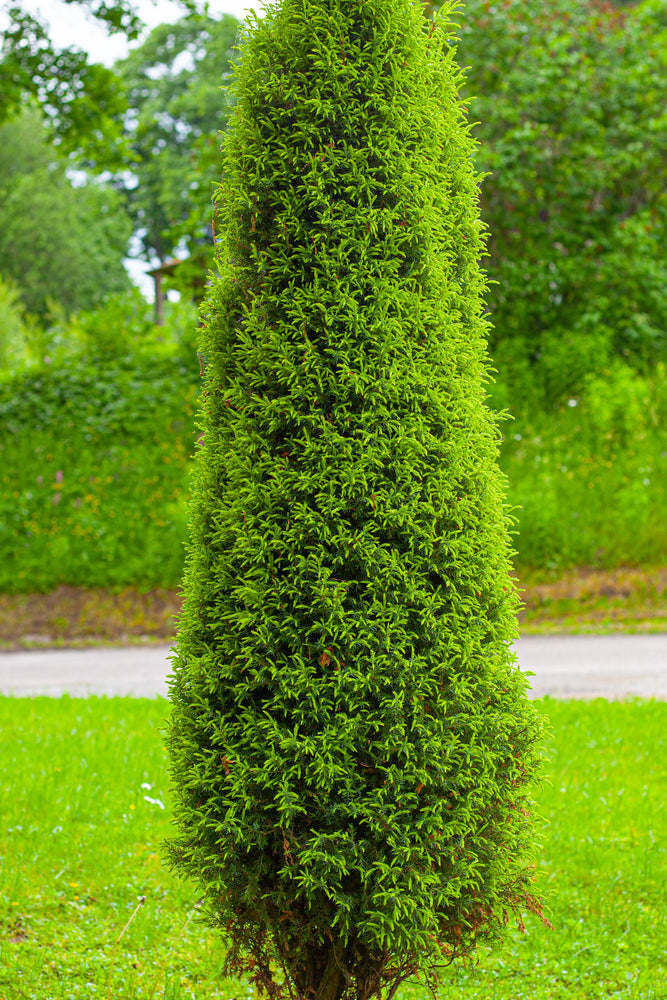
Picea omorika Nana, commonly known as Dwarf Serbian Spruce, is an evergreen conifer with a compact, conical form. It produces dense, short needles that are dark green with silvery-blue undersides, creating a attractive two-tone effect when the branches move. The foliage is retained year-round, providing consistent structure and colour in the garden throughout all seasons.
This slow-growing cultivar develops a neat, symmetrical shape with tightly packed branches, making it well suited to smaller gardens, borders or as a specimen plant where space is limited. Its compact habit means minimal pruning is required to maintain its form.
Dwarf Serbian Spruce tolerates a range of soil types, including clay, and adapts well to both full sun and partial shade. It is also wind-resistant, making it a suitable choice for exposed or coastal positions where many other conifers may struggle.
The dense branching of this spruce can offer shelter for small birds, providing nesting sites and protection from weather and predators within a garden setting.
Jack pine 'Velda' | Pinus banksiana Velda - Height 30-40cm Width 40-50cm - 15lt
11000
£110.00
Unit price perJack pine 'Velda' | Pinus banksiana Velda - Height 30-40cm Width 40-50cm - 15lt
11000
£110.00
Unit price per {
Alpine.store('xUpdateVariantQuanity').updateQuantity('template--24215847600506__main', '/products/pinus-banksiana-velda-height-30-40cm-width-40-50cm-15lt?_pos=5&_sid=4c36c8a5e&_ss=r');
});">
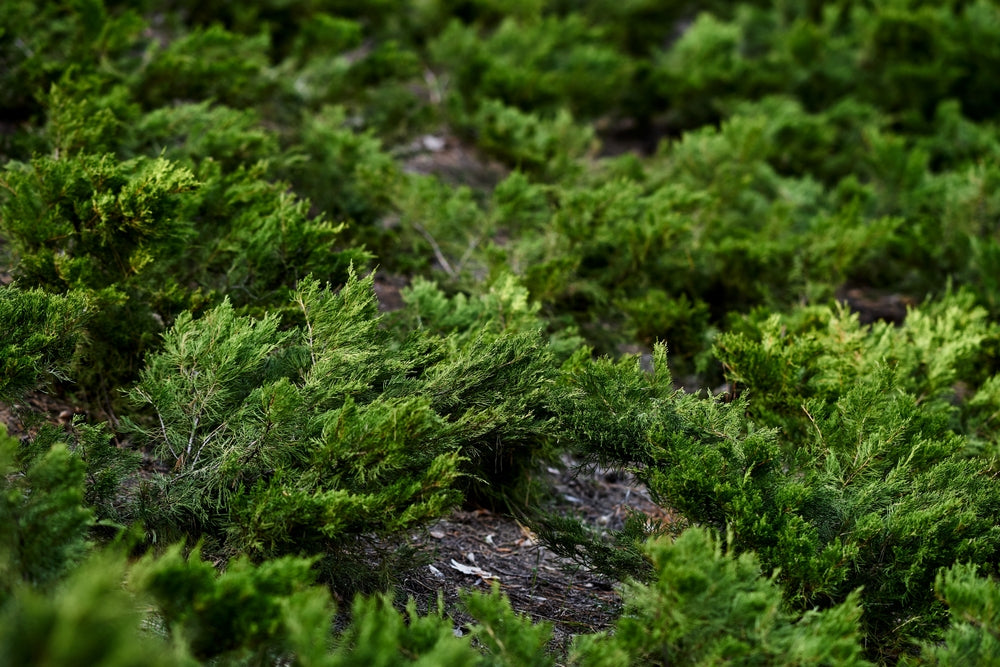
Pinus banksiana 'Velda' is an evergreen dwarf conifer, commonly known as Jack Pine, valued for its compact, bushy habit. It forms a dense, irregular mound of short, twisted needles in a bright to mid-green shade, creating a textured, tactile appearance throughout the year. The dense branching structure makes it a useful specimen for adding year-round structure to borders, rockeries, or dwarf conifer collections, where its low, spreading shape contrasts well with taller or more upright plants.
As a slow-growing cultivar, it maintains a neat, tight form without requiring regular pruning, making it low-maintenance once established. The foliage colour remains fairly consistent across the seasons, offering steady visual interest rather than dramatic seasonal change, though fresh growth in spring can appear slightly lighter and more vivid before darkening with maturity.
This pine is tolerant of poor, sandy, or well-drained soils and copes well with exposed or coastal conditions, making it a reliable choice for gardens with challenging growing environments. It is also well suited to areas with full sun, where its dense habit and needle retention are best maintained.