

-
Trees
Trees
 Fruit Trees
 Ornamental
 Screening
 Palms
By FeaturesBy Shape
Palms
By FeaturesBy Shape -
Shrubs
Shrubs
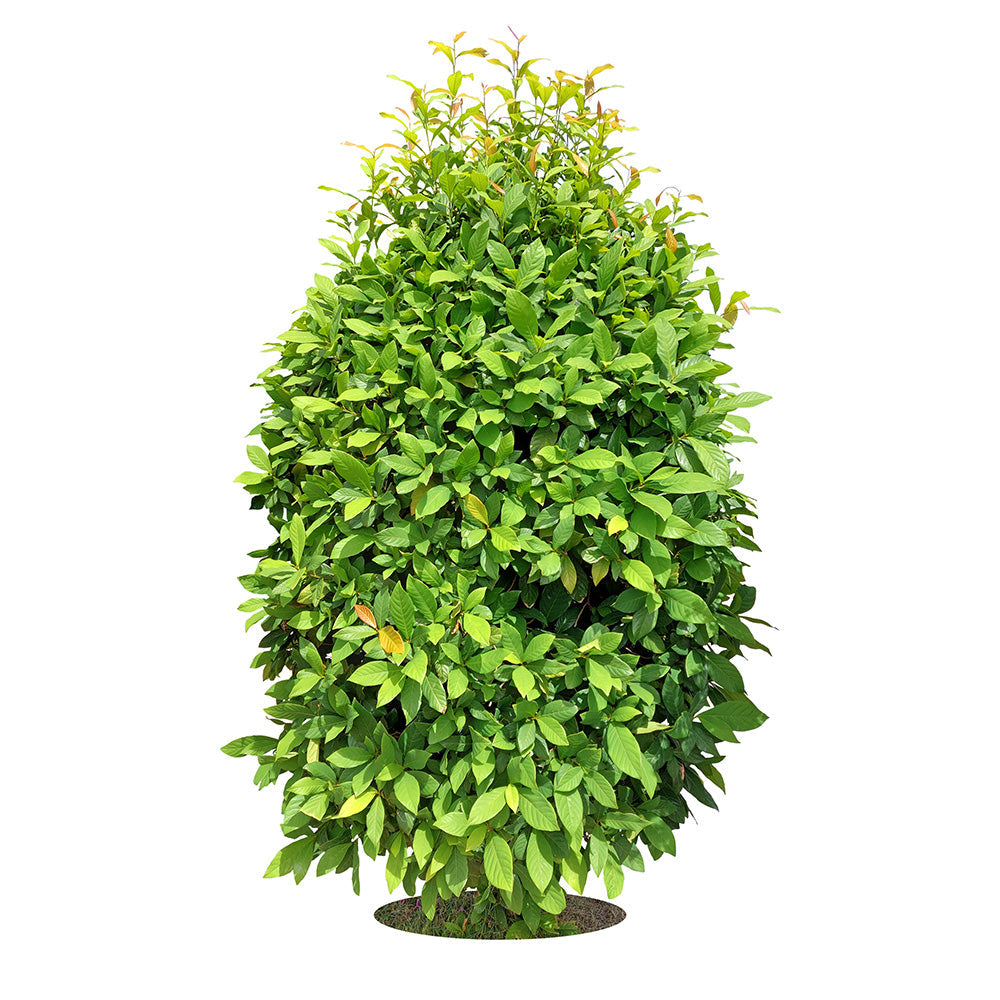 Large shrubs
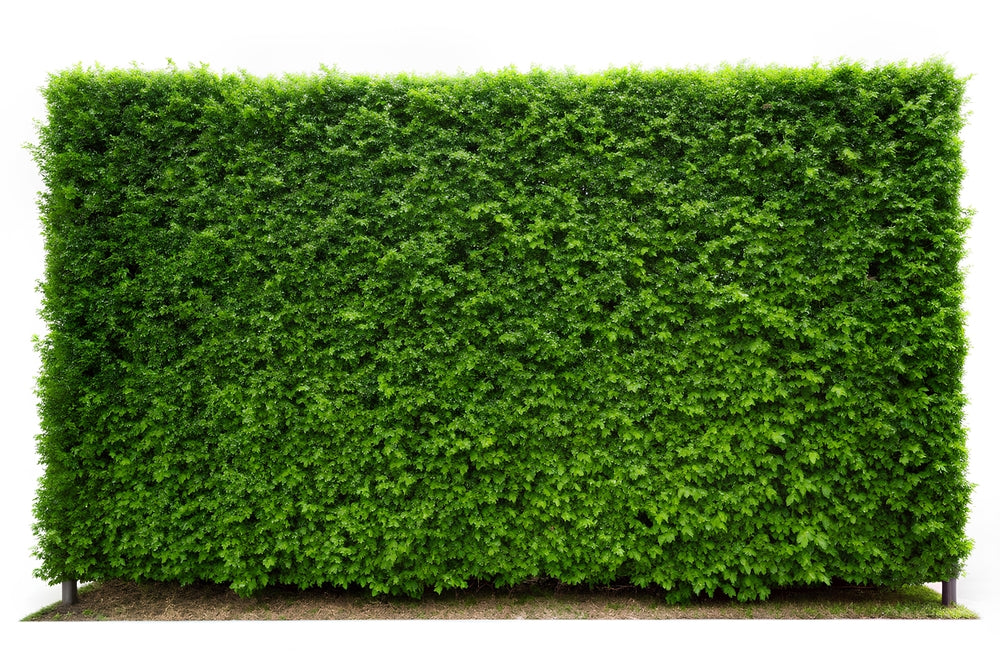 Hedging
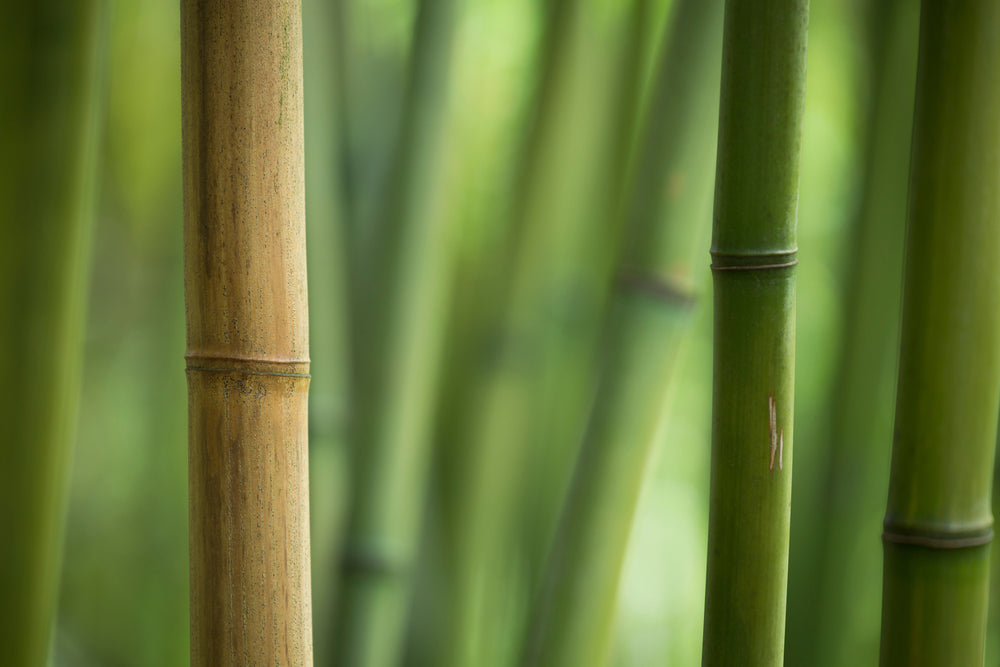 Bamboo
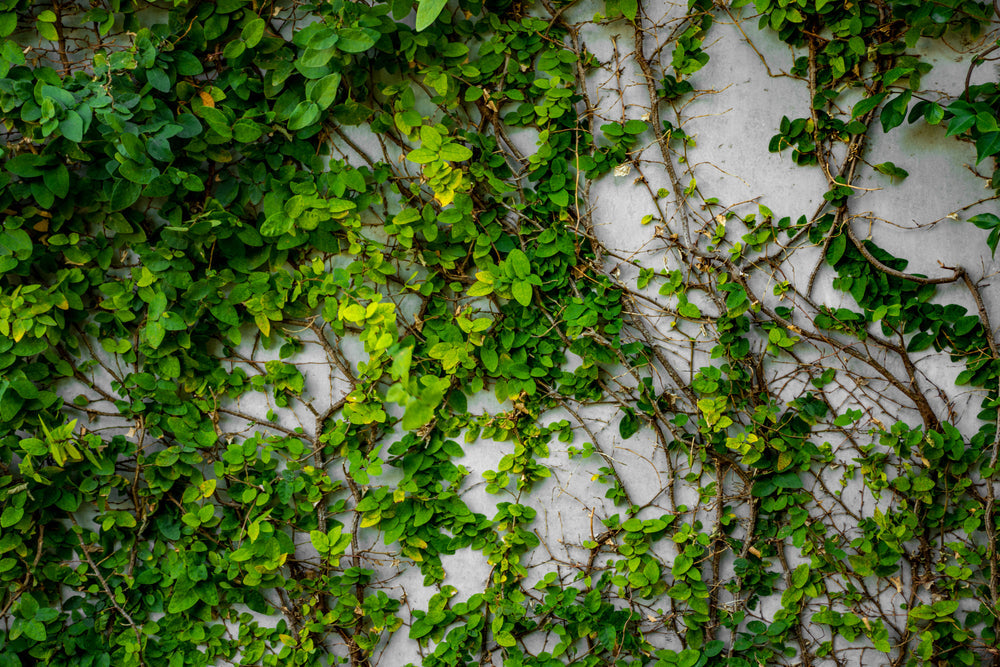 Climbers
 Flowering
 Grasses & Ferns
 Popular
-
Pines & Conifers
Pines & Conifers
 Pines
Pines
 Spruce & Fir
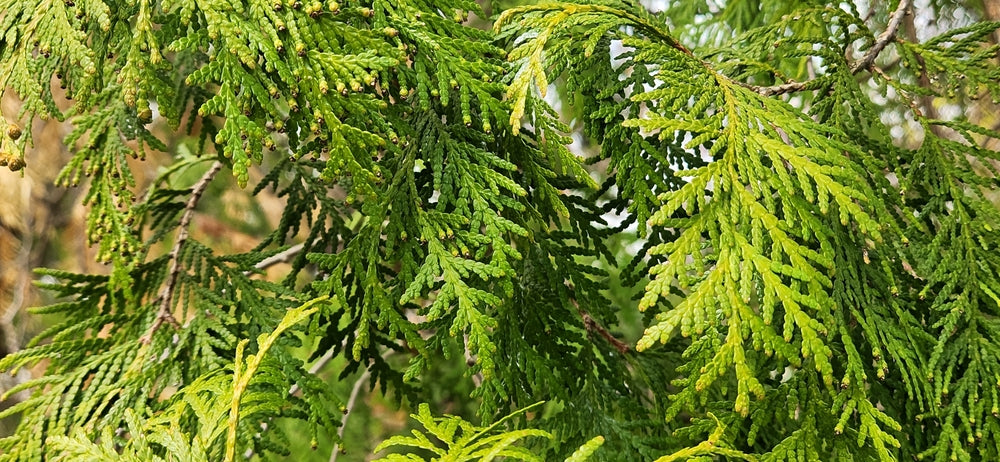 Cypress
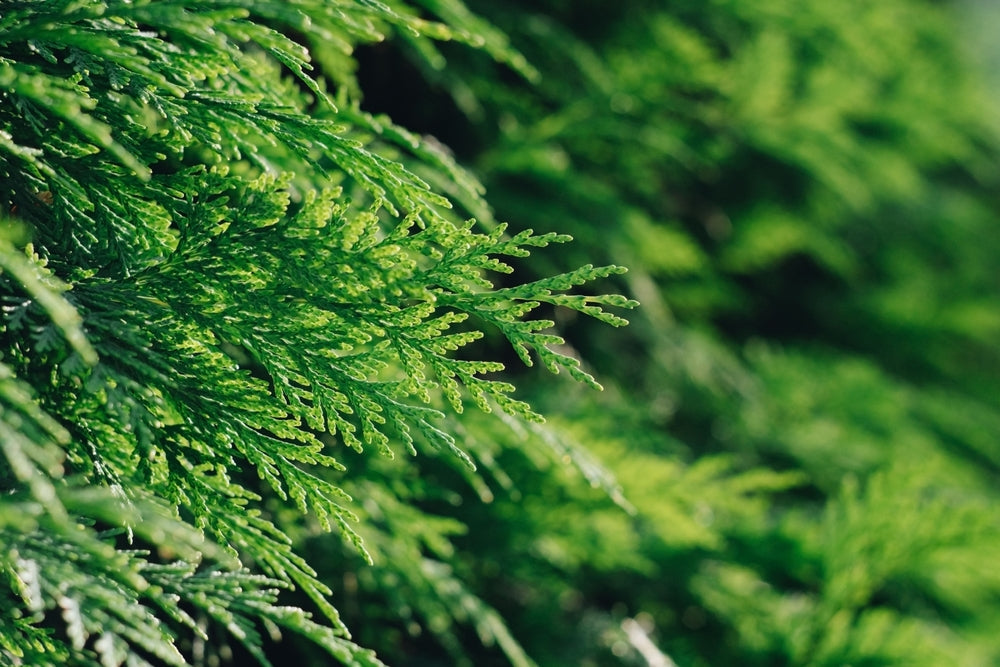 Thuja
Thuja
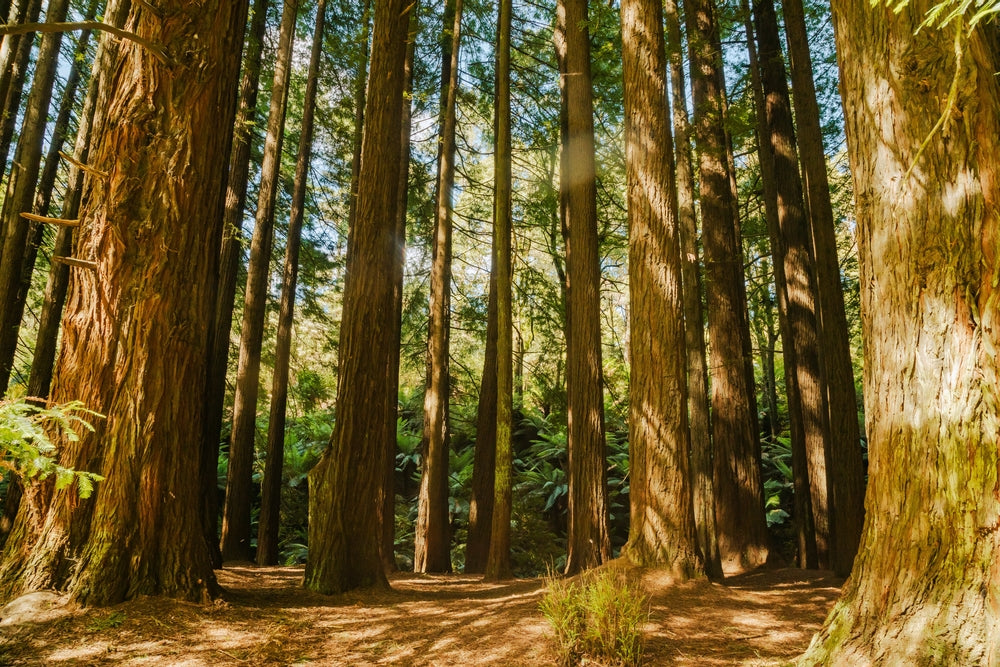 Redwood | Sequoia
-
Specimen
FREE DELIVERY OVER £350
Search results
Search results


Cercis canadensis 'Forest Pansy' - Bushy - Height 220-320cm - 20lt
£182.00
Unit price perCercis canadensis 'Forest Pansy' - Bushy - Height 220-320cm - 20lt
£182.00
Unit price per


Cercis chinensis 'Avondale' - 100-120cm, 20lt
£198.00
Unit price perCercis chinensis 'Avondale' - 100-120cm, 20lt
£198.00
Unit price per


Judas tree | Cercis siliquastrum - Girth 8-10cm - 400-440cm - Clear Stem - 45lt
£295.00
Unit price perJudas tree | Cercis siliquastrum - Girth 8-10cm - 400-440cm - Clear Stem - 45lt
£295.00
Unit price per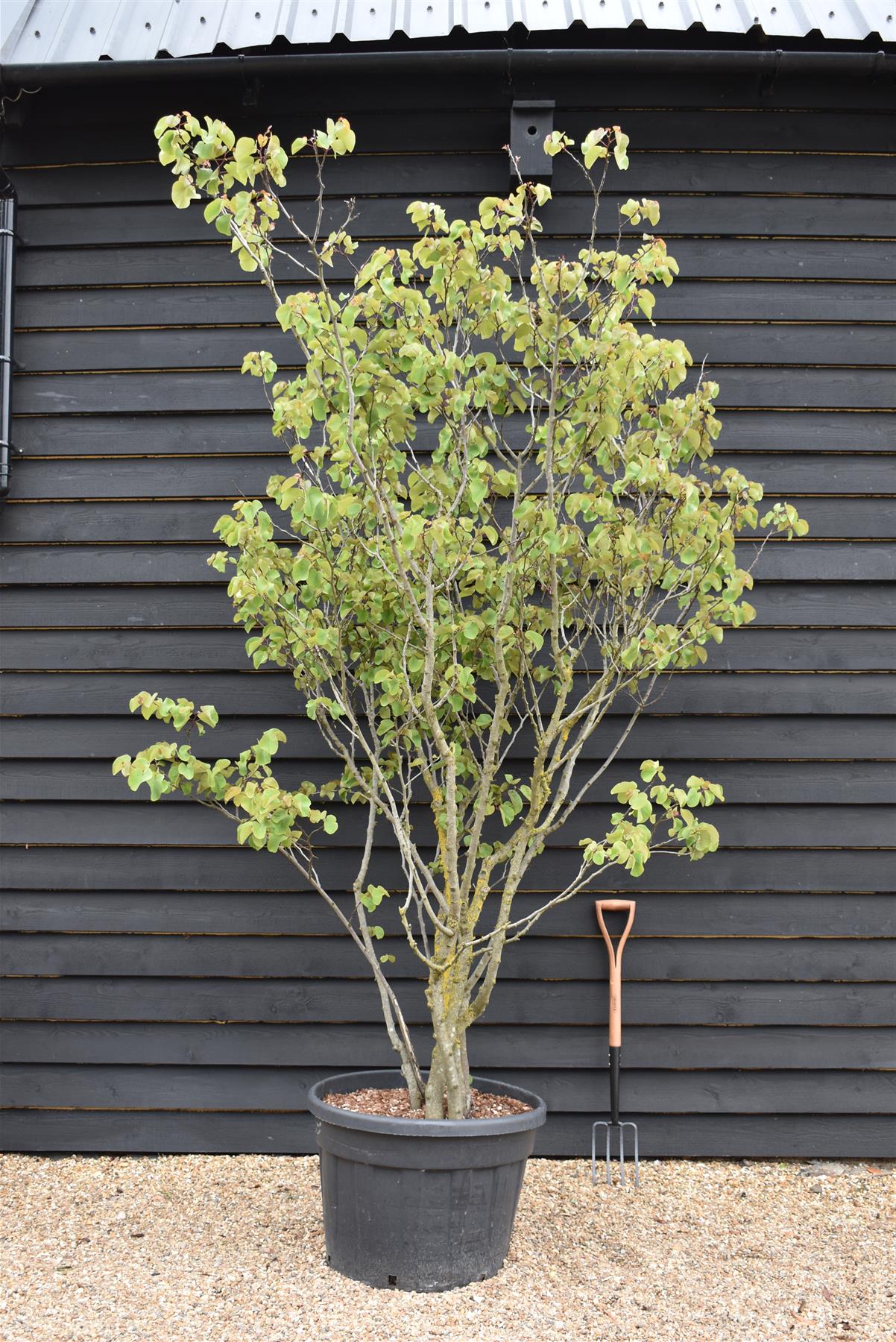


Cercis siliquastrum | Judas tree - 220-230cm, 130lt
£495.00
Unit price perCercis siliquastrum | Judas tree - 220-230cm, 130lt
£495.00
Unit price per


Cercis chinensis Shirobana - Chinese Redbud - Height 200-220cm - 20lt
£138.00
Unit price perCercis chinensis Shirobana - Chinese Redbud - Height 200-220cm - 20lt
£138.00
Unit price perCercis chinensis 'Shirobana,' commonly referred to as Chinese Redbud 'Shirobana,' is an exceptional and eye-catching ornamental tree that can grace British gardens and landscapes with its unique and captivating features. Originally hailing from China, this cultivar has garnered international acclaim for its remarkable characteristics.
One of the most remarkable attributes of 'Shirobana' is its blossoms. During the spring season, prior to the emergence of its leaves, this tree adorns itself with a profusion of delicate, butterfly-like flowers. What sets it apart is its ability to produce different-colored blossoms on the same tree simultaneously, creating a spectacular display of colour variation that is truly enchanting.
The name 'Shirobana' translates to "white flower," underscoring the tree's ability to produce these stunning pale blooms alongside the usual pink and lavender ones. This unique trait makes 'Shirobana' particularly desirable for garden enthusiasts seeking to introduce an element of whimsy and diversity to their outdoor spaces.
The foliage of 'Shirobana' typically takes on a heart-shaped form and exhibits a medium green hue, serving as a splendid backdrop to the lavish spring blossoms. As the leaves mature, they may acquire a glossy sheen, adding to the tree's visual appeal. This deciduous tree usually reaches a height of around 3 to 4 meters and forms an elegant, gracefully-rounded canopy.
Maintaining Cercis chinensis 'Shirobana' in the UK is relatively straightforward. It thrives in well-drained soil and prefers a location that receives ample sunlight or partial shade. Ensuring adequate watering during dry spells and regular mulching to conserve moisture are key to its overall health and vitality. Pruning requirements are typically minimal, primarily focused on shaping the tree or removing any dead or overcrowded branches.
One of the advantages of 'Shirobana' is its notable resistance to common pests and diseases, contributing to its low-maintenance nature. Additionally, it exhibits adaptability to various soil types, making it a versatile choice for a wide range of garden settings.
In conclusion, Cercis chinensis 'Shirobana' is an extraordinary ornamental tree that can bring a sense of wonder and diversity to British gardens. Its multi-coloured spring blossoms, heart-shaped leaves, and manageable size make it an enchanting addition to landscapes, providing an opportunity for gardeners to experience the ever-changing palette of nature. Whether used as a focal point or to infuse charm into garden borders, 'Shirobana' is certain to captivate the hearts of those who encounter its mesmerizing beauty.


Judas tree | Cercis siliquastrum - Girth 5-6cm - 290-300cm - 30lt
£225.00
Unit price perJudas tree | Cercis siliquastrum - Girth 5-6cm - 290-300cm - 30lt
£225.00
Unit price perCercis siliquastrum, commonly known as the Judas tree or love tree, is a deciduous tree native to the Mediterranean region, including parts of Southern Europe and Western Asia. It is a member of the bean family (Fabaceae) and is known for its vibrant, pink-purple flowers and heart-shaped leaves. The Judas tree can grow up to 10 meters tall and has a spreading, umbrella-shaped crown. Its bark is smooth and grey-brown, and its branches are often twisted and gnarled, adding to its aesthetic appeal. The tree typically blooms in early spring, before its leaves appear, producing an abundance of small, pink-purple flowers that grow in clusters on the branches and trunk. These flowers are a valuable source of nectar for bees and other pollinators. After flowering, the tree produces flattened, brown seed pods that hang from the branches throughout the summer. These pods can be several centimetres long and contain numerous small seeds. The Judas tree is a popular ornamental tree in gardens and parks, where it is valued for its attractive appearance and early spring flowering. It prefers full sun or partial shade and well-drained soil, and is generally hardy and easy to grow.


Cercis canadensis 'Ruby Falls' | Eastern Redbud - Twisted stem - Height 160-180cm - 30lt
£255.00
Unit price perCercis canadensis 'Ruby Falls' | Eastern Redbud - Twisted stem - Height 160-180cm - 30lt
£255.00
Unit price perCercis canadensis 'Ruby Falls', also known as the Ruby Falls Redbud, is an eye-catching, weeping variety of the Eastern Redbud tree. This cultivar stands out with its unique, cascading growth habit and striking foliage. The heart-shaped leaves emerge in a vibrant shade of ruby-red in spring, gradually maturing to deep purple as the season progresses. In early spring, before the foliage unfurls, the bare branches are adorned with a profusion of small, rosy-pink flowers, creating a breathtaking display. 'Ruby Falls' features a clear stem or trunk, which elevates the weeping canopy, making it an excellent focal point in landscape designs. It's a compact, deciduous tree, perfect for small gardens and spaces where a dramatic vertical element is desired. Its resilience and relatively low maintenance make it a favored choice among gardeners seeking a tree with year-round visual interest.


Cercis canadensis 'Ruby Falls' | Eastern Redbud - Twisted stem - Height 200-210cm - 45lt
£300.00
Unit price perCercis canadensis 'Ruby Falls' | Eastern Redbud - Twisted stem - Height 200-210cm - 45lt
£300.00
Unit price perCercis canadensis 'Ruby Falls', also known as the Ruby Falls Redbud, is an eye-catching, weeping variety of the Eastern Redbud tree. This cultivar stands out with its unique, cascading growth habit and striking foliage. The heart-shaped leaves emerge in a vibrant shade of ruby-red in spring, gradually maturing to deep purple as the season progresses. In early spring, before the foliage unfurls, the bare branches are adorned with a profusion of small, rosy-pink flowers, creating a breathtaking display. 'Ruby Falls' features a clear stem or trunk, which elevates the weeping canopy, making it an excellent focal point in landscape designs. It's a compact, deciduous tree, perfect for small gardens and spaces where a dramatic vertical element is desired. Its resilience and relatively low maintenance make it a favored choice among gardeners seeking a tree with year-round visual interest.


Cercis canadensis | Eastern Redbud - Semi-Mature Feathered - Height 160-180cm - 30lt
£255.00
Unit price perCercis canadensis | Eastern Redbud - Semi-Mature Feathered - Height 160-180cm - 30lt
£255.00
Unit price perCercis canadensis 'Ruby Falls', also known as the Ruby Falls Redbud, is an eye-catching, weeping variety of the Eastern Redbud tree. This cultivar stands out with its unique, cascading growth habit and striking foliage. The heart-shaped leaves emerge in a vibrant shade of ruby-red in spring, gradually maturing to deep purple as the season progresses. In early spring, before the foliage unfurls, the bare branches are adorned with a profusion of small, rosy-pink flowers, creating a breath taking display. 'Ruby Falls' features a clear stem or trunk, which elevates the weeping canopy, making it an excellent focal point in landscape designs. It's a compact, deciduous tree, perfect for small gardens and spaces where a dramatic vertical element is desired. Its resilience and relatively low maintenance make it a favoured choice among gardeners seeking a tree with year-round visual interest.


Celtis Australis | European hackberry - 550cm, 285lt
£1,710.00
Unit price perCeltis Australis | European hackberry - 550cm, 285lt
£1,710.00
Unit price per


Celtis Australis | European hackberry - Girth 16cm - 470-480cm - 130lt
£920.00
Unit price perCeltis Australis | European hackberry - Girth 16cm - 470-480cm - 130lt
£920.00
Unit price perCeltis australis, commonly known as the European nettle tree, is a deciduous tree native to southern Europe, western Asia, and northern Africa. It belongs to the family Cannabaceae, and it is closely related to the hackberry tree.
The Celtis australis tree can grow up to 25 meters tall and has a dense, rounded crown with a spreading habit. The bark is smooth and gray-brown when young, becoming rough and fissured with age. The leaves are alternate, simple, and oval-shaped with serrated edges. They are dark green on the upper side and paler on the underside, turning yellow in autumn before falling.
The tree produces small, inconspicuous flowers in late spring or early summer, followed by small, round, edible fruit that resembles a cherry in size and shape. The fruit is initially green, turning yellow or brown when ripe, and is sweet and juicy, with a taste similar to a fig.
The Celtis australis tree is adaptable to a wide range of soils and can tolerate drought, air pollution, and salt spray. It is often used as an ornamental tree in gardens, parks, and urban landscapes due to its attractive foliage and distinctive bark. It also provides food and shelter for wildlife, including birds and small mammals. Additionally, the tree has cultural significance and has been used for centuries in traditional medicine for various ailments.


Ceratostigma willmottianum Sapphire Ring - Height 15-20cm - 2lt
£18.00
Unit price perCeratostigma willmottianum Sapphire Ring - Height 15-20cm - 2lt
£18.00
Unit price perCeratostigma willmottianum 'Sapphire Ring' is a deciduous shrub valued for its striking late-season flowers and colourful autumn foliage. It is a selected cultivar of Ceratostigma willmottianum, a plant native to western China that is widely cultivated in ornamental gardens. This cultivar is particularly appreciated for its intense flower colour and its ability to extend interest in the garden well into autumn.
‘Sapphire Ring’ forms a compact, bushy shrub that typically grows to about 80–100 cm in height with a similar spread. It produces slender, upright stems that gradually create a rounded, slightly spreading habit. The leaves are oval to elliptic in shape with a smooth surface and a fresh mid-green colour during the growing season. As autumn approaches, the foliage develops rich shades of red, bronze and purple, providing an attractive seasonal display that complements the plant’s flowers.
The most notable feature of this cultivar is its brilliant blue flowers. From late summer through to early autumn, clusters of vivid sapphire-blue blooms appear at the tips of the stems. Each flower has five rounded petals arranged in a star-like shape, creating a bold splash of colour against the foliage. The flowers are often surrounded by reddish sepals that remain visible even after the petals fall, adding further decorative interest.
This shrub grows best in a sunny position, although it will tolerate light partial shade. It prefers well-drained soil and performs well in a variety of garden conditions once established. ‘Sapphire Ring’ is suitable for mixed herbaceous borders, gravel gardens, and informal planting schemes where its late flowering period can provide valuable colour when many other plants are finishing.
Pruning is usually carried out in early spring, as the plant flowers on new growth. Cutting the stems back encourages fresh shoots and helps maintain a neat, compact form. With its vibrant flowers, colourful foliage and reliable growth, Ceratostigma willmottianum ‘Sapphire Ring’ is a highly decorative addition to sunny garden borders.


Cercidiphyllum japonicum | Japanese Katsura Tree - Clear Stem - Girth 8-10cm - Height 340-360cm - 45lt
£410.00
Unit price perCercidiphyllum japonicum | Japanese Katsura Tree - Clear Stem - Girth 8-10cm - Height 340-360cm - 45lt
£410.00
Unit price per


Cercidiphyllum japonicum | Japanese Katsura Tree - Height 140-220cm - 20lt
£105.00
Unit price perCercidiphyllum japonicum | Japanese Katsura Tree - Height 140-220cm - 20lt
£105.00
Unit price per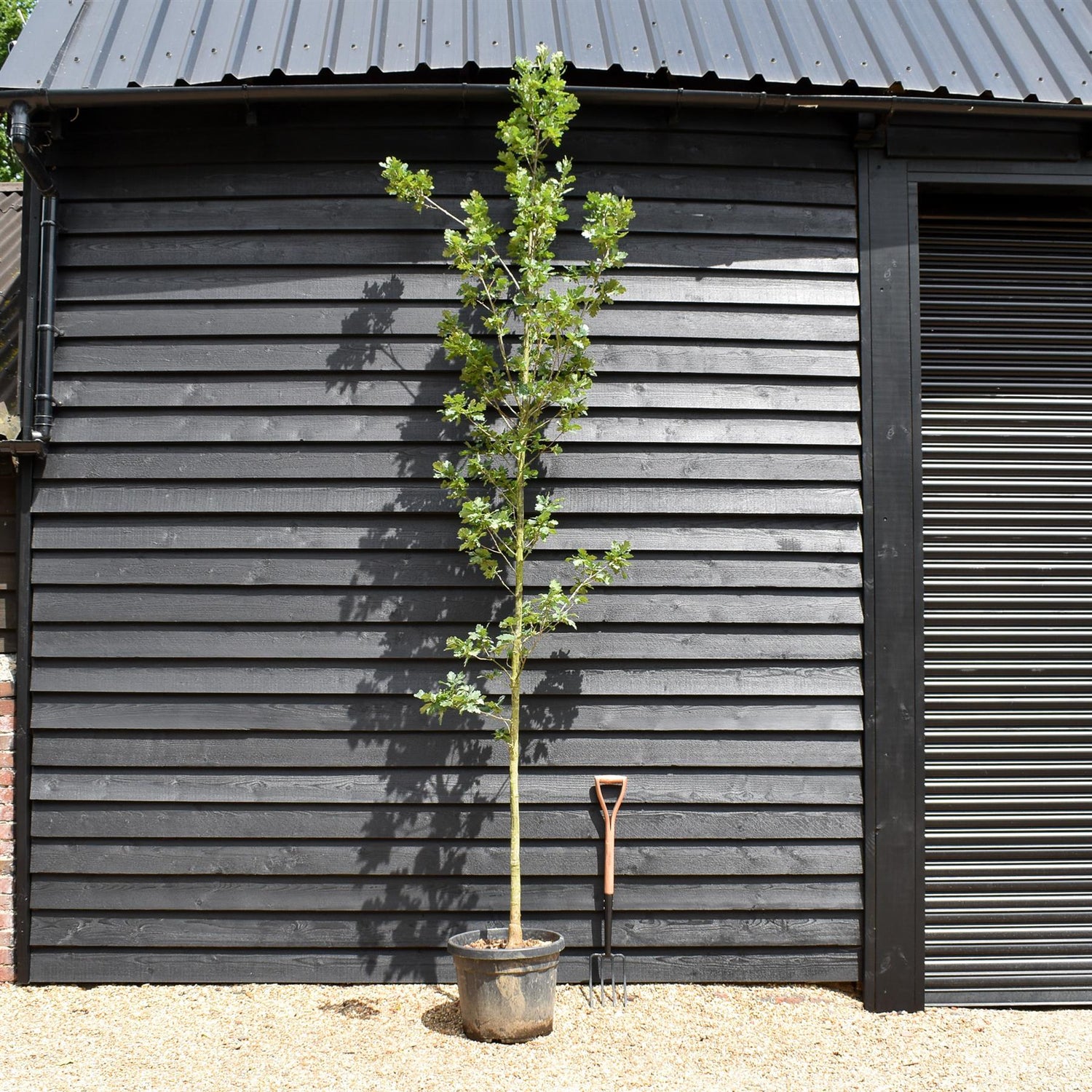


Turkey oak | Quercus cerris - Height 300-350cm - Girth 10-12cm - 45lt
£345.00
Unit price perTurkey oak | Quercus cerris - Height 300-350cm - Girth 10-12cm - 45lt
£345.00
Unit price perQuercus cerris, commonly known as the Turkey oak, is a robust and fast-growing deciduous tree native to southeastern Europe and Asia Minor. It is widely cultivated across Europe for its adaptability and ornamental value. The tree features deeply lobed, glossy green leaves that often persist into winter, and rough, deeply fissured bark that adds texture and character. One of its most distinctive features is its acorns, which are enclosed in a spiky, moss-like cup, giving the tree a unique appearance in autumn. Turkey oak can reach heights of 65 to 100 feet, making it suitable for large landscapes, parks, and avenues. It grows well in a variety of soils, including poor or dry conditions, and tolerates urban environments and pollution. While not native to the UK, it has been widely planted there since the 18th century. Quercus cerris also provides valuable habitat and food for wildlife, supporting biodiversity.


Cedrus libani atlantica 'Saphire Nymph' | Atlas Cedar - Height 70-80cm - Width 30-40cm - 11lt
£129.00
Unit price perCedrus libani atlantica 'Saphire Nymph' | Atlas Cedar - Height 70-80cm - Width 30-40cm - 11lt
£129.00
Unit price perCedrus libani atlantica 'Saphire Nymph' is an exquisite dwarf cultivar of the Atlas cedar, cherished for its unique, compact, weeping form and vibrant blue-green needles. This cultivar is specifically bred for its slow growth and small stature, reaching an ultimate height of approximately 4-5 feet after many years, making it an ideal choice for smaller garden spaces and rockeries. Its dense, cascading branches create a striking visual impact, adding texture and color contrast when planted alongside broader-leaved plants or brighter flowers.
'Saphire Nymph' thrives in full sun to partial shade, preferring well-drained soil conditions. It is relatively drought-tolerant once established, making it suitable for xeriscaping and gardens with less frequent watering schedules. Gardeners often use this plant as a focal point in thematic gardens, such as rock or alpine gardens, where its unique form and coloration can be fully appreciated. This cedar's hardy nature ensures it can adapt to a variety of temperate climates, making it a versatile and attractive addition to diverse landscapes


Parthenocissus henryana - 50-60cm - 3lt
£18.00
Unit price perParthenocissus henryana - 50-60cm - 3lt
£18.00
Unit price perParthenocissus henryana, commonly referred to as the Chinese Virginia creeper, is a captivating deciduous climbing plant originating from China. One of its most distinctive features is its dark green leaves adorned with shimmering silver veins, creating a striking contrast that provides a visual delight in gardens or landscapes.
The plant displays a growth habit that is somewhat less aggressive compared to some of its cousins in the Parthenocissus genus. This makes it a preferable choice for homeowners and gardeners who desire a less intrusive climber.
During the fall season, Parthenocissus henryana undergoes a breathtaking transformation. Its leaves turn to a vibrant shade of red, offering a spectacular autumnal display and enriching the landscape with its fiery hues.
In addition to its ornamental leaves, the plant produces small blue-black berries. While they provide an aesthetic appeal and are a food source for birds, they are considered inedible for humans.
One of the advantages of this plant is its adaptability. It can thrive in a range of soil types and can tolerate both full sun and partial shade. As an ornamental climber, Parthenocissus henryana is versatile, making it suitable for various garden designs, from trellises to walls or even ground cover. Proper care and management can ensure this plant remains an attractive and manageable feature in gardens.


Celtis Australis | European hackberry - Height 200-230cm - Girth 6-8cm - 20lt
£155.00
Unit price perCeltis Australis | European hackberry - Height 200-230cm - Girth 6-8cm - 20lt
£155.00
Unit price perCeltis australis, commonly known as the European nettle tree, is a deciduous tree native to southern Europe, western Asia, and northern Africa. It belongs to the family Cannabaceae, and it is closely related to the hackberry tree.
The Celtis australis tree can grow up to 25 meters tall and has a dense, rounded crown with a spreading habit. The bark is smooth and gray-brown when young, becoming rough and fissured with age. The leaves are alternate, simple, and oval-shaped with serrated edges. They are dark green on the upper side and paler on the underside, turning yellow in autumn before falling.
The tree produces small, inconspicuous flowers in late spring or early summer, followed by small, round, edible fruit that resembles a cherry in size and shape. The fruit is initially green, turning yellow or brown when ripe, and is sweet and juicy, with a taste similar to a fig.
The Celtis australis tree is adaptable to a wide range of soils and can tolerate drought, air pollution, and salt spray. It is often used as an ornamental tree in gardens, parks, and urban landscapes due to its attractive foliage and distinctive bark. It also provides food and shelter for wildlife, including birds and small mammals. Additionally, the tree has cultural significance and has been used for centuries in traditional medicine for various ailments.


Hardy Blue-Flowered Leadwort | Ceratostigma plumbaginoides - Height 15-25cm - 2lt
£18.00
Unit price perHardy Blue-Flowered Leadwort | Ceratostigma plumbaginoides - Height 15-25cm - 2lt
£18.00
Unit price perCeratostigma plumbaginoides, commonly known as hardy plumbago or leadwort, is a low-growing, herbaceous perennial plant native to China. It is prized for its vibrant blue flowers and attractive autumn foliage, making it a popular choice in UK gardens.
This hardy plant typically grows to a height of 30-45 cm, forming a dense, mat-like ground cover. Its slender, wiry stems bear oval, mid-green leaves that turn a rich red or bronze in autumn, providing a striking contrast to its late-summer blooms. From August through to October, Ceratostigma plumbaginoides produces clusters of vivid cobalt-blue, five-petalled flowers, which resemble those of the plumbago plant, hence its common name.
This plant thrives in well-drained soil, preferring full sun to partial shade, although it can tolerate a range of soil types, including poorer, rocky conditions. It is relatively drought-tolerant once established, and its creeping habit makes it ideal for planting at the front of borders, in rock gardens, or as ground cover beneath shrubs. In milder regions of the UK, it may remain evergreen, though it typically dies back in colder areas, regrowing from its roots in spring.
This plant is low-maintenance and is also beneficial for pollinators, attracting bees and other insects with its nectar-rich blooms.
Overall, this plant is a versatile, attractive addition to gardens, offering months of interest with its late-season flowers and colourful foliage, especially when other plants have begun to fade for the winter.


Japanese Maple | Acer palmatum 'Fire Cracker' - Tree - Height 60-70cm - 5lt
£50.00
Unit price perJapanese Maple | Acer palmatum 'Fire Cracker' - Tree - Height 60-70cm - 5lt
£50.00
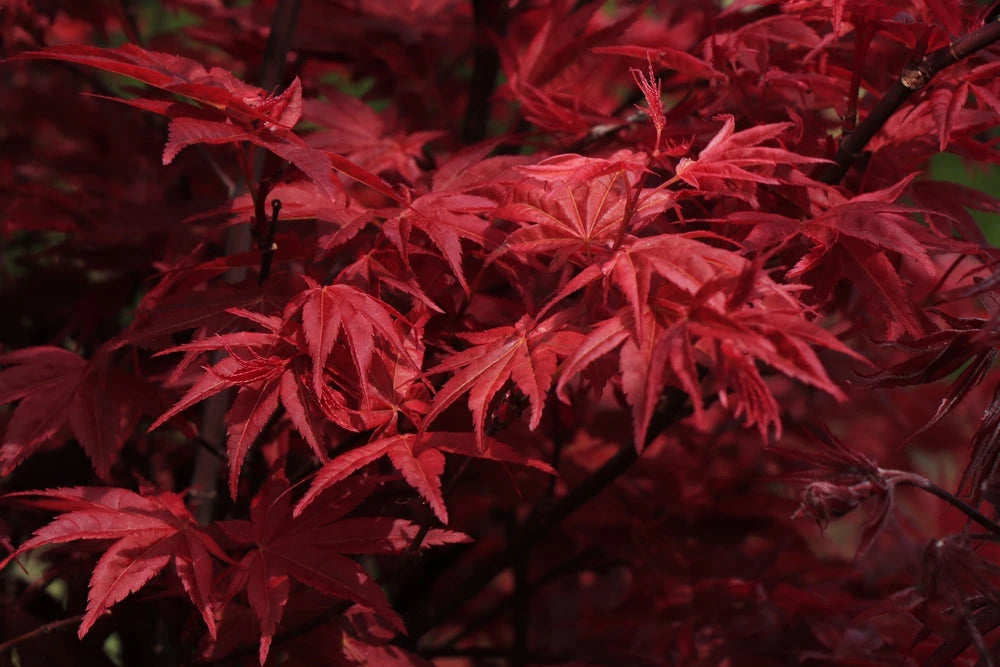
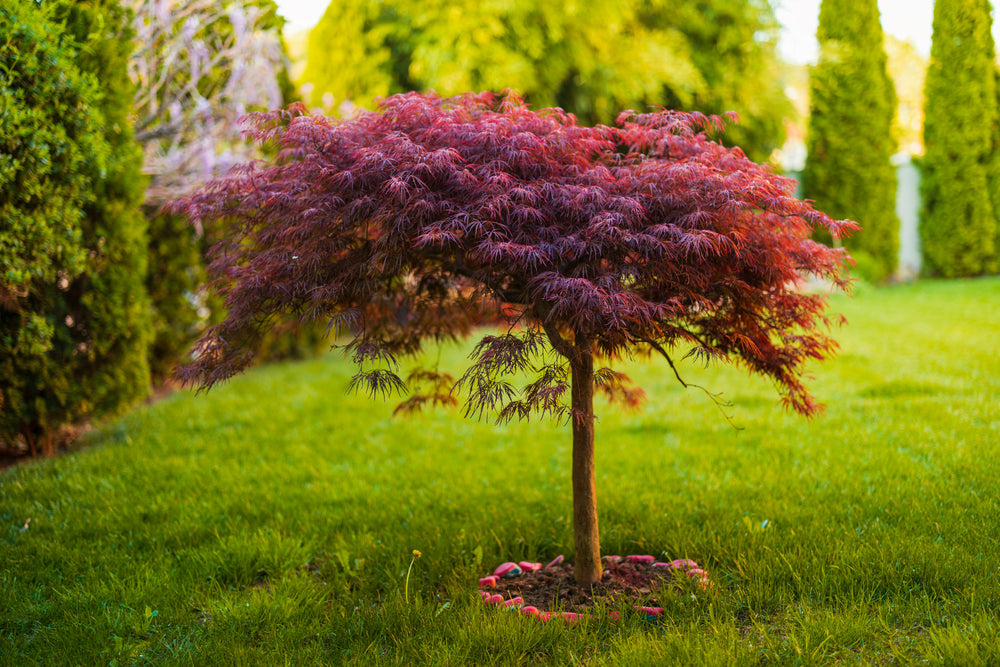
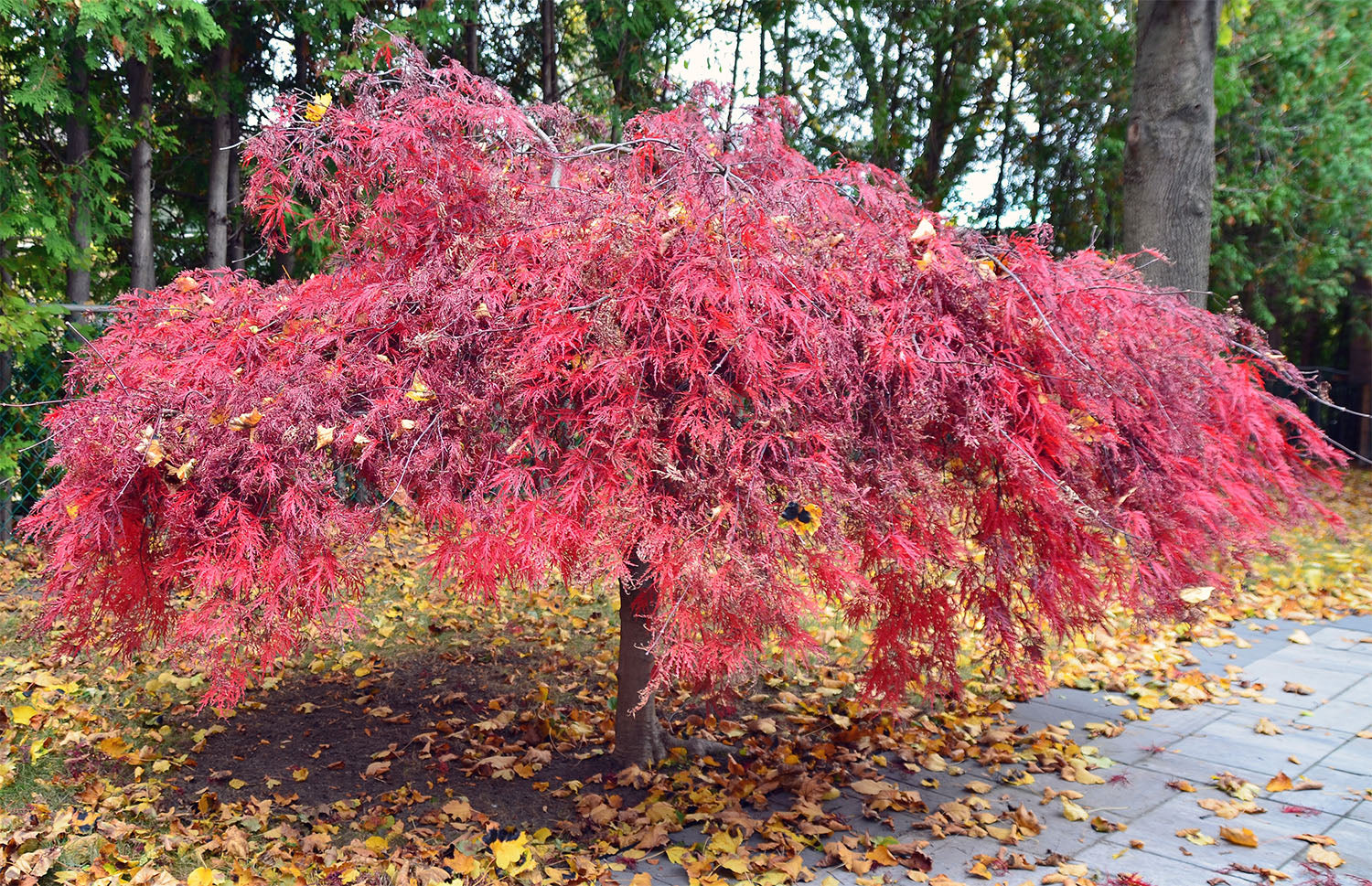
Unit price perAcer palmatum 'Fire Cracker' is a graceful and eye-catching Japanese maple admired for its finely dissected foliage and elegant cascading form. This deciduous ornamental tree produces delicate lace-like leaves that emerge rich crimson-red in spring, maintaining their vibrant colouring throughout the summer months. As autumn arrives, the foliage intensifies into brilliant scarlet and fiery red tones, creating a dramatic seasonal display.
Its naturally arching habit gives the plant a soft, flowing appearance, making it an excellent focal point in small gardens, Japanese-inspired landscapes, courtyard settings, or large decorative containers. The finely textured leaves contrast beautifully with evergreen shrubs, gravel gardens, and woodland planting schemes.
‘Fire Cracker’ thrives in moist, fertile, well-drained soil and prefers a sheltered position in partial shade, where the foliage is protected from scorching sun and drying winds. Slow growing and relatively compact, it is easy to maintain and suitable for gardens where space is limited. The attractive branching structure also provides winter interest, ensuring year-round ornamental value and refined architectural beauty.