

-
Trees
Trees
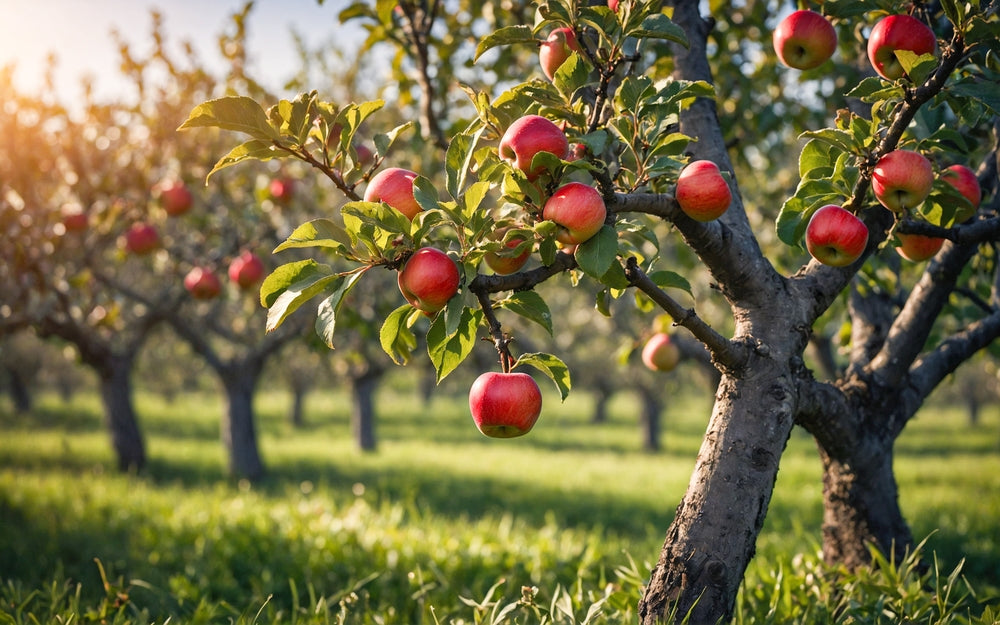 Fruit Trees
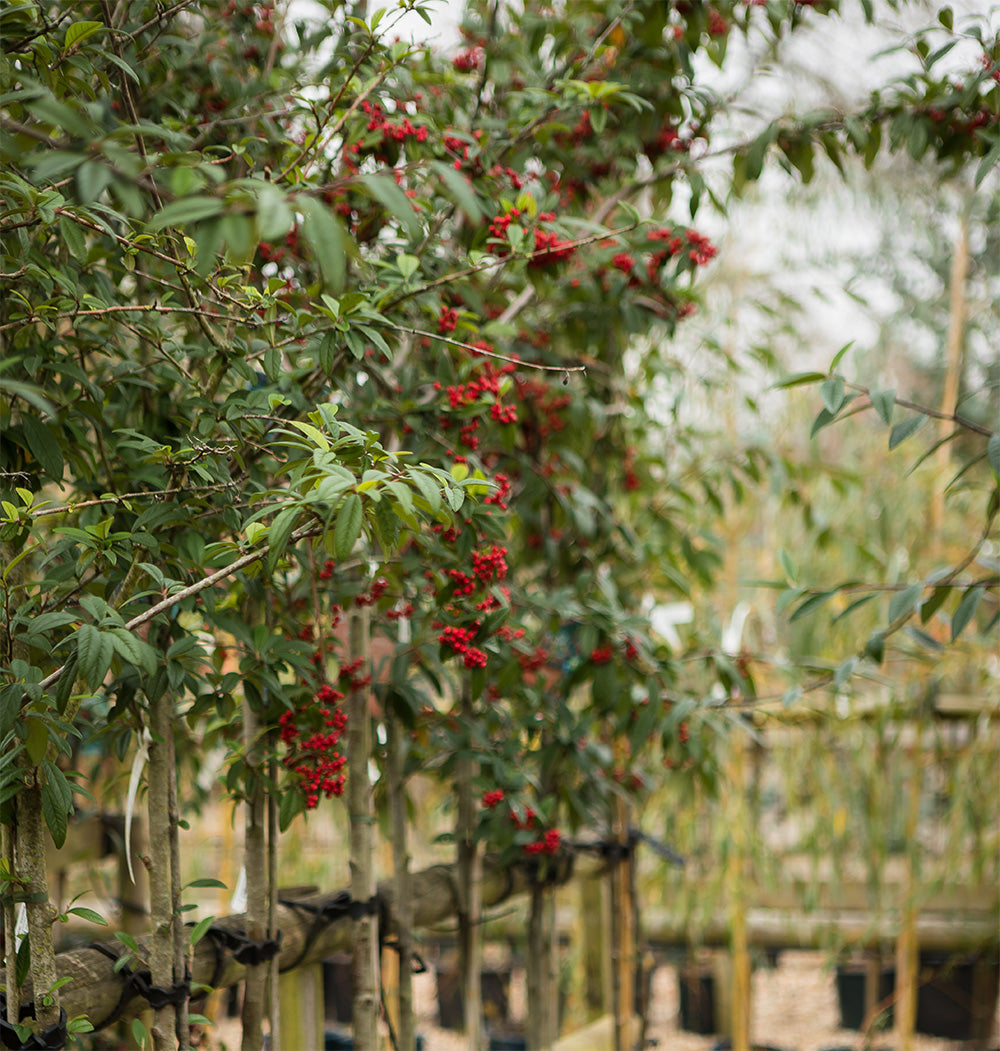 Ornamental
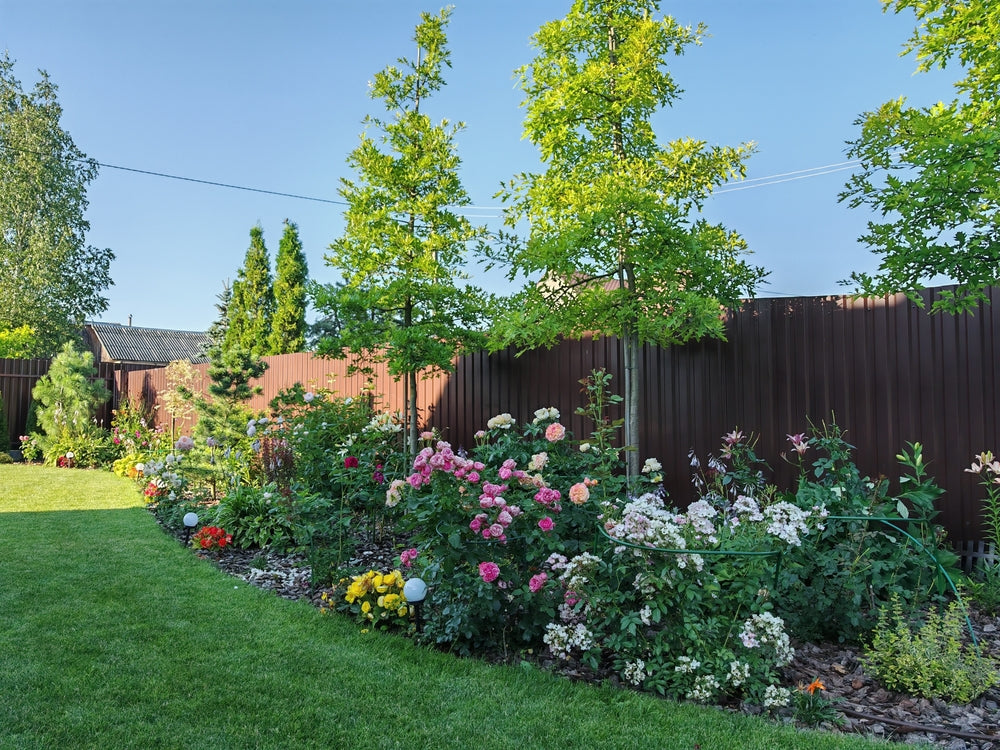 Screening
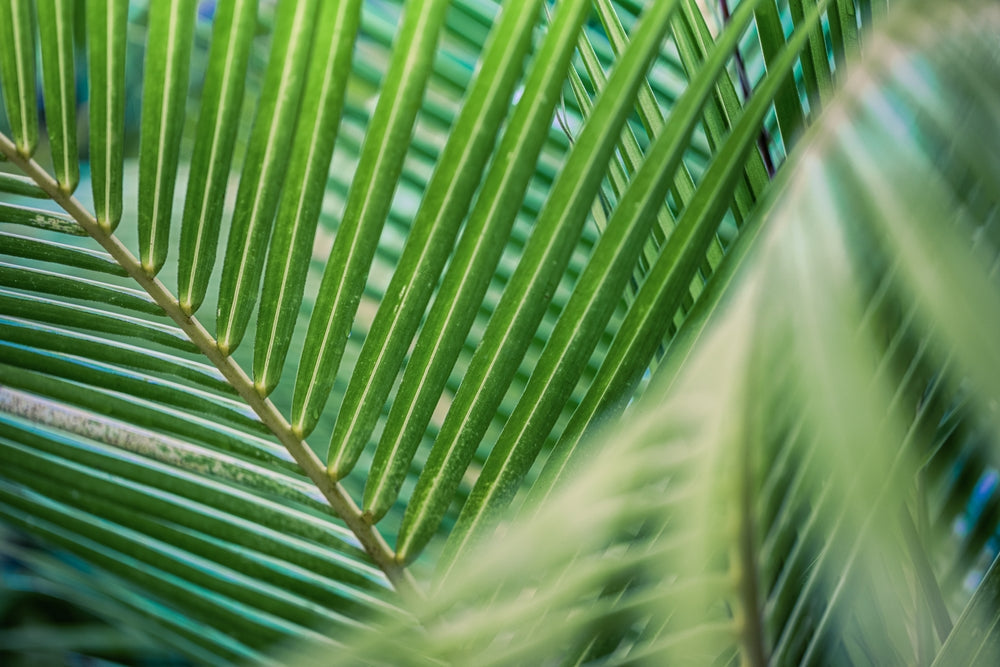 Palms
By FeaturesBy Shape
Palms
By FeaturesBy Shape -
Shrubs
Shrubs
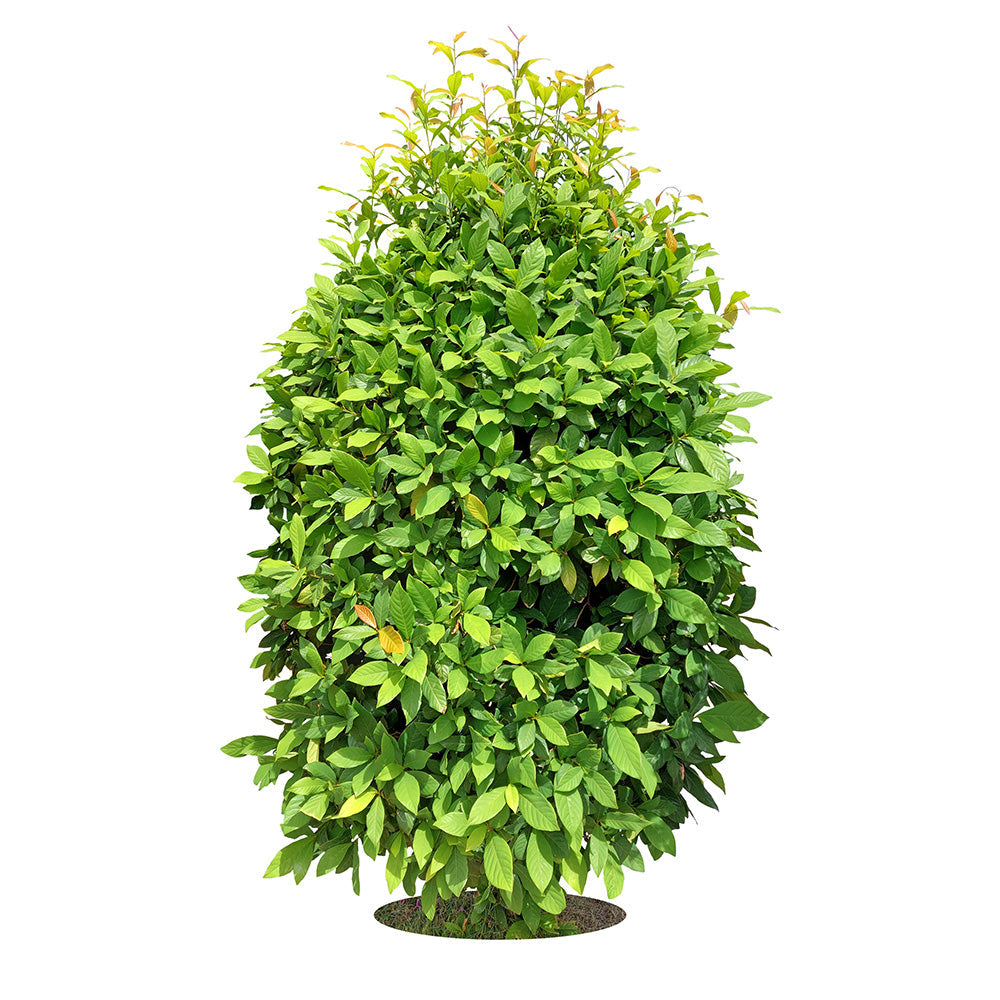 Large shrubs
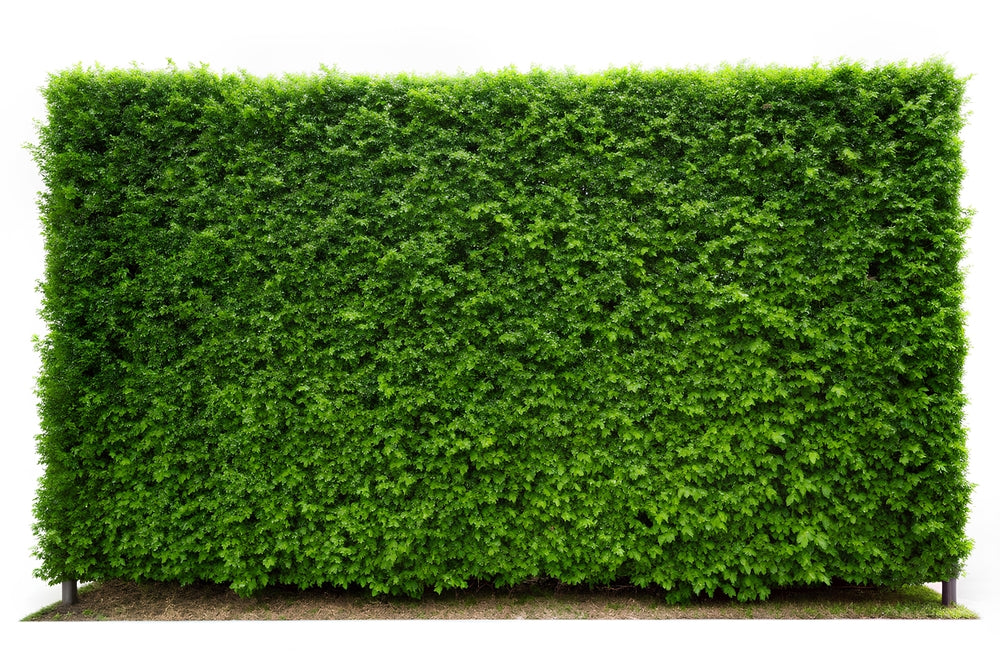 Hedging
 Bamboo
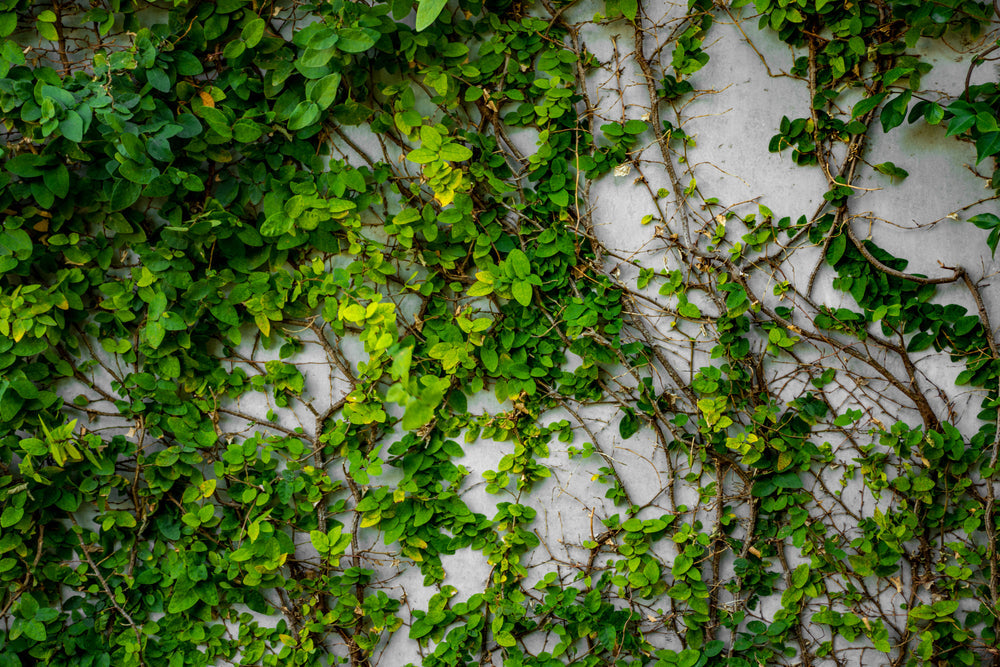 Climbers
 Flowering
 Grasses & Ferns
 Popular
-
Pines & Conifers
Pines & Conifers
 Pines
Pines
 Spruce & Fir
 Cypress
 Thuja
Thuja
 Redwood | Sequoia
-
Specimen
FREE DELIVERY OVER £350
Search results
Search results


White Mulberry | Morus Alba (fruitless) - Girth 30-32cm - Clear Stem - Height 400cm - Perfect for shade - 230lt
£920.00
Unit price perWhite Mulberry | Morus Alba (fruitless) - Girth 30-32cm - Clear Stem - Height 400cm - Perfect for shade - 230lt
£920.00
Unit price per


Morus Alba | White Mulberry - Pleached Parasol - Girth 16-18cm - Height 230cm - 150lt
£790.00
Unit price perMorus Alba | White Mulberry - Pleached Parasol - Girth 16-18cm - Height 230cm - 150lt
£790.00
Unit price per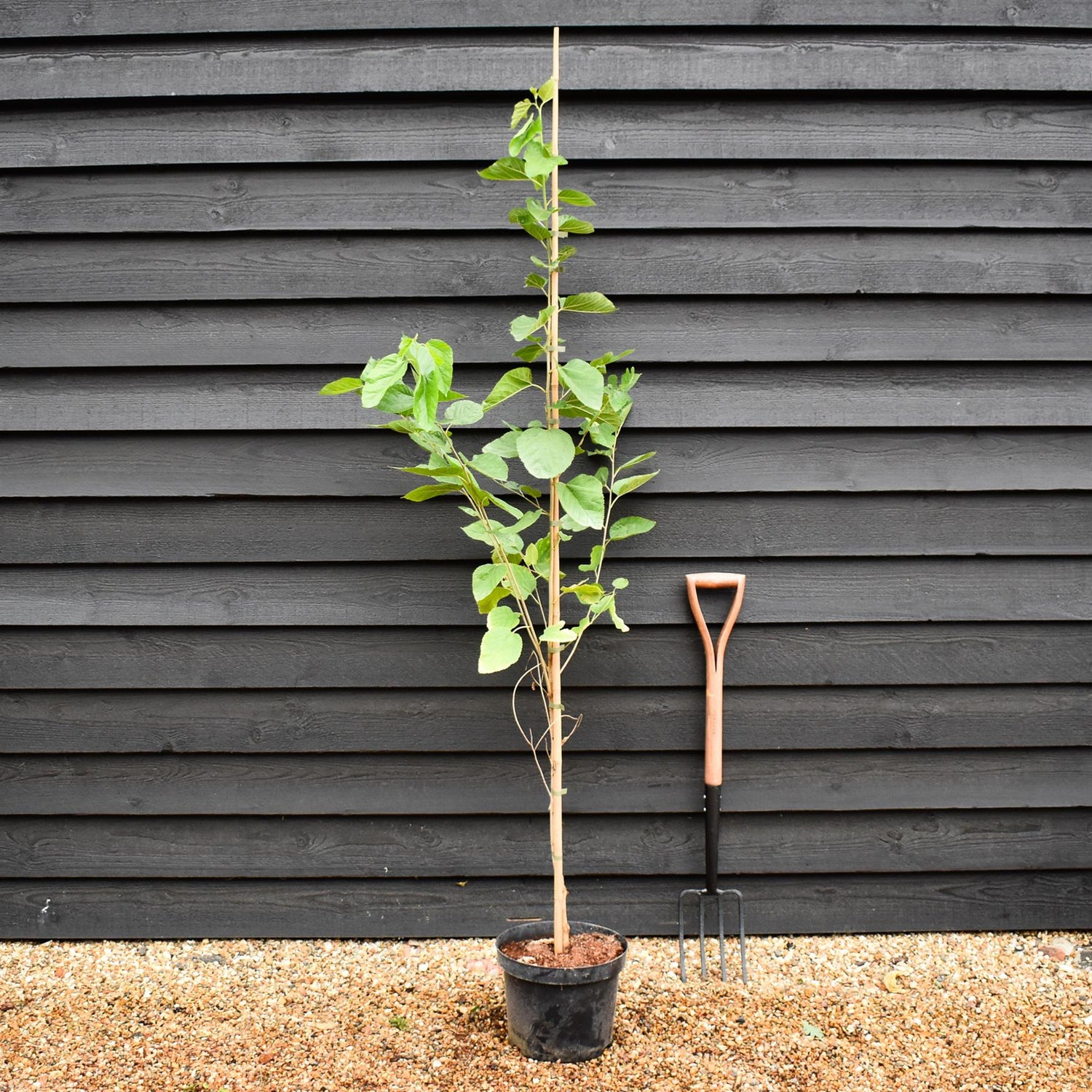


Morus alba | White Mulberry - Height 190-200cm - 10lt
£98.00
Unit price perMorus alba | White Mulberry - Height 190-200cm - 10lt
£98.00
Unit price per


Morus alba 'Pendula' | Weeping White Mulberry - Girth 30cm - Height 350-360cm - 130lt
£720.00
Unit price perMorus alba 'Pendula' | Weeping White Mulberry - Girth 30cm - Height 350-360cm - 130lt
£720.00
Unit price per


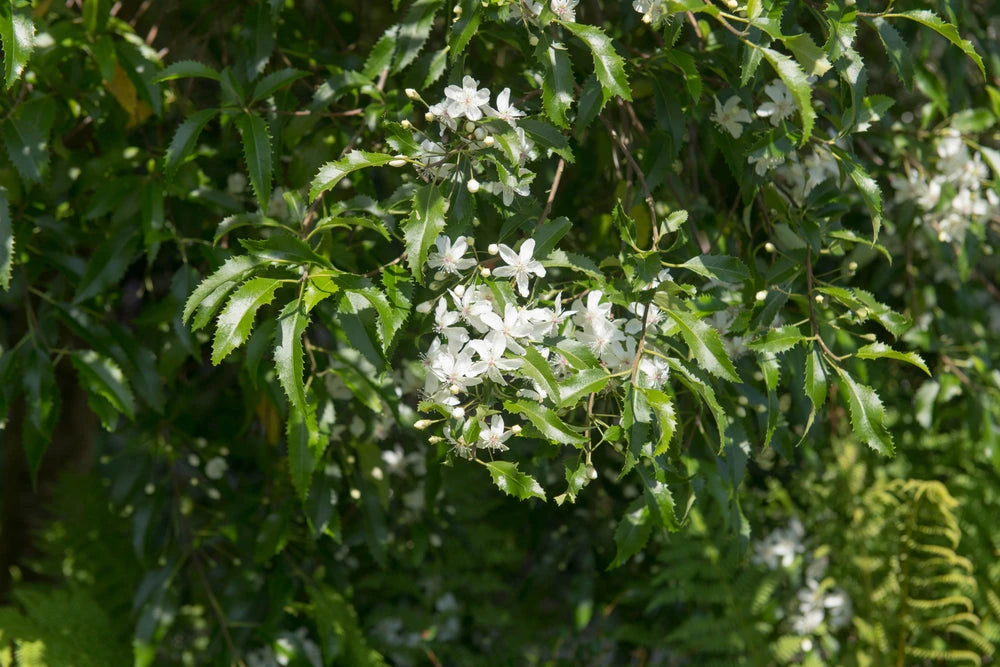
Hoheria sexstylosa Snow White | Ribbonwood - Bushy - 180-220 - 12lt
£99.00
Unit price perHoheria sexstylosa Snow White | Ribbonwood - Bushy - 180-220 - 12lt
£99.00
Unit price per


Morus Alba | White Mulberry - Girth 21cm - Clear Stem 190cm - Height 390-410cm - 130lt
£545.00
Unit price perMorus Alba | White Mulberry - Girth 21cm - Clear Stem 190cm - Height 390-410cm - 130lt
£545.00
Unit price per


Alnus Cordata - Alder tree - Height 300-350cm - 30lt
£260.00
Unit price perAlnus Cordata - Alder tree - Height 300-350cm - 30lt
£260.00
Unit price perAlnus cordata, commonly known as the Italian alder, is a medium to large deciduous tree native to southern Italy and parts of Corsica. It belongs to the Betulaceae family and is highly valued for its ability to thrive in poor soils and challenging environmental conditions. This species is often planted for ornamental purposes, soil improvement, and as a windbreak due to its robust growth and adaptability.
The tree can reach heights of up to 25-30 metres (82-98 feet) with a trunk diameter of about 1 metre (3.3 feet). It has a relatively narrow, conical crown, which makes it an attractive choice for landscaping in urban and rural environments. The bark is smooth and greyish-brown when young, developing shallow fissures with age.
Alnus cordata is noted for its distinctive heart-shaped (cordate) leaves, which are bright green and glossy, measuring 7-12 cm in length. Unlike some other alders, the leaves of A. cordata remain on the tree until late autumn, giving it an extended season of greenery. In spring, it produces small, inconspicuous catkins, with male catkins being pendulous and yellowish, and female catkins more compact and upright. These develop into small, woody cones that persist on the tree through winter.
One of the key characteristics of Alnus cordata is its nitrogen-fixing ability. Like other alders, it forms a symbiotic relationship with the bacterium Frankia, which allows it to fix atmospheric nitrogen into the soil. This quality makes it an excellent species for improving soil fertility, particularly in degraded or nutrient-poor areas.
Overall, the Italian alder is a resilient and versatile tree, well-suited to a variety of landscapes, including wet or compacted soils, and is an important species for ecological restoration projects.


Populus alba | White Poplar Tree - Standard - Clear stem 160-170cm - Height 370-400cm - 45lt
£325.00
Unit price perPopulus alba | White Poplar Tree - Standard - Clear stem 160-170cm - Height 370-400cm - 45lt
£325.00
Unit price perPopulus alba, or White Poplar, is a fast-growing, suckering, spreading, deciduous tree with a broad-rounded crown, and 3-5 lobed, dark green leaves, silvery and hairy underneath, white when young, golden yellow in autumn. Small, reddish male or greenish female catkins appear on separate plants in spring, before the leaves. Female flowers are followed by capsules that open to release cottony seeds. Roots can be invasive.
White Poplar is easily grown in a wide range of soils and soil conditions, even poorly-drained, except constantly waterlogged. It thrives in average, moist, well-drained soils. It prefers full sun. It is tolerant of salt and winds, therefore, suitable for coastal areas. Attractive to bees and birds. Low maintenance plant. Populus alba, with its attractive foliage, is a great ornamental tree, perfect for very large woodland gardens or parks. Excellent as a windbreak or a screen tree. Not suitable for streets or near the houses because of its vigorous roots and messy tendencies.


Populus alba | White Poplar Tree - Standard - Clear stem 160-170cm - Height 430-450cm - 70lt
£325.00
Unit price perPopulus alba | White Poplar Tree - Standard - Clear stem 160-170cm - Height 430-450cm - 70lt
£325.00
Unit price perPopulus alba, or White Poplar, is a fast-growing, suckering, spreading, deciduous tree with a broad-rounded crown, and 3-5 lobed, dark green leaves, silvery and hairy underneath, white when young, golden yellow in autumn. Small, reddish male or greenish female catkins appear on separate plants in spring, before the leaves. Female flowers are followed by capsules that open to release cottony seeds. Roots can be invasive.
White Poplar is easily grown in a wide range of soils and soil conditions, even poorly-drained, except constantly waterlogged. It thrives in average, moist, well-drained soils. It prefers full sun. It is tolerant of salt and winds, therefore, suitable for coastal areas. Attractive to bees and birds. Low maintenance plant. Populus alba, with its attractive foliage, is a great ornamental tree, perfect for very large woodland gardens or parks. Excellent as a windbreak or a screen tree. Not suitable for streets or near the houses because of its vigorous roots and messy tendencies.
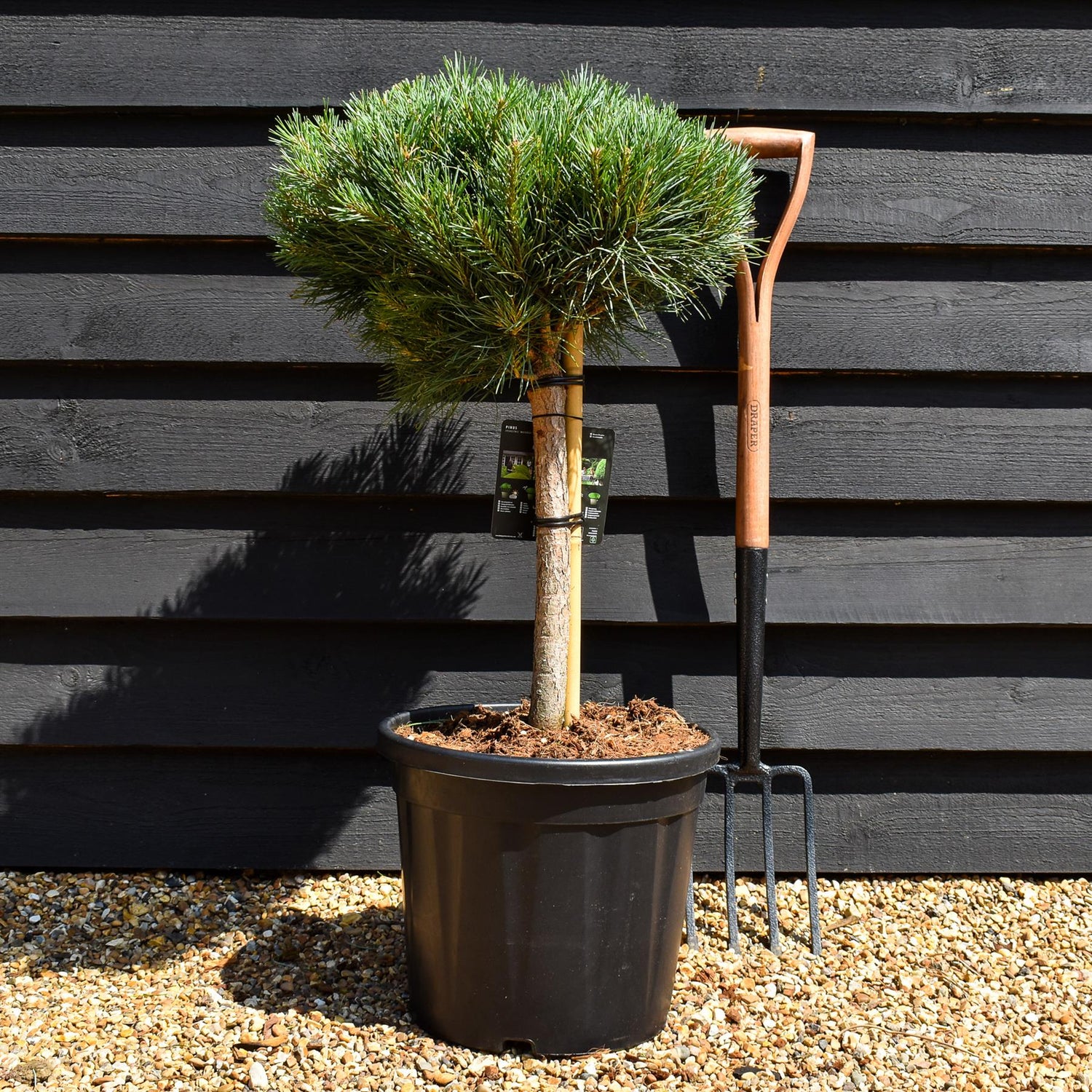
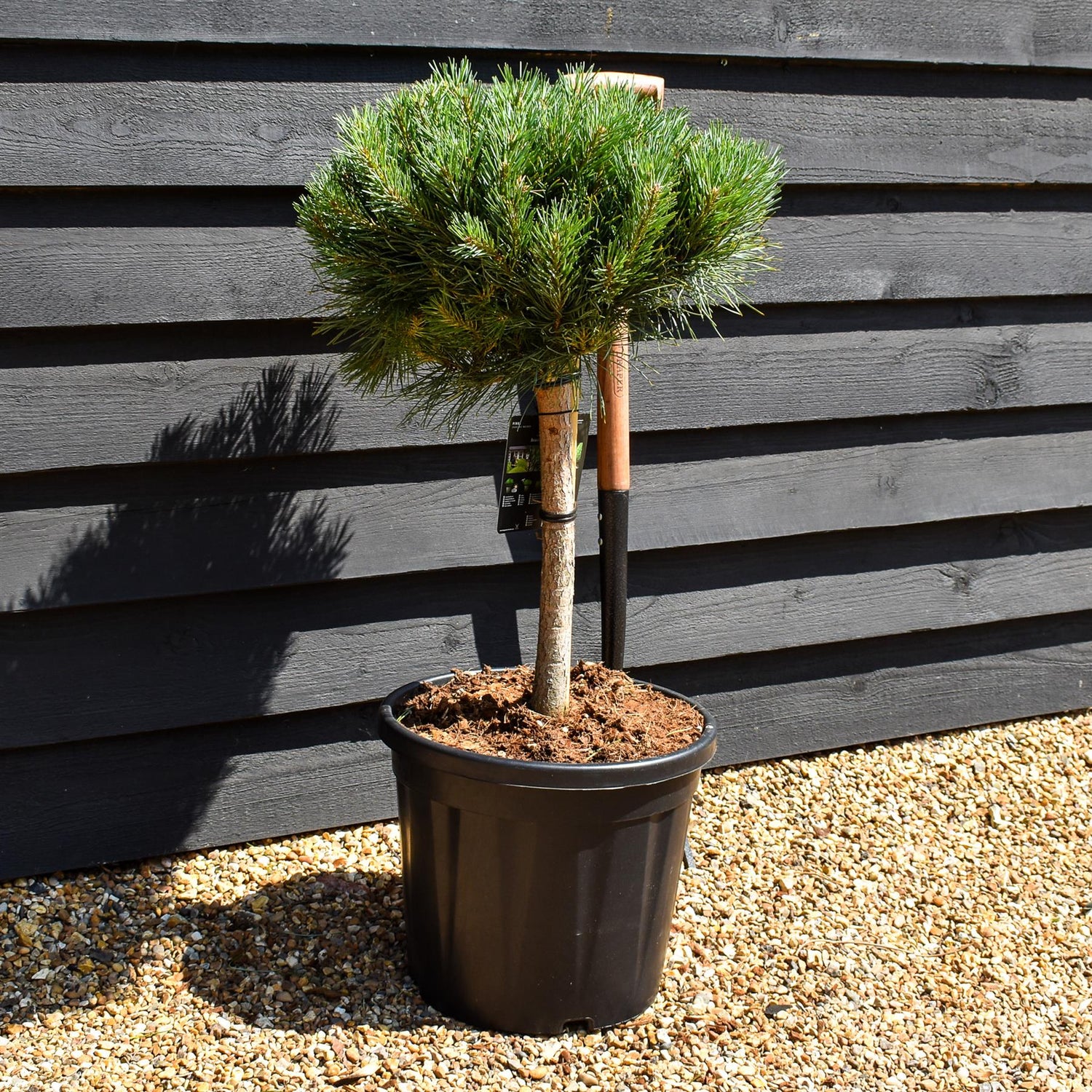
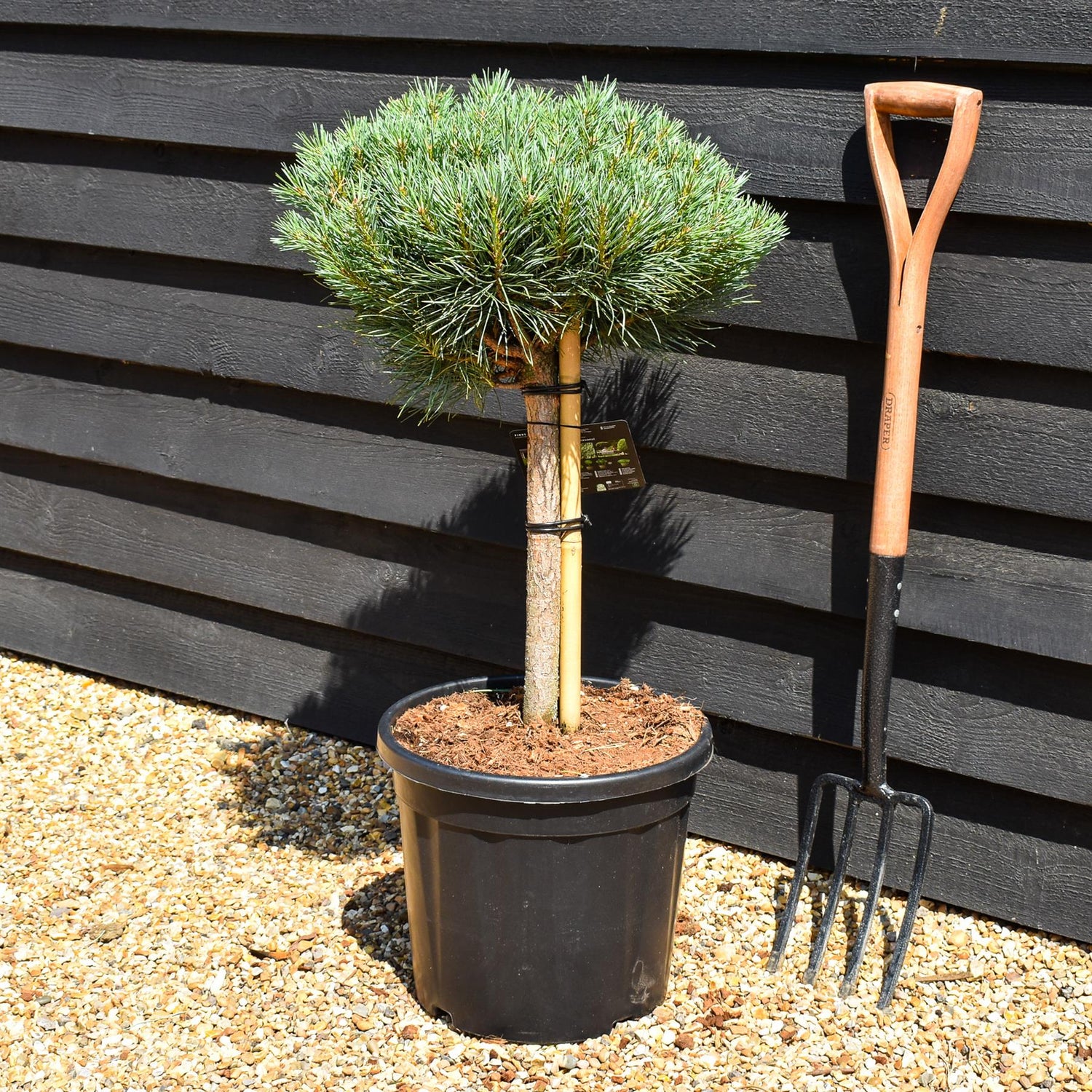
Pinus sylvestris 'Watereri' | Scots pine - Clear Stem 40cm - Girth 8-10cm - Height 60-70cm - Width 40-50cm - 20lt
£196.00
Unit price perPinus sylvestris 'Watereri' | Scots pine - Clear Stem 40cm - Girth 8-10cm - Height 60-70cm - Width 40-50cm - 20lt
£196.00
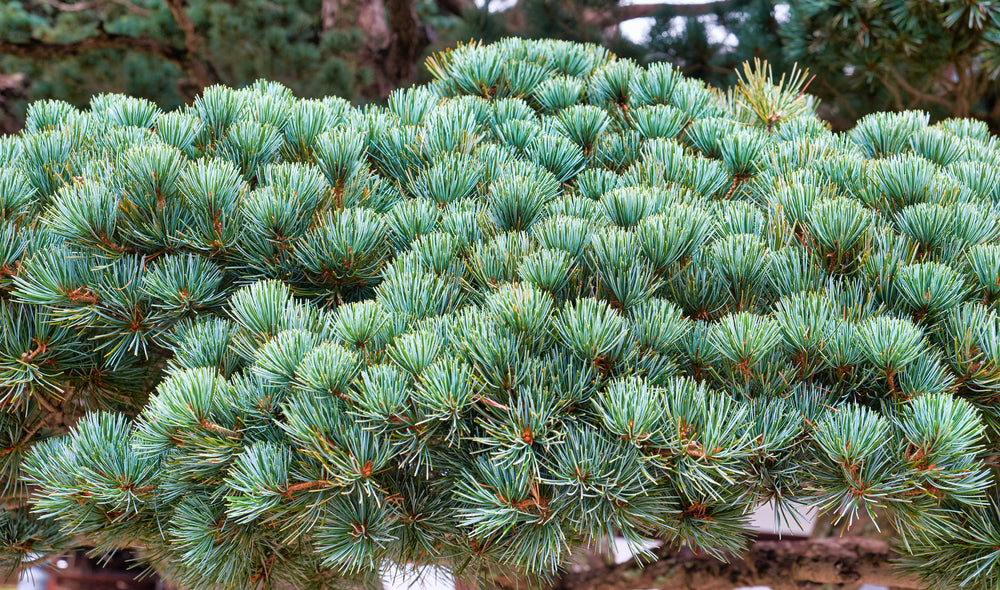
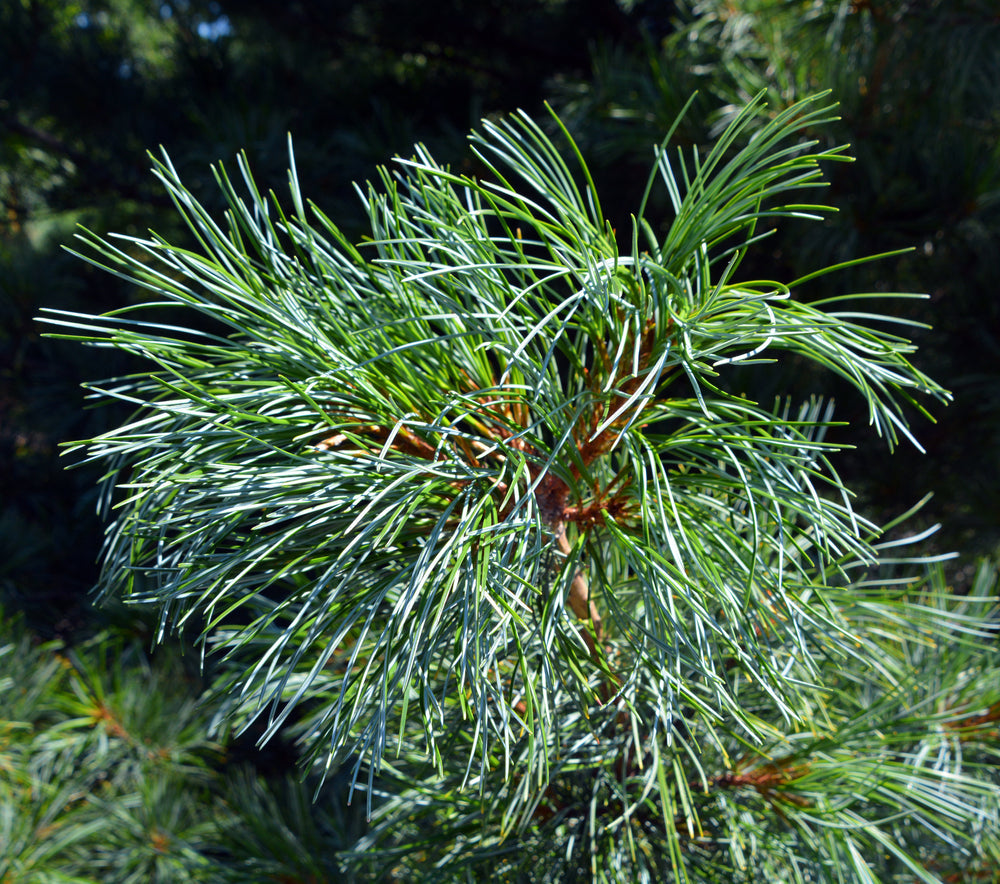
Unit price perPinus sylvestris ‘Watereri’ on a clear stem is an exceptional choice for gardens seeking year-round structure, texture, and visual interest in a compact, elevated form. This cultivated Scots pine features a rounded, densely branched canopy of silvery-blue to blue-green needles, creating a striking contrast against its bare, upright trunk. Its raised form allows for underplanting with perennials, groundcovers, or ornamental grasses, making it ideal for layered planting schemes in both contemporary and traditional garden designs.
Typically reaching 6 to 12 feet in height over time, ‘Watereri’ on a clear stem is perfect as a focal point in smaller gardens, courtyard spaces, or formal borders. It is hardy and thrives in full sun with well-drained soil. Once established, it is tolerant of drought, wind, and poor soil conditions, making it suitable for a wide range of settings, including coastal and exposed locations.
Low maintenance and slow-growing, it requires little pruning to maintain its shape. Its evergreen nature ensures year-round appeal, while its sculptural form adds elegance and structure. This variety is a smart, stylish choice for modern and low-maintenance landscapes.


Populus alba | White Poplar Tree - Standard - Clear stem 160-170cm - Height 430-450cm - 55lt
£325.00
Unit price perPopulus alba | White Poplar Tree - Standard - Clear stem 160-170cm - Height 430-450cm - 55lt
£325.00
Unit price perPopulus alba, or White Poplar, is a fast-growing, suckering, spreading, deciduous tree with a broad-rounded crown, and 3-5 lobed, dark green leaves, silvery and hairy underneath, white when young, golden yellow in autumn. Small, reddish male or greenish female catkins appear on separate plants in spring, before the leaves. Female flowers are followed by capsules that open to release cottony seeds. Roots can be invasive.
White Poplar is easily grown in a wide range of soils and soil conditions, even poorly-drained, except constantly waterlogged. It thrives in average, moist, well-drained soils. It prefers full sun. It is tolerant of salt and winds, therefore, suitable for coastal areas. Attractive to bees and birds. Low maintenance plant. Populus alba, with its attractive foliage, is a great ornamental tree, perfect for very large woodland gardens or parks. Excellent as a windbreak or a screen tree. Not suitable for streets or near the houses because of its vigorous roots and messy tendencies.


Alnus Cordata - Alder tree - Clear Stem - Standard - Girth 10-12cm - Height 480-530cm - 70lt
£390.00
Unit price perAlnus Cordata - Alder tree - Clear Stem - Standard - Girth 10-12cm - Height 480-530cm - 70lt
£390.00
Unit price perAlnus cordata, commonly known as the Italian alder, is a medium to large deciduous tree native to southern Italy and parts of Corsica. It belongs to the Betulaceae family and is highly valued for its ability to thrive in poor soils and challenging environmental conditions. This species is often planted for ornamental purposes, soil improvement, and as a windbreak due to its robust growth and adaptability.
The tree can reach heights of up to 25-30 metres (82-98 feet) with a trunk diameter of about 1 metre (3.3 feet). It has a relatively narrow, conical crown, which makes it an attractive choice for landscaping in urban and rural environments. The bark is smooth and greyish-brown when young, developing shallow fissures with age.
Alnus cordata is noted for its distinctive heart-shaped (cordate) leaves, which are bright green and glossy, measuring 7-12 cm in length. Unlike some other alders, the leaves of A. cordata remain on the tree until late autumn, giving it an extended season of greenery. In spring, it produces small, inconspicuous catkins, with male catkins being pendulous and yellowish, and female catkins more compact and upright. These develop into small, woody cones that persist on the tree through winter.
One of the key characteristics of Alnus cordata is its nitrogen-fixing ability. Like other alders, it forms a symbiotic relationship with the bacterium Frankia, which allows it to fix atmospheric nitrogen into the soil. This quality makes it an excellent species for improving soil fertility, particularly in degraded or nutrient-poor areas.
Overall, the Italian alder is a resilient and versatile tree, well-suited to a variety of landscapes, including wet or compacted soils, and is an important species for ecological restoration projects.


Laburnum x watereri 'Vossii' | Golden Chain Tree - Clear Stem - Girth 8-10cm - Height 380-400cm - 45lt
£425.00
Unit price perLaburnum x watereri 'Vossii' | Golden Chain Tree - Clear Stem - Girth 8-10cm - Height 380-400cm - 45lt
£425.00
Unit price perLaburnum x watereri 'Vossii' is a cultivar of Laburnum x watereri and the best known Laburnum. It’s an attractive, large, deciduous shrub or small tree of bushy, spreading, capricious growing habit, vase-shaped crown, and glossy, deep-green leaves. Spectacular, long, dropping clusters of slightly scented, pea-like, golden yellow flowers bloom in spring, and are followed by attractive bean-like pods.
Laburnum x watereri 'Vossii' thrives in rich, fertile, medium moisture, well-drained soils. It likes full sun, but in hot areas, it appreciates some afternoon shade. It doesn’t like heat and humidity, but is tolerant of frost, winds, urban conditions, and de-icing salt. Its roots can sometimes be badly anchored. A very tough and hardy plant. All parts of the palnt are toxic to humans and animals. This stunning shrub with its rich, dense, golden yellow flower clusters resembling golden chains, is great as a specimen plant, but can also be trained for arbours and pergolas.


Alnus Glutinosa Imperialis - Alder Imperialis - Height 220-260cm - 12lt
£94.00
Unit price perAlnus Glutinosa Imperialis - Alder Imperialis - Height 220-260cm - 12lt
£94.00
Unit price perAlnus glutinosa 'Imperialis,' commonly known as the Imperial Alder, is a cultivar of the European alder (Alnus glutinosa) renowned for its striking ornamental qualities. This deciduous tree is a favoUrite among landscape enthusiasts and horticulturists for its impressive appearance and adaptability.
Imperial Alder typically reaches a height of 40 to 50 feet (12 to 15 meters) and forms a broadly pyramidal shape. Its dark green, glossy leaves are deeply cut and serrated, measuring about 4 to 6 inches (10 to 15 cm) in length. During the growing season, the foliage provides a lush and vibrant backdrop to garden landscapes.
One of the standout features of Alnus glutinosa 'Imperialis' is its stunning catkins. In late winter or early spring, long, pendulous catkins emerge, adding a unique and captivating element to the tree's appearance. These catkins sway gracefully in the wind, creating a charming visual effect. Additionally, this cultivar displays a lovely yellow fall coloUr, which adds to its overall aesthetic appeal.
Imperial Alder is highly adaptable to various soil types and moisture conditions, making it suitable for a wide range of environments. It thrives in full sun to partial shade, making it a versatile choice for gardens and parks. Its ability to tolerate wet soil and even occasional flooding makes it an excellent choice for riparian zones or areas prone to seasonal waterlogging.
Beyond its aesthetic value, Alnus glutinosa 'Imperialis' also contributes to the ecosystem by supporting various wildlife species. Its catkins provide a source of food for birds and insects, and its roots help stabilize soil along riverbanks and wetland areas.
In summary, Alnus glutinosa 'Imperialis' is a captivating cultivar of the European alder celebrated for its striking appearance, adaptability, and ecological contributions. Whether used as a focal point in a garden or to enhance riparian habitats, this tree adds a touch of elegance and functionality to its surroundings.


Laburnum x watereri 'Vossii' | Golden Chain Tree -Shrub - Height 90-120cm - 20lt
£105.00
Unit price perLaburnum x watereri 'Vossii' | Golden Chain Tree -Shrub - Height 90-120cm - 20lt
£105.00
Unit price perLaburnum x watereri 'Vossii' is a cultivar of Laburnum x watereri and the best known Laburnum. It’s an attractive, large, deciduous shrub or small tree of bushy, spreading, capricious growing habit, vase-shaped crown, and glossy, deep-green leaves. Spectacular, long, dropping clusters of slightly scented, pea-like, golden yellow flowers bloom in spring, and are followed by attractive bean-like pods.
Laburnum x watereri 'Vossii' thrives in rich, fertile, medium moisture, well-drained soils. It likes full sun, but in hot areas, it appreciates some afternoon shade. It doesn’t like heat and humidity, but is tolerant of frost, winds, urban conditions, and de-icing salt. Its roots can sometimes be badly anchored. A very tough and hardy plant. All parts of the palnt are toxic to humans and animals. This stunning shrub with its rich, dense, golden yellow flower clusters resembling golden chains, is great as a specimen plant, but can also be trained for arbours and pergolas.
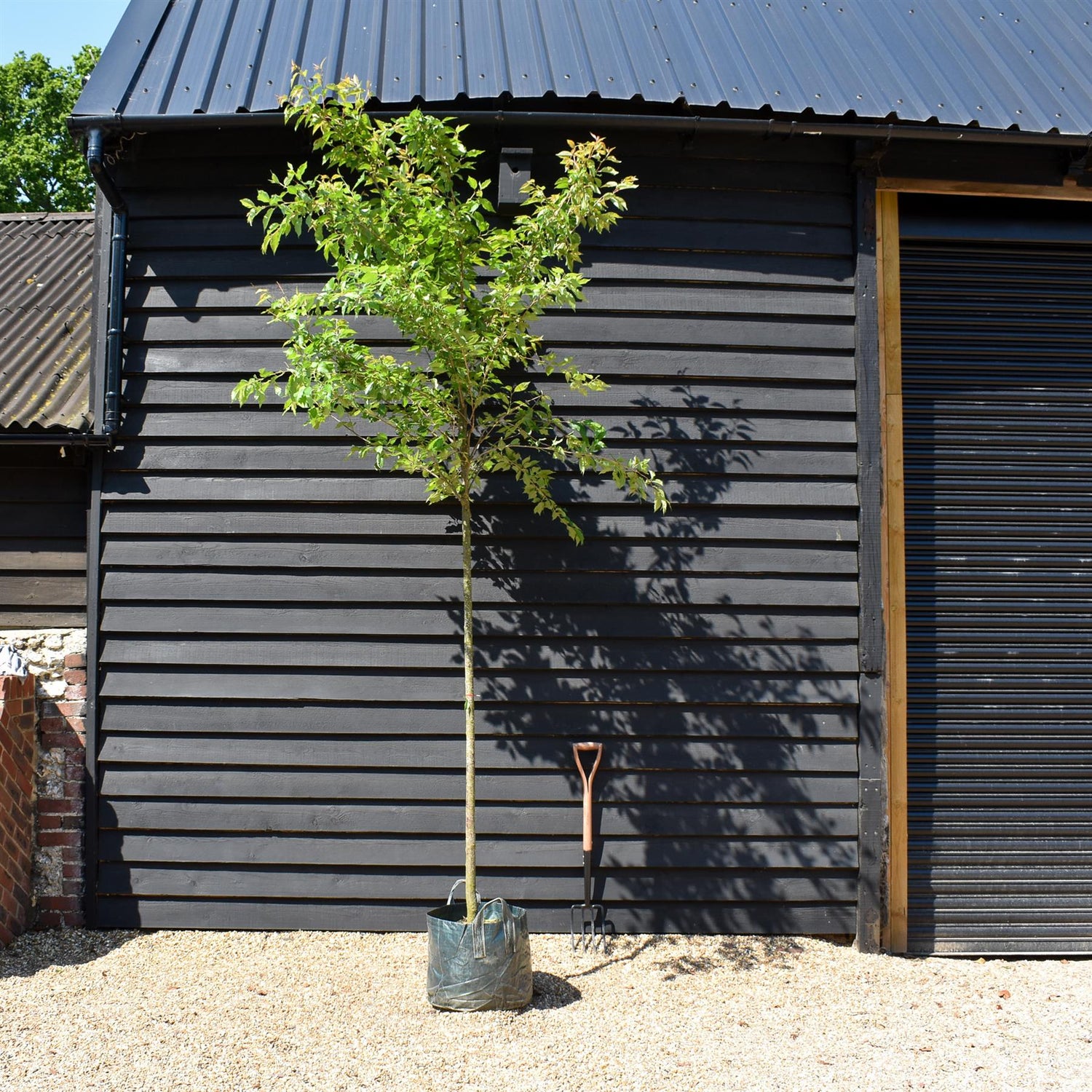


Sorbus arnoldiana 'White Wax' - Clear Stem 160cm - Girth 8-10cm - Height 300-350cm - 45lt
£379.00
Unit price perSorbus arnoldiana 'White Wax' - Clear Stem 160cm - Girth 8-10cm - Height 300-350cm - 45lt
£379.00
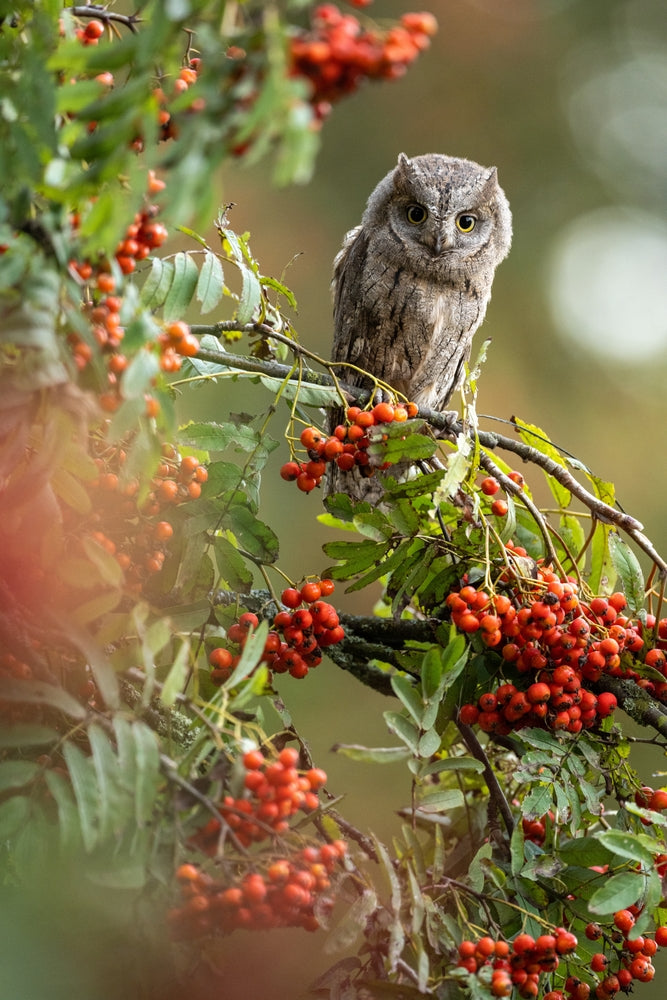
Unit price perSorbus arnoldiana 'White Wax' is a striking and ornamental tree, well-suited to medium or large gardens, particularly those seeking year-round interest and wildlife value. This cultivar is a hybrid rowan tree known for its graceful form and attractive seasonal features. It typically grows to a moderate height, with a well-balanced, upright crown that fits well into mixed borders, lawn focal points, or woodland-style gardens.
In spring, it produces clusters of creamy-white flowers that are highly attractive to pollinators such as bees. These are followed by distinctive white, waxy berries in late summer to autumn—hence the name 'White Wax'—which offer an unusual twist compared to the more common red-berried rowans. These fruits are a valuable food source for birds, particularly thrushes and blackbirds.
The foliage is another highlight, with dark green, pinnate leaves that turn vibrant shades of orange, red, or purple in autumn, creating a stunning seasonal display. The tree is hardy, low-maintenance, and tolerant of a range of soil types, making it a practical and decorative choice for gardeners looking to enhance biodiversity and visual appeal with minimal effort.
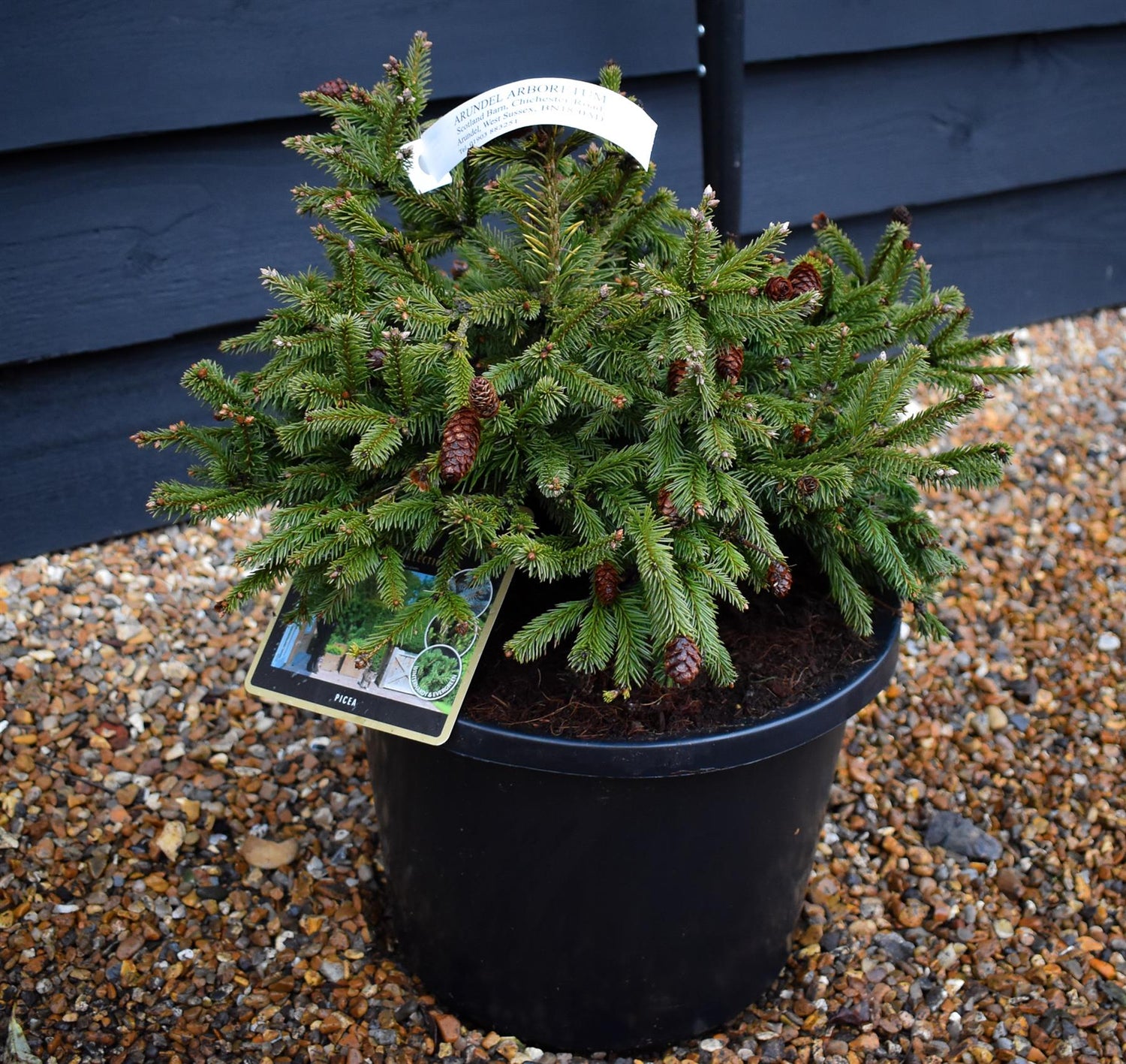


Picea abies Pusch | Norway spruce 'Pusch' - Height 10-20cm - Width 40-50cm - 12lt
£160.00
Unit price perPicea abies Pusch | Norway spruce 'Pusch' - Height 10-20cm - Width 40-50cm - 12lt
£160.00
Unit price perPicea abies 'Pusch' is a dwarf cultivar of the Norway spruce, known for its compact size, unique cone production, and suitability for small gardens and rockeries. Originating from the traditional Picea abies species, this slow-growing variety is cherished for its ornamental value and attractive, miniature form.
This conifer typically grows to a height of 60 to 90 cm (2 to 3 feet) over the course of 10 years, forming a compact, rounded shape. Its dense branches are covered in short, dark green needles that provide a striking year-round display. What makes Picea abies 'Pusch' truly special, however, is its prolific production of bright red, small cones in spring. These cones first appear as vibrant, ruby-red structures, creating a colourful contrast against the green foliage, before maturing into a more subdued brown hue later in the season.
Due to its modest size and slow growth rate, Picea abies 'Pusch' is ideal for smaller spaces, container gardening, and rock gardens. It thrives in full sun but can tolerate partial shade, preferring well-drained, slightly acidic soil. While it is hardy in cold climates, it benefits from being sheltered from strong winds and extremes in weather, especially during its early growth stages.
This cultivar requires minimal maintenance and is relatively resistant to pests and diseases, making it a low-care option for gardeners seeking year-round visual interest. Pruning is rarely necessary, though it can be done lightly to maintain its shape. Overall, Picea abies 'Pusch' is a striking and versatile choice for anyone looking to add a splash of colour and texture to their garden or landscape design.


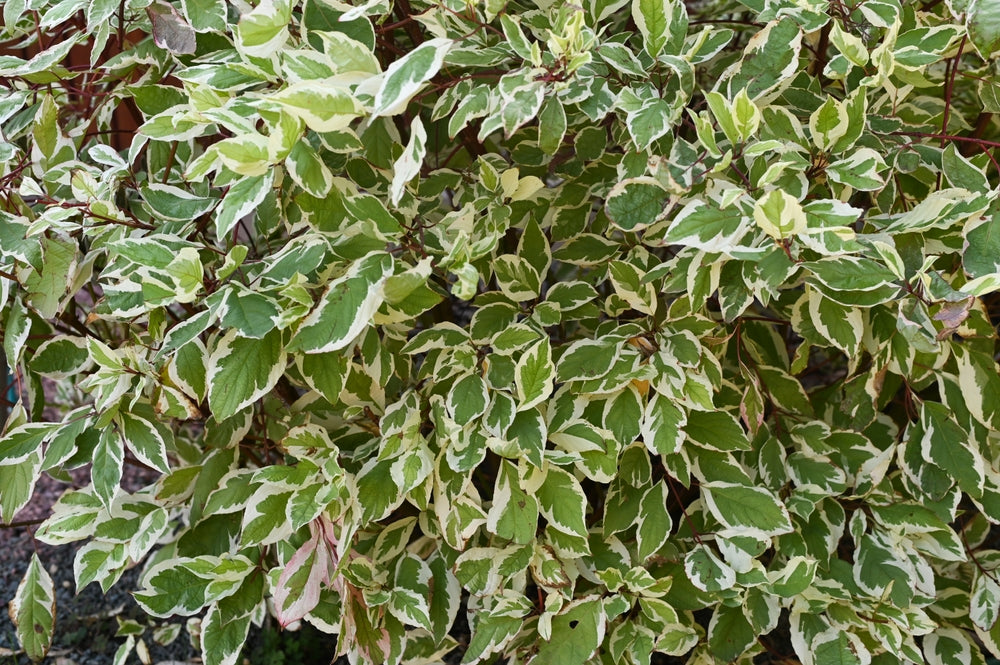
Cornus alba 'Sibirica' | Siberian Dogwood - Shrub - Height 90-100cm - 20lt
£72.00
Unit price perCornus alba 'Sibirica' | Siberian Dogwood - Shrub - Height 90-100cm - 20lt
£72.00
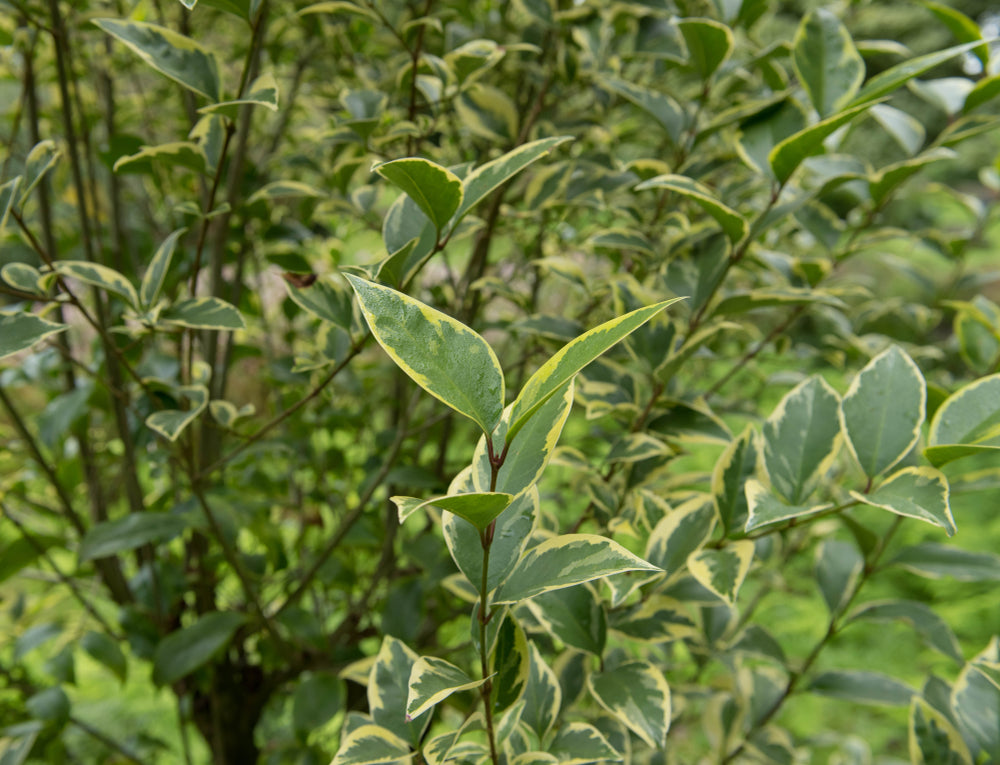
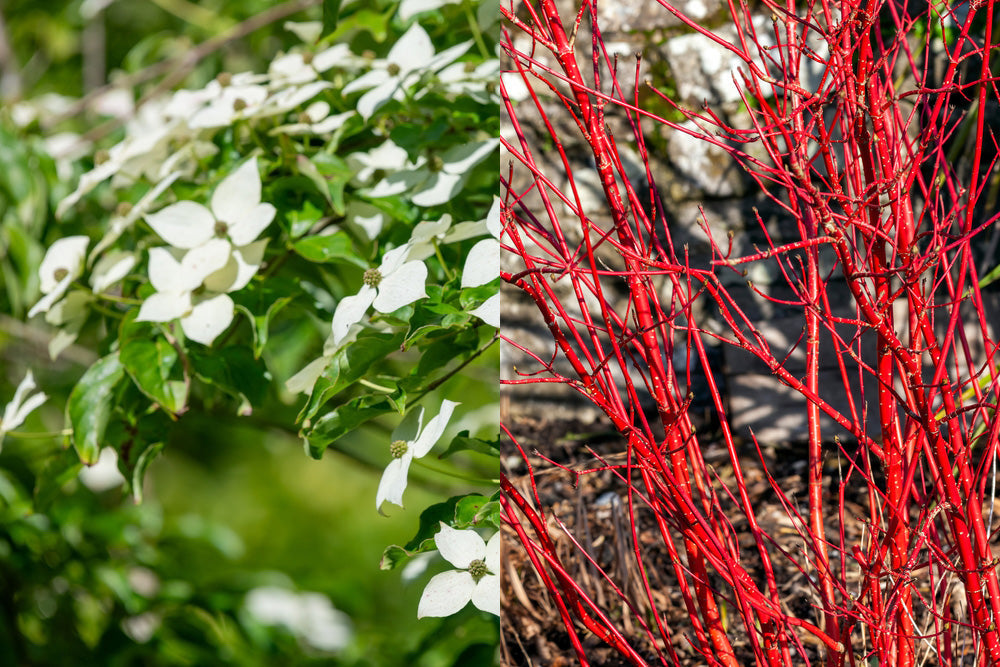
Unit price perCornus alba 'Sibirica' is a medium-sized, suckering, fast-growing, multi-stemmed, deciduous shrub famous for its red stems, especially spectacular in winter, when they turn bright coral red. It has ovate, greyish-green leaves with white margins and small, creamy white flowers that bloom in spring and summer and are followed by bluish-white berries in autumn. Attractive to birds and butterflies.
Cornus alba 'Sibirica' thrives in fertile, medium moisture, well-drained soils, in full sun to partial shade. It can tolerate, wet, dry, and poor soils. Pruning is not required but it can stimulate the growth of new stems. Young stems have the best colour.
Cornus alba 'Sibirica' is most attractive during the winter when its fiery red stems bring colour to a winter garden and beautifully contrast the whiteness of the snow. It looks best when planted in groups or beside water. It is great for shrub borders, hedging and screens, or as an accent plant.
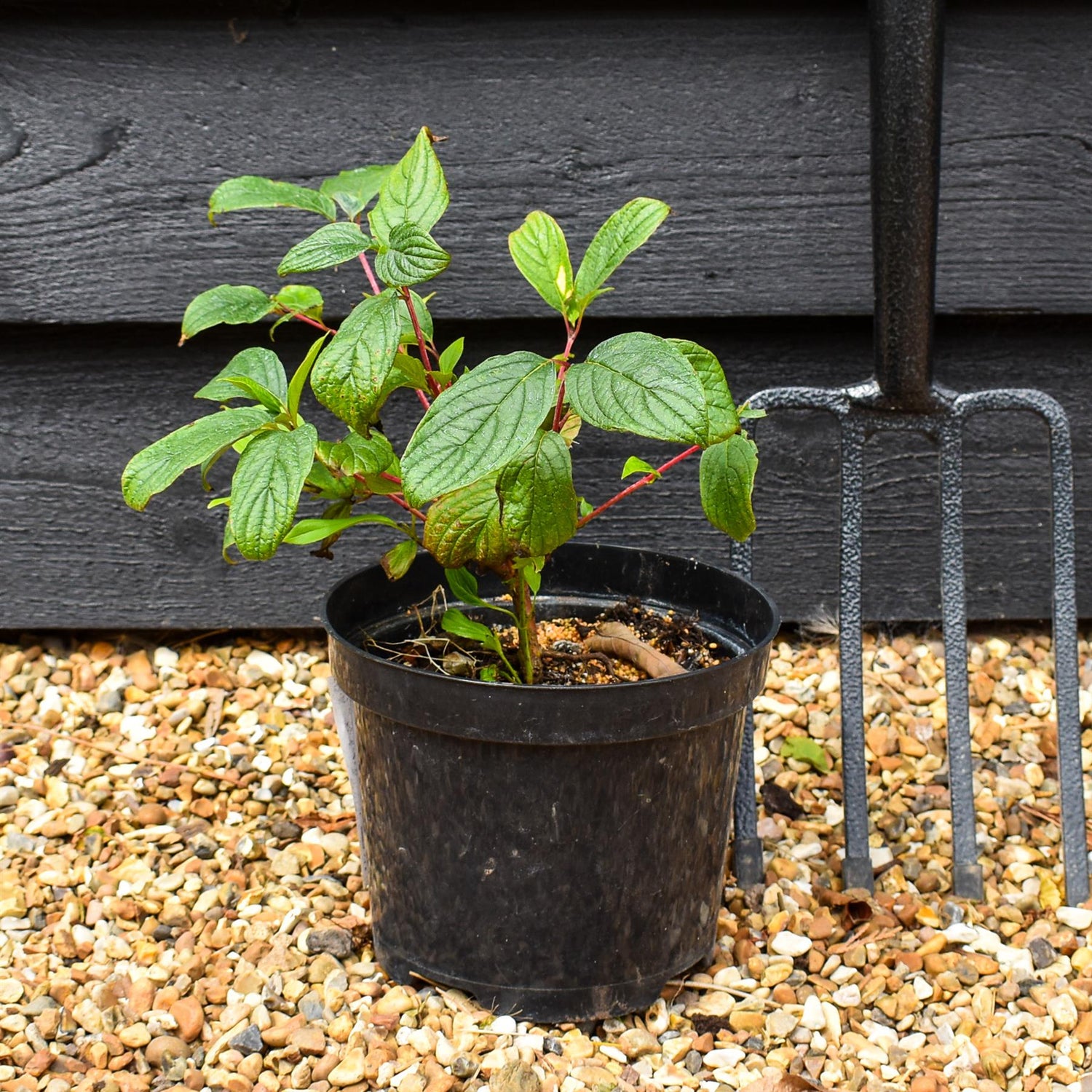


Cornus alba 'Sibirica' | Siberian Dogwood - 20-35CM - 3lt
£14.00
Unit price perCornus alba 'Sibirica' | Siberian Dogwood - 20-35CM - 3lt
£14.00
Unit price per


Alnus Incana - Grey Alder tree - Clear Stem - Standard - Girth 12-14cm - Height 450-480cm - 70lt
£390.00
Unit price perAlnus Incana - Grey Alder tree - Clear Stem - Standard - Girth 12-14cm - Height 450-480cm - 70lt
£390.00
Unit price perAlnus incana, commonly known as grey alder, is a deciduous tree belonging to the birch family, Betulaceae. Native to Europe, Asia, and North America, it is a resilient species often found in riparian zones, wetlands, and areas with moist soils. This medium-sized tree typically grows to heights of 15 to 25 metres, with a slender trunk and smooth, greyish-brown bark, which often develops fine fissures with age.
The leaves of Alnus incana are oval to elliptic in shape, measuring 5 to 10 centimetres in length. They are characterised by their serrated margins and a dark green upper surface, with a paler, slightly downy underside, giving them a distinct two-tone appearance. The leaves emerge in early spring and typically turn yellow before falling in autumn.
Grey alder is monoecious, meaning that both male and female reproductive structures are found on the same tree. The male catkins, which are long and pendulous, appear in early spring before the leaves, while the smaller, more upright female catkins develop into woody cones that persist on the tree through the winter. These cones release small winged seeds, which are dispersed by wind and water.
One of the notable features of Alnus incana is its ability to fix nitrogen through a symbiotic relationship with the bacterium *Frankia*. This allows it to thrive in nutrient-poor soils and contribute to soil fertility, making it a valuable species for land restoration and erosion control.
Grey alder is often planted in landscaping and reforestation projects, particularly in areas prone to flooding or soil degradation. Its rapid growth, hardiness, and ecological benefits make it an important species in maintaining the health of wetland ecosystems.