
-
Trees
Trees
 Fruit Trees
 Ornamental
 Screening
 Palms
By FeaturesBy Shape
Palms
By FeaturesBy Shape -
Shrubs
Shrubs
 Large shrubs
 Hedging
 Bamboo
 Climbers
 Flowering
 Grasses & Ferns
 Popular
-
Pines & Conifers
Pines & Conifers
 Pines
Pines
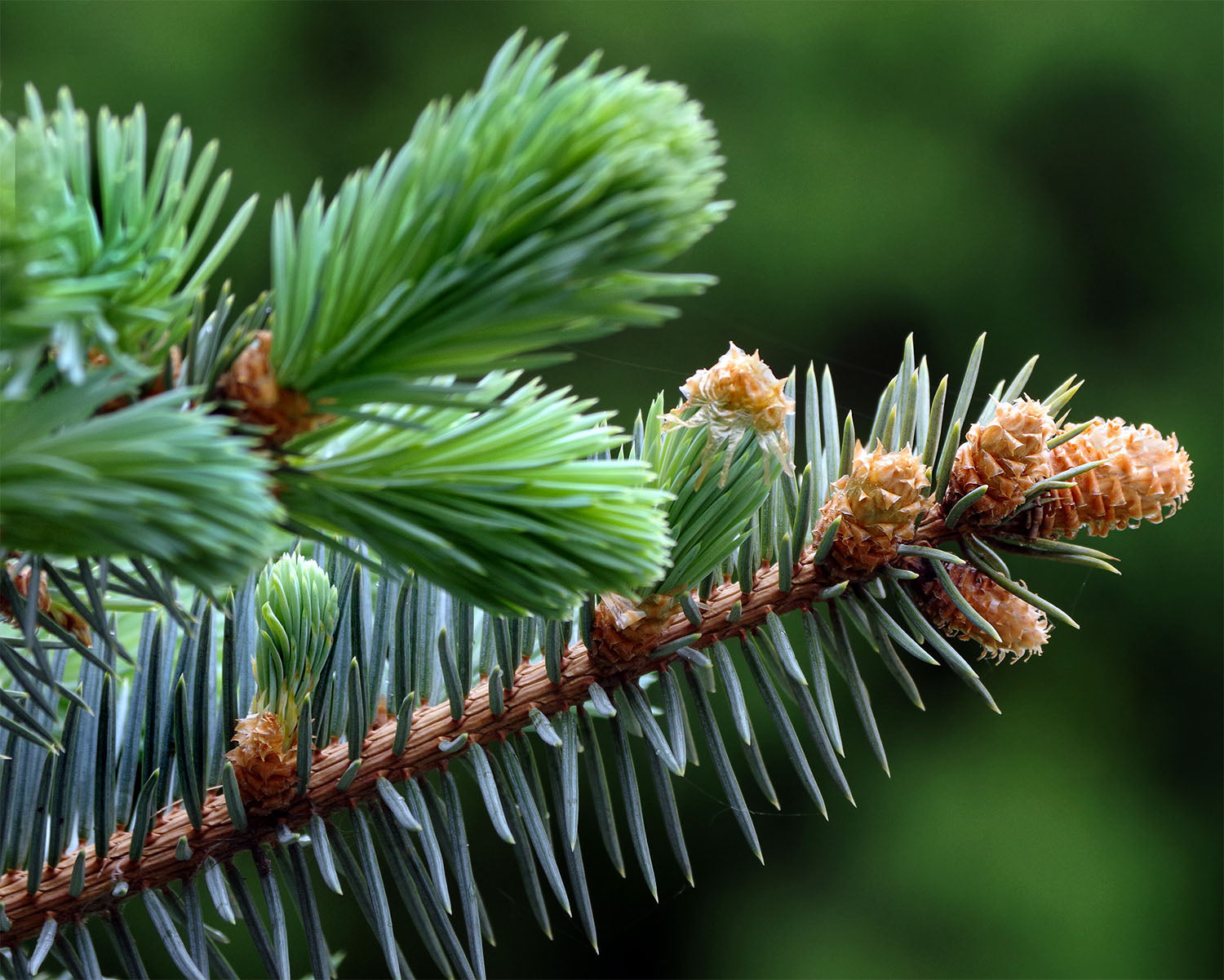 Spruce & Fir
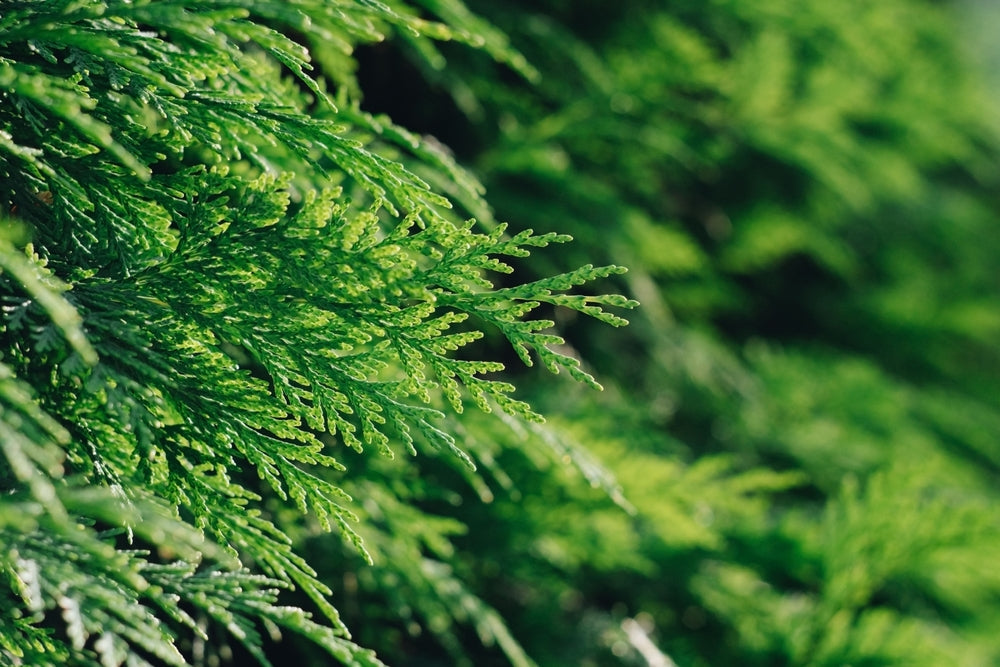
 Cypress
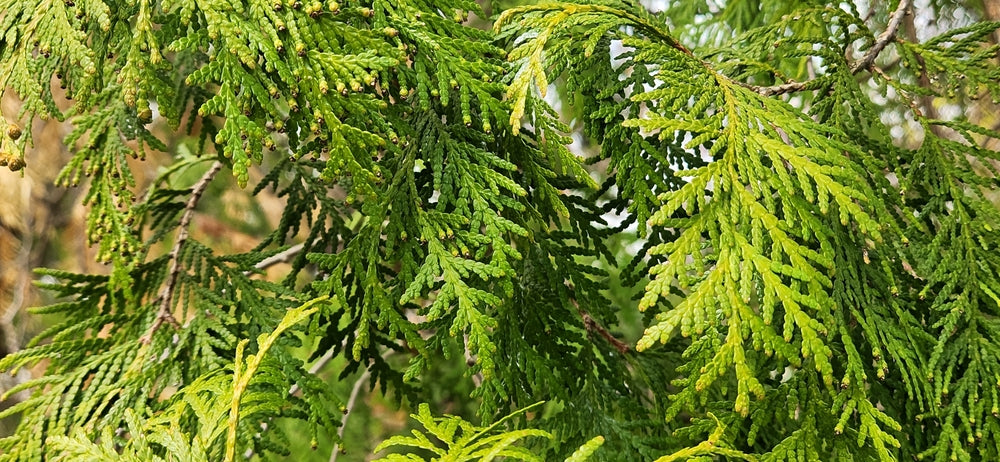
 Thuja
Thuja
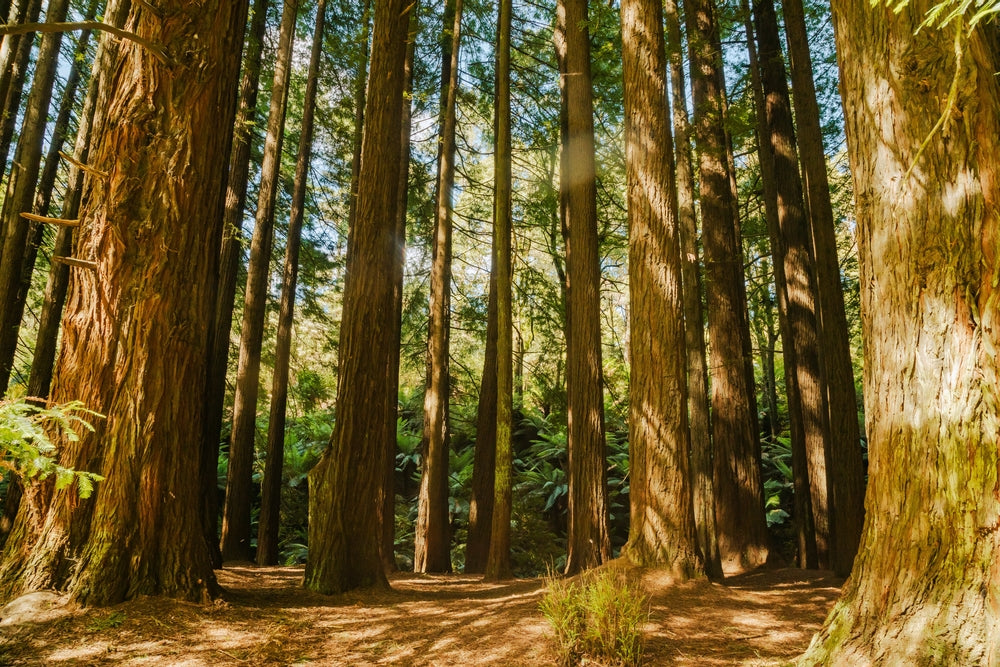 Redwood | Sequoia
-
Specimen
FREE DELIVERY OVER £350
Feathered trees
199 products
199 products
Sort by:
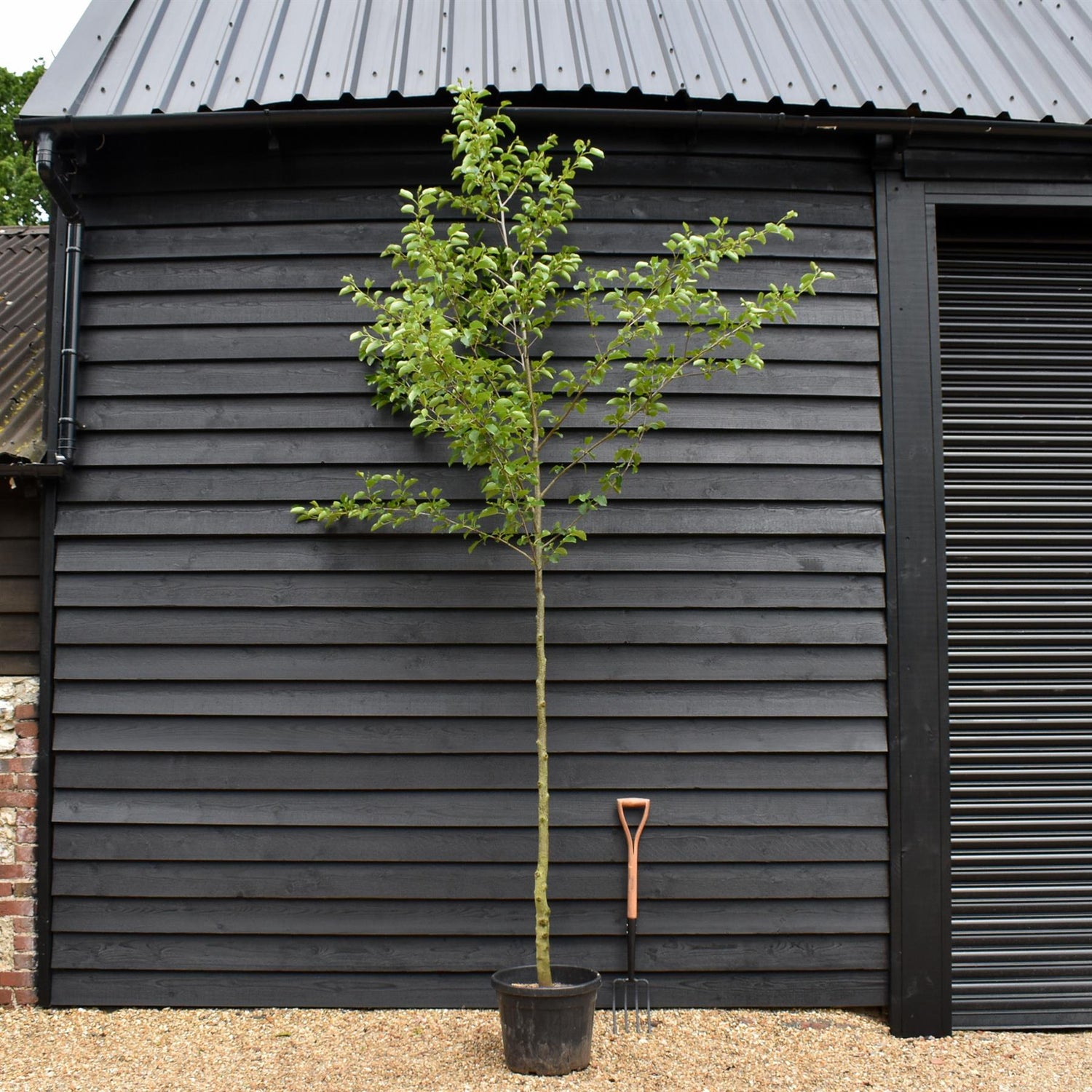


Alder tree | Alnus Cordata - Clear Stem - Height 300-350cm - Girth 8-10cm - 45lt
£255.00
Unit price perAlder tree | Alnus Cordata - Clear Stem - Height 300-350cm - Girth 8-10cm - 45lt
£255.00
Unit price perAlnus cordata, commonly known as the Italian alder, is a medium to large deciduous tree native to southern Italy and parts of Corsica. It belongs to the Betulaceae family and is highly valued for its ability to thrive in poor soils and challenging environmental conditions. This species is often planted for ornamental purposes, soil improvement, and as a windbreak due to its robust growth and adaptability.
The tree can reach heights of up to 25-30 metres (82-98 feet) with a trunk diameter of about 1 metre (3.3 feet). It has a relatively narrow, conical crown, which makes it an attractive choice for landscaping in urban and rural environments. The bark is smooth and greyish-brown when young, developing shallow fissures with age.
Alnus cordata is noted for its distinctive heart-shaped (cordate) leaves, which are bright green and glossy, measuring 7-12 cm in length. Unlike some other alders, the leaves of A. cordata remain on the tree until late autumn, giving it an extended season of greenery. In spring, it produces small, inconspicuous catkins, with male catkins being pendulous and yellowish, and female catkins more compact and upright. These develop into small, woody cones that persist on the tree through winter.
One of the key characteristics of Alnus cordata is its nitrogen-fixing ability. Like other alders, it forms a symbiotic relationship with the bacterium Frankia, which allows it to fix atmospheric nitrogen into the soil. This quality makes it an excellent species for improving soil fertility, particularly in degraded or nutrient-poor areas.
Overall, the Italian alder is a resilient and versatile tree, well-suited to a variety of landscapes, including wet or compacted soils, and is an important species for ecological restoration projects.
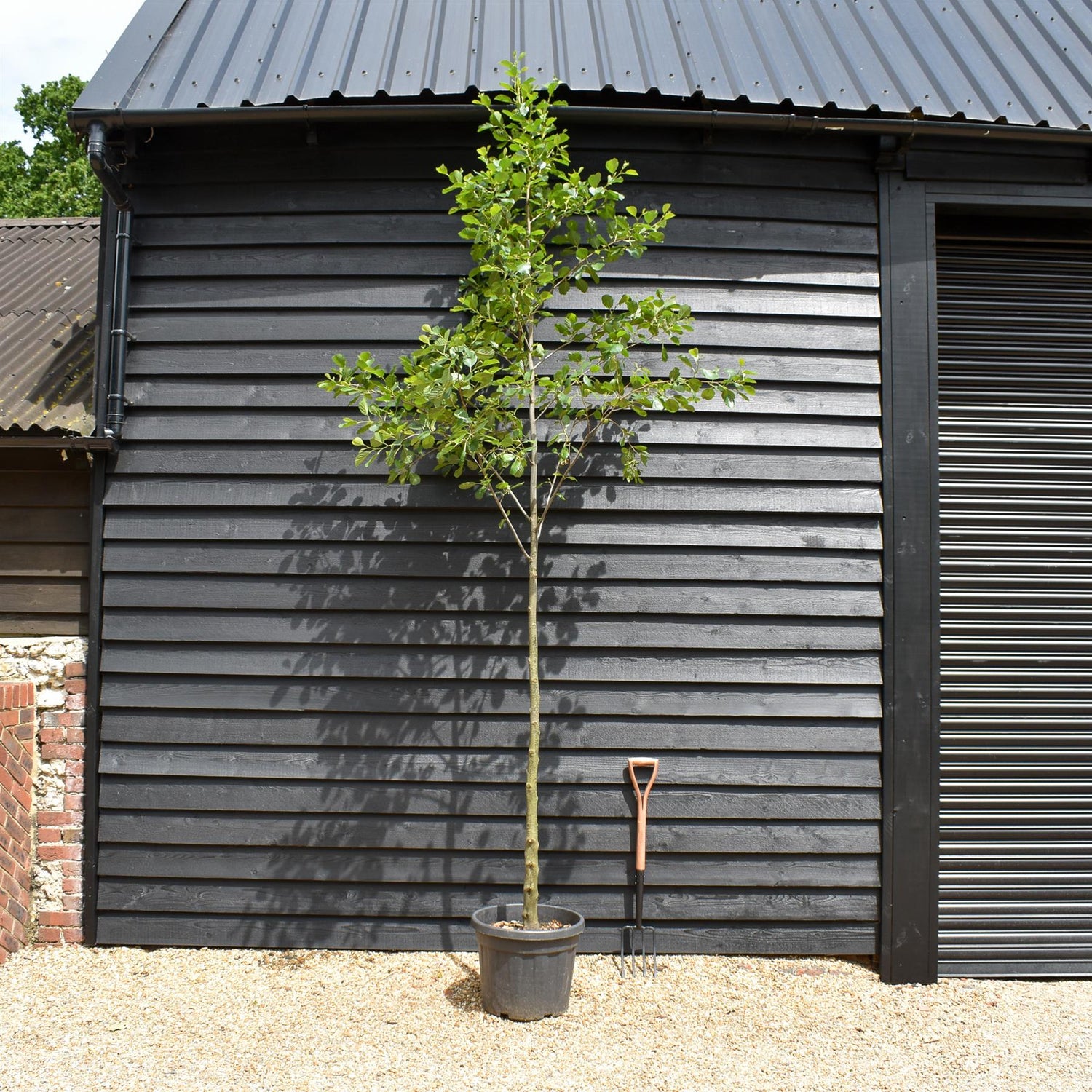


Alder tree | Alnus Glutinosa - Height 300-400cm - Girth 14-16 - 30-50lt
£365.00
Unit price perAlder tree | Alnus Glutinosa - Height 300-400cm - Girth 14-16 - 30-50lt
£365.00
Unit price perAlnus glutinosa, commonly known as the black alder, is a deciduous tree native to Europe, including the British Isles. It is a versatile and resilient species, often found thriving in wetland areas, riverbanks, and marshes, where its roots can help stabilise the soil and prevent erosion.
The black alder typically grows to a height of 20-30 metres, with a broad, conical crown that becomes more rounded with age. Its bark is dark brown and fissured, often developing a distinctive, almost black hue as the tree matures. One of its most notable features is its leaves, which are rounded with a slightly serrated edge and a glossy, dark green surface that turns yellow in the autumn.
In early spring, Alnus glutinosa produces catkins – the male catkins are long and yellowish, while the female ones are shorter and reddish. These mature into woody, cone-like fruits that persist on the tree throughout the winter, providing a valuable food source for wildlife. The black alder also forms symbiotic relationships with nitrogen-fixing bacteria in its root nodules, enriching the soil and benefiting neighbouring plants.
Due to its adaptability and ecological benefits, Alnus glutinosa is often used in reforestation and habitat restoration projects. It supports a wide range of wildlife, including insects, birds, and aquatic species, making it a vital component of the British natural landscape.


Alnus Cordata - Alder tree - Height 280-300cm - 30lt
£260.00
Unit price perAlnus Cordata - Alder tree - Height 280-300cm - 30lt
£260.00
Unit price perAlnus cordata, commonly known as the Italian alder, is a medium to large deciduous tree native to southern Italy and parts of Corsica. It belongs to the Betulaceae family and is highly valued for its ability to thrive in poor soils and challenging environmental conditions. This species is often planted for ornamental purposes, soil improvement, and as a windbreak due to its robust growth and adaptability.
The tree can reach heights of up to 25-30 metres (82-98 feet) with a trunk diameter of about 1 metre (3.3 feet). It has a relatively narrow, conical crown, which makes it an attractive choice for landscaping in urban and rural environments. The bark is smooth and greyish-brown when young, developing shallow fissures with age.
Alnus cordata is noted for its distinctive heart-shaped (cordate) leaves, which are bright green and glossy, measuring 7-12 cm in length. Unlike some other alders, the leaves of A. cordata remain on the tree until late autumn, giving it an extended season of greenery. In spring, it produces small, inconspicuous catkins, with male catkins being pendulous and yellowish, and female catkins more compact and upright. These develop into small, woody cones that persist on the tree through winter.
One of the key characteristics of Alnus cordata is its nitrogen-fixing ability. Like other alders, it forms a symbiotic relationship with the bacterium Frankia, which allows it to fix atmospheric nitrogen into the soil. This quality makes it an excellent species for improving soil fertility, particularly in degraded or nutrient-poor areas.
Overall, the Italian alder is a resilient and versatile tree, well-suited to a variety of landscapes, including wet or compacted soils, and is an important species for ecological restoration projects.


Alnus Glutinosa - Alder tree - Feathered - Height 280-300cm - Girth 6-8cm -30lt
£260.00
Unit price perAlnus Glutinosa - Alder tree - Feathered - Height 280-300cm - Girth 6-8cm -30lt
£260.00
Unit price perAlnus glutinosa, commonly known as the black alder, is a deciduous tree native to Europe, including the British Isles. It is a versatile and resilient species, often found thriving in wetland areas, riverbanks, and marshes, where its roots can help stabilise the soil and prevent erosion.
The black alder typically grows to a height of 20-30 metres, with a broad, conical crown that becomes more rounded with age. Its bark is dark brown and fissured, often developing a distinctive, almost black hue as the tree matures. One of its most notable features is its leaves, which are rounded with a slightly serrated edge and a glossy, dark green surface that turns yellow in the autumn.
In early spring, Alnus glutinosa produces catkins – the male catkins are long and yellowish, while the female ones are shorter and reddish. These mature into woody, cone-like fruits that persist on the tree throughout the winter, providing a valuable food source for wildlife. The black alder also forms symbiotic relationships with nitrogen-fixing bacteria in its root nodules, enriching the soil and benefiting neighbouring plants.
Due to its adaptability and ecological benefits, Alnus glutinosa is often used in reforestation and habitat restoration projects. It supports a wide range of wildlife, including insects, birds, and aquatic species, making it a vital component of the British natural landscape.


Alnus Glutinosa Imperialis - Alder Imperialis - Height 220-260cm - 12lt
£94.00
Unit price perAlnus Glutinosa Imperialis - Alder Imperialis - Height 220-260cm - 12lt
£94.00
Unit price perAlnus glutinosa 'Imperialis,' commonly known as the Imperial Alder, is a cultivar of the European alder (Alnus glutinosa) renowned for its striking ornamental qualities. This deciduous tree is a favoUrite among landscape enthusiasts and horticulturists for its impressive appearance and adaptability.
Imperial Alder typically reaches a height of 40 to 50 feet (12 to 15 meters) and forms a broadly pyramidal shape. Its dark green, glossy leaves are deeply cut and serrated, measuring about 4 to 6 inches (10 to 15 cm) in length. During the growing season, the foliage provides a lush and vibrant backdrop to garden landscapes.
One of the standout features of Alnus glutinosa 'Imperialis' is its stunning catkins. In late winter or early spring, long, pendulous catkins emerge, adding a unique and captivating element to the tree's appearance. These catkins sway gracefully in the wind, creating a charming visual effect. Additionally, this cultivar displays a lovely yellow fall coloUr, which adds to its overall aesthetic appeal.
Imperial Alder is highly adaptable to various soil types and moisture conditions, making it suitable for a wide range of environments. It thrives in full sun to partial shade, making it a versatile choice for gardens and parks. Its ability to tolerate wet soil and even occasional flooding makes it an excellent choice for riparian zones or areas prone to seasonal waterlogging.
Beyond its aesthetic value, Alnus glutinosa 'Imperialis' also contributes to the ecosystem by supporting various wildlife species. Its catkins provide a source of food for birds and insects, and its roots help stabilize soil along riverbanks and wetland areas.
In summary, Alnus glutinosa 'Imperialis' is a captivating cultivar of the European alder celebrated for its striking appearance, adaptability, and ecological contributions. Whether used as a focal point in a garden or to enhance riparian habitats, this tree adds a touch of elegance and functionality to its surroundings.


Alnus Glutinosa Laciniata - Cut Leaved Black Alder - 240-260cm - 30lt
£245.00
Unit price perAlnus Glutinosa Laciniata - Cut Leaved Black Alder - 240-260cm - 30lt
£245.00
Unit price perAlnus glutinosa Laciniata, commonly known as Cut-leaved Alder, is a deciduous tree and a distinct cultivar of the Black Alder. Native to Europe, this ornamental tree is valued for its unique and finely dissected foliage, giving it a delicate and graceful appearance. The deeply lobed, fern-like leaves are dark green, offering a lacy texture that sets it apart from the standard Alnus glutinosa, which typically has more rounded leaves.
Mature trees can reach a height of 12 to 20 metres, with a spread of about 6 to 10 metres, making it a medium-sized tree suitable for gardens, parks, and water-side plantings. The tree has a conical to rounded shape when fully grown, and its branches create an attractive structure, especially in winter when the leaves have fallen.
Like other alders, ‘Laciniata’ is well adapted to wet soils and thrives in damp, poorly drained areas. It is often found near rivers, streams, and wetlands. The tree is also tolerant of urban pollution and can withstand occasional waterlogging, making it a versatile choice for various landscapes.
In spring, ‘Laciniata’ produces small, inconspicuous catkins, which eventually develop into small, woody cones containing seeds. These cones add an extra ornamental feature to the tree, especially in the autumn and winter months.
Alnus glutinosa ‘Laciniata’ is also beneficial to the environment. As a member of the birch family, it has the ability to fix nitrogen in the soil, improving fertility and promoting biodiversity. This makes it an excellent choice for ecological restoration projects.
Overall, Alnus glutinosa ‘Laciniata’ is an elegant and functional tree that brings beauty, wildlife support, and environmental benefits to the landscapes where it is planted.


Alnus Incana Aurea - Grey Alder - Height 220-250cm - 30lt
£195.00
Unit price perAlnus Incana Aurea - Grey Alder - Height 220-250cm - 30lt
£195.00
Unit price perAlnus incana 'Aurea', known as the Golden Alder, is a deciduous tree prized for its striking yellow foliage and adaptability to various growing conditions. This cultivar is a variation of the grey alder (Alnus incana), native to Europe, North America, and parts of Asia, and is widely cultivated for its ornamental appeal.
Reaching a height of 6 to 10 metres, with a spread of 4 to 6 metres, Alnus incana 'Aurea' is medium-sized, making it suitable for smaller gardens as well as larger landscapes. It is noted for its smooth, greyish bark, which contrasts beautifully with its bright golden-yellow leaves that emerge in early spring. As the season progresses, the foliage turns a lime green, maintaining a light and airy appearance. The leaves are ovate, serrated, and slightly sticky to the touch when young.
In winter, this tree adds visual interest with its small, cone-like fruits and hanging catkins that persist on the branches. The catkins are yellow-brown and appear before the leaves in early spring, contributing to the tree’s year-round appeal.
Alnus incana 'Aurea' is an extremely hardy tree, thriving in a variety of soil types, including wet and poorly drained soils. It is often planted in areas prone to flooding or along riverbanks, as it is highly tolerant of waterlogged conditions. The tree also fixes nitrogen in the soil through symbiotic relationships with root nodules, which improves soil fertility.
Though low-maintenance, the Golden Alder benefits from occasional pruning to maintain its shape and encourage healthy growth. This fast-growing tree is a great choice for those looking to introduce colour and texture to their garden while supporting local wildlife, as it provides shelter and food for birds and insects.


Amelanchier can. October Flame Multistem - Height 150-170cm - 25lt
£430.00
Unit price perAmelanchier can. October Flame Multistem - Height 150-170cm - 25lt
£430.00
Unit price per


Amelanchier canadensis | Juneberry - Clear Stem - Height 220-250cm - Girth 6-8cm - 40lt
£295.00
Unit price perAmelanchier canadensis | Juneberry - Clear Stem - Height 220-250cm - Girth 6-8cm - 40lt
£295.00
Unit price per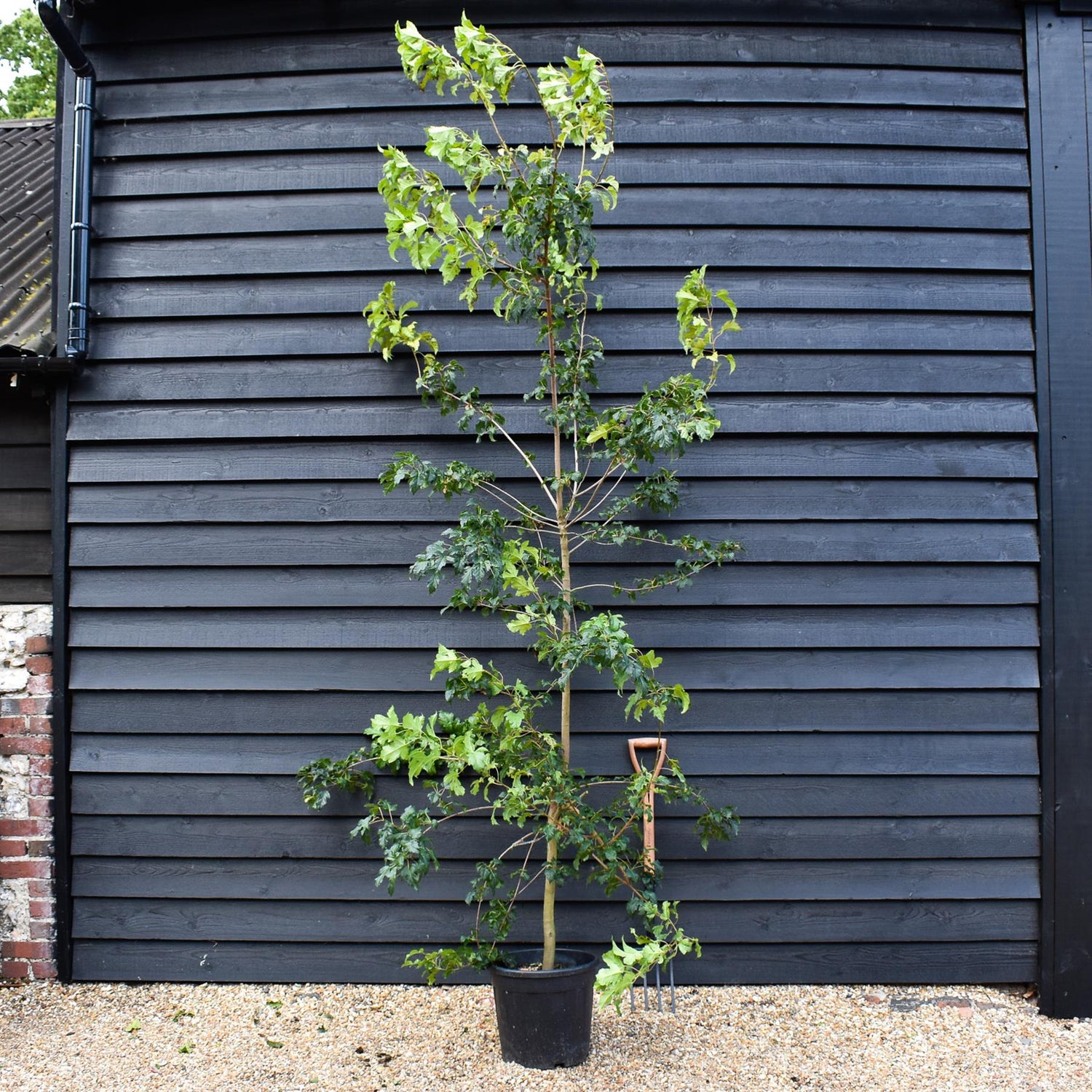


Amur maple | Acer tataricum ginnala - Height 220-280cm - Girth 6-8cm - 30lt
£170.00
Unit price perAmur maple | Acer tataricum ginnala - Height 220-280cm - Girth 6-8cm - 30lt
£170.00
Unit price perAcer tataricum subsp. ginnala, commonly known as the Amur maple, is a small, ornamental tree or large shrub admired for its hardiness, compact size, and brilliant seasonal color. Typically growing 4 to 6 meters in height and spread, it features glossy, lobed green leaves that turn spectacular shades of red, orange, and yellow in autumn. In spring, clusters of small, fragrant white flowers appear, followed by distinctive paired winged seeds. Adaptable and resilient, the Amur maple thrives in a range of soils and conditions, including urban environments. Its manageable size and vibrant display make it perfect for gardens, parks, and streetscapes. It can also be grown as a multi-stemmed specimen, offering year-round interest and supporting local wildlife.


Arbutus Rubra | Pink Strawberry Tree - Height 60-80cm - 10lt
£105.00
Unit price perArbutus Rubra | Pink Strawberry Tree - Height 60-80cm - 10lt
£105.00
Unit price perArbutus rubra is an evergreen tree of notable ornamental value, admired for its rich colouring, distinctive bark, and year-round interest. Typically medium-sized, it develops a rounded to spreading crown and a strong architectural presence, making it well suited to gardens, parks, and mild coastal landscapes.
The foliage of Arbutus rubra is one of its most striking features. The leaves are leathery, glossy, and deep green, often flushed with reddish tones when young. Elliptical in shape with finely serrated margins, they are held densely along the branches, contributing to the tree’s lush and robust appearance throughout the year. As an evergreen, it provides consistent structure even in winter months.
Its bark is particularly decorative. Smooth and richly coloured, it peels naturally in thin flakes, revealing layers of warm red, cinnamon, and copper beneath. This exfoliating habit gives the trunk and larger branches a textured, sculptural quality that becomes increasingly attractive with age.
Flowering typically occurs in autumn or early winter. Small, urn-shaped flowers appear in hanging clusters and are usually creamy white to pale pink. These blooms are attractive to pollinating insects and add subtle charm at a time when many plants are dormant. The flowers are followed by rounded fruits that gradually ripen to shades of red, enhancing the tree’s seasonal appeal and providing food for birds.
Arbutus rubra prefers well-drained soil and thrives in sheltered positions with full sun or light shade. Once established, it shows good tolerance to drought and coastal conditions. Its combination of colourful bark, evergreen foliage, delicate flowers, and ornamental fruit makes it a refined and enduring choice in temperate gardens.
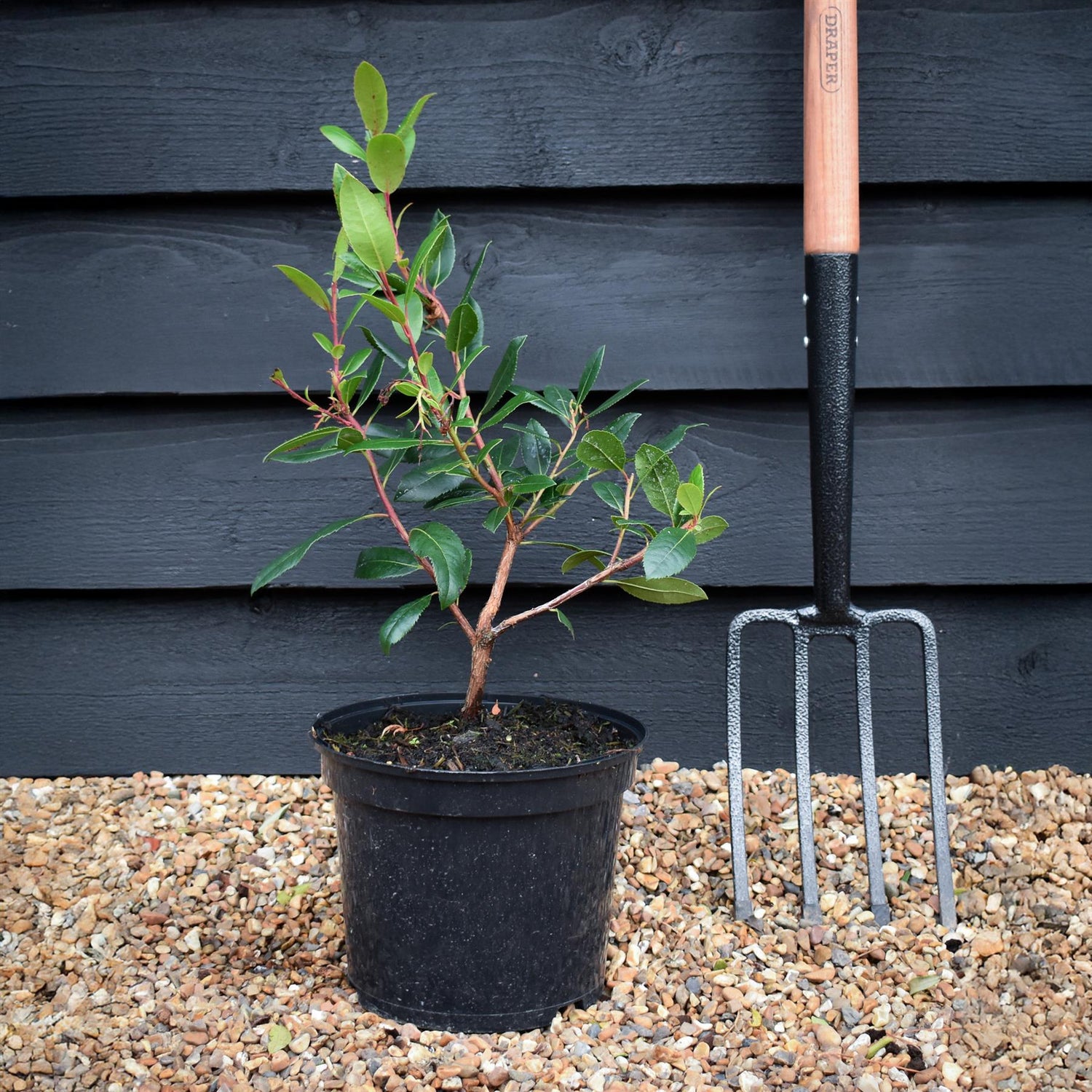


Arbutus unedo | Strawberry Tree - 40-70cm, 5lt
£29.00
Unit price perArbutus unedo | Strawberry Tree - 40-70cm, 5lt
£29.00
Unit price per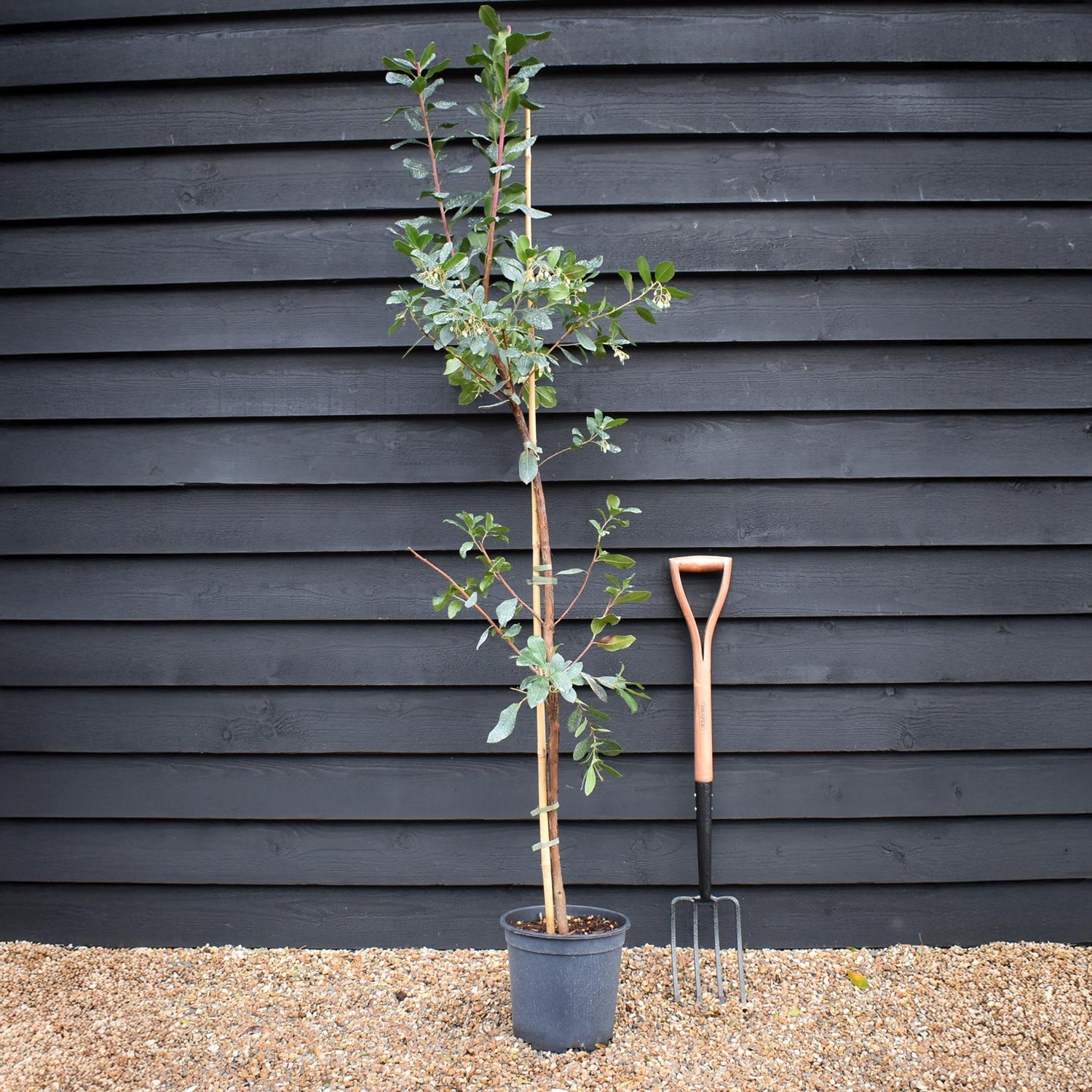


Arbutus unedo | Strawberry Tree - Height 150-200cm - 10lt
£95.00
Unit price perArbutus unedo | Strawberry Tree - Height 150-200cm - 10lt
£95.00
Unit price per


Aspen | Populus tremula - Height 130-160cm - 2-3 years old - Pot Grown - 10lt
£48.00
Unit price perAspen | Populus tremula - Height 130-160cm - 2-3 years old - Pot Grown - 10lt
£48.00
Unit price perPopulus tremula, commonly known as the trembling aspen or quaking aspen, is a deciduous tree native to various regions across the Northern Hemisphere, including the United Kingdom. It belongs to the genus Populus and is renowned for its distinctive quivering leaves, which flutter in even the slightest breeze, giving rise to its evocative common names.
The trembling aspen typically reaches heights of 20 to 25 meters, although some specimens can grow taller under optimal conditions. Its slender trunk is often pale grey or white with black knots, and it tends to have a narrow crown with branches that ascend in a graceful, upward fashion.
One of the most striking features of the trembling aspen is its leaves. They are roughly triangular in shape with finely serrated edges, and they have a flat petiole that causes them to flutter and tremble in the wind. This unique characteristic helps to distinguish the tree from other species in its range.
In the spring, the trembling aspen produces catkins, which are long, drooping clusters of small flowers. These flowers are an important source of pollen for bees and other pollinators. Later in the season, the tree develops small, round fruits containing tiny seeds surrounded by cottony fluff, aiding in wind dispersal.
Trembling aspens typically thrive in moist, well-drained soils in locations such as riverbanks, wetlands, and mixed woodlands. They are relatively fast-growing and can colonize disturbed areas quickly, making them an important pioneer species in forest ecosystems.
In addition to their ecological significance, trembling aspens also hold cultural and historical importance. They feature prominently in folklore and mythology in various cultures, often symbolizing resilience, regeneration, and transformation.


Aspen | Populus tremula - Height 200-220cm - 4-5 years old - Feathered - Very well rooted -Pot Grown - 12lt
£72.00
Unit price perAspen | Populus tremula - Height 200-220cm - 4-5 years old - Feathered - Very well rooted -Pot Grown - 12lt
£72.00
Unit price perPot grown from seed here at the Arundel Arboretum, very well rooted and hardened.
Populus tremula, commonly known as the trembling aspen or quaking aspen, is a deciduous tree native to various regions across the Northern Hemisphere, including the United Kingdom. It belongs to the genus Populus and is renowned for its distinctive quivering leaves, which flutter in even the slightest breeze, giving rise to its evocative common names.
The trembling aspen typically reaches heights of 20 to 25 meters, although some specimens can grow taller under optimal conditions. Its slender trunk is often pale grey or white with black knots, and it tends to have a narrow crown with branches that ascend in a graceful, upward fashion.
One of the most striking features of the trembling aspen is its leaves. They are roughly triangular in shape with finely serrated edges, and they have a flat petiole that causes them to flutter and tremble in the wind. This unique characteristic helps to distinguish the tree from other species in its range.
In the spring, the trembling aspen produces catkins, which are long, drooping clusters of small flowers. These flowers are an important source of pollen for bees and other pollinators. Later in the season, the tree develops small, round fruits containing tiny seeds surrounded by cottony fluff, aiding in wind dispersal.
Trembling aspens typically thrive in moist, well-drained soils in locations such as riverbanks, wetlands, and mixed woodlands. They are relatively fast-growing and can colonize disturbed areas quickly, making them an important pioneer species in forest ecosystems.
In addition to their ecological significance, trembling aspens also hold cultural and historical importance. They feature prominently in folklore and mythology in various cultures, often symbolizing resilience, regeneration, and transformation.


Betula jacquemontii - Standard - Clear Stem 145cm - Girth 10-12cm - Height 420-450cm - 45lt
£490.00
Unit price perBetula jacquemontii - Standard - Clear Stem 145cm - Girth 10-12cm - Height 420-450cm - 45lt
£490.00
Unit price per

Betula jacquemontii | Himalayan Birch - 280-300cm, 20lt
£96.00
Unit price perBetula jacquemontii | Himalayan Birch - 280-300cm, 20lt
£96.00
Unit price per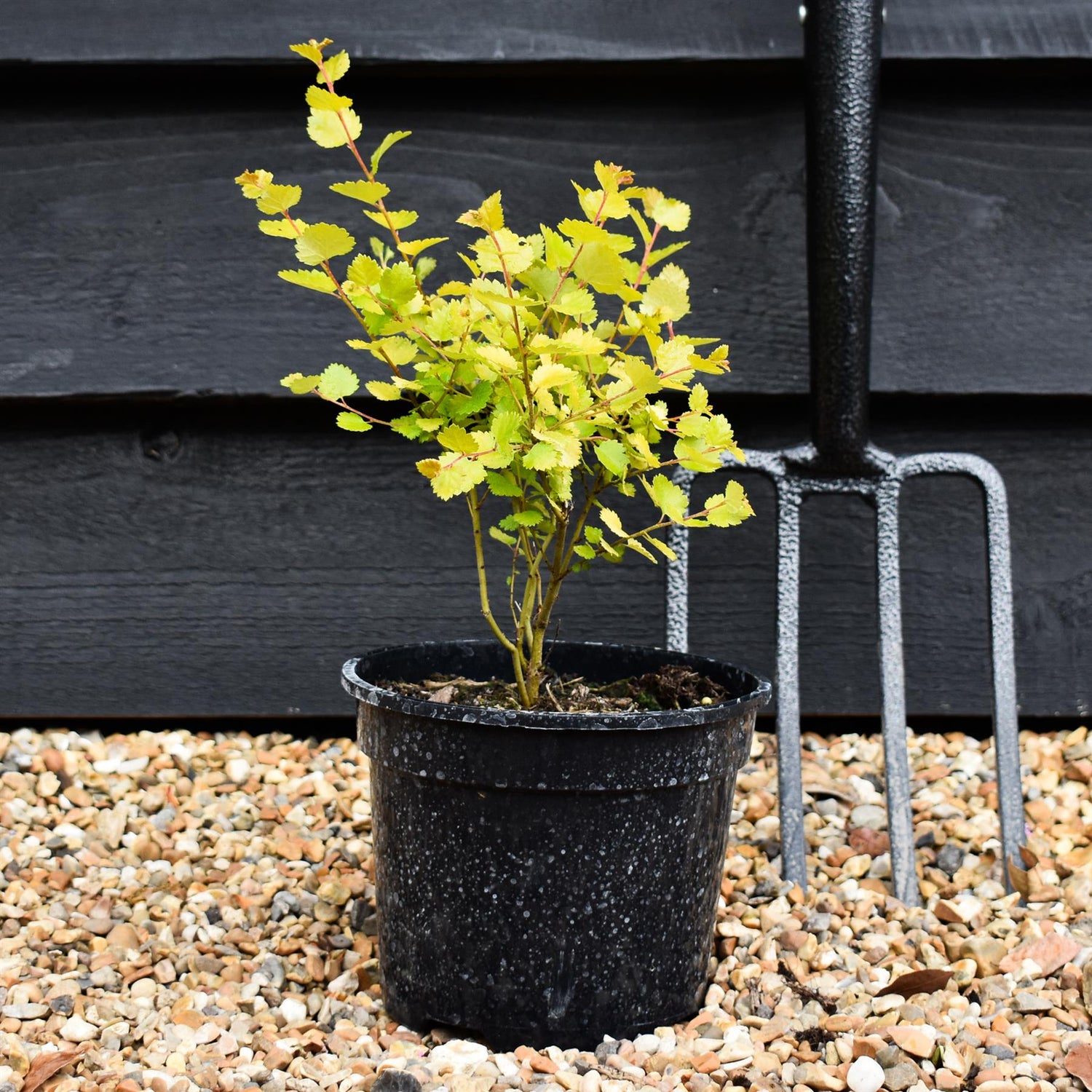


Betula nana 'Golden Treasure' - Height 20-30cm - Dwarf - 3lt
£22.00
Unit price perBetula nana 'Golden Treasure' - Height 20-30cm - Dwarf - 3lt
£22.00
Unit price perBetula nana 'Golden Treasure' is a compact, slow-growing deciduous shrub, ideal for small gardens, rockeries, and borders. Its naturally dwarf habit, typically reaching around 60–80 cm in height, makes it perfect for limited spaces or as part of a mixed planting scheme.
Golden Treasure thrives in full sun to partial shade and prefers moist, well-drained, acidic to neutral soils. This variety is particularly valued for its vibrant golden-yellow foliage in spring and summer, turning warm orange hues in autumn, adding long-lasting seasonal interest.
Hardy and low-maintenance, 'Golden Treasure' is well-suited to cooler climates and exposed locations, making it a great choice for northern or upland gardens. It also tolerates poor soils and is suitable for wildlife-friendly gardens, attracting insects and providing ground cover. For best results, plant it in an open, sunny spot where its colorful foliage can shine, and avoid overly dry or chalky soil conditions. Minimal pruning is required.
Showing 36/199
Related blog posts