
-
Trees
Trees
 Fruit Trees
 Ornamental
 Screening
 Palms
By FeaturesBy Shape
Palms
By FeaturesBy Shape -
Shrubs
Shrubs
 Large shrubs
 Hedging
 Bamboo
 Climbers
 Flowering
 Grasses & Ferns
 Popular
-
Pines & Conifers
Pines & Conifers
 Pines
Pines
 Spruce & Fir
 Cypress
 Thuja
Thuja
 Redwood | Sequoia
-
Specimen
FREE DELIVERY OVER £350
Fruit Trees
95 products
95 products
Sort by:


Apple tree 'Sunset' | Malus domestica - MM106 - Semi Dwarfing - Height 150-160cm - 20lt
£94.00
Unit price perApple tree 'Sunset' | Malus domestica - MM106 - Semi Dwarfing - Height 150-160cm - 20lt
£94.00
Unit price per


Apple tree 'Red Devil' | Malus domestica - MM106 - Semi-Dwarfing - 150-160cm - 20lt
£94.00
Unit price perApple tree 'Red Devil' | Malus domestica - MM106 - Semi-Dwarfing - 150-160cm - 20lt
£94.00
Unit price perRed Devil Apple plant is a deciduous, hardy, vigorous tree with a bushy, upright habit, attractive pink-white flowers, and stunning, deep red fruit. Its creamy flesh is white, but stained with red and produces beautiful pink juice. Red Devil apples ripen in mid-September and are harvested till mid-October. The fruit has juicy and moderately sweet and sharp taste with a hint of strawberry flavour. They store well and can be kept till January.
Red Devil Apple was bred by Hugh Ermen, in Faversham, Kent in 1975, and introduced in 1990 as an excellent, modern dessert apple. It is very resilient, generally disease-free, and adaptable to most weather conditions. It grows in almost any type of soil as long as it is moist and well-drained. It prefers full sun, but can tolerate partial shade. It is self-fertile and doesn’t need a pollination partner.
Root stock MM106 is a semi-dwarfing rootstock commonly used for apple trees. It offers a moderate growth rate, producing trees 10-15 feet tall when mature. Suitable for medium-sized gardens, MM106 ensures good fruit yield and adaptability to various soils. It's resistant to woolly apple aphid and moderately resistant to crown rot. Ideal for bush, cordons, and espalier forms. Ensure proper staking in early years.
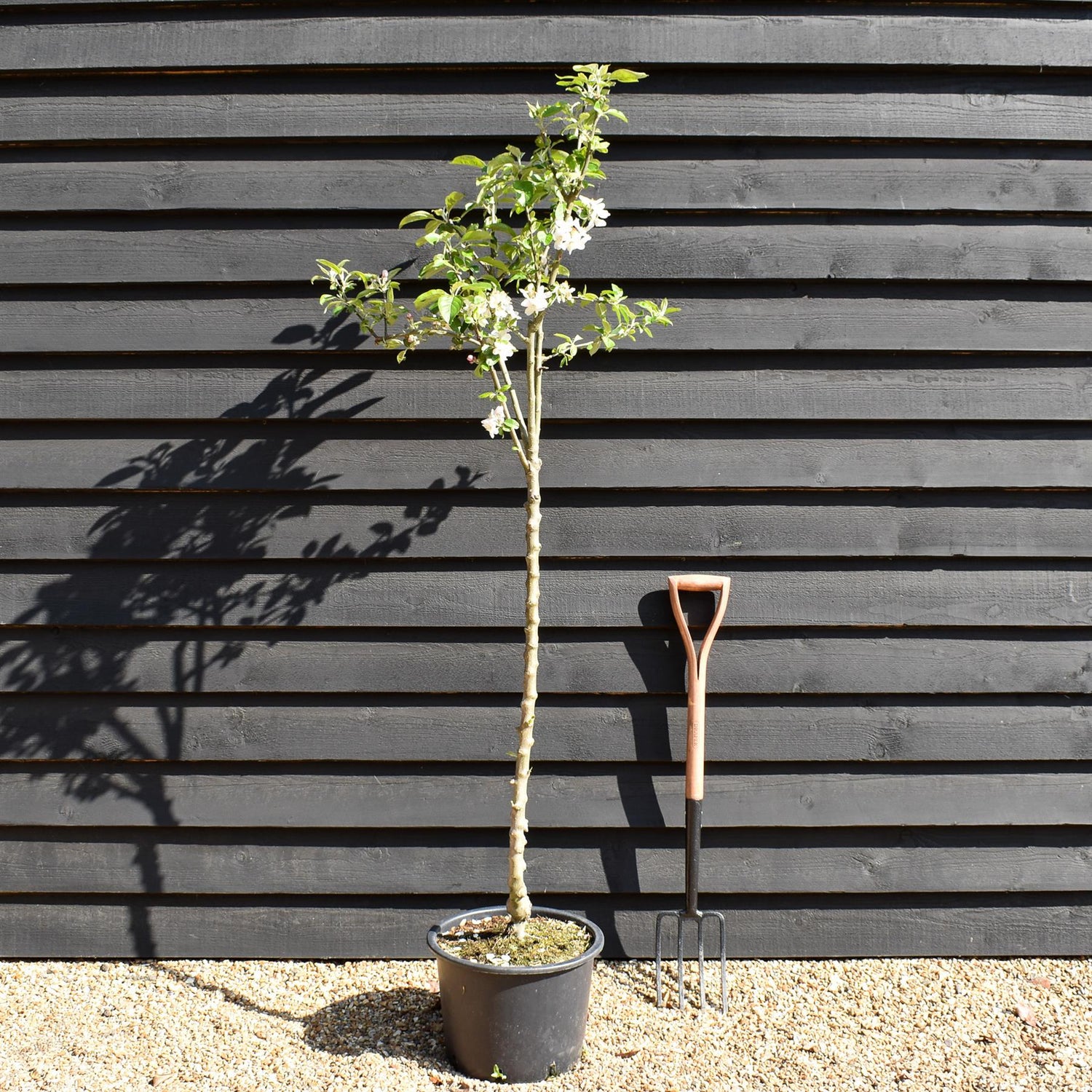


Apple tree 'King of the Pippins' | Malus Domestica - Semi Dwarfing - Height 150-180cm, 20lt
£94.00
Unit price perApple tree 'King of the Pippins' | Malus Domestica - Semi Dwarfing - Height 150-180cm, 20lt
£94.00
Unit price perMalus Domestica 'King of the Pippins' is a type of apple that is known for its distinct taste and appearance. This heirloom variety has been grown for over 300 years and remains popular today due to its exceptional flavour and crisp texture.
The fruit has a round to oblong shape with a greenish-yellow skin that is often blushed with red. The skin is thin and tender, making it easy to bite into. The flesh is creamy white and has a firm texture with a sweet, juicy, and slightly tart taste.
'King of the Pippins' apples are typically harvested in mid to late September and can be stored for several weeks in a cool, dark place. They are versatile apples that can be used in a variety of ways, including eating raw, baking, cooking, and juicing.
This apple variety is also known for its disease-resistant qualities, making it a popular choice for home gardeners and commercial growers alike. Its hardiness and adaptability make it well-suited to a wide range of growing conditions.
Overall, Malus Domestica 'King of the Pippins' is a delicious and versatile apple that is a favourite among apple enthusiasts for its outstanding flavour, texture, and appearance.


Apple tree 'Discovery' | Malus domestica - MM106 - Semi-Dwarfing - Height 140-150cm - 20lt
£96.00
Unit price perApple tree 'Discovery' | Malus domestica - MM106 - Semi-Dwarfing - Height 140-150cm - 20lt
£96.00
Unit price perMalus domestica 'Discovery' is an excellent early-producing apple tree with an upright, compact growth habit. Attractive white flowers emerge in spring, and delicious bright red apples, with hints of green and yellow, are ready for harvesting in late August and September. The apples are hard and crisp, sweet and slightly acidic, with delicate light flavour that has a touch of strawberry. As every early-producing variety, it can be stored only for a short period of time. Discovery Apple tree is very easy to care for. It is resilient and undemanding. It prefers neutral, well-drained soil, and full sun in a sheltered position. It is generally disease-resistant and pest-resistant and tolerates frost very well. It is not self-pollinating. It needs to cross-pollinate with other apple trees. As a partial tip-barer, it can be grown in cordons and espaliers. Suitable for containers and large pots.
Root stock MM106 is a semi-dwarfing rootstock commonly used for apple trees. It offers a moderate growth rate, producing trees 10-15 feet tall when mature. Suitable for medium-sized gardens, MM106 ensures good fruit yield and adaptability to various soils. It's resistant to woolly apple aphid and moderately resistant to crown rot. Ideal for bush, cordons, and espalier forms. Ensure proper staking in early years.


Malus domestica 'Belle de Boskoop' is a cultivar of apple tree that is believed to have originated in the Netherlands in the late 19th century. It is also known as 'Beauty of Boskoop' or simply 'Boskoop'.
The fruit produced by this apple tree is large and somewhat flattened, with a green-yellow skin that is often russeted or brownish. The flesh is firm, juicy, and slightly tart, with a distinct aroma and flavor that is highly regarded by apple enthusiasts.
'Belle de Boskoop' is a late-ripening variety, typically harvested in October and November in the northern hemisphere. It is known for its excellent storage qualities and can be kept for several months in a cool, dry place.
This apple cultivar is considered to be a triploid, meaning it requires two other compatible apple trees for cross-pollination in order to produce fruit. It is a popular variety for commercial and home orchards alike, and is grown in many parts of the world, including Europe and North America.


Apple tree 'James Grieve' | Malus domestica - MM106 - Semi-Dwarfing - Height 150-160cm - 20lt
£94.00
Unit price perApple tree 'James Grieve' | Malus domestica - MM106 - Semi-Dwarfing - Height 150-160cm - 20lt
£94.00
Unit price perJames Grieve Apple is a hardy, deciduous tree suitable for cold climate zones. It is best grown in northerly areas with cold winters, moderate summer temperatures, and medium to high humidity. It’s an old apple variety, raised in 1893. in Edinburgh, Scotland, by James Grieve from pollination of Cox’s Orange Pippin and most likely Pott’s Seedling apple. Generally, a resilient plant, it needs some protection from harsh winds. It’s a good polliniser for other apples. It cannot be found in supermarkets because it is sensitive to pressure and easily bruised and cannot sustain supermarket handling.
James Grieve apples are medium to large, yellow-green, speckled and striped orange-red, with creamy, refreshing and very juicy flesh. At the beginning of season, it is sharp and perfect for cooking, retaining its shape when cooked. After a few weeks, it becomes milder and sweeter, like a firm pear in texture.
Root stock MM106 is a semi-dwarfing rootstock commonly used for apple trees. It offers a moderate growth rate, producing trees 10-15 feet tall when mature. Suitable for medium-sized gardens, MM106 ensures good fruit yield and adaptability to various soils. It's resistant to woolly apple aphid and moderately resistant to crown rot. Ideal for bush, cordons, and espalier forms. Ensure proper staking in early years.


Apple tree 'Granny Smith' | Malus domestica - Semi Dwarfing - Height 150-160cm - 20lt
£96.00
Unit price perApple tree 'Granny Smith' | Malus domestica - Semi Dwarfing - Height 150-160cm - 20lt
£96.00
Unit price per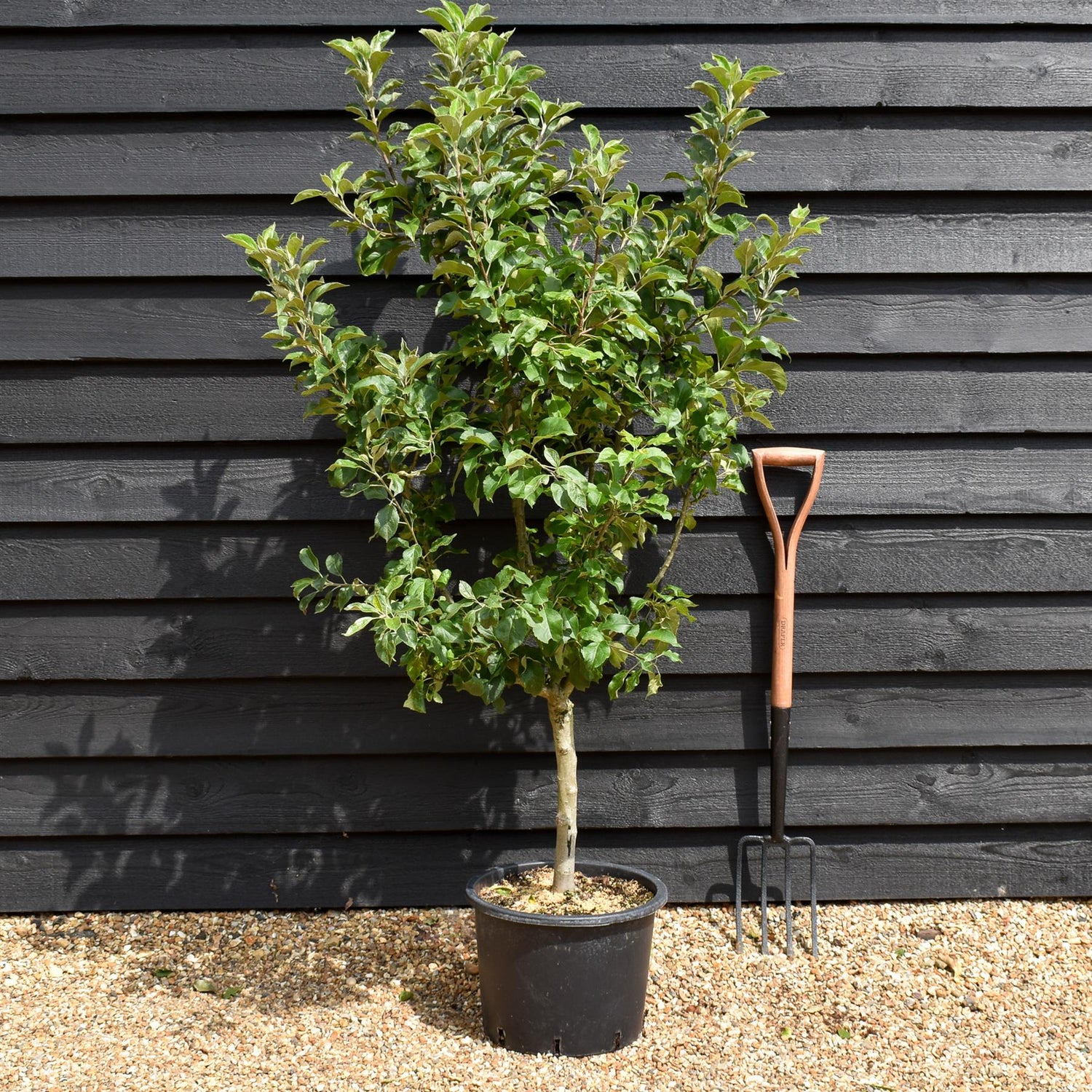


Apple tree 'Garden Sun Red' Nano | Semi Dwarfing - Height 100-11cm - 20lt
£94.00
Unit price perApple tree 'Garden Sun Red' Nano | Semi Dwarfing - Height 100-11cm - 20lt
£94.00
Unit price per


Chinese Date | Ziziphus Jujuba - Specimen/Mature tree - Height - 300-350cm - 150lt
£980.00
Unit price perChinese Date | Ziziphus Jujuba - Specimen/Mature tree - Height - 300-350cm - 150lt
£980.00
Unit price perThis is unique, gnarly, mature specimen tree. Very rare and uncommon.
Ziziphus Jujuba, commonly known as jujube or Chinese date, is a species of small deciduous tree native to China, where it has been cultivated for thousands of years for its fruit and various medicinal properties. Belonging to the buckthorn family (Rhamnaceae), this tree is revered not only for its delicious and nutritious fruit but also for its adaptability to diverse climates and soils.
The jujube tree typically grows up to 5 to 12 meters in height, with shiny green leaves and small, fragrant, yellow flowers that bloom in late spring. The fruit, resembling a small date, ripens in late summer to early autumn, transitioning from green to reddish-brown or mahogany when fully matured. Jujubes are sweet and tangy in taste, with a chewy texture similar to that of dates.
Throughout history, jujubes have held cultural significance in various regions. In traditional Chinese medicine, the fruit and other parts of the tree are believed to possess medicinal properties, including anti-inflammatory, sedative, and immune-boosting effects. Jujubes are often used to alleviate stress, improve digestion, and promote overall well-being.
Jujubes are a popular ingredient in culinary dishes and beverages. They can be eaten fresh, dried, candied, or cooked into jams, syrups, and desserts.
Moreover, the jujube tree plays a role in agroforestry systems, as it is drought-tolerant and can thrive in poor soil conditions. Its deep roots help prevent soil erosion.


Pyrus calleryana 'Chanticleer' - Clear Stem - Standard - Height 290-310cm - 70lt
£350.00
Unit price perPyrus calleryana 'Chanticleer' - Clear Stem - Standard - Height 290-310cm - 70lt
£350.00
Unit price per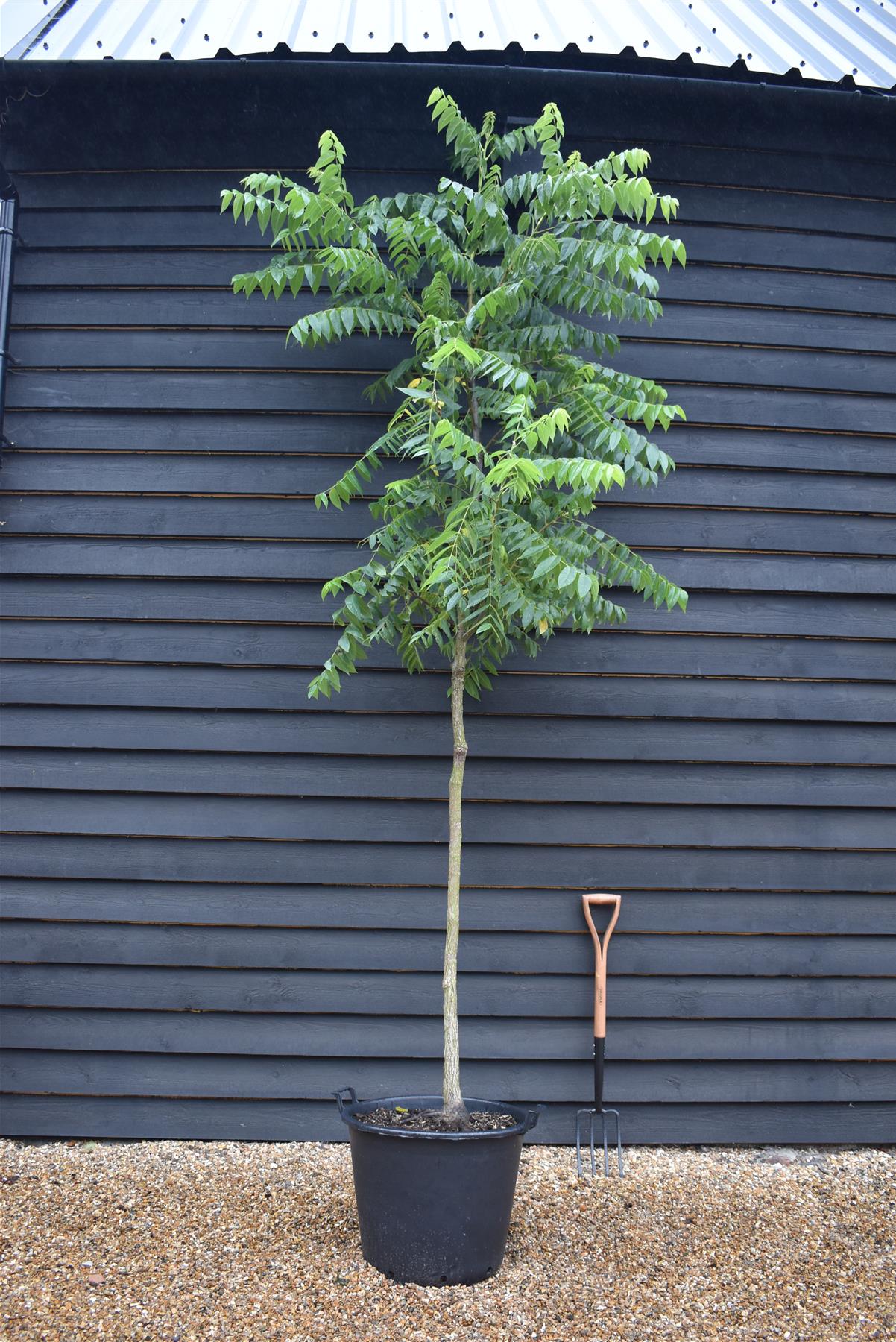


Juglans Nigra - Black Walnut Tree - Clear Stem - Standard - Girth 10-12cm - 300-320cm - 70lt
£420.00
Unit price perJuglans Nigra - Black Walnut Tree - Clear Stem - Standard - Girth 10-12cm - 300-320cm - 70lt
£420.00
Unit price perJuglans nigra, commonly known as the black walnut, is a large deciduous tree native to North America, particularly found in the eastern and central United States. It belongs to the Juglandaceae family, which also includes other walnut and hickory species. The tree is well known for its rich, dark brown to black heartwood, prized for its beauty, durability, and workability in furniture making and cabinetry.
The black walnut tree can grow to impressive heights, often reaching 30 to 40 metres tall, with a trunk diameter of up to 1.5 metres. The bark is deeply furrowed, dark grey to almost black, and has a rugged texture. Its compound leaves are pinnate, usually comprising 15 to 23 leaflets that are finely toothed and emit a distinctive aromatic scent when crushed. These leaves turn a golden yellow in the autumn.
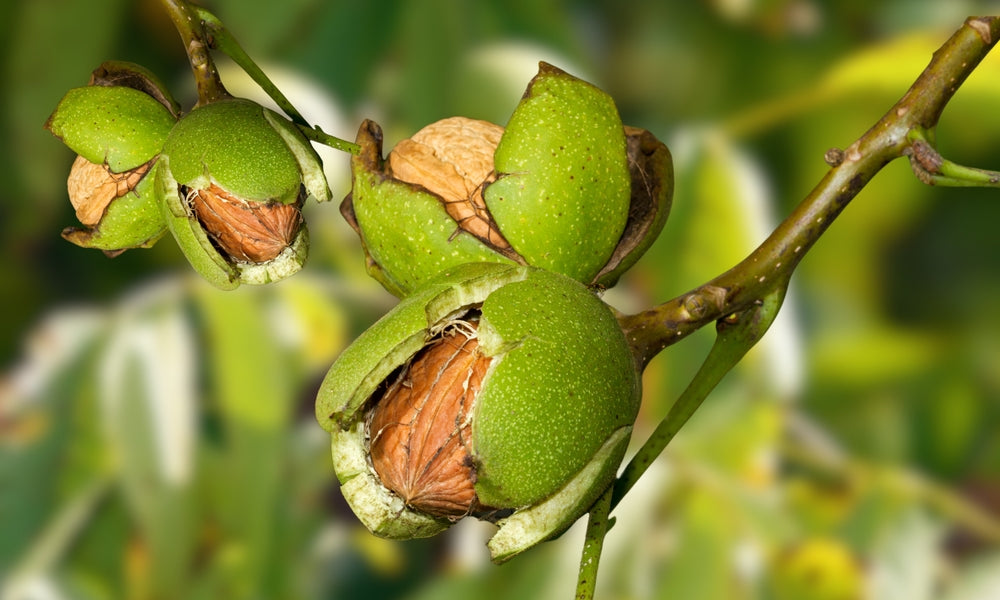
One of the most notable features of Juglans nigra is its edible nut, enclosed in a thick, greenish-brown husk that eventually turns black as it matures. The nuts are difficult to crack but are highly valued for their rich flavour, commonly used in baking and cooking. Wildlife, including squirrels and birds, also consume the nuts, making the tree an important source of food in its ecosystem.
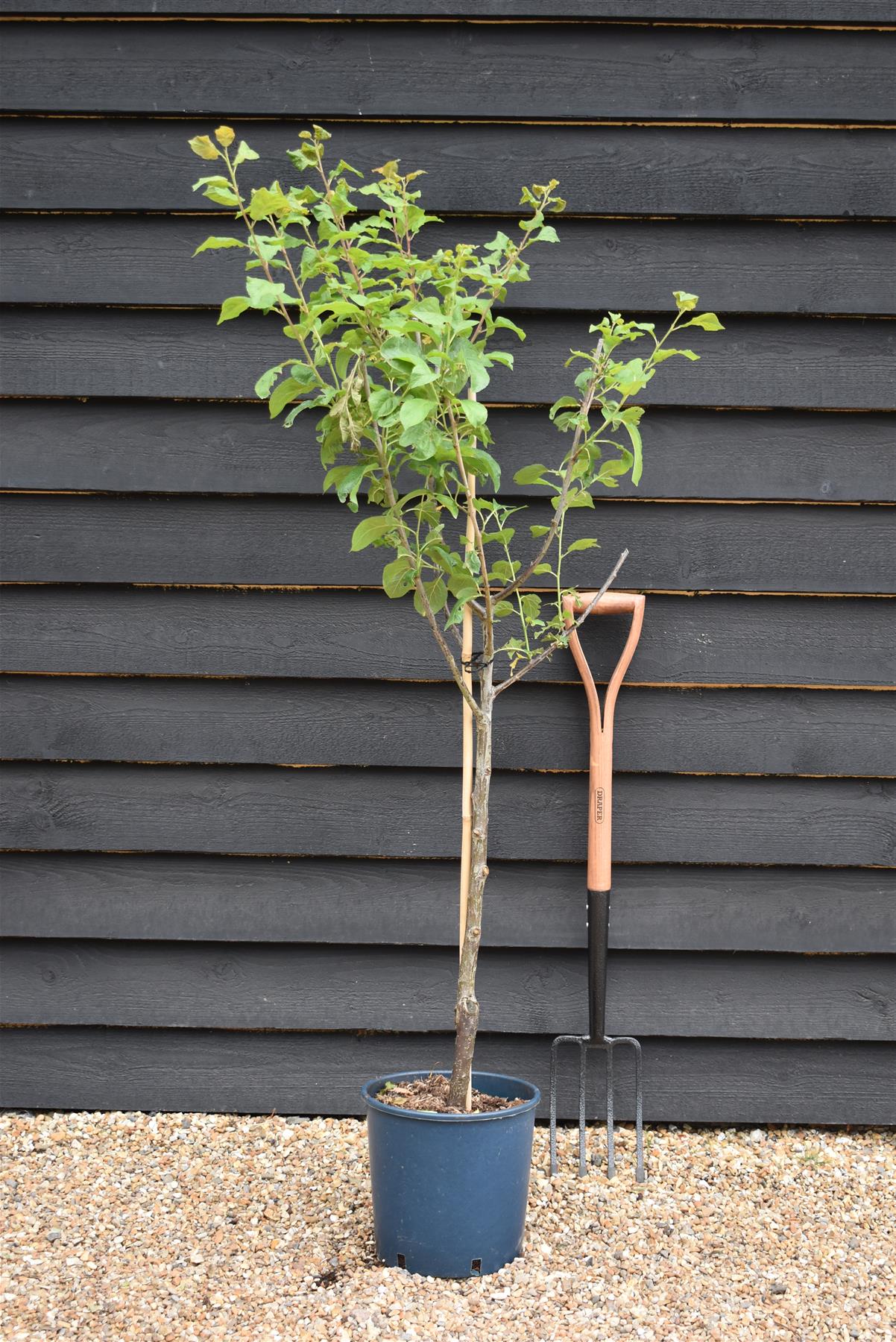
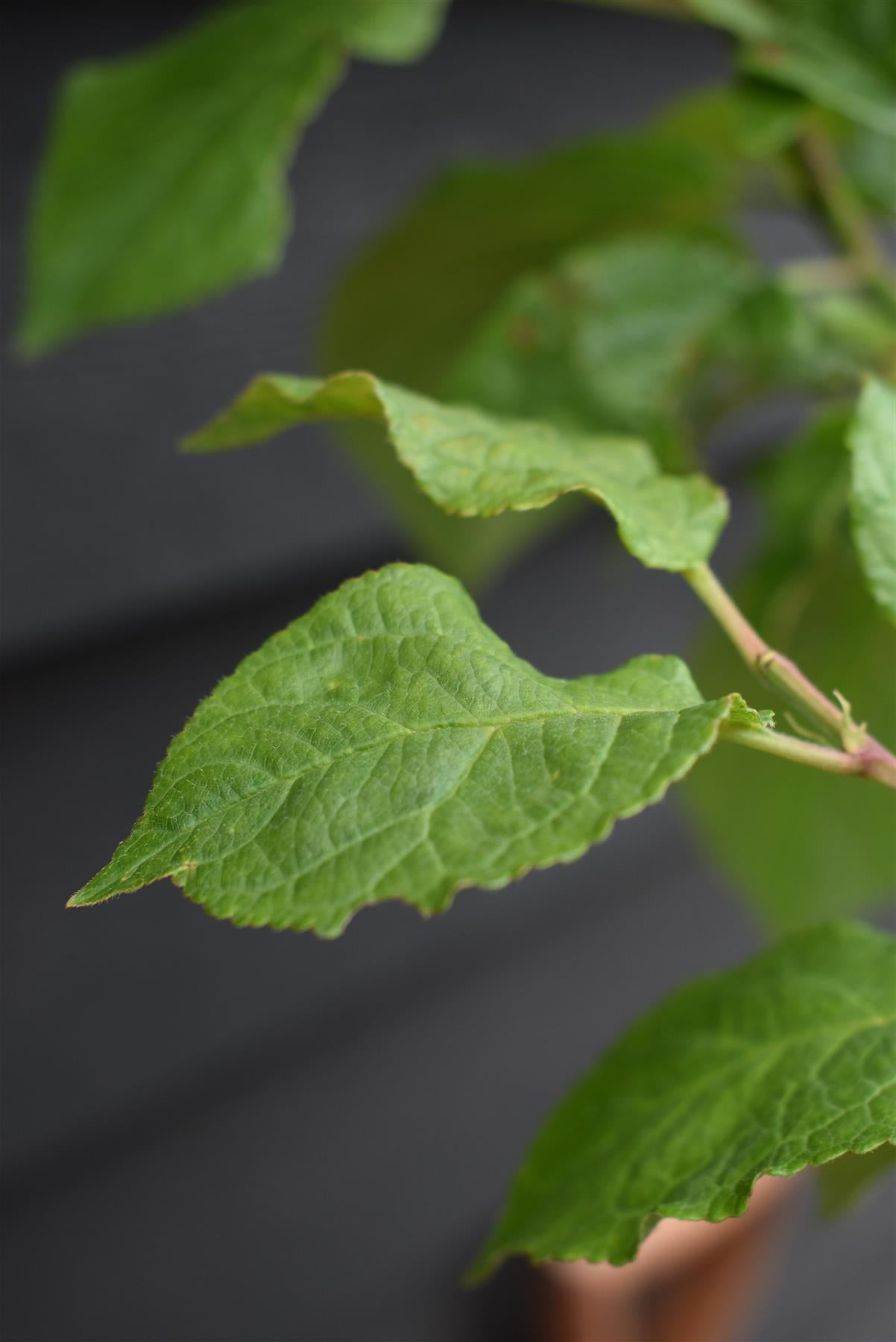

Plum 'Czar' on Myrobalan | Prunus domestica - 130-170cm - 12lt
£76.00
Unit price perPlum 'Czar' on Myrobalan | Prunus domestica - 130-170cm - 12lt
£76.00
Unit price perThe Czar plum tree, grafted onto a Myrobalan rootstock, combines the robust characteristics of the Myrobalan with the desirable qualities of the Czar plum variety. This combination results in a plum tree that is particularly well-suited to varied and challenging growing conditions.
The Czar plum is renowned for its early ripening and high productivity. It produces medium to large, dark purple fruits with a blue bloom, maturing in late July to early August. The flesh is greenish-yellow, juicy, and slightly tart, making it excellent for culinary uses, including jams, preserves, and baking, though it can also be enjoyed fresh when fully ripe.
The Myrobalan rootstock imparts strong vigour to the Czar plum tree, promoting robust and healthy growth. This vigour supports the development of a larger canopy and an extensive root system, enabling the tree to access water and nutrients efficiently. Trees grafted onto Myrobalan rootstocks tend to be larger, requiring ample space for optimal growth. Gardeners should ensure sufficient spacing to accommodate the expansive growth habit and facilitate easy maintenance. One of the key advantages of the Myrobalan rootstock is its adaptability to a wide range of soil conditions, including heavier, poorly-drained soils. This makes it an excellent choice for gardens with less-than-ideal soil. Myrobalan rootstocks offer good resistance to various soil-borne diseases and pests, contributing to the overall health and longevity of the tree. This resistance reduces the need for chemical interventions, promoting more sustainable gardening practices.
While the Myrobalan rootstock promotes vigorous growth, it can also lead to the production of suckers, which require regular removal. Additionally, the increased size and vigour may necessitate more frequent pruning to manage the tree’s shape and encourage fruit production.
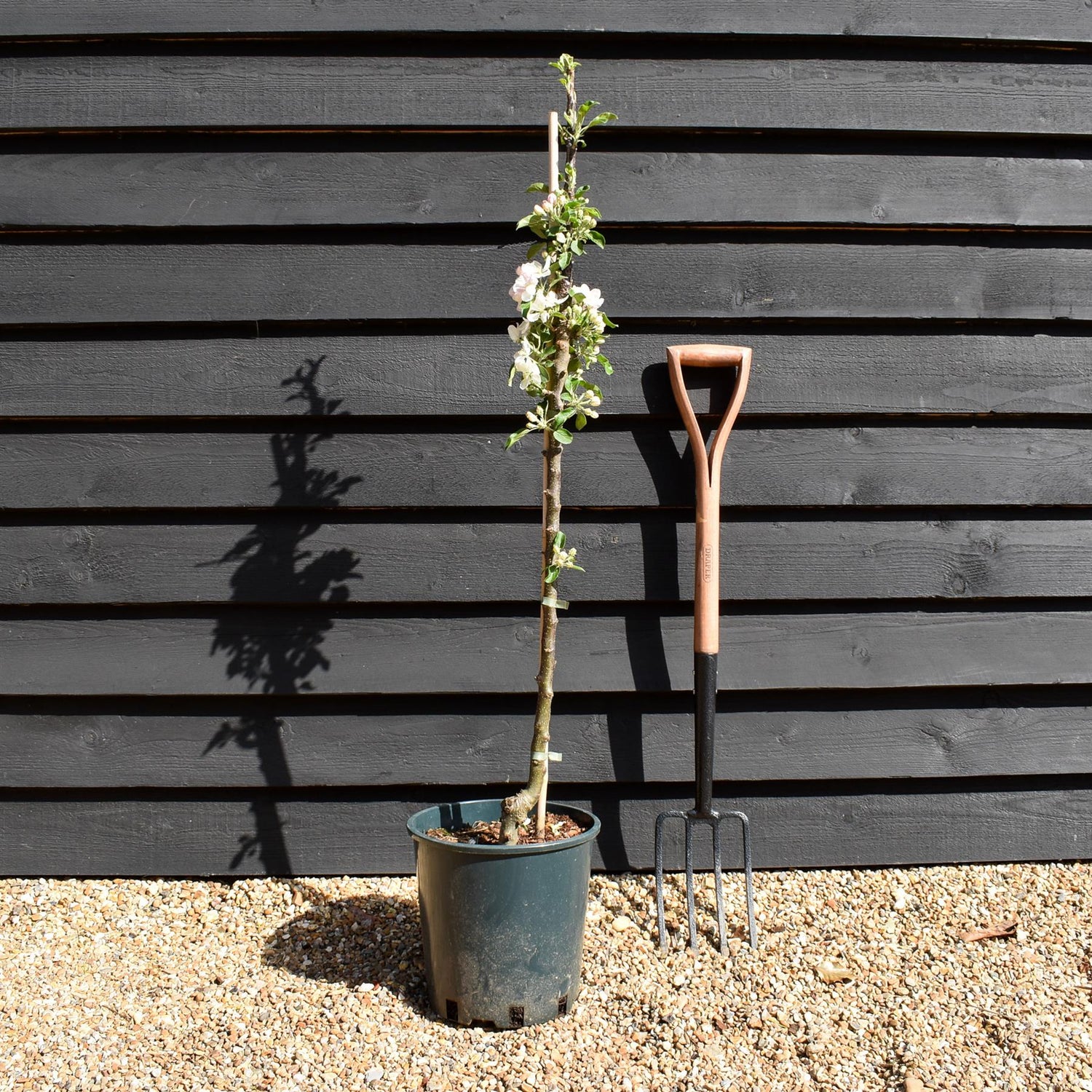
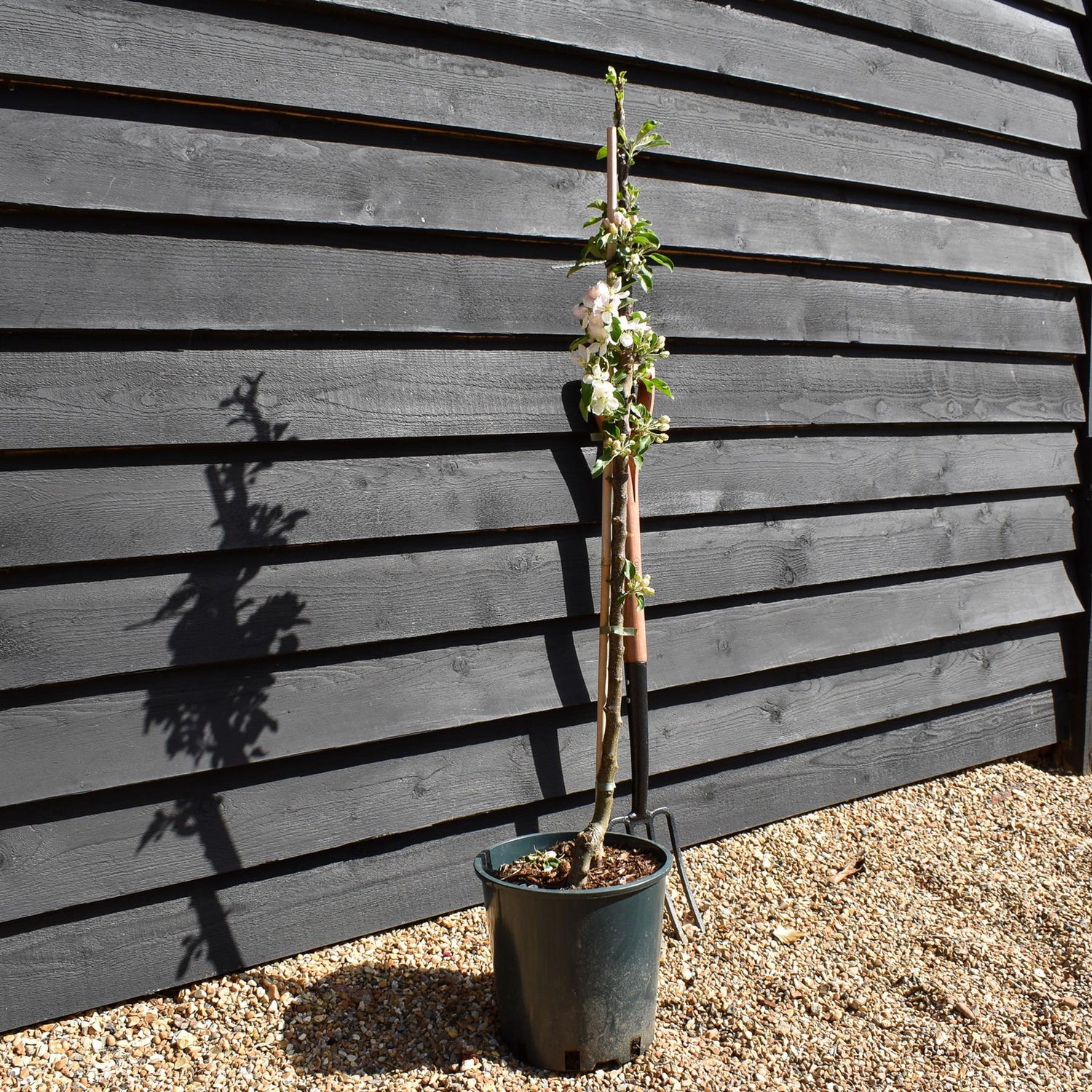
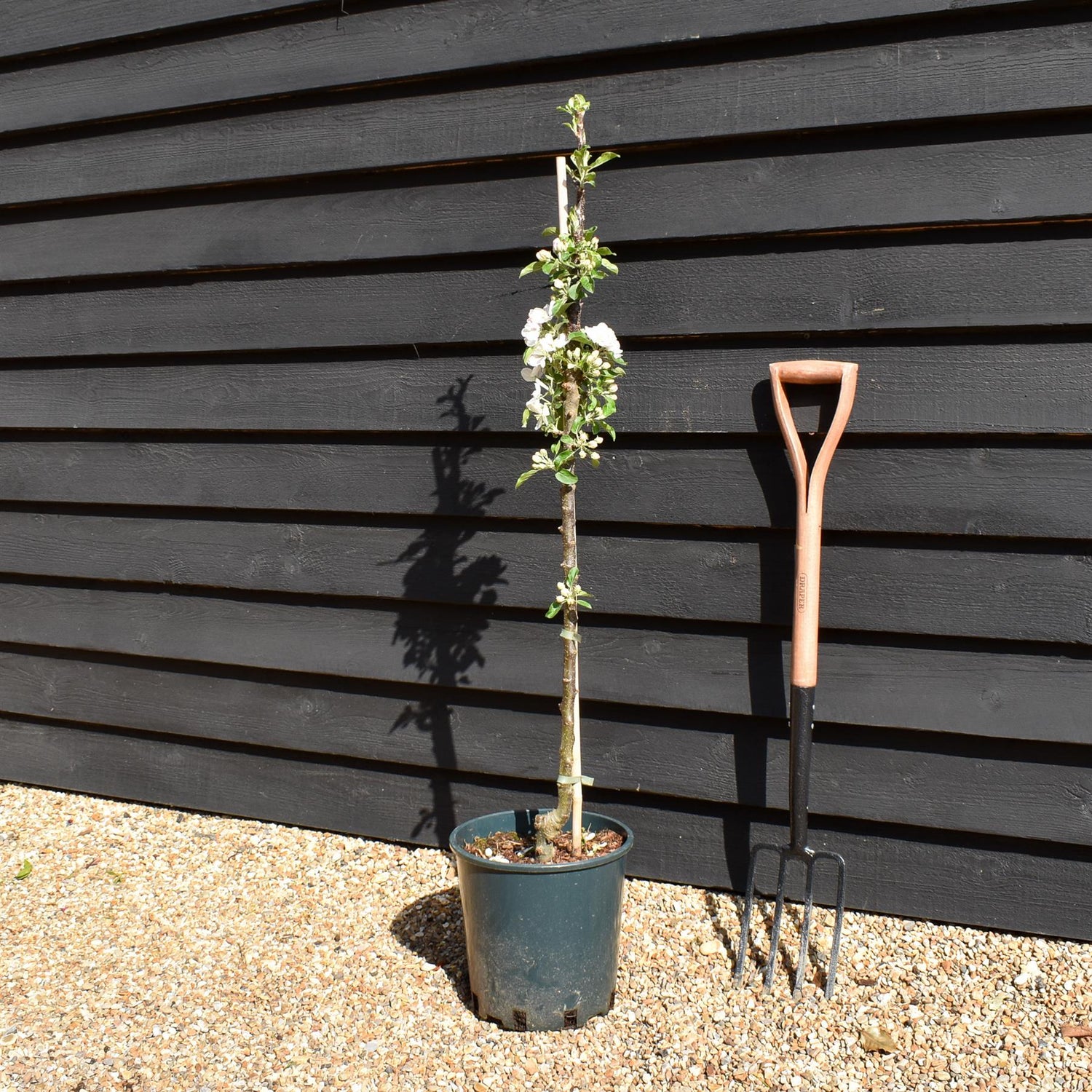
Apple tree 'Blue Moon' (Starline) | Malus domestica - 160-150cm - 10lt
£80.00
Unit price perApple tree 'Blue Moon' (Starline) | Malus domestica - 160-150cm - 10lt
£80.00
Unit price perCultivated as a concise, erect cordon, Starline 'Blue Moon' is a multifunctional apple tree perfectly suited for container growth or limited spaces. It's a prolific, contemporary apple cultivar yielding striking purple-blue apples. Harvesting in August and September, its apples offer a crunchy texture and succulent flesh, balancing sweet and tangy flavors.
This columnar apple tree, reaching 2 meters in height and 40cm in width, presents enchanting spring blossoms and visually appealing fruits, enhancing patio aesthetics. 'Blue Moon' excels in row planting, fostering your mini orchard creation, and boasts self-fertility and exceptional disease resistance.


Apple tree 'Golden Delicious' | Malus Domestica - M106 - Semi-Dwarfing - 160-180cm - 10lt
£77.00
Unit price perApple tree 'Golden Delicious' | Malus Domestica - M106 - Semi-Dwarfing - 160-180cm - 10lt
£77.00
Unit price perMalus Domestica 'Golden Delicious’ is a heavily-producing, deciduous apple tree, with oval, dark green leaves and lovely, fragrant, white flowers blooming in April. Attractive to bees, butterflies, and hummingbirds. Flowers are followed by heavy and regular crops of greenish-yellow to golden-yellow, delicious, sweet, crispy, juicy, and aromatic apples. Malus Domestica 'Golden Delicious’ grows best in moderately fertile, neutral, deep, loamy, moist, well-drained soils. It thrives in full sun, but can adapt to partial shade. It requires cold winters for good fruit production, but it has to be sheltered from harsh winter winds. It is self-fertile but needs a pollinator of anther variety blooming at the same time for better crops. Regular pruning and fruit thinning are required to improve fruit size and quality. 'Golden Delicious' Apple is a wonderful, ornamental tree, a nice addition to any garden. It is primarily grown for its delicious fruit, perfect for eating fresh and great for cooking. One of the best apple varieties.
Root stock MM106 is a semi-dwarfing rootstock commonly used for apple trees. It offers a moderate growth rate, producing trees 10-15 feet tall when mature. Suitable for medium-sized gardens, MM106 ensures good fruit yield and adaptability to various soils. It's resistant to woolly apple aphid and moderately resistant to crown rot. Ideal for bush, cordons, and espalier forms. Ensure proper staking in early years.


Pear - Pyrus calleryana 'Chanticleer' - 300-310cm, 35lt
£350.00
Unit price perPear - Pyrus calleryana 'Chanticleer' - 300-310cm, 35lt
£350.00
Unit price per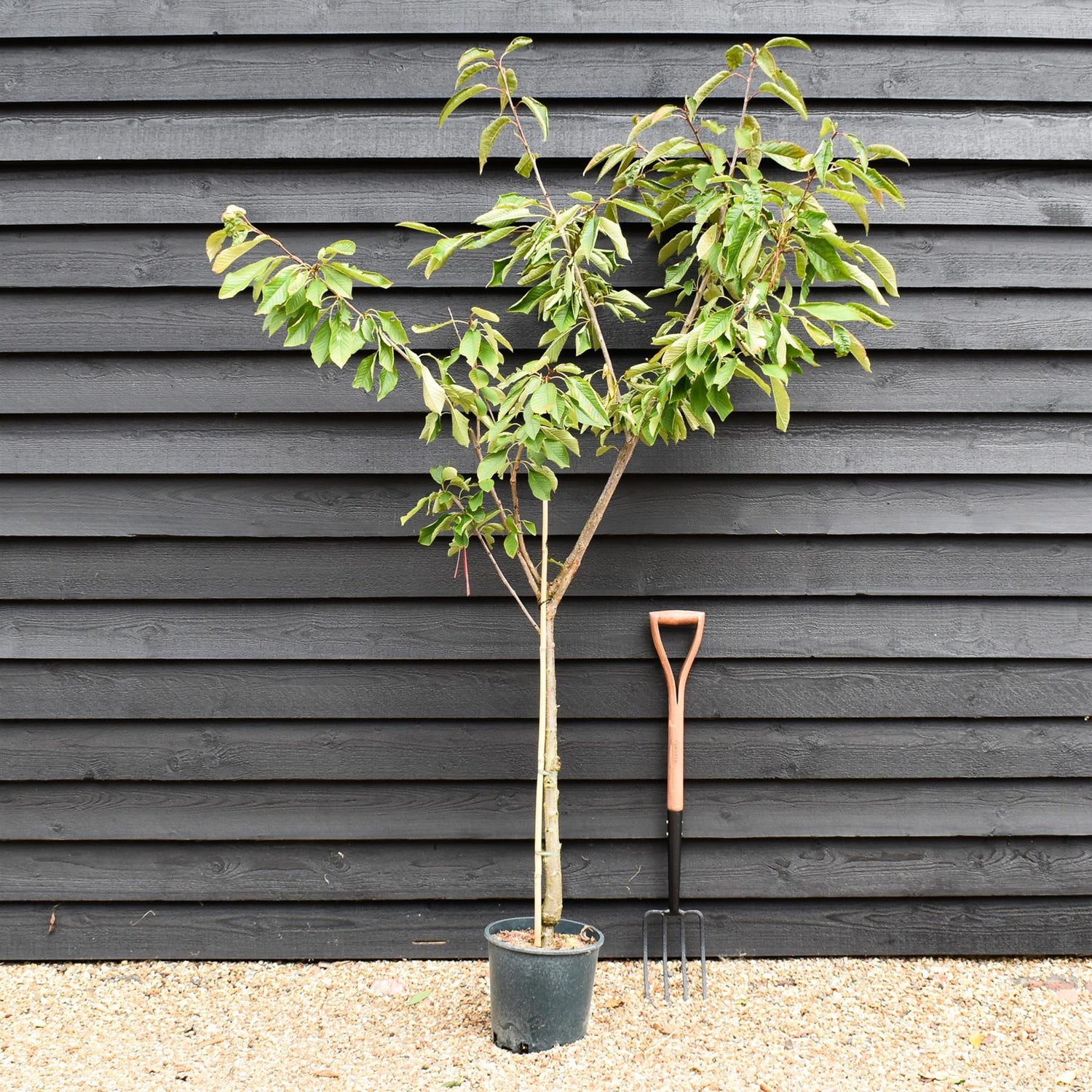


Cherry 'Summer Sun' on Colt | Prunus avium - Semi-Dwarfing - 160-170cm - 12lt
£80.00
Unit price perCherry 'Summer Sun' on Colt | Prunus avium - Semi-Dwarfing - 160-170cm - 12lt
£80.00
Unit price perPrunus avium ‘Summer Sun’ is a compact, medium-sized, moderately vigorous, deciduous cherry tree of upright, spreading habit, dark green leaves, abundance of fragrant, white flowers in spring, and a great crop of tasty, dark red cherries in summer. The cherries are large, not too firm, not too soft, with excellent taste. Sweet Cherry 'Summer Sun' grows best in average, moderately fertile, loamy, sandy, medium moisture, well-drained soils and thrives in full sun. Doesn’t tolerate too wet or waterlogged soils. It is resistant to frost but needs to be sheltered from harsh winds. Late frosts may damage the flower buds. A partially self-pollinating variety, but it requires a pollinator. Low maintenance plant. Prunus avium ‘Summer Sun’ is primarily grown for its sweet cherries. It is a reliable producer of a good amount of fruit, but it also looks lovely in small, informal and cottage gardens. Great as a specimen plant, in beds and borders and wall-side borders.
Colt rootstock is a popular choice for cherry trees, offering a semi-dwarfing size that reaches about 70-80% the height of standard cherry trees. It's well-suited for heavier soils, providing good anchorage and resistance to bacterial canker. Colt enhances the tree's longevity and supports robust fruit yields, making it ideal for various cherry cultivars.
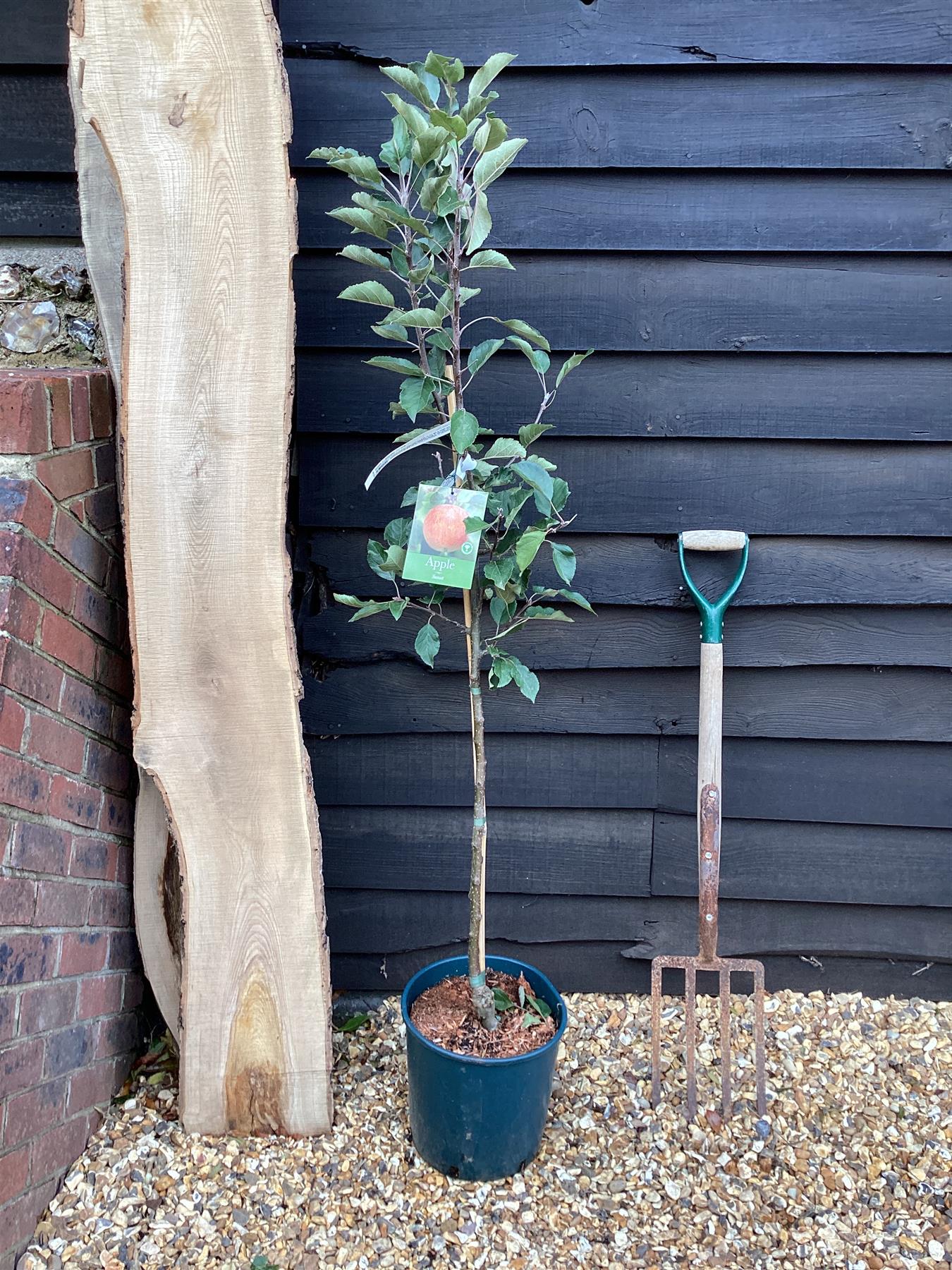
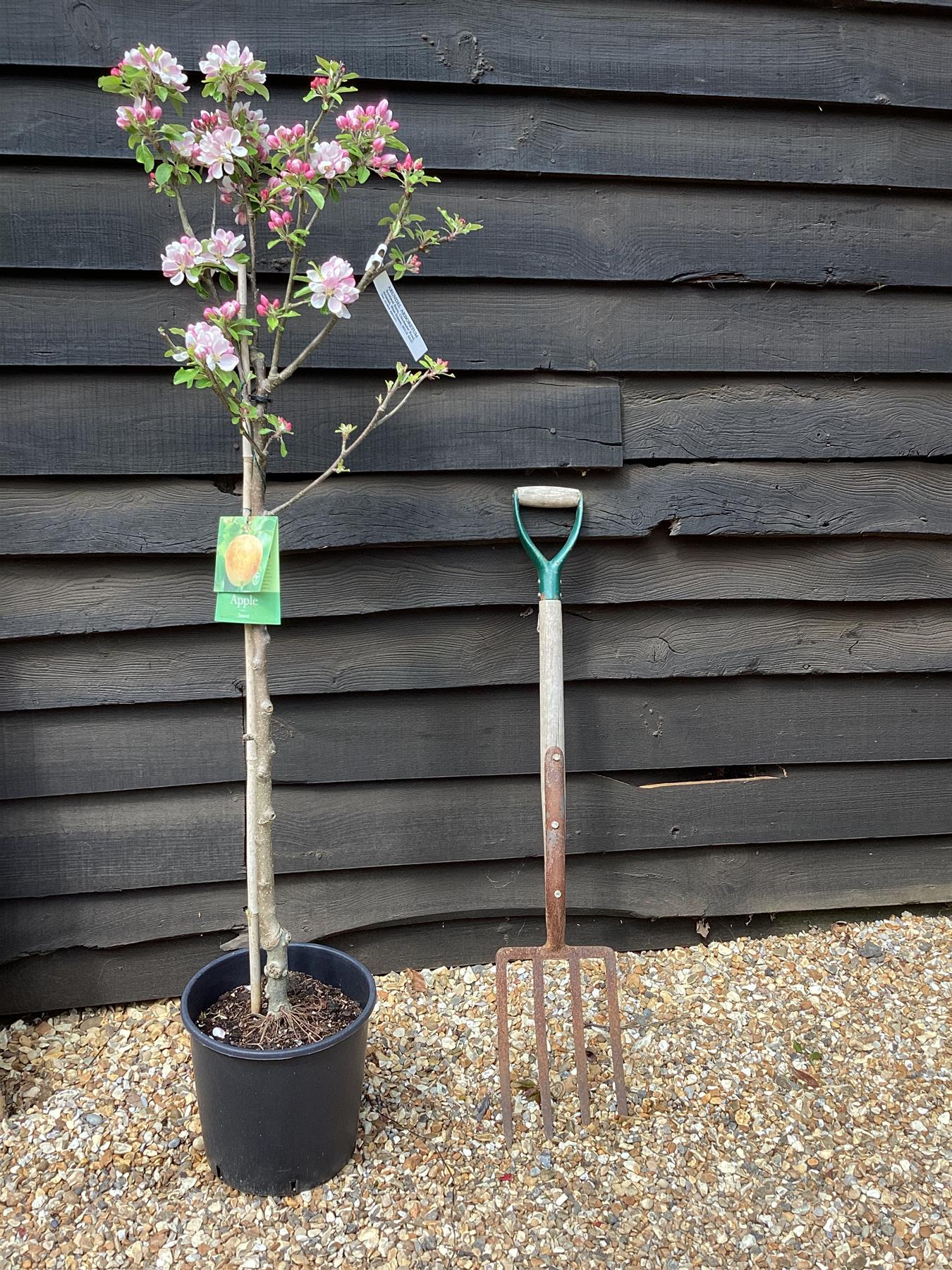
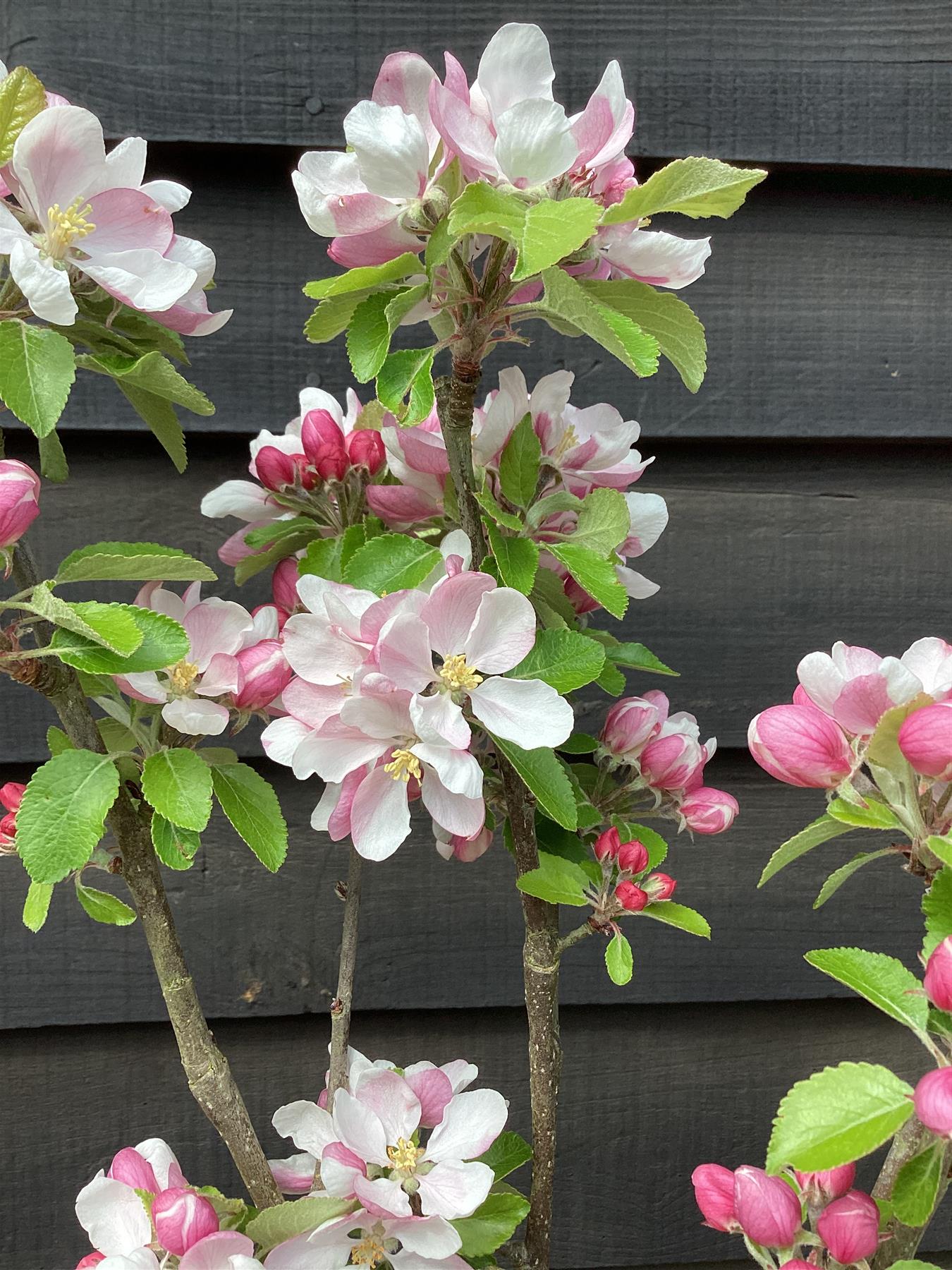
Apple tree 'Sunset' | Malus domestica - M26 - Dwarfing - 140-150cm - 10lt
£70.00
Unit price perApple tree 'Sunset' | Malus domestica - M26 - Dwarfing - 140-150cm - 10lt
£70.00
Unit price perSunset apple is a heavy-cropping garden apple with upright, compact habit and attractive pale pink flowers that bloom in March. They are followed by small, round to ovate, golden-yellow and green fruit with red and orange striping. A white to ivory flesh is crisp, firm and fine-grained, sometimes tinged with green. It has sweet, sharp, aromatic flavour. Sunset Apple was bred in approximately 1918 by G. C. Addy at Ightham, Kent. One of the parent varieties is Cox’s Orange Pippin Apple. Sunset Apple was meant to be similar to it, but easier to grow. It is very resilient, generally disease-free, cold and frost resistant, therefore, suitable for growing even in northern parts of Europe. Doesn’t need a pollinating partner because it is self-fertile. It is not commercially grown because of its small size. Sunset apples are crispy and juicy, great for eating or cooking. When cooked, they retain their shape.
M26 is a semi-dwarfing rootstock (smaller than MM106) used for apple trees, particularly in orchards and home gardens. It produces trees 10-12 feet in height, making them easier to manage and harvest. M26 ensures early fruit production, good anchorage, and medium vigor. However, it requires staking during early years and is moderately susceptible to fire blight.


Apple tree 'Laxton's Superb' | Malus domestica - TM26 - Dwarfing - 140-150cm - 10lt
£70.00
Unit price perApple tree 'Laxton's Superb' | Malus domestica - TM26 - Dwarfing - 140-150cm - 10lt
£70.00
Unit price perLaxton's Superb Apple is an old-fashioned, traditional, sweet, aromatic dessert apple. It was bred by Laxton Brothers in Bedford, UK in 1897. This apple plant is great for cold or exposed locations. It is fast-growing, but has a tendency to biennial bearing. It brings better crop when planted with another variety. It prefers full sun and fertile, well-drained soil. Doesn’t like very acidic soils, shallow chalk soils, and shade more than half of the day. Its flowers are pretty and fragrant, white with some pink, self-pollinating and long-lasting.
The fruit is green-yellow with orange-red blush and crisp firm flesh. It is similar to Cox’s Orange Pippin, which is one of its parents, but it is a bit superior with larger fruits, slightly richer flavour and better keeping qualities. Ready for harvesting in October, it can be stored till January. Late-season and heavy cropping.
M26 is a semi-dwarfing rootstock (smaller than MM106) used for apple trees, particularly in orchards and home gardens. It produces trees 10-12 feet in height, making them easier to manage and harvest. M26 ensures early fruit production, good anchorage, and medium vigor. However, it requires staking during early years and is moderately susceptible to fire blight.
Showing 72/95
Related blog posts