
130 products
130 products
Sort by:
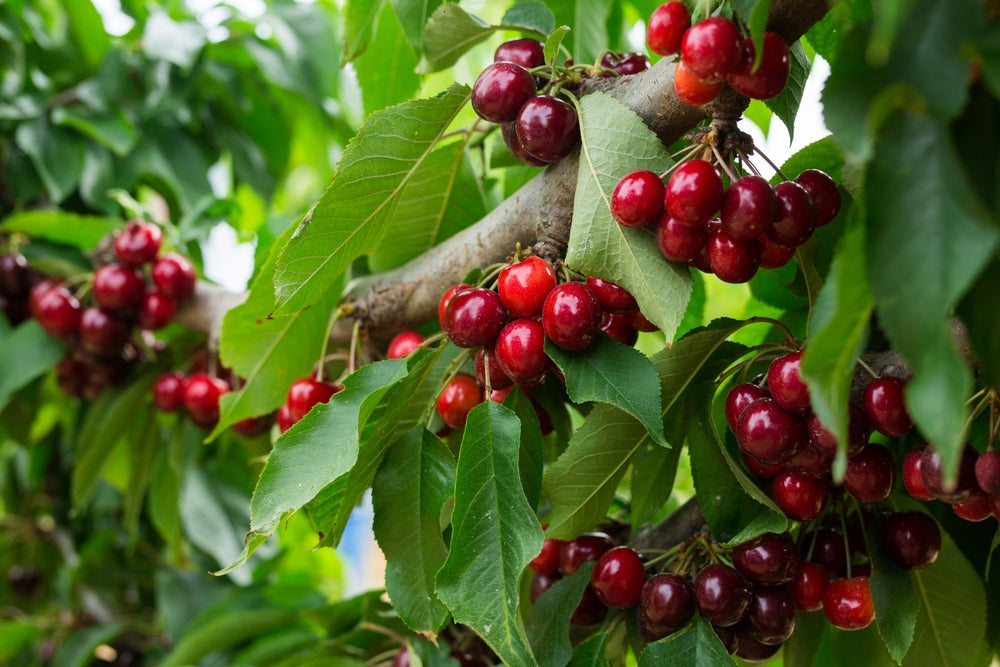
Cherry 'Summer Sun' on Colt | Prunus avium - Semi-Dwarfing - 160-170cm - 12lt
£80.00
Unit price perCherry 'Summer Sun' on Colt | Prunus avium - Semi-Dwarfing - 160-170cm - 12lt
£80.00
Unit price perPrunus avium ‘Summer Sun’ is a compact, medium-sized, moderately vigorous, deciduous cherry tree of upright, spreading habit, dark green leaves, abundance of fragrant, white flowers in spring, and a great crop of tasty, dark red cherries in summer. The cherries are large, not too firm, not too soft, with excellent taste. Sweet Cherry 'Summer Sun' grows best in average, moderately fertile, loamy, sandy, medium moisture, well-drained soils and thrives in full sun. Doesn’t tolerate too wet or waterlogged soils. It is resistant to frost but needs to be sheltered from harsh winds. Late frosts may damage the flower buds. A partially self-pollinating variety, but it requires a pollinator. Low maintenance plant. Prunus avium ‘Summer Sun’ is primarily grown for its sweet cherries. It is a reliable producer of a good amount of fruit, but it also looks lovely in small, informal and cottage gardens. Great as a specimen plant, in beds and borders and wall-side borders.
Colt rootstock is a popular choice for cherry trees, offering a semi-dwarfing size that reaches about 70-80% the height of standard cherry trees. It's well-suited for heavier soils, providing good anchorage and resistance to bacterial canker. Colt enhances the tree's longevity and supports robust fruit yields, making it ideal for various cherry cultivars.
Sour Cherry 'Morello' on Colt - Semi-Dwarfing - 160-170cm - 12lt
£80.00
Unit price perSour Cherry 'Morello' on Colt - Semi-Dwarfing - 160-170cm - 12lt
£80.00
Unit price perThe Morello cherry tree, when grafted onto Colt rootstock, represents an exceptional combination that brings together the delectable taste of the Morello cherries with the strength and resilience of the Colt rootstock. Morello cherries are renowned for their distinctly sour taste, a deep, enticing red hue, and a rich, juicy texture. These attributes make them highly favored for a variety of culinary uses, including pies, jams, jellies, and other desserts.
The tree itself boasts white blossoms in spring, offering not only a bountiful harvest but also an ornamental display. The leaves are a bright green, providing a vivid backdrop for the cherries as they develop from green to their deep, mature red.
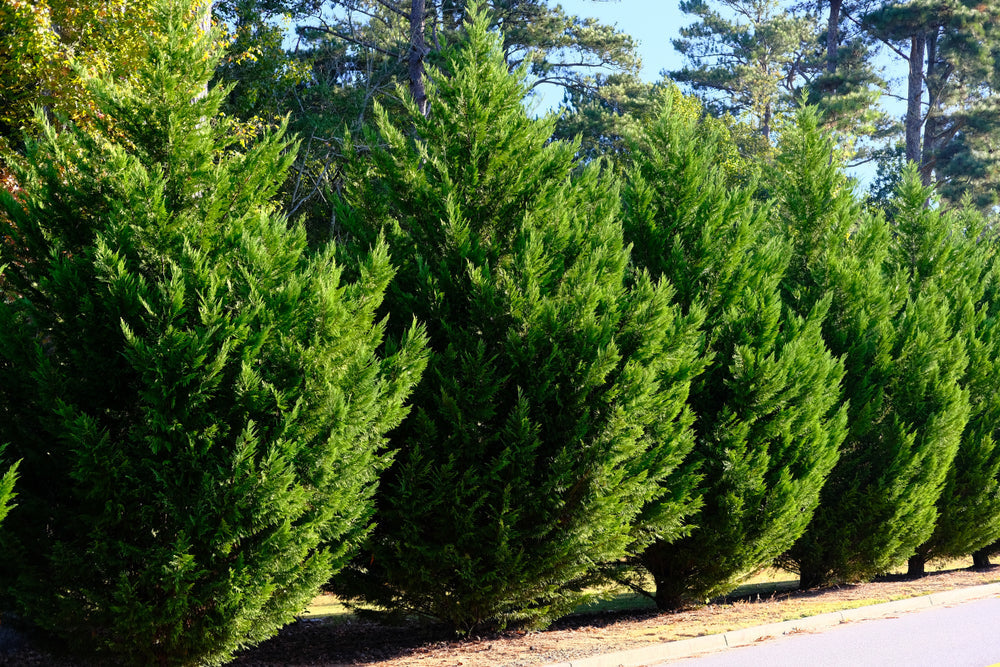
Colt rootstock plays an integral role in this pairing. It imparts semi-vigorous growth to the cherry tree, ensuring that it remains at a manageable size, perfect for medium to large garden spaces. Moreover, trees grafted onto Colt benefit from enhanced drought resistance, reliable anchorage, and a noteworthy resilience against various diseases that might plague cherry trees. This results in a tree that is both productive in fruit yield and relatively low-maintenance, making it a favored choice for both experienced gardeners and novices.
Colt rootstock is a popular choice for cherry trees, offering a semi-dwarfing size that reaches about 70-80% the height of standard cherry trees. It's well-suited for heavier soils, providing good anchorage and resistance to bacterial canker. Colt enhances the tree's longevity and supports robust fruit yields, making it ideal for various cherry cultivars.
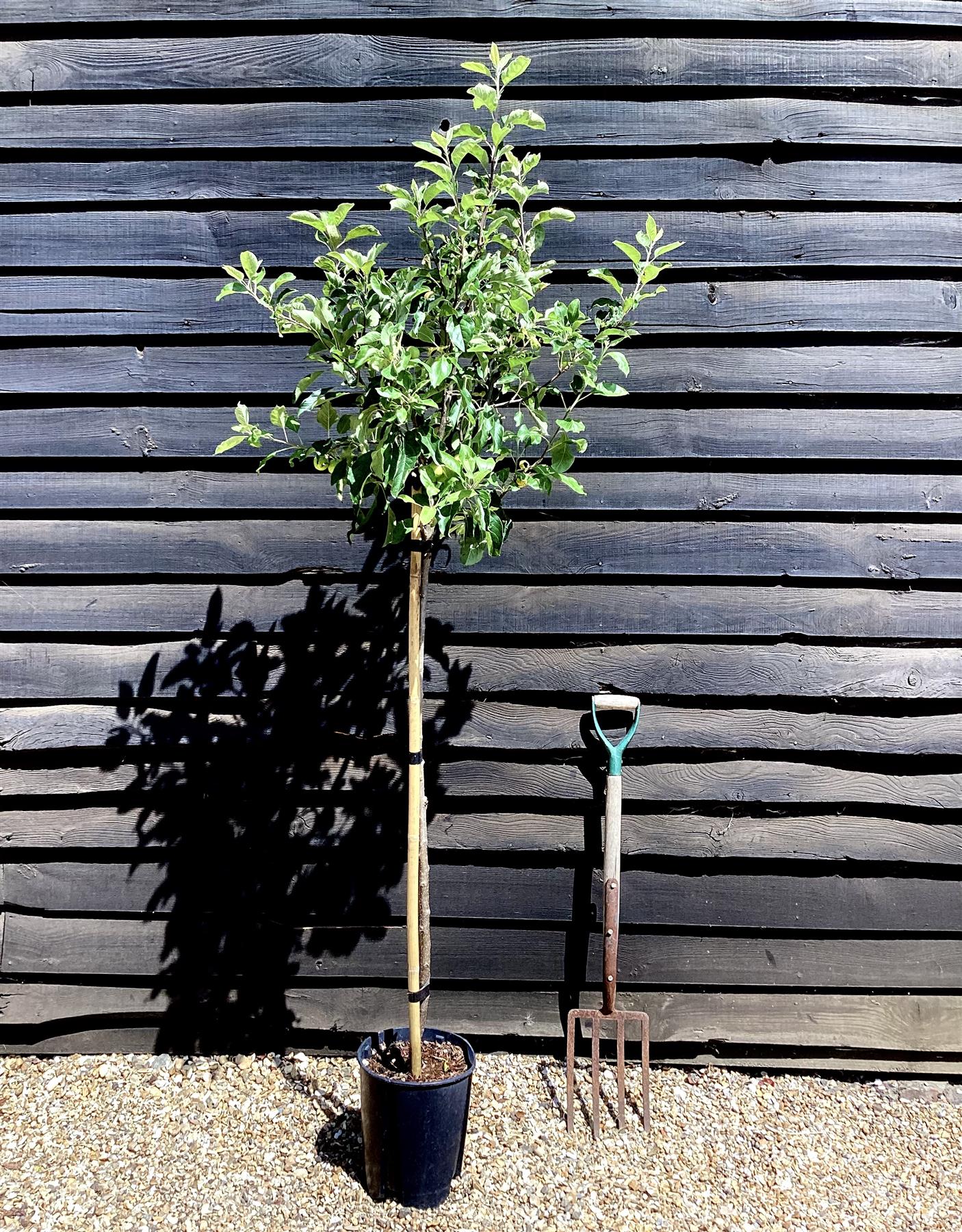
Apple tree 'Golden Delicious' | Malus Domestica - M26 - Dwarfing - 140-150cm - 10lt
£76.00
Unit price perApple tree 'Golden Delicious' | Malus Domestica - M26 - Dwarfing - 140-150cm - 10lt
£76.00
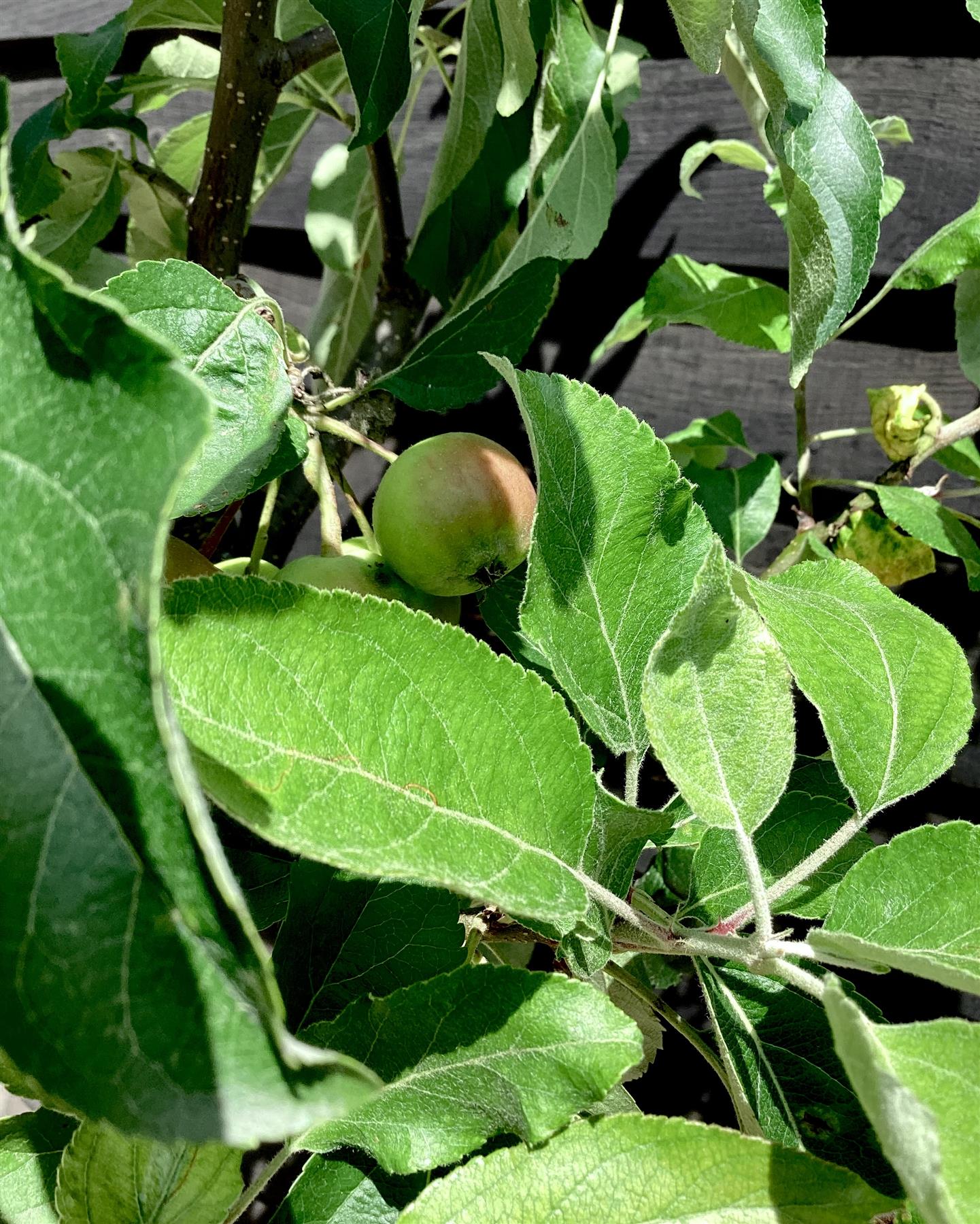
Unit price perMalus Domestica 'Golden Delicious’ is a heavily-producing, deciduous apple tree, with oval, dark green leaves and lovely, fragrant, white flowers blooming in April. Attractive to bees, butterflies, and hummingbirds. Flowers are followed by heavy and regular crops of greenish-yellow to golden-yellow, delicious, sweet, crispy, juicy, and aromatic apples. Malus Domestica 'Golden Delicious’ grows best in moderately fertile, neutral, deep, loamy, moist, well-drained soils. It thrives in full sun, but can adapt to partial shade. It requires cold winters for good fruit production, but it has to be sheltered from harsh winter winds. It is self-fertile but needs a pollinator of anther variety blooming at the same time for better crops. Regular pruning and fruit thinning are required to improve fruit size and quality. 'Golden Delicious' Apple is a wonderful, ornamental tree, a nice addition to any garden. It is primarily grown for its delicious fruit, perfect for eating fresh and great for cooking. One of the best apple varieties.
M26 is a semi-dwarfing rootstock (smaller than MM106) used for apple trees, particularly in orchards and home gardens. It produces trees 10-12 feet in height, making them easier to manage and harvest. M26 ensures early fruit production, good anchorage, and medium vigor. However, it requires staking during early years and is moderately susceptible to fire blight.
Apple tree 'Scrumptious' | Malus domestica - M26 - Dwarfing - 140-150cm - 10lt
£72.00
Unit price perApple tree 'Scrumptious' | Malus domestica - M26 - Dwarfing - 140-150cm - 10lt
£72.00
Unit price perMalus domestica 'Scrumptious' is an early-fruiting, dessert apple tree with ovate, dark green leaves and pale pink flowers blooming in spring. Flowers are followed by heavy crops of large, sweet, crisp, and aromatic apples with thin, red skin and tasty, white flesh, ready for harvesting in early autumn, usually September. Malus domestica 'Scrumptious' grows best in moderately fertile, moist, well-drained soils in full sun, but can adapt to a wide range of soils as long as they are well-drained. It can tolerate partial shade but the best cropping occurs if grown in full sun. It can withstand frost and, therefore, suitable for colder areas. Fairly resistant to pests and diseases. It is self-fertile and a good pollinator to other varieties. May require pruning and fruit thinning for better crops. Apple 'Scrumptious' is a modern English dessert apple, a cross between the Golden Delicious and the Discovery. Great option for small informal and cottage gardens and for growing in containers.
M26 is a semi-dwarfing rootstock (smaller than MM106) used for apple trees, particularly in orchards and home gardens. It produces trees 10-12 feet in height, making them easier to manage and harvest. M26 ensures early fruit production, good anchorage, and medium vigour. However, it requires staking during early years and is moderately susceptible to fire blight.
Apple tree 'James Grieve' | Malus domestica - M27 - Ultra-Dwarfing - 140-150cm - 10lt
£70.00
Unit price perApple tree 'James Grieve' | Malus domestica - M27 - Ultra-Dwarfing - 140-150cm - 10lt
£70.00
Unit price perJames Grieve Apple is a hardy, deciduous tree suitable for cold climate zones. It is best grown in northerly areas with cold winters, moderate summer temperatures, and medium to high humidity. It’s an old apple variety, raised in 1893. in Edinburgh, Scotland, by James Grieve from pollination of Cox’s Orange Pippin and most likely Pott’s Seedling apple. Generally, a resilient plant, it needs some protection from harsh winds. It’s a good polliniser for other apples. It cannot be found in supermarkets because it is sensitive to pressure and easily bruised and cannot sustain supermarket handling.
James Grieve apples are medium to large, yellow-green, speckled and striped orange-red, with creamy, refreshing and very juicy flesh. At the beginning of season, it is sharp and perfect for cooking, retaining its shape when cooked. After a few weeks, it becomes milder and sweeter, like a firm pear in texture.
M27 is an ultra-dwarfing rootstock for apple trees, resulting in trees that reach only 6-8 feet in height. Ideal for small gardens or container planting, M27 enables high-density orchards and easy harvesting. It induces early fruiting, often within 2-3 years of planting. Good soil preparation and staking are essential, as it offers limited vigor and anchorage. Regular watering and fertilizing are crucial for healthy growth.
Apple tree 'Spartan' | Malus domestica - MM106 - Semi-Dwarfing - 150-160cm - 10lt
£77.00
Unit price perApple tree 'Spartan' | Malus domestica - MM106 - Semi-Dwarfing - 150-160cm - 10lt
£77.00
Unit price perThe Apple Spartan tree, when grafted onto M26 rootstock, presents an ideal option for orchardists and home gardeners seeking a blend of manageable size and quality fruit production.
Spartan, a descendant of the McIntosh apple, hails from Canada and is renowned for its striking deep-red, almost glossy skin. Beneath this inviting exterior, the apple provides a crisp, juicy bite, bursting with a sweet flavor subtly accompanied by hints of tartness. This apple variety is not only cherished for fresh eating but also excels in culinary creations due to its rich taste and texture.
M26, as a rootstock, strikes a balance between dwarf and semi-dwarf growth habits. When fully mature, trees on this rootstock typically attain heights of 8-12 feet, making them particularly suited for gardens where space might be at a premium. Additionally, M26 provides a faster onset of fruiting, usually within 2-3 years of planting, which is a boon for those eager to enjoy their homegrown apples sooner. Furthermore, it offers commendable disease resistance and fares well in a diverse range of soil conditions.
Together, the Spartan apple on M26 rootstock promises a compact, yet productive tree, yielding high-quality fruit while fitting seamlessly into smaller orchard spaces or backyard gardens.
Apple tree 'Sunset' | Malus domestica - M26 - Dwarfing - 140-150cm - 10lt
£70.00
Unit price perApple tree 'Sunset' | Malus domestica - M26 - Dwarfing - 140-150cm - 10lt
£70.00
Unit price perSunset apple is a heavy-cropping garden apple with upright, compact habit and attractive pale pink flowers that bloom in March. They are followed by small, round to ovate, golden-yellow and green fruit with red and orange striping. A white to ivory flesh is crisp, firm and fine-grained, sometimes tinged with green. It has sweet, sharp, aromatic flavour. Sunset Apple was bred in approximately 1918 by G. C. Addy at Ightham, Kent. One of the parent varieties is Cox’s Orange Pippin Apple. Sunset Apple was meant to be similar to it, but easier to grow. It is very resilient, generally disease-free, cold and frost resistant, therefore, suitable for growing even in northern parts of Europe. Doesn’t need a pollinating partner because it is self-fertile. It is not commercially grown because of its small size. Sunset apples are crispy and juicy, great for eating or cooking. When cooked, they retain their shape.
M26 is a semi-dwarfing rootstock (smaller than MM106) used for apple trees, particularly in orchards and home gardens. It produces trees 10-12 feet in height, making them easier to manage and harvest. M26 ensures early fruit production, good anchorage, and medium vigor. However, it requires staking during early years and is moderately susceptible to fire blight.
Apple tree 'Lord Lambourne' | Malus domestica - M26 - Dwarfing - 140-150cm - 10lt
£70.00
Unit price perApple tree 'Lord Lambourne' | Malus domestica - M26 - Dwarfing - 140-150cm - 10lt
£70.00
Unit price per"Lord Lambourne" is a distinguished English dessert apple, celebrated for its tantalizing sweet-tart balance. Introduced in the early 20th century, its juicy, aromatic flesh and crisp texture make it a preferred choice for fresh eating.
The apple showcases an alluring appearance: a brilliant red flush gracefully juxtaposed against a yellow-green backdrop. When in full bloom, the tree becomes a sight to behold, draped in beautiful white blossoms that exude a subtle fragrance.
When grafted onto the M26 rootstock, "Lord Lambourne" becomes particularly suitable for those with limited garden space. M26 is a semi-dwarfing rootstock, ensuring that the tree remains relatively compact, typically reaching heights of 10-12 feet. This makes it an ideal choice for smaller gardens or orchards and for those who wish for more manageable tree sizes without compromising fruit quality.
The combination also brings about earlier fruiting, usually within 2-3 years of planting. However, it's worth noting that while "Lord Lambourne" can produce fruit alone, it thrives best with cross-pollination from another suitable apple variety. This ensures optimal fruit set and production.
In conclusion, "Lord Lambourne" on M26 is a perfect fusion of flavor and convenience, marrying delectable fruit with a tree size suited for compact spaces.
Apple tree 'Laxton's Superb' | Malus domestica - TM26 - Dwarfing - 140-150cm - 10lt
£70.00
Unit price perApple tree 'Laxton's Superb' | Malus domestica - TM26 - Dwarfing - 140-150cm - 10lt
£70.00
Unit price perLaxton's Superb Apple is an old-fashioned, traditional, sweet, aromatic dessert apple. It was bred by Laxton Brothers in Bedford, UK in 1897. This apple plant is great for cold or exposed locations. It is fast-growing, but has a tendency to biennial bearing. It brings better crop when planted with another variety. It prefers full sun and fertile, well-drained soil. Doesn’t like very acidic soils, shallow chalk soils, and shade more than half of the day. Its flowers are pretty and fragrant, white with some pink, self-pollinating and long-lasting.
The fruit is green-yellow with orange-red blush and crisp firm flesh. It is similar to Cox’s Orange Pippin, which is one of its parents, but it is a bit superior with larger fruits, slightly richer flavour and better keeping qualities. Ready for harvesting in October, it can be stored till January. Late-season and heavy cropping.
M26 is a semi-dwarfing rootstock (smaller than MM106) used for apple trees, particularly in orchards and home gardens. It produces trees 10-12 feet in height, making them easier to manage and harvest. M26 ensures early fruit production, good anchorage, and medium vigor. However, it requires staking during early years and is moderately susceptible to fire blight.
Apple tree 'Katy' | Malus domestica - MM106 - Semi-Dwarfing - 140-150cm - 10lt
£70.00
Unit price perApple tree 'Katy' | Malus domestica - MM106 - Semi-Dwarfing - 140-150cm - 10lt
£70.00
Unit price perMalus domestica ‘Katy’ is a vigorous, early-season, heavy-cropping, deciduous apple tree with ovate, green leaves, orange and red in autumn, and lovely, white, scented flowers blooming in spring. Small to medium, bright red apples have white and juicy flash with sweet and refreshing flavour and are ready for harvesting in early September. Malus domestica ‘Katy’ prefers moderately fertile, moist, well-drained soils in sunny, sheltered positions. It doesn’t like acidic and shallow chalk soils, as well as shady areas. Resistant to frost and suitable for Northern European climates. Not self-fertile, it needs a pollinator nearby for flower pollination. Requires regular pruning and fruit thinning for better fruit size and quality. Apple 'Katya' is a cross between James Grieve and Worcester Pearmain. It’s a beautiful ornamental tree, a great addition to any informal, cottage, or urban garden. Suitable for wall-side borders and for growing in containers. Apples are perfect for making juices, but also to be eaten fresh.
M26 is a semi-dwarfing rootstock (smaller than MM106) used for apple trees, particularly in orchards and home gardens. It produces trees 10-12 feet in height, making them easier to manage and harvest. M26 ensures early fruit production, good anchorage, and medium vigor. However, it requires staking during early years and is moderately susceptible to fire blight.
Apple tree 'James Grieve' | Malus domestica - M26 - Dwarfing - 140-150cm - 10lt
£70.00
Unit price perApple tree 'James Grieve' | Malus domestica - M26 - Dwarfing - 140-150cm - 10lt
£70.00
Unit price perJames Grieve Apple is a hardy, deciduous tree suitable for cold climate zones. It is best grown in northerly areas with cold winters, moderate summer temperatures, and medium to high humidity. It’s an old apple variety, raised in 1893. in Edinburgh, Scotland, by James Grieve from pollination of Cox’s Orange Pippin and most likely Pott’s Seedling apple. Generally, a resilient plant, it needs some protection from harsh winds. It’s a good polliniser for other apples. It cannot be found in supermarkets because it is sensitive to pressure and easily bruised and cannot sustain supermarket handling.
James Grieve apples are medium to large, yellow-green, speckled and striped orange-red, with creamy, refreshing and very juicy flesh. At the beginning of season, it is sharp and perfect for cooking, retaining its shape when cooked. After a few weeks, it becomes milder and sweeter, like a firm pear in texture.
M26 is a semi-dwarfing rootstock (smaller than MM106) used for apple trees, particularly in orchards and home gardens. It produces trees 10-12 feet in height, making them easier to manage and harvest. M26 ensures early fruit production, good anchorage, and medium vigor. However, it requires staking during early years and is moderately susceptible to fire blight.
Apple tree 'Fiesta' | Malus domestica - M26 - Dwarfing - 150-160cm - 10lt
£76.00
Unit price perApple tree 'Fiesta' | Malus domestica - M26 - Dwarfing - 150-160cm - 10lt
£76.00
Unit price perMalus domestica 'Fiesta' is a medium-sized, upright to spreading, heavy-cropping, deciduous, dessert apple tree with ovate, toothed, grey-green leaves, yellow and orange in autumn. Pale pink flowers fade to white, bloom in spring, and are followed by heavy crops of red-flushed, yellow-orange apples ready for harvesting in September. The apples are rich in flavour, juicy, sweet and crisp. Malus domestica 'Fiesta' grows best in moderately fertile, neutral, moist, well-drained soils. It prefers full sun, but can tolerate some shade. It is resistant to frost, but late frosts may damage the flower buds. Partially self-fertile, it requires another pollinator planted near-by. It needs regular pruning and thinning. Apple 'Fiesta' is a popular dessert apple. The tree is ornamental and suitable for informal, cottage, and urban gardens. It’s a reliable and heavy cropper. The apples can be eaten fresh, but are also used for culinary purposes. Since very juicy, they are perfect for making apple juice.
M26 is a semi-dwarfing rootstock (smaller than MM106) used for apple trees, particularly in orchards and home gardens. It produces trees 10-12 feet in height, making them easier to manage and harvest. M26 ensures early fruit production, good anchorage, and medium vigor. However, it requires staking during early years and is moderately susceptible to fire blight.
Apple tree 'Bramley's Seedling' | Malus domestica - M26 - Dwarfing - 150-160cm - 10lt
£77.00
Unit price perApple tree 'Bramley's Seedling' | Malus domestica - M26 - Dwarfing - 150-160cm - 10lt
£77.00
Unit price perBramley's Seedling Apple is an English cooking apple and one of the best culinary apples in the world. It was discovered in 1809. in Nottinghamshire in England. Bramley apples are large, mostly green, slightly reddish, juicy, sharply acidic, and with excellent, strong flavour. They are used mostly for cooking and baking as they can be cooked down to a smooth puree. Bramley's Seedling Apple tree is very large and vigorous, with oval green leaves and beautiful crimson flowers. For smaller gardens, it needs to be grown on dwarfing rootstock. It is very easy to grow and also known for its longevity. The original tree is alive to this day and still producing apples. It prefers sunny, sheltered locations and neutral, moist and well-drained soil. The only problem could be pollination since Bramley's Seedling Apple needs two different pollinating apple trees nearby to be successfully pollinated.
M26 is a semi-dwarfing rootstock (smaller than MM106) used for apple trees, particularly in orchards and home gardens. It produces trees 10-12 feet in height, making them easier to manage and harvest. M26 ensures early fruit production, good anchorage, and medium vigor. However, it requires staking during early years and is moderately susceptible to fire blight.
Apple tree 'Blenheim Orange' | Malus domestica - MM26 - Dwarfing - 150-160cm - 10lt
£70.00
Unit price perApple tree 'Blenheim Orange' | Malus domestica - MM26 - Dwarfing - 150-160cm - 10lt
£70.00
Unit price perMalus domestica Blenheim Orange is a very old English apple variety. It’s an attractive, vigorous apple tree with pale pink flowers blooming in April and May and large, golden, flushed red, crisp, nutty, dessert and cooking apples with crumbly texture. Ready for harvesting in September and October. Malus domestica Blenheim Orange prefers moderately fertile, moist, well-drained soil in full sun. It can tolerate partial shade, but the crop is best in full sun. It is suitable for northerly, cooler, rainier climates. Resistant to scab and mildew. It can withstand frost, but it needs to be sheltered from harsh winds. It’s a triploid, it needs two other varieties for pollination. Regular pruning is required. Apple ‘Blenheim Orange’ is a vigorous architectural tree perfect for informal, cottage, and urban gardens. Suitable for growing in containers. Fruits can be eaten fresh, cooked to purée or cooked to keep its shape. It is thought to be one of the best dual purpose apples.
M26 is a semi-dwarfing rootstock (smaller than MM106) used for apple trees, particularly in orchards and home gardens. It produces trees 10-12 feet in height, making them easier to manage and harvest. M26 ensures early fruit production, good anchorage, and medium vigor. However, it requires staking during early years and is moderately susceptible to fire blight.
Punica granatum - Pomegranate - Girth 38-40cm - Height 200-220cm - 70lt
£370.00
Unit price perPunica granatum - Pomegranate - Girth 38-40cm - Height 200-220cm - 70lt
£370.00
Unit price perPunica granatum, commonly known as pomegranate, is a small deciduous tree or shrub that belongs to the family Lythraceae. Native to the Mediterranean region and parts of Asia, the pomegranate is widely cultivated for its fruit, ornamental value, and medicinal properties. The tree grows up to 5-8 meters tall and has glossy, dark green leaves that turn yellow in autumn. It produces beautiful red-orange flowers that bloom in summer.
The fruit of the pomegranate is a round or slightly hexagonal berry, about the size of an apple or grapefruit. The leathery skin of the fruit is thick and inedible, but it contains hundreds of edible arils or seeds, each surrounded by a juicy, ruby-red pulp. The seeds are packed with nutrients and antioxidants and are said to have numerous health benefits, including anti-inflammatory and anti-cancer properties. Pomegranate is commonly used in cooking, juices, smoothies, and salads, and it adds a sweet-tart flavour and vibrant colour to any dish. Overall, Punica granatum is a versatile and attractive tree that would make a great addition to any garden or landscape, both for its ornamental value and its delicious fruit.
Peach peach | Prunus persica 'Melred' - 170-180cm - 10lt
£72.00
Unit price perPeach peach | Prunus persica 'Melred' - 170-180cm - 10lt
£72.00
Unit price perPrunus persica 'Melred', commonly known as the Redhaven peach, is a popular and widely grown cultivar of peach tree that produces medium to large-sized fruit with a firm and juicy flesh. The tree itself is relatively small and compact, growing to a height of 10 to 12 feet and spreading to a width of 8 to 10 feet.
One of the distinguishing features of the Redhaven peach is its attractive red-blushed skin, which covers a yellow background. The fruit ripens in mid to late July, making it one of the earliest varieties to be harvested. The flesh of the Redhaven peach is yellow and has a sweet, tangy flavor with a slightly acidic finish. The fruit is excellent for eating fresh, canning, freezing, and baking.
The Redhaven peach tree is known for its hardiness and disease resistance, making it a great choice for backyard growers or commercial orchards. It thrives in full sun and well-drained soil, and requires regular watering and fertilization to produce a bountiful crop.
Overall, the Prunus persica 'Melred' or Redhaven peach is a beautiful and delicious fruit that is perfect for anyone looking to grow their own fruit at home or for commercial production.
The flowers of Prunus persica 'Melred' or Redhaven peach are pink and have five petals with a diameter of approximately 2 to 3 centimeters. They are arranged in clusters of two to five flowers and bloom in early spring before the tree leaves out. The flowers have a pleasant fragrance and attract bees and other pollinators, which are necessary for the tree to produce fruit. The pink color of the flowers adds an ornamental value to the tree, making it a beautiful addition to any landscape. Once the flowers fade, they give way to the small, green fruit that will eventually mature into the recognizable, red-blushed peaches.
The Prunus persica, or peach tree, is native to China, where it has been cultivated for thousands of years. The tree was introduced to Europe via the Silk Road trade routes and eventually made its way to North America with European colonizers in the 16th century. Prunus persica 'Melred', or Redhaven peach, is a cultivar that was developed in Michigan, USA in the 1940s by Stanley Johnston. It was a result of a crossbreeding program between two other peach cultivars, the Redskin and the Haven. Redhaven peach became very popular due to its exceptional flavor and texture, disease resistance, and reliable yields, and is now widely grown in North America and beyond.
Cherry tree 'Lapins' | Prunus avium 'Cherokee' - 100-120cm - 10lt
£72.00
Unit price perCherry tree 'Lapins' | Prunus avium 'Cherokee' - 100-120cm - 10lt
£72.00
Unit price perPrunus avium 'Cherokee' is a popular cultivar of sweet cherry trees known for its large, dark red fruit and its hardiness. This deciduous tree typically reaches a height of 15-25 feet and a spread of 10-15 feet, with a rounded crown of dark green leaves that turn yellow in the fall. The fruit produced by 'Cherokee' cherry trees is sweet and juicy, with a firm texture that makes it ideal for eating fresh, baking, or preserving.
'Cherokee' cherry trees are self-fertile, meaning they can produce fruit without the need for a second tree for cross-pollination. They are also adaptable to a variety of soil types, including sandy, loamy, and clay soils, as long as they are well-drained. These trees prefer full sun and moderate watering, and can tolerate cold temperatures down to -20 degrees Fahrenheit.
Overall, Prunus avium 'Cherokee' is a beautiful and productive cherry tree that is easy to care for and provides delicious fruit. It is an excellent choice for home orchards, landscape plantings, or commercial production.
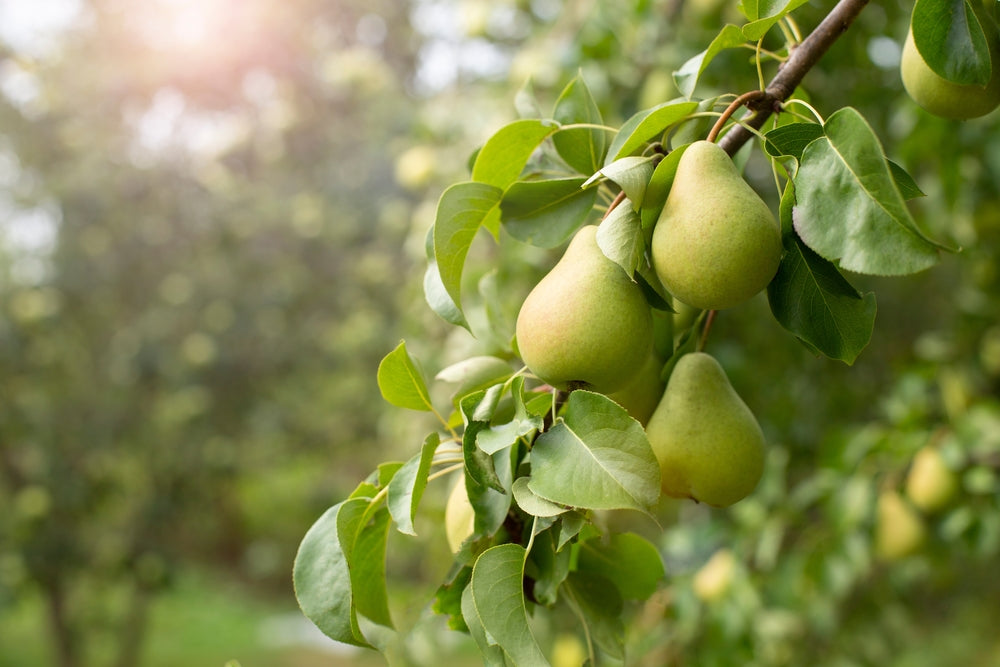
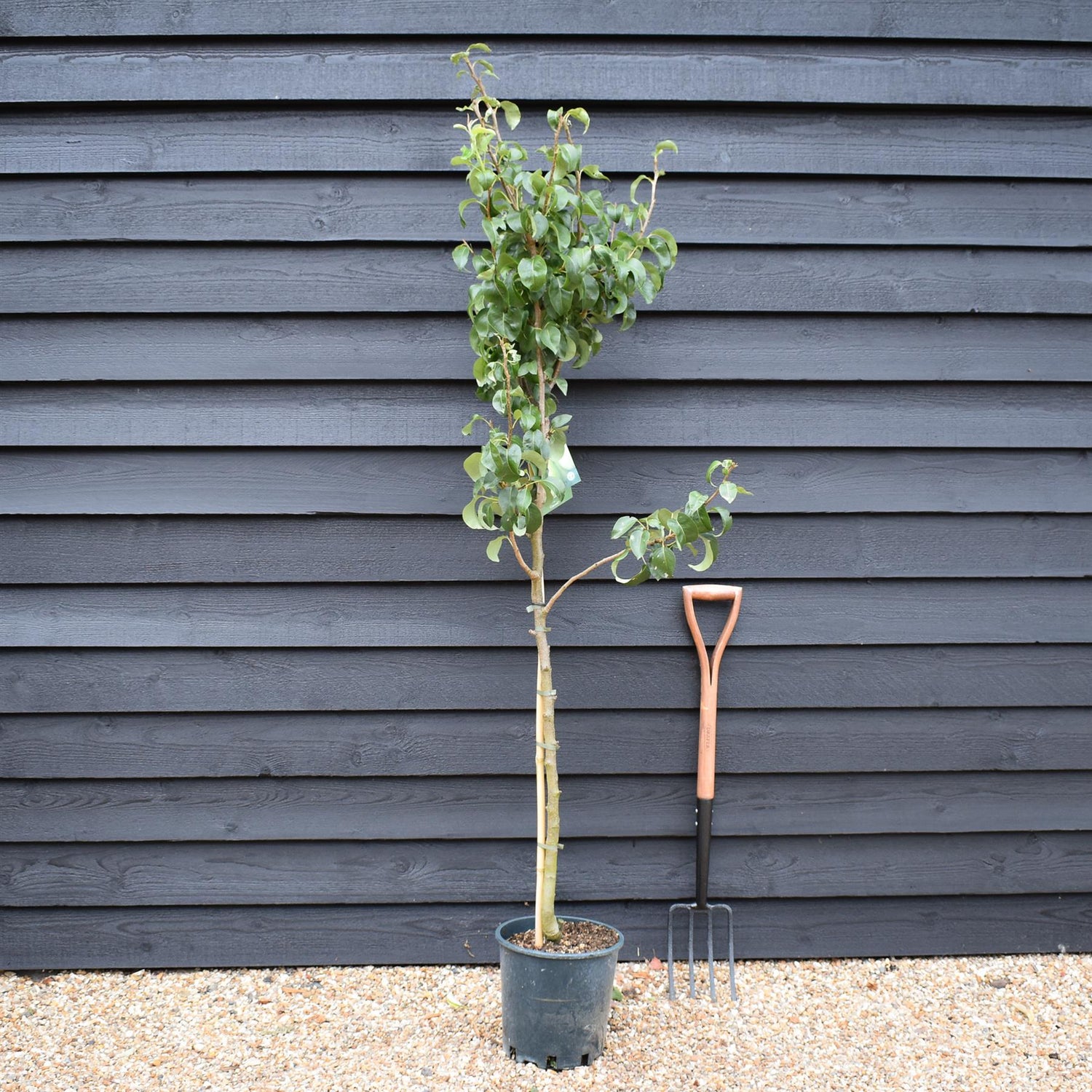
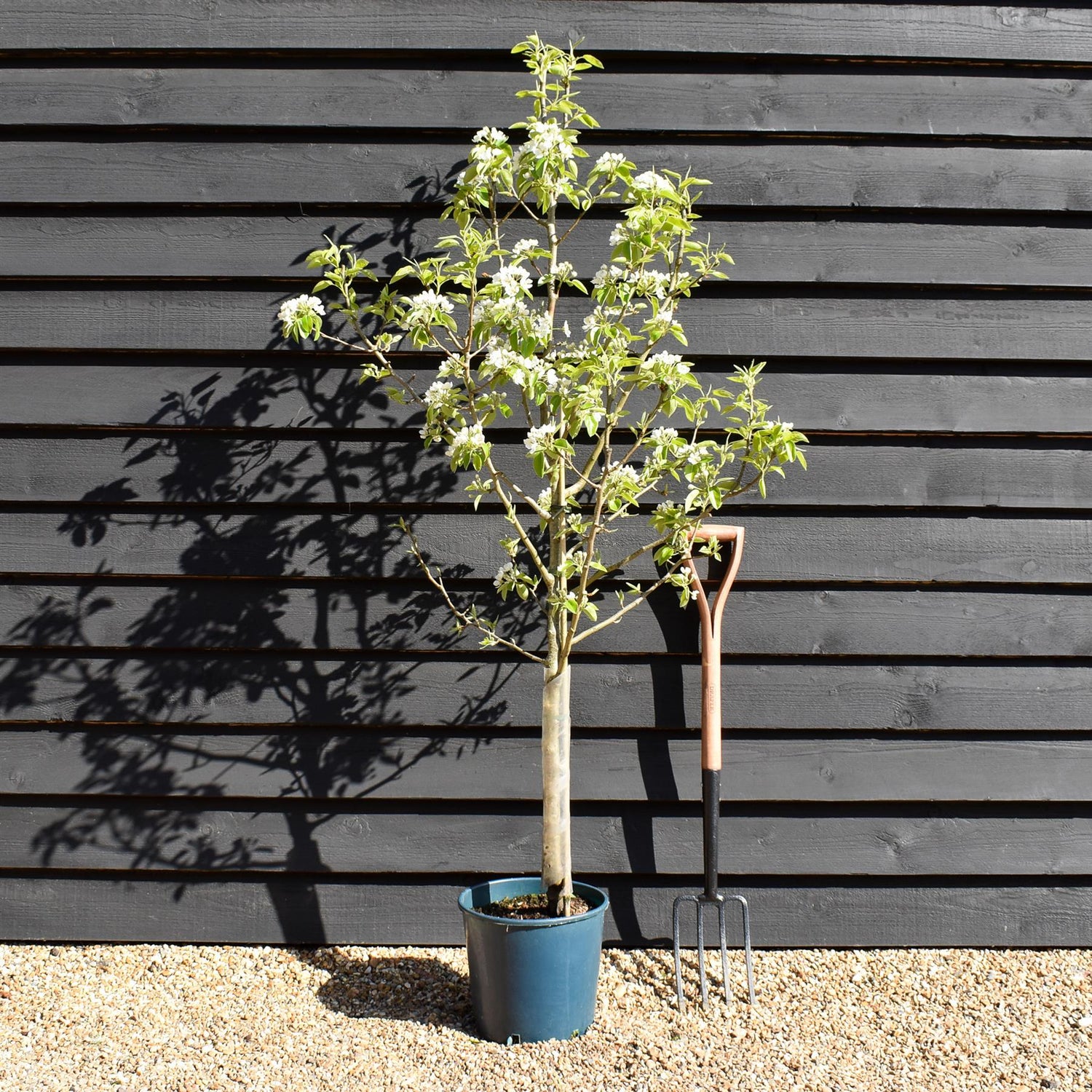
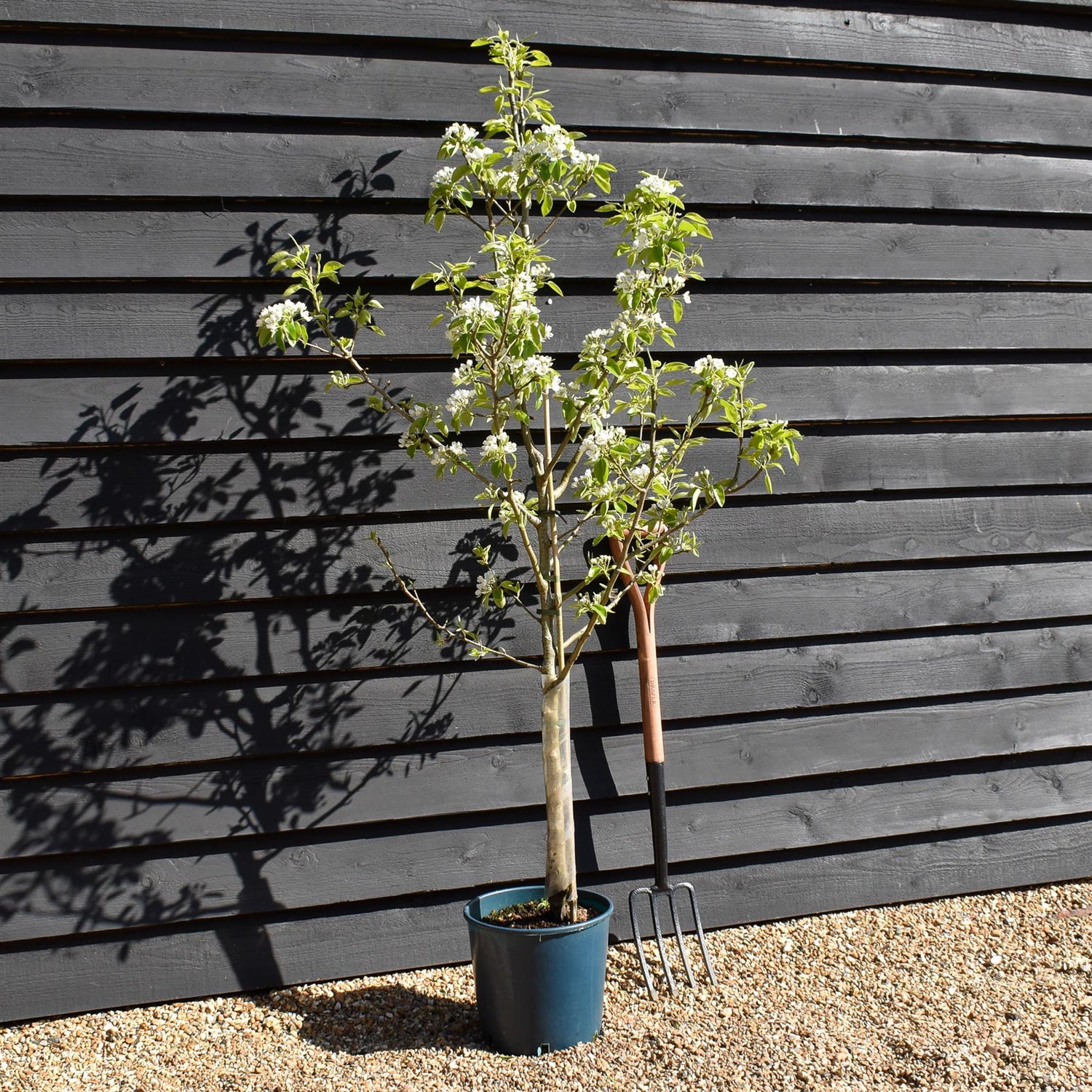
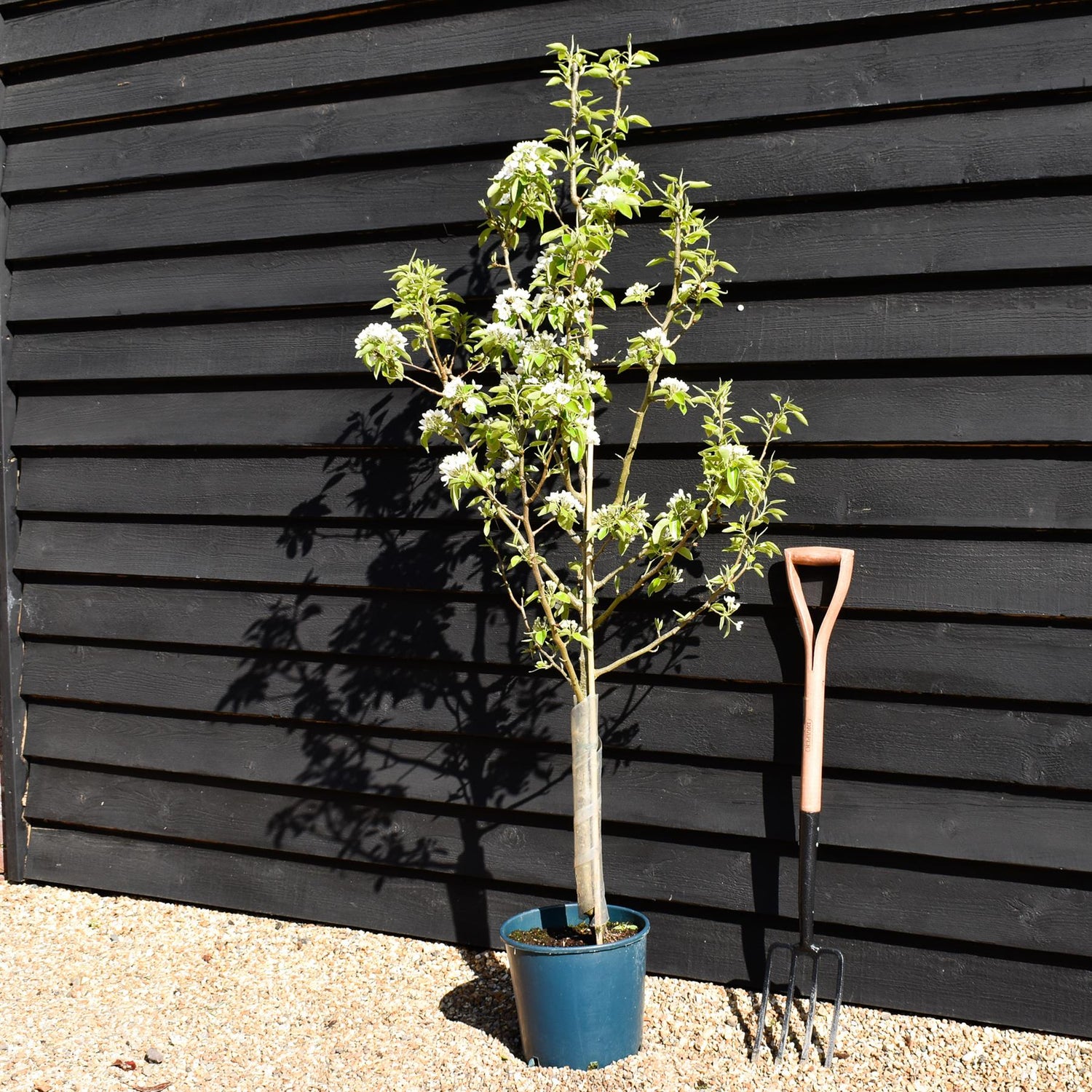
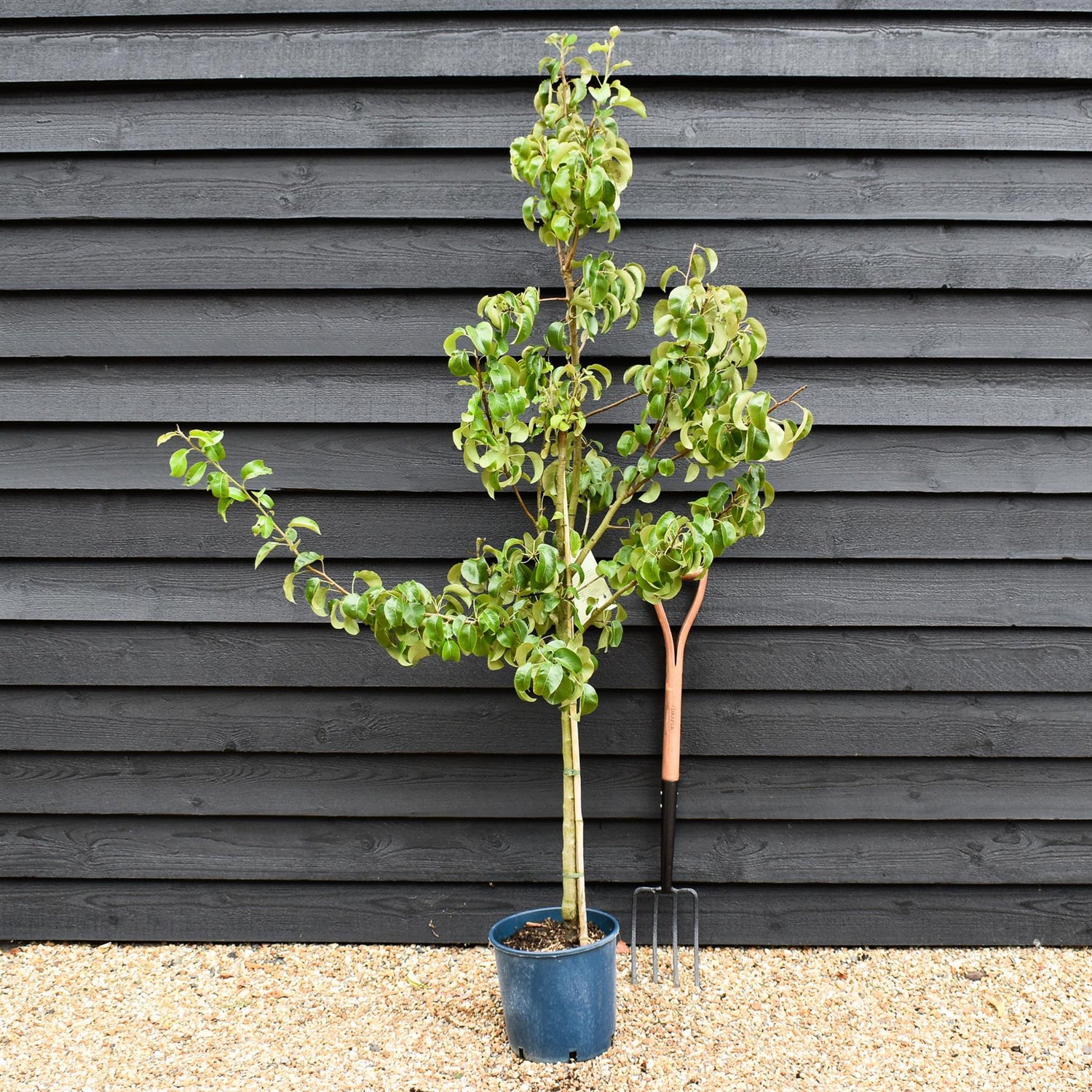
Pear tree 'Williams' Bon Chretien' | Pyrus communis - 170-180cm - 30lt
£120.00
Unit price perPear tree 'Williams' Bon Chretien' | Pyrus communis - 170-180cm - 30lt
£120.00
Unit price perShowing 90/130