
-
Trees
Trees
 Fruit Trees
 Ornamental
 Screening
 Palms
By FeaturesBy Shape
Palms
By FeaturesBy Shape -
Shrubs
Shrubs
 Large shrubs
 Hedging
 Bamboo
 Climbers
 Flowering
 Grasses & Ferns
 Popular
-
Pines & Conifers
Pines & Conifers
 Pines
Pines
 Spruce & Fir
 Cypress
 Thuja
Thuja
 Redwood | Sequoia
-
Specimen

FREE DELIVERY OVER £350
307 products
307 products
Sort by:


Fig | Ficus carica 'Ice Crystal' - Girth 10-12cm - 120-140cm - 15lt
£86.00
Unit price perFig | Ficus carica 'Ice Crystal' - Girth 10-12cm - 120-140cm - 15lt
£86.00
Unit price perFicus carica 'Ice Crystal' is a beautiful and unique variety of fig tree that is known for its ornamental qualities and its delicious fruit. This tree is a member of the Ficus genus, which includes over 800 species of trees and shrubs.
One of the most striking features of the Ficus carica 'Ice Crystal' is its foliage. The leaves are deeply lobed and have a distinctive, jagged edge that gives them a crystalline appearance. The leaves are also variegated with shades of green, white, and silver, which adds to the tree's ornamental value.
In terms of size, the Ficus carica 'Ice Crystal' can grow up to 20 feet tall and 20 feet wide, although it is often pruned to a more manageable size. The tree is also well-suited to container growing, which makes it a great choice for patio or balcony gardens.
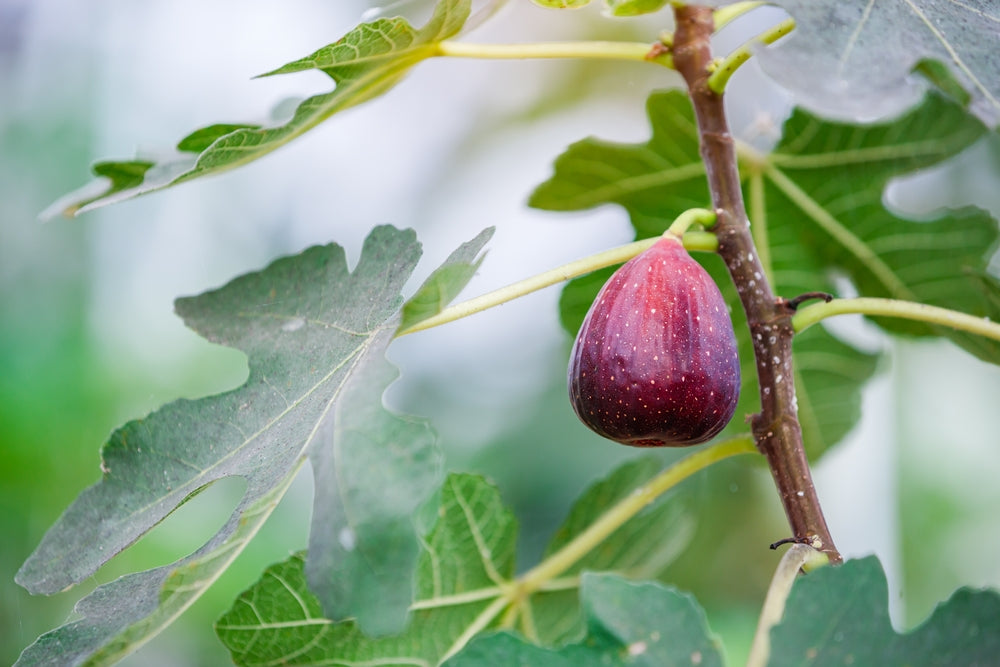
Of course, one of the main attractions of the Ficus carica 'Ice Crystal' is its fruit. This variety produces medium-sized figs that are typically green when young and turn purplish-brown when ripe. The fruit has a sweet and juicy flesh with a delicate flavor that is perfect for eating fresh, dried, or in recipes.
The fruit of the Ficus carica 'Ice Crystal' is also a good source of vitamins, minerals, and fiber, making it a healthy addition to any diet. It is often used in Mediterranean and Middle Eastern cuisines, where it is featured in dishes like fig jam, stuffed figs, and fig and goat cheese salad.
Overall, the Ficus carica 'Ice Crystal' is a beautiful and productive tree that would make a great addition to any garden. With its unique foliage and delicious fruit, it is sure to be a standout feature in any landscape.


Fig | Ficus carica 'Ice Crystal' - Girth 10-12cm - 120-140cm - 15lt
£86.00
Unit price perFig | Ficus carica 'Ice Crystal' - Girth 10-12cm - 120-140cm - 15lt
£86.00
Unit price perFicus carica 'Little Miss Figgy' is a beautiful deciduous tree that belongs to the mulberry family. It is a small, compact tree that grows up to 6-8 feet tall and 4-6 feet wide. This tree is well-suited for small gardens, patios, and balconies. The 'Little Miss Figgy' tree is known for its ornamental value as well as its delicious fruit.
The leaves of 'Little Miss Figgy' are dark green and lobed, giving the tree an attractive appearance. The fruit produced by this tree is a small to medium-sized fig with a reddish-brown skin and a sweet, juicy flesh inside. The fruit is ready for harvest in mid to late summer, and it can be eaten fresh or used in cooking and baking.
One of the advantages of the 'Little Miss Figgy' tree is that it is self-pollinating, which means that it does not require another tree for fertilization. This makes it a great choice for gardeners with limited space. Additionally, this tree is relatively easy to care for and can adapt to a range of soil types and environmental conditions.
In terms of growing conditions, the 'Little Miss Figgy' tree prefers full sun exposure and well-draining soil. It is also important to provide regular watering during the growing season, especially during hot and dry weather. Pruning is generally not necessary for this tree, although some gardeners may choose to shape it to their liking.
Overall, the Ficus carica 'Little Miss Figgy' tree is an excellent choice for anyone looking to grow a beautiful and fruitful tree in a small space. Its compact size, ornamental value, and delicious fruit make it a popular choice among gardeners and fruit enthusiasts alike.


Fig | Ficus carica 'Ice Crystal' - Half Standard - Height 180-200cm - 35lt
£160.00
Unit price perFig | Ficus carica 'Ice Crystal' - Half Standard - Height 180-200cm - 35lt
£160.00
Unit price perFicus carica 'Ice Crystal' is a beautiful and unique variety of fig tree that is known for its ornamental qualities and its delicious fruit. This tree is a member of the Ficus genus, which includes over 800 species of trees and shrubs.
One of the most striking features of the Ficus carica 'Ice Crystal' is its foliage. The leaves are deeply lobed and have a distinctive, jagged edge that gives them a crystalline appearance. The leaves are also variegated with shades of green, white, and silver, which adds to the tree's ornamental value.
In terms of size, the Ficus carica 'Ice Crystal' can grow up to 20 feet tall and 20 feet wide, although it is often pruned to a more manageable size. The tree is also well-suited to container growing, which makes it a great choice for patio or balcony gardens.
Of course, one of the main attractions of the Ficus carica 'Ice Crystal' is its fruit. This variety produces medium-sized figs that are typically green when young and turn purplish-brown when ripe. The fruit has a sweet and juicy flesh with a delicate flavour that is perfect for eating fresh, dried, or in recipes.
The fruit of the Ficus carica 'Ice Crystal' is also a good source of vitamins, minerals, and fibre, making it a healthy addition to any diet. It is often used in Mediterranean and Middle Eastern cuisines, where it is featured in dishes like fig jam, stuffed figs, and fig and goat cheese salad.
Overall, the Ficus carica 'Ice Crystal' is a beautiful and productive tree that would make a great addition to any garden. With its unique foliage and delicious fruit, it is sure to be a standout feature in any landscape.


Fig | Ficus carica 'Little Miss Figgy' - Half Standard - Height 180-200cm - 35lt
£160.00
Unit price perFig | Ficus carica 'Little Miss Figgy' - Half Standard - Height 180-200cm - 35lt
£160.00
Unit price perFicus carica 'Little Miss Figgy' is a beautiful deciduous tree that belongs to the mulberry family. It is a small, compact tree that grows up to 6-8 feet tall and 4-6 feet wide. This tree is well-suited for small gardens, patios, and balconies. The 'Little Miss Figgy' tree is known for its ornamental value as well as its delicious fruit.
The leaves of 'Little Miss Figgy' are dark green and lobed, giving the tree an attractive appearance. The fruit produced by this tree is a small to medium-sized fig with a reddish-brown skin and a sweet, juicy flesh inside. The fruit is ready for harvest in mid to late summer, and it can be eaten fresh or used in cooking and baking.
One of the advantages of the 'Little Miss Figgy' tree is that it is self-pollinating, which means that it does not require another tree for fertilization. This makes it a great choice for gardeners with limited space. Additionally, this tree is relatively easy to care for and can adapt to a range of soil types and environmental conditions.
In terms of growing conditions, the 'Little Miss Figgy' tree prefers full sun exposure and well-draining soil. It is also important to provide regular watering during the growing season, especially during hot and dry weather. Pruning is generally not necessary for this tree, although some gardeners may choose to shape it to their liking.
Overall, the Ficus carica 'Little Miss Figgy' tree is an excellent choice for anyone looking to grow a beautiful and fruitful tree in a small space. Its compact size, ornamental value, and delicious fruit make it a popular choice among gardeners and fruit enthusiasts alike.
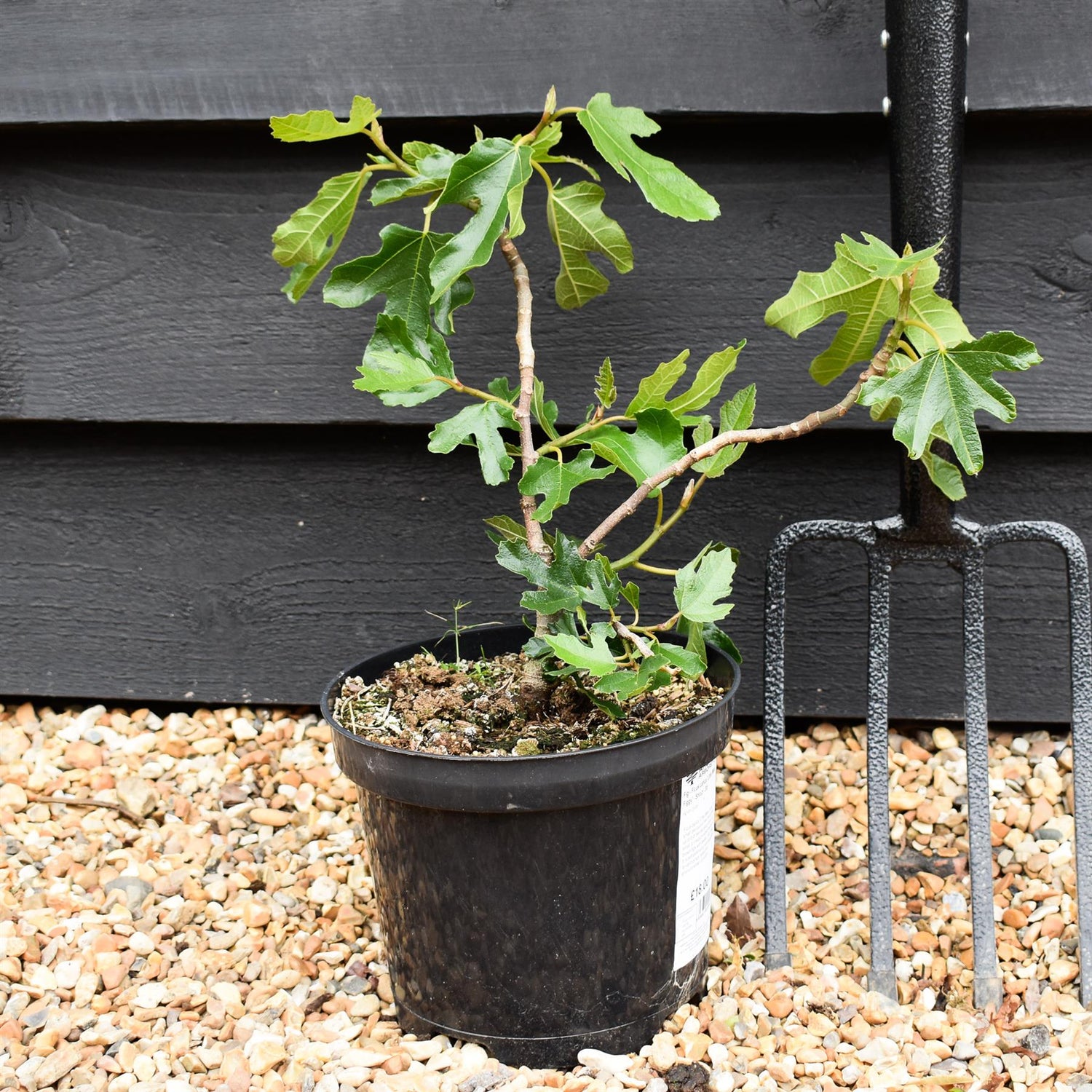


Fig | Ficus carica 'Little Miss Figgy' - Shrub - 25-40cm - 3lt
£19.00
Unit price perFig | Ficus carica 'Little Miss Figgy' - Shrub - 25-40cm - 3lt
£19.00
Unit price perFicus carica 'Little Miss Figgy' is a beautiful deciduous tree that belongs to the mulberry family. It is a small, compact tree that grows up to 6-8 feet tall and 4-6 feet wide. This tree is well-suited for small gardens, patios, and balconies. The 'Little Miss Figgy' tree is known for its ornamental value as well as its delicious fruit.
The leaves of 'Little Miss Figgy' are dark green and lobed, giving the tree an attractive appearance. The fruit produced by this tree is a small to medium-sized fig with a reddish-brown skin and a sweet, juicy flesh inside. The fruit is ready for harvest in mid to late summer, and it can be eaten fresh or used in cooking and baking.
One of the advantages of the 'Little Miss Figgy' tree is that it is self-pollinating, which means that it does not require another tree for fertilization. This makes it a great choice for gardeners with limited space. Additionally, this tree is relatively easy to care for and can adapt to a range of soil types and environmental conditions.
In terms of growing conditions, the 'Little Miss Figgy' tree prefers full sun exposure and well-draining soil. It is also important to provide regular watering during the growing season, especially during hot and dry weather. Pruning is generally not necessary for this tree, although some gardeners may choose to shape it to their liking.
Overall, the Ficus carica 'Little Miss Figgy' tree is an excellent choice for anyone looking to grow a beautiful and fruitful tree in a small space. Its compact size, ornamental value, and delicious fruit make it a popular choice among gardeners and fruit enthusiasts alike.


Fig | Ficus carica 'Little Miss Figgy' - Shrub - 40-60cm - 5lt
£38.00
Unit price perFig | Ficus carica 'Little Miss Figgy' - Shrub - 40-60cm - 5lt
£38.00
Unit price perFicus carica 'Little Miss Figgy' is a beautiful deciduous tree that belongs to the mulberry family. It is a small, compact tree that grows up to 6-8 feet tall and 4-6 feet wide. This tree is well-suited for small gardens, patios, and balconies. The 'Little Miss Figgy' tree is known for its ornamental value as well as its delicious fruit.
The leaves of 'Little Miss Figgy' are dark green and lobed, giving the tree an attractive appearance. The fruit produced by this tree is a small to medium-sized fig with a reddish-brown skin and a sweet, juicy flesh inside. The fruit is ready for harvest in mid to late summer, and it can be eaten fresh or used in cooking and baking.
One of the advantages of the 'Little Miss Figgy' tree is that it is self-pollinating, which means that it does not require another tree for fertilization. This makes it a great choice for gardeners with limited space. Additionally, this tree is relatively easy to care for and can adapt to a range of soil types and environmental conditions.
In terms of growing conditions, the 'Little Miss Figgy' tree prefers full sun exposure and well-draining soil. It is also important to provide regular watering during the growing season, especially during hot and dry weather. Pruning is generally not necessary for this tree, although some gardeners may choose to shape it to their liking.
Overall, the Ficus carica 'Little Miss Figgy' tree is an excellent choice for anyone looking to grow a beautiful and fruitful tree in a small space. Its compact size, ornamental value, and delicious fruit make it a popular choice among gardeners and fruit enthusiasts alike.
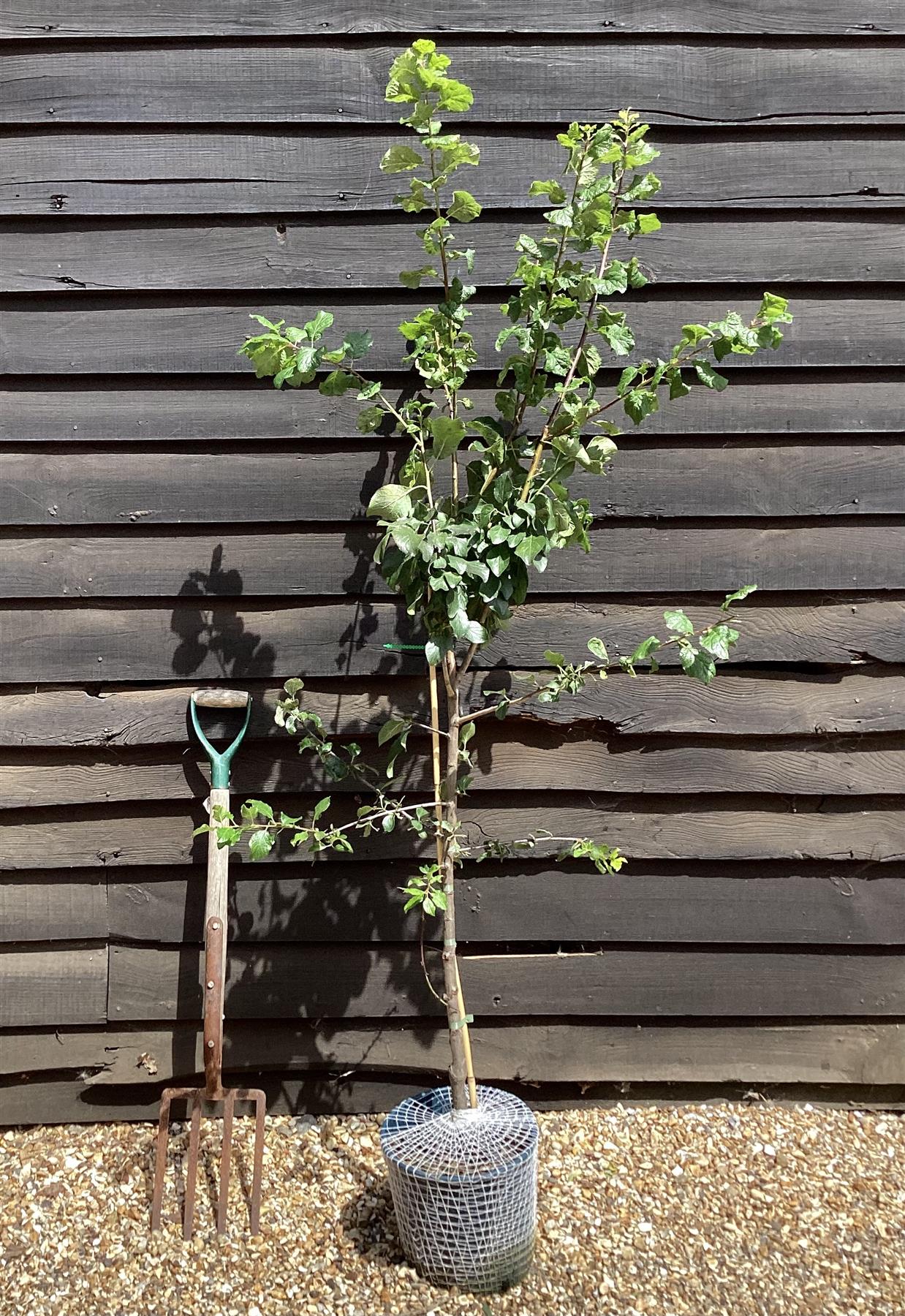
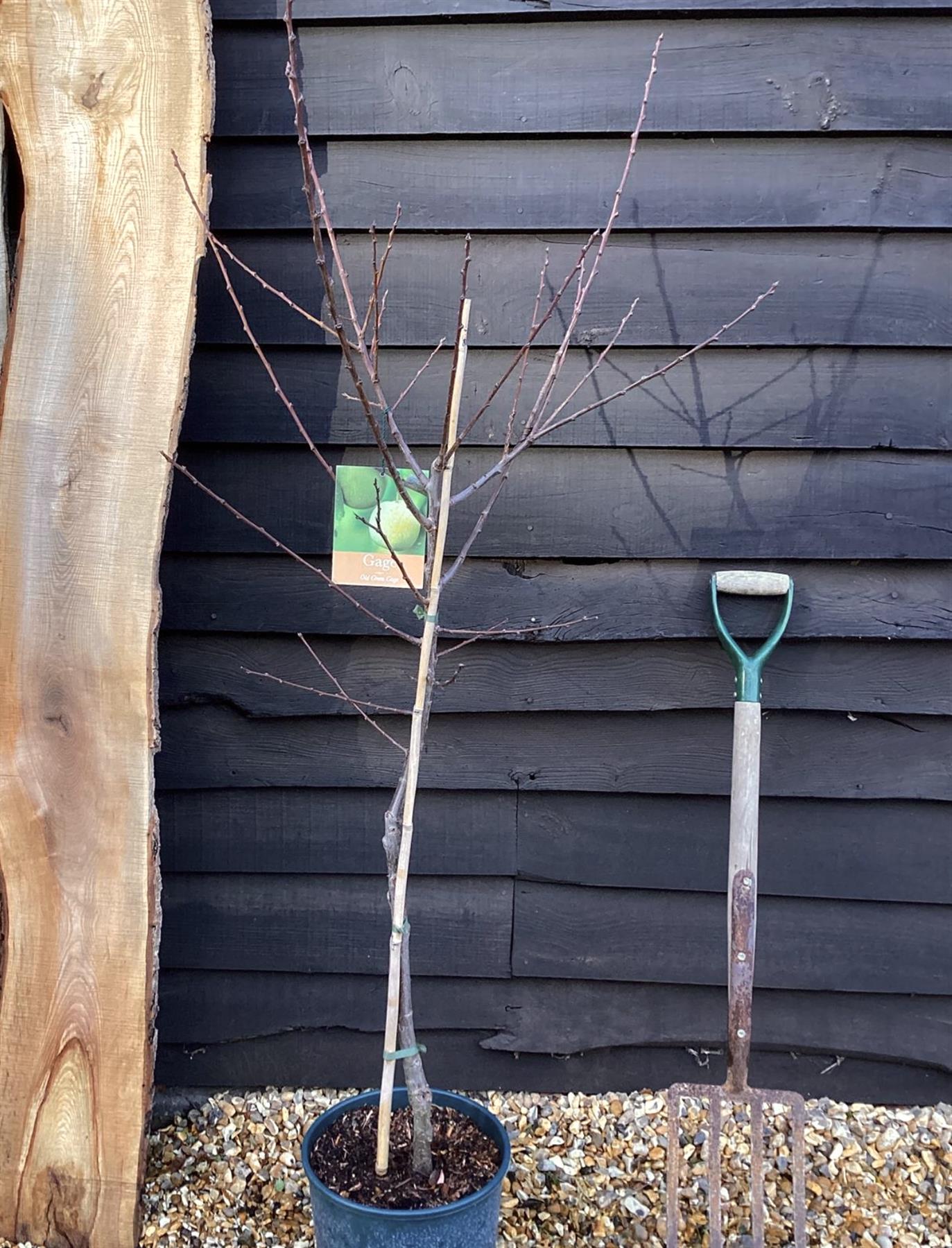
Gage 'Old Greengage' on Myrobalan | Prunus domestica - Semi-Vigorous - 130-140cm - 12lt
£79.00
Unit price perGage 'Old Greengage' on Myrobalan | Prunus domestica - Semi-Vigorous - 130-140cm - 12lt
£79.00
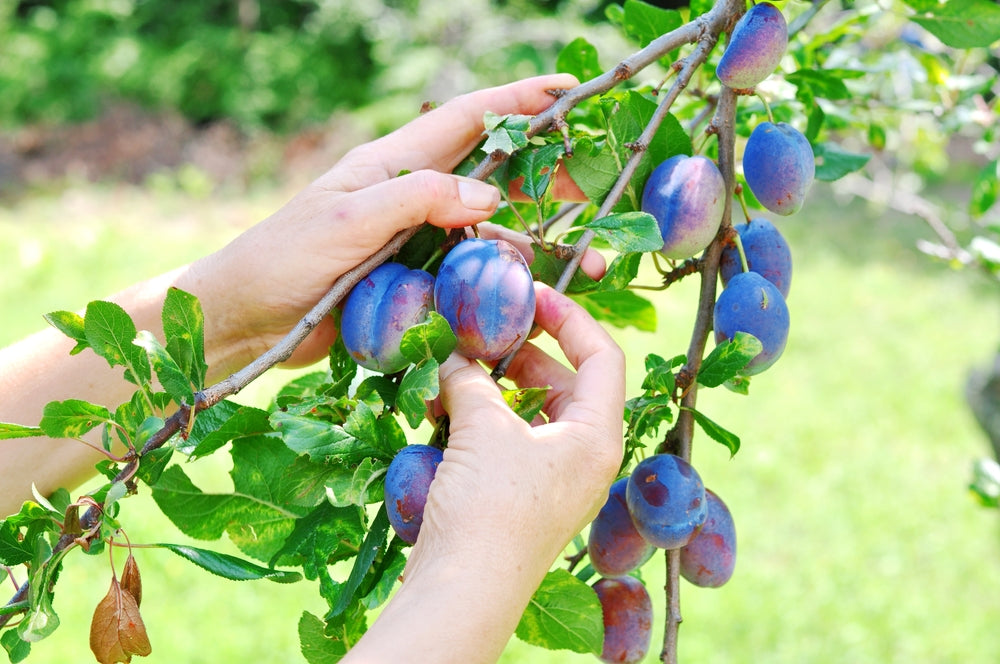
Unit price perThe Gage Old Greengage on Myrobalan rootstock is a distinguished fruit tree revered for its production of exquisite, sweet, and flavourful plums. This tree, when paired with Myrobalan rootstock, exhibits admirable hardiness and disease resistance, making it an enduring favorite amongst gardeners and orchard owners. Myrobalan rootstock is notably conducive to moderate growth, rendering the tree suitable for gardens with limited space.
Old Greengage is prized for its delicious greenish-yellow fruits that have been a staple in gardens for centuries. The fruits are known for their rich, honeyed flavor and smooth texture, making them a preferred variety for fresh consumption and culinary uses, like jams, jellies, and baked goods. The tree blooms with delicate, white flowers in spring, setting the stage for a bountiful harvest in late summer.
The symbiotic relation between the Old Greengage and the Myrobalan rootstock not only ensures a reliable yield but also increases the tree’s adaptability to different soil types, improving its chances to thrive in various environments. This combination of delectable fruits and robust growth makes the Gage Old Greengage on Myrobalan rootstock a cherished option for those seeking to cultivate quality plums with less hassle.
Despite its myriad of advantages, the cultivation of Old Greengage requires meticulous attention to watering, pruning, and pest control to maintain optimal health and achieve abundant, high-quality fruit production. This union of storied fruit variety and sturdy rootstock remains a symbol of horticultural excellence and tradition in fruit cultivation.
St. Julian rootstock is a semi-vigorous rootstock for gage trees, providing medium-sized trees, making it suitable for small gardens. It's widely used for its compatibility and adaptability, promoting good productivity and longevity. It's partially self-fertile and moderately resistant to diseases and pests. Ideal for plum and gage.
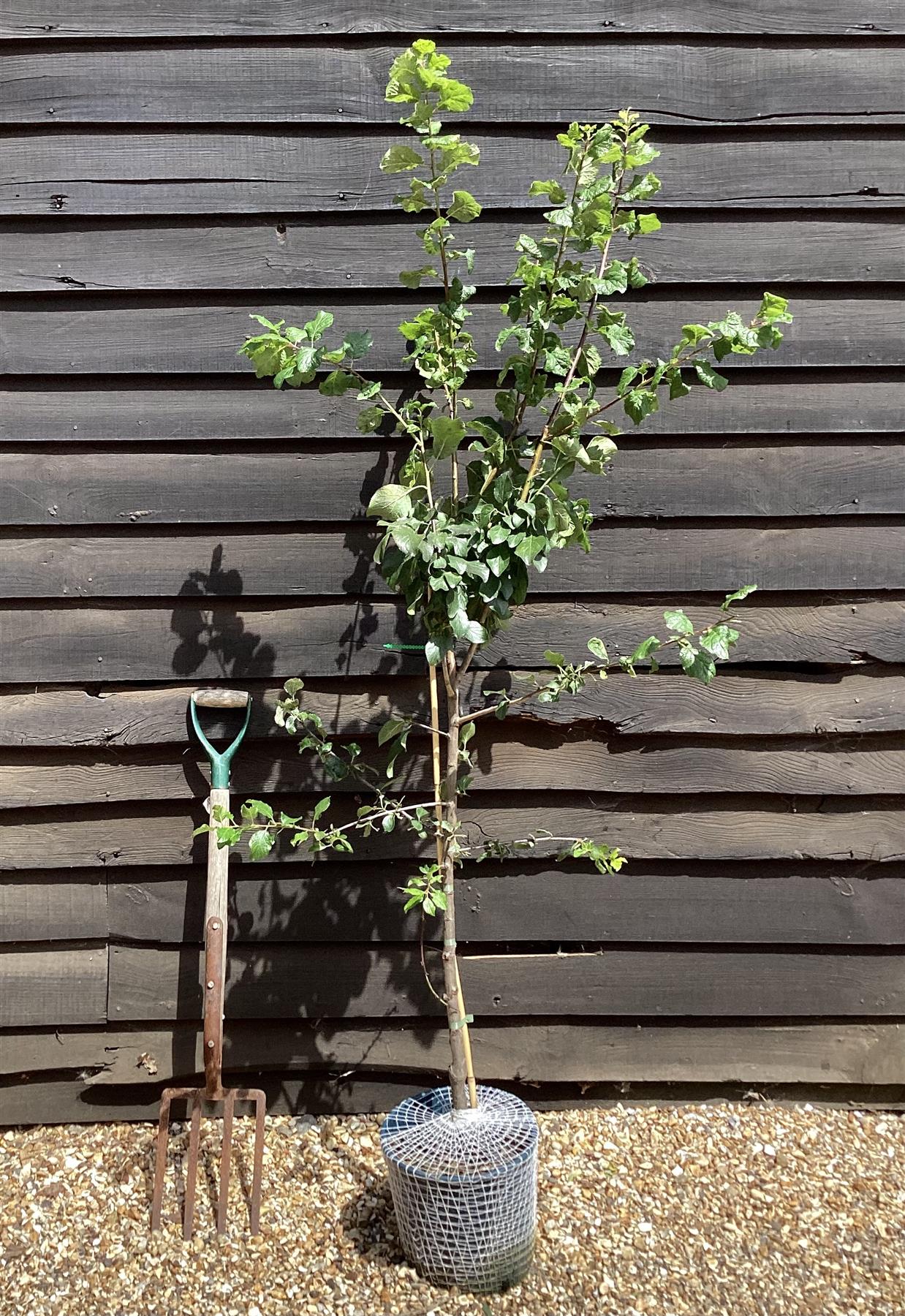
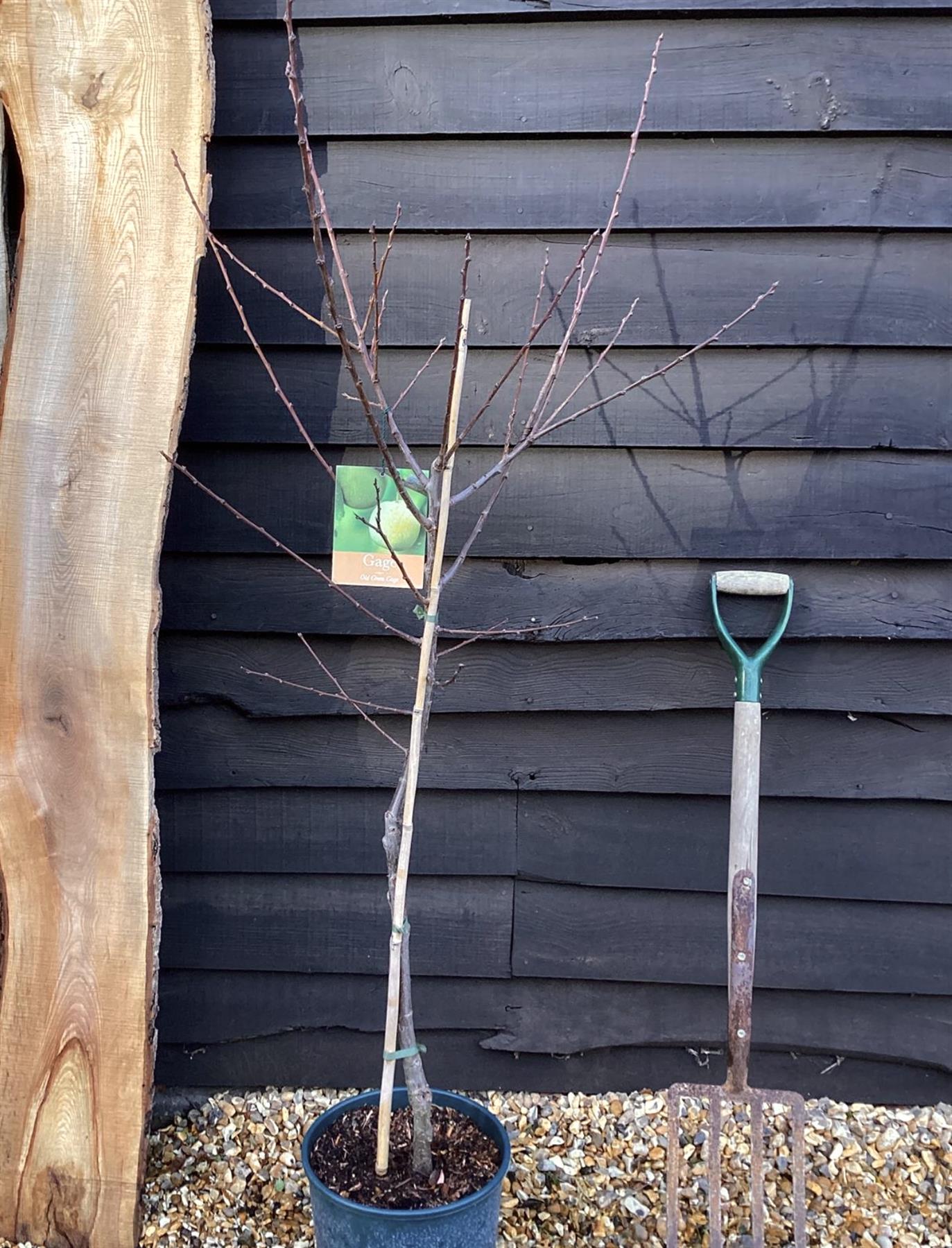
Gage 'Old Greengage' on St. Julian | Prunus domestica - Semi-Vigorous - 150-160cm - 12lt
£72.00
Unit price perGage 'Old Greengage' on St. Julian | Prunus domestica - Semi-Vigorous - 150-160cm - 12lt
£72.00
Unit price perThe Gage Old Greengage on St. Julian rootstock is a distinguished fruit tree revered for its production of exquisite, sweet, and flavorful plums. This tree, when paired with St. Julian rootstock, exhibits admirable hardiness and disease resistance, making it an enduring favorite amongst gardeners and orchard owners. St. Julian rootstock is notably conducive to moderate growth, rendering the tree suitable for gardens with limited space.
Old Greengage is prized for its delicious greenish-yellow fruits that have been a staple in gardens for centuries. The fruits are known for their rich, honeyed flavor and smooth texture, making them a preferred variety for fresh consumption and culinary uses, like jams, jellies, and baked goods. The tree blooms with delicate, white flowers in spring, setting the stage for a bountiful harvest in late summer.
The symbiotic relation between the Old Greengage and the St. Julian rootstock not only ensures a reliable yield but also increases the tree’s adaptability to different soil types, improving its chances to thrive in various environments. This combination of delectable fruits and robust growth makes the Gage Old Greengage on St. Julian rootstock a cherished option for those seeking to cultivate quality plums with less hassle.
Despite its myriad of advantages, the cultivation of Old Greengage requires meticulous attention to watering, pruning, and pest control to maintain optimal health and achieve abundant, high-quality fruit production. This union of storied fruit variety and sturdy rootstock remains a symbol of horticultural excellence and tradition in fruit cultivation.
St. Julian rootstock is a semi-vigorous rootstock for gage trees, providing medium-sized trees, making it suitable for small gardens. It's widely used for its compatibility and adaptability, promoting good productivity and longevity. It's partially self-fertile and moderately resistant to diseases and pests. Ideal for plum and gage.
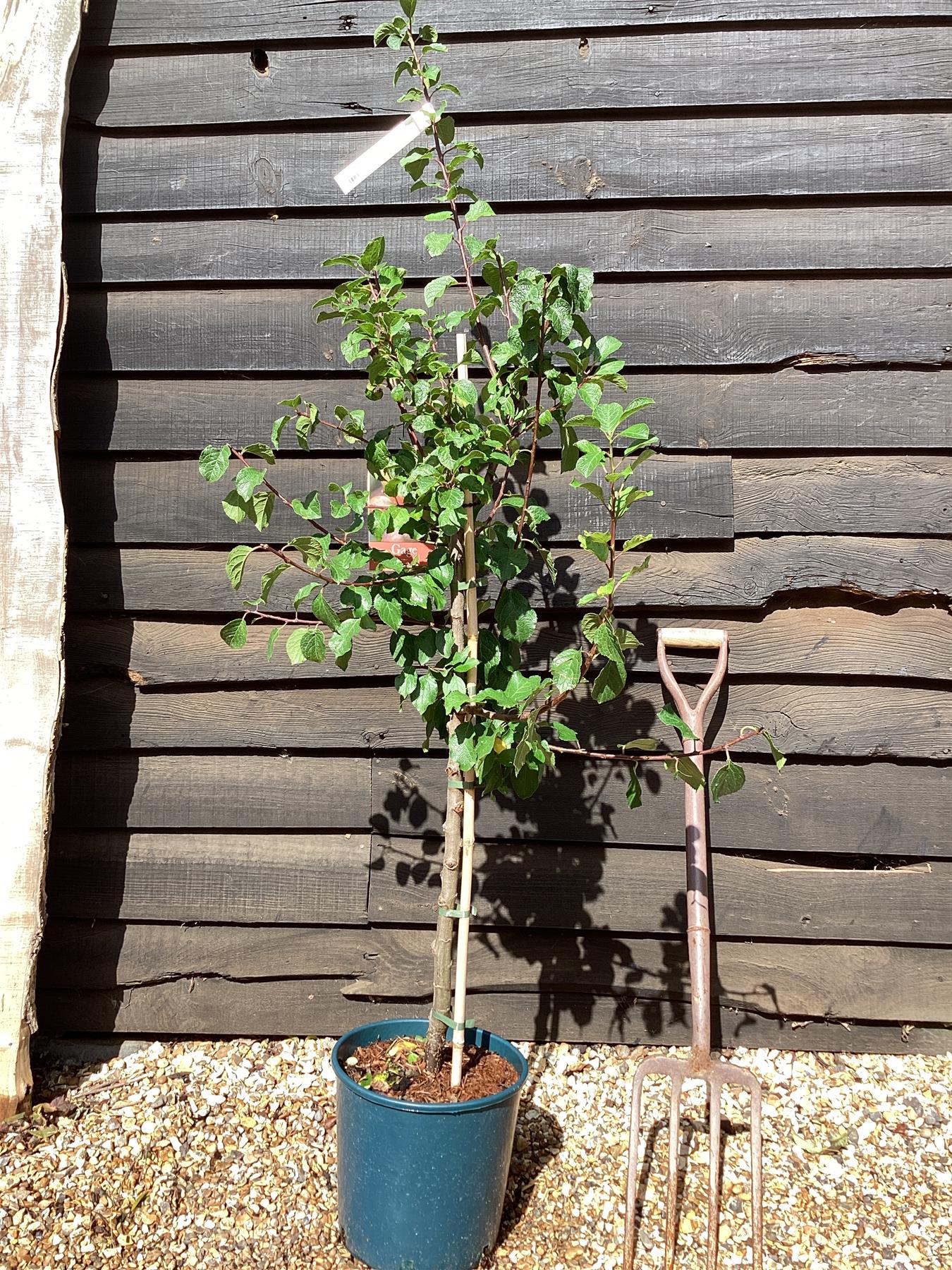
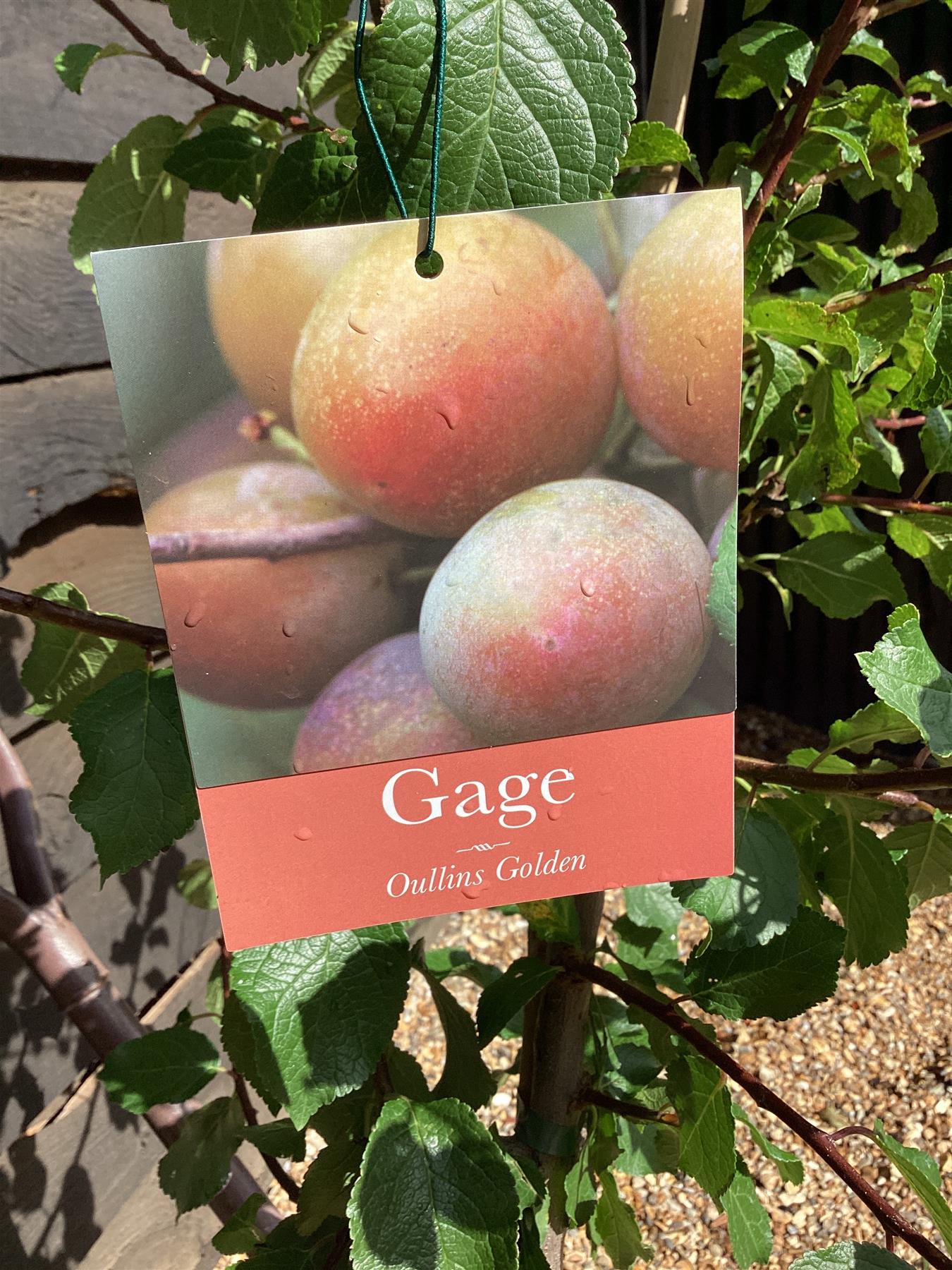
Gage 'Oullins Golden Gage' | Plum | Prunus domestica - 140-150cm - 12lt
£72.00
Unit price perGage 'Oullins Golden Gage' | Plum | Prunus domestica - 140-150cm - 12lt
£72.00
Unit price perThe Gage Oullins Golden on St. Julian rootstock is a remarkable fruit tree revered for its capability to produce succulent and sweet golden fruits. This tree is grafted onto St. Julian rootstock, known for imparting a robust and resilient character to the plant, allowing it to flourish in a plethora of conditions. The moderately vigorous growth induced by this rootstock makes it suitable for gardens with limited space and offers easier manageability.
The fruits of Gage Oullins Golden are renowned for their exquisite taste and multifaceted utility. These golden gems are relished fresh and are also esteemed components in a variety of culinary creations, including jams, jellies, and baked delights, contributing a unique flavor profile that is both rich and refreshing.
This variety, with its prolific bearing, elevates garden landscapes by introducing an element of productivity and visual appeal. The allure of the sunlit golden fruits amidst the lush green foliage is a charming sight, creating a focal point of beauty and bounty. The St. Julian rootstock not only facilitates consistent and abundant yields but also aids in enhanced resistance against diseases and pests, ensuring healthier and more resilient plants. The combination of the Gage Oullins Golden with St. Julian rootstock is a harmonious union, promising a bountiful and flavorful harvest.
St. Julian rootstock is a semi-vigorous rootstock for gage trees, providing medium-sized trees, making it suitable for small gardens. It's widely used for its compatibility and adaptability, promoting good productivity and longevity. It's partially self-fertile and moderately resistant to diseases and pests. Ideal for plum and gage.
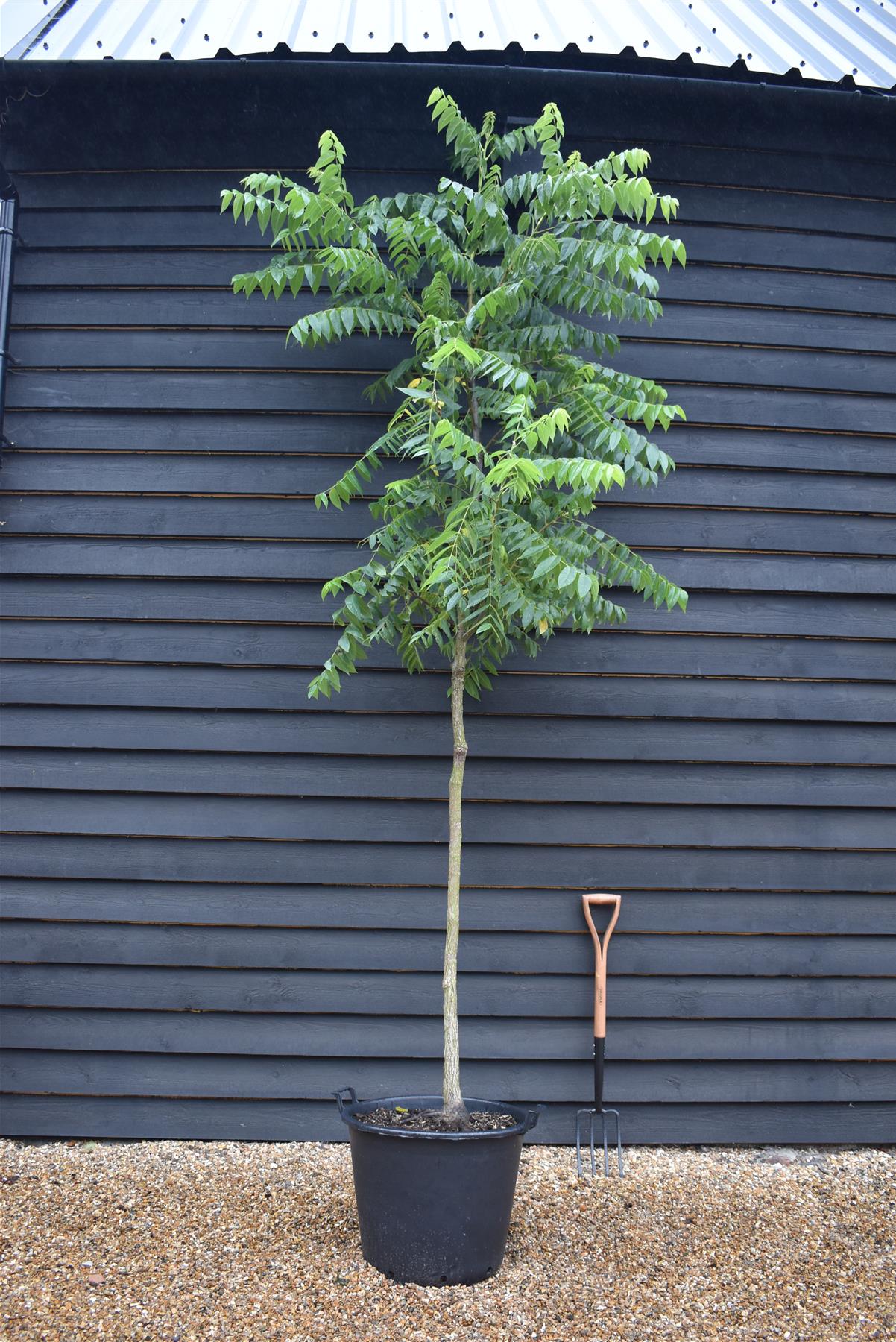


Juglans Nigra - Black Walnut Tree - Clear Stem - Standard - Girth 10-12cm - 300-320cm - 70lt
£420.00
Unit price perJuglans Nigra - Black Walnut Tree - Clear Stem - Standard - Girth 10-12cm - 300-320cm - 70lt
£420.00
Unit price perJuglans nigra, commonly known as the black walnut, is a large deciduous tree native to North America, particularly found in the eastern and central United States. It belongs to the Juglandaceae family, which also includes other walnut and hickory species. The tree is well known for its rich, dark brown to black heartwood, prized for its beauty, durability, and workability in furniture making and cabinetry.
The black walnut tree can grow to impressive heights, often reaching 30 to 40 metres tall, with a trunk diameter of up to 1.5 metres. The bark is deeply furrowed, dark grey to almost black, and has a rugged texture. Its compound leaves are pinnate, usually comprising 15 to 23 leaflets that are finely toothed and emit a distinctive aromatic scent when crushed. These leaves turn a golden yellow in the autumn.
One of the most notable features of Juglans nigra is its edible nut, enclosed in a thick, greenish-brown husk that eventually turns black as it matures. The nuts are difficult to crack but are highly valued for their rich flavour, commonly used in baking and cooking. Wildlife, including squirrels and birds, also consume the nuts, making the tree an important source of food in its ecosystem.


Juglans regia | Common Walnut Tree - 180-200cm, 50lt
£260.00
Unit price perJuglans regia | Common Walnut Tree - 180-200cm, 50lt
£260.00
Unit price per

Juglans regia | Common Walnut Tree - 200-220cm, 30lt
£135.00
Unit price perJuglans regia | Common Walnut Tree - 200-220cm, 30lt
£135.00
Unit price per


Juglans regia | Common Walnut Tree - Girth 14-16cm - Height 5m-5.3m - 110lt
£400.00
Unit price perJuglans regia | Common Walnut Tree - Girth 14-16cm - Height 5m-5.3m - 110lt
£400.00
Unit price per


Juglans regia | Common Walnut Tree - Girth 30-40cm - Height 3m-5m - 70lt
£300.00
Unit price perJuglans regia | Common Walnut Tree - Girth 30-40cm - Height 3m-5m - 70lt
£300.00
Unit price per


Malus Communis - 'Beleza de Roma' - Apple Tree - Espalier - Height 140-150cm - 15lt
£215.00
Unit price perMalus Communis - 'Beleza de Roma' - Apple Tree - Espalier - Height 140-150cm - 15lt
£215.00
Unit price perMalus communis 'Beleza de Roma' grown on a frame is a refined and productive apple tree, valued for its classic flavour, decorative appeal, and space-saving form. Carefully trained against a support frame, it develops a neat structured shape that makes an attractive feature for walls, fences, kitchen gardens, or patios. In spring, the branches are covered with masses of delicate white to soft pink blossom, bringing welcome seasonal colour and attracting bees and other pollinators.
By autumn, the tree bears handsome fruits with a rich aromatic flavour, balancing sweetness with a gentle sharpness. Highly regarded for fresh eating, cooking, and traditional recipes, the apples are versatile and rewarding to harvest. The trained frame shape allows sunlight to reach the fruit evenly, helping ripening and improving colour, while also keeping the plant compact and easy to manage.
This variety thrives best in a sunny, sheltered position with fertile, well-drained soil. Regular pruning helps maintain its elegant framework and encourages strong cropping year after year. Ideal for smaller gardens or where decorative productivity is required, Malus communis 'Beleza de Roma' offers spring blossom, handsome fruit, and practical structure, making it a beautiful and useful addition to any garden space.


Malus Communis - 'Elstar' - Apple Tree - Espalier - Height 140-150cm - 15lt
£215.00
Unit price perMalus Communis - 'Elstar' - Apple Tree - Espalier - Height 140-150cm - 15lt
£215.00
Unit price perMalus communis 'Elstar' grown on a frame is a refined and productive apple tree, valued for its classic flavour, decorative appeal, and space-saving form. Carefully trained against a support frame, it develops a neat structured shape that makes an attractive feature for walls, fences, kitchen gardens, or patios. In spring, the branches are covered with masses of delicate white to soft pink blossom, bringing welcome seasonal colour and attracting bees and other pollinators.
By autumn, the tree bears handsome fruits with a rich aromatic flavour, balancing sweetness with a gentle sharpness. Highly regarded for fresh eating, cooking, and traditional recipes, the apples are versatile and rewarding to harvest. The trained frame shape allows sunlight to reach the fruit evenly, helping ripening and improving colour, while also keeping the plant compact and easy to manage.
This variety thrives best in a sunny, sheltered position with fertile, well-drained soil. Regular pruning helps maintain its elegant framework and encourages strong cropping year after year. Ideal for smaller gardens or where decorative productivity is required, Malus communis 'Elstar' offers spring blossom, handsome fruit, and practical structure, making it a beautiful and useful addition to any garden space.


Malus Communis - 'Fuji' - Apple Tree - Espalier - Height 140-150cm - 15lt
£215.00
Unit price perMalus Communis - 'Fuji' - Apple Tree - Espalier - Height 140-150cm - 15lt
£215.00
Unit price perMalus communis 'Fuji' trained as an espalier is an elegant and highly productive apple tree, ideal for gardens where space is limited but fruit and ornamental value are desired. Carefully trained onto a frame it creates a striking architectural feature against walls, fences, or support wires while allowing excellent sunlight exposure and airflow. In spring, the branches are covered with attractive white to pale pink blossom, bringing seasonal beauty and attracting pollinators to the garden.
By autumn, the tree produces large, crisp apples with a sweet, juicy flavour and excellent texture. ‘Fuji’ is widely prized for its refreshing taste, making the fruit ideal for eating fresh, juicing, or storing for later use. The espalier form keeps the plant compact and manageable, making pruning, harvesting, and general maintenance far easier than with a full-sized tree.
Best grown in a sunny, sheltered position with fertile, well-drained soil, this variety performs reliably in many UK gardens. Its trained habit makes it especially useful for patios, kitchen gardens, courtyards, and narrow borders. Malus communis ‘Fuji’ espalier combines decorative blossom, practical structure, and delicious homegrown fruit in one beautiful and space-efficient tree.


Malus Communis - 'Fuji' - Apple Tree - Espalier - Height 140-150cm - 30lt
£240.00
Unit price perMalus Communis - 'Fuji' - Apple Tree - Espalier - Height 140-150cm - 30lt
£240.00
Unit price perMalus communis 'Fuji' trained as an espalier is an elegant and highly productive apple tree, ideal for gardens where space is limited but fruit and ornamental value are desired. Carefully trained onto a frame it creates a striking architectural feature against walls, fences, or support wires while allowing excellent sunlight exposure and airflow. In spring, the branches are covered with attractive white to pale pink blossom, bringing seasonal beauty and attracting pollinators to the garden.
By autumn, the tree produces large, crisp apples with a sweet, juicy flavour and excellent texture. ‘Fuji’ is widely prized for its refreshing taste, making the fruit ideal for eating fresh, juicing, or storing for later use. The espalier form keeps the plant compact and manageable, making pruning, harvesting, and general maintenance far easier than with a full-sized tree.
Best grown in a sunny, sheltered position with fertile, well-drained soil, this variety performs reliably in many UK gardens. Its trained habit makes it especially useful for patios, kitchen gardens, courtyards, and narrow borders. Malus communis ‘Fuji’ espalier combines decorative blossom, practical structure, and delicious homegrown fruit in one beautiful and space-efficient tree.
Showing 180/307
Related blog posts